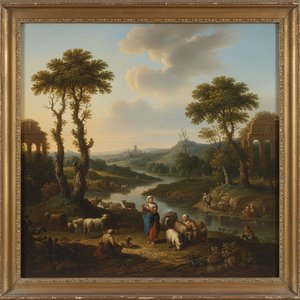
Johan Mari Henri Ten Kate: Um Pintor de Paisagens do Romantismo Holandês
Johan Mari Henri Ten Kate (1859 – 1896) emergiu como uma figura proeminente no movimento de paisagem romântica holandesa, cativando o público com suas representações magistrais da serena campiña holandesa e retratos evocativos de figuras humanas em meio à beleza natural. Embora tenha sido ofuscado por contemporâneos como Israëls e Maris durante sua vida, o estilo distinto de Ten Kate — caracterizado por paletas de cores luminosas e uma atenção meticulosa aos detalhes — continua a ressoar com colecionadores e historiadores da arte nos dias de hoje.- Juventude e Formação Artística: Nascido em Amsterdã, em 1859, Ten Kate recebeu uma educação artística formal na Koninklijke Academie voor Beeldende Künsten (Real Academia de Belas Artes) em Antuérpia, na Bélgica. Seus instrutores incluíam Willem Maris e Anton Mauve, figuras influentes que defendiam técnicas impressionistas e encorajavam seus alunos a capturar momentos fugazes de luz e atmosfera — um elemento crucial que moldou a visão artística de Ten Kate.
Um Estilo Romântico Distintivo
A obra de Ten Kate distingue-se das tendências predominantes de sua era por uma sensibilidade notável à cor e à textura. Ao contrário de muitos artistas que favoreciam tons suaves, ele abraçou matizes vibrantes — particularmente azuis e verdes — para transmitir a grandiosidade e a tranquilidade das paisagens holandesas. Suas pinceladas eram deliberadas, porém fluidas, sobrepondo pigmentos com uma precisão minuciosa para alcançar um senso de realismo inigualável, ao mesmo tempo em que imbuía suas telas de profundidade emocional. Ele renderizou habilmente efeitos atmosféricos como névoa e bruma, criando cenas que pareciam vivas com movimento e impregnadas por um sentimento palpável em relação ao mundo natural.- Paisagens Notáveis: Entre as obras mais celebradas de Ten Kate estão “Kite Flying” (1883) e “Seeking Shelter”, ambas capturando vistas holandesas quintessenciais. Estas pinturas exemplificam sua capacidade de transmitir não apenas precisão visual, mas também ressonância psicológica — o espectador é transportado para a contemplação silenciosa de uma tarde ventosa ou para o abraço reconfortante de um bosque protegido.
- Retratística: Além das paisagens, Ten Kate produziu vários retratos marcantes, demonstrando sua versatilidade como artista. “The Young Couple” exemplifica sua observação meticulosa e habilidade em capturar expressões sutis de emoção — um testemunho de sua perícia artística e sensibilidades humanistas.
Influências e Desenvolvimento Artístico
A jornada artística de Ten Kate foi profundamente impactada pelo movimento Impressionista, liderado por Claude Monet e Pierre-Auguste Renoir. Ele absorveu suas técnicas para capturar a luz e a cor, adaptando-as ao seu próprio estilo distintivo. Além disso, buscou inspiração em pintores românticos como Caspar David Friedrich e Eugène Delacroix, cujo ênfase em paisagens sublimes e narrativas emocionais dramáticas moldaram suas sensibilidades artísticas. Essas influências combinaram-se para forjar uma estética única que fundia o realismo com a beleza lírica.Legado e Significado Histórico
Apesar de enfrentar um relativo obscurantismo durante sua vida, o legado de Johan Mari Henri Ten Kate persiste como um exemplar da pintura de paisagem romântica holandesa. Suas telas continuam a cativar os espectadores com suas paletas de cores luminosas e a renderização magistral de efeitos atmosféricos — um lembrete do poder duradouro da arte para evocar emoções e capturar a essência de um lugar e tempo específicos. Hoje, o trabalho de Ten Kate é apreciado por sua elegância discreta e profunda conexão com o mundo natural, assegurando sua posição como um importante contribuidor para a história da arte holandesa.Perguntas e Respostas
Onde e quando nasceu João Henri Ten Kate?
João Henri Ten Kate nasceu em Amsterdam, em 1859.
Quantas obras de João Henri Ten Kate estão disponíveis para explorar?
Você pode explorar 47 obras de arte obras de João Henri Ten Kate na página Todas as obras.
Onde as obras de João Henri Ten Kate estão agrupadas por movimento artístico?
Os movimentos em que João Henri Ten Kate atuou podem ser conferidos na página de Todos os Movimentos do artista, que agrupa as obras por movimento.