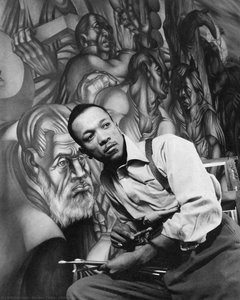
Retrato de Gordon Parks

As 88 Pinturas Mais Famosas de Gordon Parks, Cada Uma Única

Atualizado em Novembro 2026 · classificado pela nossa pontuação de popularidade (pesquisas, visitas e pedidos de cada obra) · 88 obras de Gordon Parks em nosso catálogo

Em resumo

Muhammad Ali in Training, Miami Beach, Florida (1966) é a pintura de Gordon Parks que mais atrai olhares; a obra original pertence ao The Gordon Parks Foundation, Pleasantville. Depois disso, o olhar recai sobre Untitled, Harlem, New York (1952) e Contact sheet 111 R3, (1952). Entre as 88 obras de Gordon Parks em nosso catálogo, estas 88 são as mais famosas, cada uma uma original única apresentada com o seu ano, o seu museu e a razão pela qual perdura.

1912 – 2006, Fort Scott Documentary photography surrealism Mais obras: The Gordon Parks Foundation

As 10 principais pinturas de Gordon Parks, sob o olhar da galeria

1
Muhammad Ali in Training, Miami Beach, Florida (1966) de Gordon Parks

Muhammad Ali in Training, Miami Beach, Florida

1966 · Black and White Photography · The Gordon Parks Foundation, Pleasantville

In the sweltering summer of 1966, amidst the rhythmic preparations of Miami Beach, Gordon Parks captured more than just an athlete in training; he immortalized a psychological landscape. His photograph, Muhammad Ali in Training, serves as a profound window into a pivotal moment in American history. At this juncture, Ali was on the precipice of his monumental victory over Sonny Liston, a triumph that would not only crown him heavyweight…

2
Untitled, Harlem, New York (1952) de Gordon Parks

Untitled, Harlem, New York

1952 · Black and White Photography · The Gordon Parks Foundation, Pleasantville

In the heart of 1952, amidst the vibrant yet stratified landscape of New York City, Gordon Parks captured a moment that transcends the boundaries of mere documentation to become a profound visual poem. His photograph, "Untitled, Harlem, New York," serves as an enduring testament to the power of the lens to illuminate the quiet strength found within human dignity. Created during his groundbreaking tenure with Life magazine, this work was…

3
Contact sheet 111 R3, (1952) de Gordon Parks

Contact sheet 111 R3,

1952 · Black and White Photography · The Gordon Parks Foundation, Pleasantville

To gaze upon this contact sheet of Gordon Parks’ work is not merely to view a collection of photographs; it is to step directly into the crucible of observation itself. The image presents a mesmerizing grid, a tangible record of moments captured in time—a visual diary assembled from black and white film. Here, the stark poetry of monochrome dominates, allowing light and shadow to become the primary sculptors of form.…

4
Red and Friends Hide in Shadows while they Scan Street for Rival Gangs, Harlem, New York (1948) de Gordon Parks

Red and Friends Hide in Shadows while they Scan Street for Rival Gangs, Harlem, New York

1948 · Photography · The Gordon Parks Foundation, Pleasantville

Gordon Parks' "Red and Friends Hide in Shadows while they Scan Street for Rival Gangs, Harlem, New York" isn’t merely a photograph; it’s a meticulously crafted tableau of urban tension, a frozen moment brimming with unspoken narratives. Captured in 1948 amidst the burgeoning Civil Rights movement, this image transports us to the heart of Harlem, a vibrant yet fraught neighborhood grappling with poverty, gang violence, and systemic inequality. The scene…

5
Untitled, Harlem, New York (1948) de Gordon Parks

Untitled, Harlem, New York

1948 · Gelatin Silver Print · The Gordon Parks Foundation, Pleasantville

Gordon Parks' "Untitled, Harlem, New York," captured in 1948, isn’t merely a photograph; it’s a distilled essence of urban tension and the quiet desperation simmering beneath the surface of mid-20th century America. This gelatin silver print, measuring a modest 11 x 11 cm, punches far beyond its size, delivering a visceral experience that speaks volumes about race, poverty, and the precariousness of daily life in Harlem. The image immediately commands…

6
Contact Sheet B1, (1948) de Gordon Parks

Contact Sheet B1,

1948 · Black and White Photography · The Gordon Parks Foundation, Pleasantville

In the quiet, grayscale expanse of Gordon Parks’ Contact Sheet B1, one finds much more than a mere collection of photographic frames; one discovers a profound, unvarnished window into the heart of mid-century America. Created in 1948, this contact sheet serves as a raw, cinematic precursor to his legendary work for Life magazine, capturing the pulse of Harlem during a period of intense social transformation. As we gaze upon this…

7
In-Home Barbershop, Shady Grove, Alabama (1956) de Gordon Parks

In-Home Barbershop, Shady Grove, Alabama

1956 · Black and White Photography · The Gordon Parks Foundation, Pleasantville

A Quiet Resilience in Black and White The photograph “In-Home Barbershop, Shady Grove, Alabama,” captured by the legendary Gordon Parks in 1956, serves as much more than a mere visual record of a bygone era; it is a profound window into the soul of the American South during the height of the Jim Crow period. Through his lens, Parks invites us into a private, domestic sanctuary where the boundaries between…

8
Untitled, Harlem, New York (1952) de Gordon Parks

Untitled, Harlem, New York

1952 · Photography · The Gordon Parks Foundation, Pleasantville

Gordon Parks' "Untitled, Harlem, New York," captured in 1952, isn’t merely a photograph; it’s a distilled essence of urban life—a poignant tableau of resilience and quiet observation within the heart of Harlem. This black and white image, now housed at The Art Institute of Chicago, transcends its simple subject matter to become a powerful statement on the human condition, echoing themes of family, dignity, and the unspoken narratives woven into…

9
Contato Folha 30_4 (1952) de Gordon Parks

Contato Folha 30_4

1952 · Fotografia em Preto e Branco · The Gordon Parks Foundation, Pleasantville

Uma Janela para o Cotidiano Urbano: Uma Análise da Fotografia "Contato Folha 30_4" de Gordon Parks A imagem apresenta um contato folheto composto por múltiplas fotografias individuais dispostas em uma grade, capturando cenas do cotidiano numa rua urbana. Esta obra, datada de 1952, é atribuída ao renomado fotógrafo americano Gordon Parks, cuja trajetória artística permanece marcada pela luta contra a segregação e pelo compromisso com o registro da realidade social.…

10
Muhammad Ali, Miami Beach, Florida (1966) de Gordon Parks

Muhammad Ali, Miami Beach, Florida

1966 · Impressão em prata gelatina · The Gordon Parks Foundation, Pleasantville

Em setembro de 1966, Life Magazine confiou a Gordon Parks uma missão extraordinária: capturar um retrato de Muhammad Ali, o boxeador que desafiava as normas sociais e políticas da época. Ali era uma figura controversa, denunciando o apoio à Guerra do Vietnã e defendendo causas negras separatistas, em meio à crescente violência racial nos Estados Unidos.

Pinturas famosas de Gordon Parks, números 11 a 88

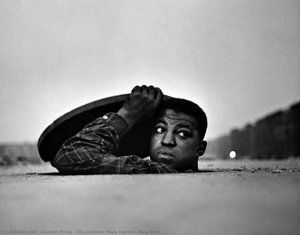
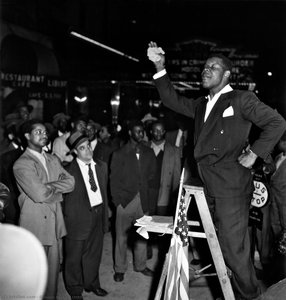
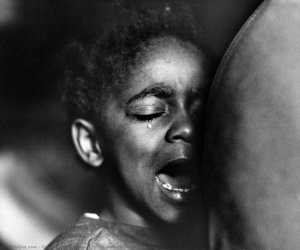
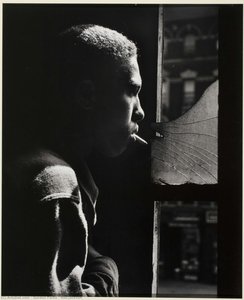
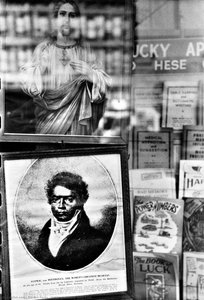
11Untitled, Harlem, New York (1948) de Gordon ParksUntitled, Harlem, New York1948 · The Gordon Parks Foundation 12The Fontenelles at the Poverty Board, Harlem, New York (1967) de Gordon ParksThe Fontenelles at the Poverty Board, Harlem, New York1967 · The Gordon Parks Foundation 13Bessie and Little Richard the Morning After She Scalded Her Husband, Harlem, New York (1967) de Gordon ParksBessie and Little Richard the Morning After She Scalded Her Husband, Harlem, New York1967 · The Gordon Parks Foundation 14The Invisible Man, Harlem, New York (1952) de Gordon ParksThe Invisible Man, Harlem, New York1952 · The Gordon Parks Foundation 15Soapbox Orator, Harlem, New York (1952) de Gordon ParksSoapbox Orator, Harlem, New York1952 · The Gordon Parks Foundation 16Bessie Fontenelle e Richard Escalão pelas Escadas, Harlem, Nova York (1967) de Gordon ParksBessie Fontenelle e Richard Escalão pelas Escadas, Harlem, Nova York1967 · The Gordon Parks Foundation 17Willie Causey and Family, Shady Grove, Alabama (1956) de Gordon ParksWillie Causey and Family, Shady Grove, Alabama1956 · The Gordon Parks Foundation 18Contact sheet R3, (1952) de Gordon ParksContact sheet R3,1952 · The Gordon Parks Foundation 19Contact sheet P5, (1952) de Gordon ParksContact sheet P5,1952 · The Gordon Parks Foundation 20Portrait of Paul Robeson (1942) de Gordon ParksPortrait of Paul Robeson1942 · Library of Congress 21Outside Looking In, Mobile, Alabama de Gordon ParksOutside Looking In, Mobile, AlabamaHigh Museum of Art 22Willie Causey, Jr., with Gun During Violence in Alabama, Shady Grove, Alabama (1956) de Gordon ParksWillie Causey, Jr., with Gun During Violence in Alabama, Shady Grove, Alabama1956 · The Gordon Parks Foundation 23Untitled, Harlem, New York (1948) de Gordon ParksUntitled, Harlem, New York1948 · The Gordon Parks Foundation 24Untitled, Harlem, New York (1952) de Gordon ParksUntitled, Harlem, New York1952 · The Gordon Parks Foundation 25Indian Herb Store, Harlem, New York (1952) de Gordon ParksIndian Herb Store, Harlem, New York1952 · The Gordon Parks Foundation 26Portrait of Mrs. Lucy Johnson (1942) de Gordon ParksPortrait of Mrs. Lucy Johnson1942 · SCAD Museum of Art 27Untitled, Harlem, New York (1948) de Gordon ParksUntitled, Harlem, New York1948 · The Gordon Parks Foundation 28Mrs. Ella Watson (1942) de Gordon ParksMrs. Ella Watson1942 · Library of Congress 29Untitled, Harlem, New York (1948) de Gordon ParksUntitled, Harlem, New York1948 · The Gordon Parks Foundation 30Untitled, Harlem, Nova York (1952) de Gordon ParksUntitled, Harlem, Nova York1952 · The Gordon Parks Foundation 31Untitled, Harlem, New York (1952) de Gordon ParksUntitled, Harlem, New York1952 · The Gordon Parks Foundation 32Family Crowds Around Open Oven for Warmth, Harlem, New York (1967) de Gordon ParksFamily Crowds Around Open Oven for Warmth, Harlem, New York1967 · The Gordon Parks Foundation 33Untitled, Harlem, New York (1952) de Gordon ParksUntitled, Harlem, New York1952 · The Gordon Parks Foundation 34Untitled, Harlem, New York (1952) de Gordon ParksUntitled, Harlem, New York1952 · The Gordon Parks Foundation 35Contact Sheet 655_R-I, (1948) de Gordon ParksContact Sheet 655_R-I,1948 · The Gordon Parks Foundation 36Untitled, Harlem, New York (1948) de Gordon ParksUntitled, Harlem, New York1948 · The Gordon Parks Foundation 37Untitled, Harlem, New York (1952) de Gordon ParksUntitled, Harlem, New York1952 · The Gordon Parks Foundation 38Untitled, Harlem, New York (1952) de Gordon ParksUntitled, Harlem, New York1952 · The Gordon Parks Foundation 39Department Store, Mobile, Alabama de Gordon ParksDepartment Store, Mobile, AlabamaHigh Museum of Art 40Harlem Neighborhood, Harlem, New York (1952) de Gordon ParksHarlem Neighborhood, Harlem, New York1952 · The Gordon Parks Foundation 41Emerging Man (1952) de Gordon ParksEmerging Man1952 · Nelson-Atkins Museum of Art 42Muhammad Ali Fights Henry Cooper in Highbury, London, England (1966) de Gordon ParksMuhammad Ali Fights Henry Cooper in Highbury, London, England1966 · The Gordon Parks Foundation 43Fontenelle Children Outside Their Harlem Tenement, Harlem, New York (1967) de Gordon ParksFontenelle Children Outside Their Harlem Tenement, Harlem, New York1967 · The Gordon Parks Foundation 44Untitled, Harlem, New York (1952) de Gordon ParksUntitled, Harlem, New York1952 · The Gordon Parks Foundation 45Contact Sheet R-10-1, (1948) de Gordon ParksContact Sheet R-10-1,1948 · The Gordon Parks Foundation 46Untitled, Harlem, New York (1952) de Gordon ParksUntitled, Harlem, New York1952 · The Gordon Parks Foundation 47Untitled, Harlem, New York (1948) de Gordon ParksUntitled, Harlem, New York1948 · The Gordon Parks Foundation 48Gang Member Graffitis a Wall, Harlem, New York (1948) de Gordon ParksGang Member Graffitis a Wall, Harlem, New York1948 · The Gordon Parks Foundation 49Untitled, Harlem, New York (1948) de Gordon ParksUntitled, Harlem, New York1948 · The Gordon Parks Foundation 50Untitled, Mobile, Alabama (1956) de Gordon ParksUntitled, Mobile, Alabama1956 · The Gordon Parks Foundation 51Untitled, Harlem, New York (1952) de Gordon ParksUntitled, Harlem, New York1952 · The Gordon Parks Foundation 52Untitled, Harlem, New York (1952) de Gordon ParksUntitled, Harlem, New York1952 · The Gordon Parks Foundation 53Window/Mysticism, Harlem, New York (1952) de Gordon ParksWindow/Mysticism, Harlem, New York1952 · The Gordon Parks Foundation 54Ellen Crying, Harlem, New York (1967) de Gordon ParksEllen Crying, Harlem, New York1967 · The Gordon Parks Foundation 55Red Jackson, Harlem, Nova York (1948) de Gordon ParksRed Jackson, Harlem, Nova York1948 · The Gordon Parks Foundation 56Untitled, Shady Grove, Alabama (1956) de Gordon ParksUntitled, Shady Grove, Alabama1956 · The Gordon Parks Foundation 57Store Front, Mobile, Alabama (1956) de Gordon ParksStore Front, Mobile, Alabama1956 · The Gordon Parks Foundation 58Noite Tumultuosa Harlem, Nova York (1948) de Gordon ParksNoite Tumultuosa Harlem, Nova York1948 · The Gordon Parks Foundation 59Red Jackson with Child, Harlem, New York (1948) de Gordon ParksRed Jackson with Child, Harlem, New York1948 · The Gordon Parks Foundation 60Muhammad Ali Interviewed by Reporters, London, England (1966) de Gordon ParksMuhammad Ali Interviewed by Reporters, London, England1966 · The Gordon Parks Foundation 61Untitled, Harlem, New York (1948) de Gordon ParksUntitled, Harlem, New York1948 · The Gordon Parks Foundation 62Red Jackson de Gordon ParksRed JacksonMuseu George Eastman 63Untitled, Shady Grove, Alabama (1956) de Gordon ParksUntitled, Shady Grove, Alabama1956 · The Gordon Parks Foundation 64Untitled, Harlem, New York (1967) de Gordon ParksUntitled, Harlem, New York1967 · The Gordon Parks Foundation 65Título Traduzido: Untitled, Harlem, Nova York (1948) de Gordon ParksTítulo Traduzido: Untitled, Harlem, Nova York1948 · The Gordon Parks Foundation 66O Homem Invisível (Harlem, Nova York) (1952) de Gordon ParksO Homem Invisível (Harlem, Nova York)1952 · The Gordon Parks Foundation 67Mr. and Mrs. Albert Thornton, Mobile, Alabama (1956) de Gordon ParksMr. and Mrs. Albert Thornton, Mobile, Alabama1956 · The Gordon Parks Foundation 68Ondria Tanner and Her Grandmother Window-shopping, Mobile, Alabama (1956) de Gordon ParksOndria Tanner and Her Grandmother Window-shopping, Mobile, Alabama1956 · The Gordon Parks Foundation 69Contact sheet R1, (1952) de Gordon ParksContact sheet R1,1952 · The Gordon Parks Foundation 70Untitled, Harlem, Nova York (1948) de Gordon ParksUntitled, Harlem, Nova York1948 · The Gordon Parks Foundation 71Contact sheet 665 C1, (1952) de Gordon ParksContact sheet 665 C1,1952 · The Gordon Parks Foundation 72Charles White (1943) de Gordon ParksCharles White1943 · The Kinsey African American Art - History Collection 73Negro Women In Her Bedroom (1942) de Gordon ParksNegro Women In Her Bedroom1942 · Library of Congress 74Untitled, Miami, Florida (1966) de Gordon ParksUntitled, Miami, Florida1966 · New Orleans Museum of Art 75Photographers from the Negro press (1942) de Gordon ParksPhotographers from the Negro press1942 · Library of Congress 76Children with Doll, Washington, D.C (1942) de Gordon ParksChildren with Doll, Washington, D.C1942 77Harlem Newsboy, Harlem, New York (1943) de Gordon ParksHarlem Newsboy, Harlem, New York1943 78Harlem Gang Wars (1948) de Gordon ParksHarlem Gang Wars1948 79Arrested, Metropolitan Baptist Church, Chicago (1953) de Gordon ParksArrested, Metropolitan Baptist Church, Chicago1953 80Muslim Rally (1963) de Gordon ParksMuslim Rally1963 81Black Muslim Rally, Harlem, New York (1963) de Gordon ParksBlack Muslim Rally, Harlem, New York1963 82Malcolm X Gives Speech at Rally, Harlem, New York (1963) de Gordon ParksMalcolm X Gives Speech at Rally, Harlem, New York1963 · Art Gallery of New South Wales 83Sem Título, Harlem, Nova York (1952) de Gordon ParksSem Título, Harlem, Nova York1952 · The Gordon Parks Foundation 84African American and White Soldiers aboard A Ship (1941) de Gordon ParksAfrican American and White Soldiers aboard A Ship1941 · Library of Congress 85Untitled, Alabama (1956) de Gordon ParksUntitled, Alabama1956 · The Gordon Parks Foundation 86Fulton Fish Market Hooker, New York (1943) de Gordon ParksFulton Fish Market Hooker, New York1943 87Airline Terminal, Atlanta, Georgia (1956) de Gordon ParksAirline Terminal, Atlanta, Georgia1956 · The Gordon Parks Foundation 88American Gothic, Washington, D.C. (1942) de Gordon ParksAmerican Gothic, Washington, D.C.1942

Pinturas famosas de Gordon Parks, período por período

Os temas que cativaram o olhar de Gordon Parks

Os quatro temas que mais se repetem nestas obras originais, cada um com o seu melhor exemplo.

Os museus que guardam os originais de Gordon Parks

Os 8 museus que detêm a maioria das pinturas desta página.

Museus Cidade Obras de Gordon Parks Pinturas desta lista
The Gordon Parks Foundation, PleasantvilleThe Gordon Parks Foundation Pleasantville 67 Muhammad Ali in Training, Miami Beach, Florida, Untitled, Harlem, New York, Contact sheet 111 R3,
Library of Congress, Washington, D.C.Library of Congress Washington, D.C. 5 Portrait of Paul Robeson, Mrs. Ella Watson, Negro Women In Her Bedroom
High Museum of Art, AtlantaHigh Museum of Art Atlanta 2 Outside Looking In, Mobile, Alabama, Department Store, Mobile, Alabama
SCAD Museum of Art, SavannahSCAD Museum of Art Savannah 1 Portrait of Mrs. Lucy Johnson
Nelson-Atkins Museum of Art, Kansas CityNelson-Atkins Museum of Art Kansas City 1 Emerging Man
Museu George Eastman, RochesterMuseu George Eastman Rochester 1 Red Jackson
The Kinsey African American Art - History Collection, Los AngelesThe Kinsey African American Art - History Collection Los Angeles 1 Charles White
New Orleans Museum of Art, New OrleansNew Orleans Museum of Art New Orleans 1 Untitled, Miami, Florida

Gordon Parks ao longo das décadas: uma obra original única para cada uma

Obras por década

Escolha uma década para ver a obra original que a define.

Pinturas de Gordon Parks: perguntas para a galeria

Qual é a obra mais famosa de Gordon Parks?Revelar a resposta

Muhammad Ali in Training, Miami Beach, Florida (1966), The Gordon Parks Foundation, Pleasantville. Untitled, Harlem, New York (1952) e Contact sheet 111 R3, (1952) vêm a seguir.

Com que idade Gordon Parks criou Muhammad Ali in Training, Miami Beach, Florida?Revelar a resposta

54 anos: Muhammad Ali in Training, Miami Beach, Florida data de 1966, e Gordon Parks nasceu em 1912.

Quais são as dez pinturas mais famosas de Gordon Parks?Revelar a resposta

Muhammad Ali in Training, Miami Beach, Florida, Untitled, Harlem, New York, Contact sheet 111 R3,, Red and Friends Hide in Shadows while they Scan Street for Rival Gangs, Harlem, New York, Untitled, Harlem, New York, Contact Sheet B1,, In-Home Barbershop, Shady Grove, Alabama, Untitled, Harlem, New York, Contato Folha 30_4 e Muhammad Ali, Miami Beach, Florida. O ranking acima apresenta o ano e o museu de cada uma.

Quantas obras de Gordon Parks são conhecidas?Revelar a resposta

Nosso catálogo contém 88 obras de Gordon Parks, datadas de 1941 a 1967.

Onde se pode ver os originais mais famosos de Gordon Parks?Revelar a resposta

Principalmente em The Gordon Parks Foundation (Pleasantville), Library of Congress (Washington, D.C.) e High Museum of Art (Atlanta). A tabela de museus acima lista todos eles.

Em que período Gordon Parks criou as suas pinturas mais conhecidas?Revelar a resposta

Em 1950s: 39 das 88 obras nesta página foram feitas então, sendo Untitled, Harlem, New York delas.

Qual pintura famosa de Gordon Parks é a mais antiga e qual é a mais recente?Revelar a resposta

Nesta página, a mais antiga é African American and White Soldiers aboard A Ship (1941) e a mais recente é The Fontenelles at the Poverty Board, Harlem, New York (1967).

Quais temas Gordon Parks preferia?Revelar a resposta

Harlem (34), Black and white (17) e Urban life (15), entre as 88 obras nesta página.

Com quais materiais Gordon Parks mais pintou?Revelar a resposta

Black and White Photography, para 22 das 88 obras nesta página.

A qual movimento pertence a obra de Gordon Parks?Revelar a resposta

Documentary photography surrealism, a julgar pelos originais nesta página.

Quais originais de Gordon Parks posso ver no The Gordon Parks Foundation?Revelar a resposta

Muhammad Ali in Training, Miami Beach, Florida, Untitled, Harlem, New York e Contact sheet 111 R3,: o The Gordon Parks Foundation, Pleasantville detém 67 das obras desta página.

Gordon Parks: um retrato do artista

Gordon Parks: Uma Vida em Imagens e Palavras

Nascido em Fort Scott, Kansas, em 1912, Gordon Roger Alexander Buchanan Parks emergiu como uma das vozes mais poderosas e influentes do século XX. Sua jornada, desde a infância marcada pela segregação racial até o reconhecimento internacional como fotógrafo, cineasta e escritor, é um testemunho da força do espírito humano e do poder transformador da arte. Parks não apenas documentou a realidade americana com uma precisão implacável, mas também a interpretou com uma sensibilidade poética que transcendeu as barreiras sociais e culturais.

A infância de Parks foi moldada pela dura realidade do racismo no sul dos Estados Unidos. Essas experiências iniciais o impulsionaram a buscar formas de expressar sua visão única do mundo, inicialmente através da música e, posteriormente, da fotografia. Autodidata, ele dominou as técnicas fotográficas com uma paixão inabalável, utilizando a câmera como um instrumento para desafiar preconceitos e dar voz aos marginalizados. Seu trabalho inicial em Chicago, fotografando retratos de moda para revistas locais, refinou suas habilidades e o preparou para os desafios que viriam.

O Olhar Documental: A Voz dos Sem Voz

A ascensão meteórica de Parks ao reconhecimento nacional começou com seu trabalho para a Farm Security Administration (FSA) durante a década de 1940. Através deste projeto governamental, ele documentou as condições de vida em áreas rurais do país, focando especialmente na pobreza e nas dificuldades enfrentadas pela população afro-americana. Suas imagens, cruas e honestas, capturaram a dignidade e a resiliência das pessoas que encontrou, desafiando os estereótipos raciais prevalecentes na época. A colaboração com a revista Life, onde se tornou o primeiro fotógrafo negro a trabalhar regularmente, ampliou ainda mais seu alcance e impacto, permitindo-lhe abordar temas sociais complexos através de ensaios fotográficos extensos.

Sua série "Harlem Gang Wars" (1948), por exemplo, chocou o público com sua representação realista da violência juvenil em comunidades urbanas. Outras obras icônicas, como “American Gothic” reimaginada com uma família negra, subvertiam as convenções sociais e questionavam a noção de identidade americana. Parks não se limitava a registrar fatos; ele buscava revelar a humanidade por trás das estatísticas, dando voz aos que eram frequentemente ignorados ou silenciados pela sociedade.

Da Imagem ao Movimento: A Transição para o Cinema

A paixão de Parks pela narrativa visual se estendeu além da fotografia, levando-o a explorar o cinema como uma nova forma de expressão. Em 1969, ele fez sua estreia na direção com "The Learning Tree", um filme semiautobiográfico que retratava as dificuldades e os triunfos de uma família negra no Kansas rural durante a década de 1920. O filme foi inovador por abordar temas como racismo, pobreza e violência com uma honestidade rara para a época.
Seu trabalho mais celebrado no cinema é, sem dúvida, "Shaft" (1971), um marco do gênero blaxploitation que celebrou a cultura negra urbana e apresentou um herói afro-americano forte e independente. A trilha sonora icônica de Isaac Hayes contribuiu para o sucesso estrondoso do filme, tornando-o um fenômeno cultural. Parks continuou a dirigir filmes ao longo das décadas seguintes, explorando temas como a história da escravidão ("Solomon Northup's Odyssey") e a vida de figuras importantes como Martin Luther King Jr. (“Martin”).

Um Legado Duradouro

Gordon Parks faleceu em 2006, deixando para trás um legado artístico vasto e multifacetado. Sua obra continua a inspirar artistas e ativistas em todo o mundo, lembrando-nos do poder da arte como ferramenta de transformação social. Seu trabalho fotográfico está presente em importantes coleções museológicas, como o MoMA, e sua influência pode ser vista na obra de inúmeros cineastas e fotógrafos contemporâneos.

Mais do que um artista talentoso, Gordon Parks foi um visionário que utilizou sua arte para desafiar preconceitos, promover a justiça social e celebrar a beleza da diversidade humana. Sua vida e obra são um testemunho da capacidade da arte de transcender as barreiras sociais e culturais, unindo as pessoas em torno de valores universais como a esperança, a dignidade e o amor.

Prêmios e Reconhecimentos

  • National Medal of Arts (1988): Um dos mais altos prêmios concedidos pelo governo americano às artes.
  • Spingarn Medal (1972): Concedido pela NAACP por excelência em serviço à raça.
  • PGA Oscar Micheaux Award (1993): Reconhecimento por sua contribuição ao cinema afro-americano.