Retrato de Frederic Remington

As 100 Pinturas Mais Famosas de Frederic Remington, uma Seleção da Galeria

Atualizado em Novembro 2026 · classificado pela nossa pontuação de popularidade (pesquisas, visitas e pedidos de cada obra) · 346 obras de Frederic Remington em nosso catálogo

Em resumo

De todas as obras originais deixadas por Frederic Remington, a mais famosa é The Old Stage-Coach of the Plains (1901), da coleção do Amon Carter Museum of American Art, em Fort Worth. Logo atrás vêm Coming Through the Rye (1902) e The Broncho Buster (1895). Nosso catálogo contém 346 obras de Frederic Remington; a galeria preservou as 100 que o mundo mais admira, cada uma exibida com sua data, seu museu e sua história.

1861 – 1909, Canton Mais obras: Amon Carter Museum of American Art

As 10 principais pinturas de Frederic Remington: a escolha da galeria

1
The Old Stage-Coach of the Plains (1901) de Frederic Remington

The Old Stage-Coach of the Plains

1901 · Oil On Canvas · Amon Carter Museum of American Art, Fort Worth

In the quiet, silvered shadows of the American West, Frederic Remington’s 1901 masterpiece, The Old Stage-Coach of the Plains, breathes life into a vanishing era. This is not merely a painting of a journey; it is an immersive nocturnal experience that captures the very heartbeat of the frontier. As the eye meets the canvas, one is immediately transported to a desolate, moonlit landscape where the struggle for progress is etched…

2
Coming Through the Rye (1902) de Frederic Remington

Coming Through the Rye

1902 · Bronze · Amon Carter Museum of American Art, Fort Worth

In the heart of Frederic Remington’s prolific career lies a masterpiece that transcends mere sculpture to become a visceral embodiment of the American West. "Coming Through the Rye," created in 1902, is far more than a depiction of movement; it is a testament to courage, resilience, and the relentless pursuit of survival against a formidable landscape. As viewers encounter this bronze work, they are immediately swept into a pivotal scene…

3
The Broncho Buster (1895) de Frederic Remington

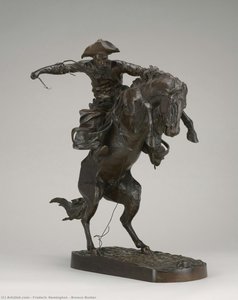
The Broncho Buster

1895 · Bronze · Amon Carter Museum of American Art, Fort Worth

In the heart of the American frontier, where the dust of the plains meets the unyielding spirit of the pioneer, lies the essence of Frederic Remington’s most enduring masterpiece, The Broncho Buster. Sculpted in 1895 and brought to life through the medium of bronze, this work is far more than a mere depiction of a rodeo event; it is a visceral capture of a fleeting moment of pure, unadulterated struggle.…

4
The Trooper (1891) de Frederic Remington

The Trooper

1891 · Oil On Canvas

To gaze upon Frederic Remington's "The Trooper" is not merely to observe a painting; it is to step directly into the heart of the American West at the turn of the twentieth century. This oil on canvas, executed in 1891, captures a moment suspended between action and reflection—a tableau vivant brimming with untamed energy. The scene unfolds under an imagined vast sky, depicting a lone rider astride his powerful horse…

5
The Charge of the Rough Riders (1898) de Frederic Remington

The Charge of the Rough Riders

1898 · Acrylic On Canvas · Frederic Remington Art Museum, Ogdensburg

Frederic Remington’s “The Charge of the Rough Riders” isn't merely a depiction of a pivotal moment in American history; it’s an immersive experience rendered in oil on canvas, capturing the raw energy and determination of Theodore Roosevelt’s expedition to Cuba during the Spanish-American War. Painted in 1898, this artwork transcends simple chronology, becoming a testament to Remington's masterful ability to translate observation into emotive visual storytelling.

6
Hunter’s Supper de Frederic Remington

Hunter’s Supper

Oil On Canvas · National Cowboy - Western Heritage Museum, Oklahoma City

To gaze upon Frederic Remington's depiction of Hunter’s Supper is to be instantly transported across the vast, untamed expanse of the American West. This painting is far more than a mere record of men gathered after a day of pursuit; it is an immersion into the very essence of masculine fellowship and survival under the immense canvas of the wilderness. The central focus, naturally, is the campfire—a beacon of flickering…

7
Fight for the Waterhole (1903) de Frederic Remington

Fight for the Waterhole

1903 · Oil On Canvas · Museum of Fine Arts, Houston

We are looking at Fight for the Waterhole, a work by Frederic Remington. Created in 1903, this painting captures a moment of intense struggle within the American West. The scene depicts cowboys and cattle gathered around a small water source, a vital necessity in such an arid landscape. It is a depiction of conflict, centered on the desperate need for a scarce resource.

8
Trooper of the Plains (1909) de Frederic Remington

Trooper of the Plains

1909 · Sculpture Bronze · Frederic Remington Art Museum, Ogdensburg

Frederic Remington’s “Trooper of the Plains,” captured in this evocative black and white photograph, isn’t merely a depiction of a cowboy on horseback; it’s a potent distillation of the American West itself – a vanishing world rendered with breathtaking realism and imbued with a profound sense of adventure. Created in 1909, during a pivotal moment in the nation's fascination with its frontier heritage, this sculpture, and now faithfully reproduced, embodies…

9
The Grass Fire (1908) de Frederic Remington

The Grass Fire

1908 · Acrylic On Canvas · Amon Carter Museum of American Art, Fort Worth

Frederic Remington's "The Grass Fire," painted in 1908, is more than just a depiction of Native Americans on horseback; it’s a poignant snapshot of a vanishing era and a testament to an artist’s profound engagement with the American West. Measuring 101 x 68 cm, this artwork captures a moment of raw energy and quiet resilience as a group of riders navigate a landscape consumed by wildfire – a visual metaphor…

10
The Broncho Buster (1905) de Frederic Remington

The Broncho Buster

1905 · Bronze · Amon Carter Museum of American Art, Fort Worth

In the pantheon of American iconography, few images possess the raw, kinetic energy found in Frederic Remington’s The Broncho Buster. Created at the height of the late nineteenth century, this masterful bronze sculpture serves as a visceral window into the soul of the American West. It is not merely a depiction of a rider and a horse; it is a frozen moment of high-stakes drama, capturing the precise second where…

A seleção de Frederic Remington continua, de 11 a 100

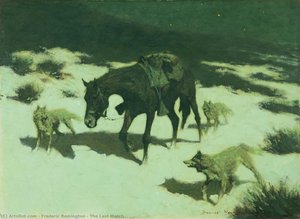
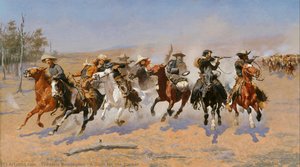
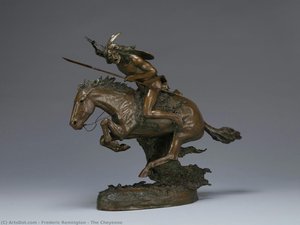
11The Grass Fire (1908) de Frederic RemingtonThe Grass Fire1908 · Amon Carter Museum of American Art 12Historians of the Tribe (1890) de Frederic RemingtonHistorians of the Tribe1890 · Art Institute of Chicago 13The Bronco Buster (1895) de Frederic RemingtonThe Bronco Buster1895 · Grohmann Museum 14Coming Through the Rye (1902) de Frederic RemingtonComing Through the Rye1902 · Frederic Remington Art Museum 15The Stampede (1910) de Frederic RemingtonThe Stampede1910 · Frederic Remington Art Museum 16The Broncho Buster (1895) de Frederic RemingtonThe Broncho Buster1895 · Frederic Remington Art Museum 17The Broncho Buster (1910) de Frederic RemingtonThe Broncho Buster1910 · Metropolitan Museum of Art 18Através da Fumaça Saltou o Soldado Audaz (1897) de Frederic RemingtonAtravés da Fumaça Saltou o Soldado Audaz1897 · Amon Carter Museum of American Art 19The Wicked Pony (1898) de Frederic RemingtonThe Wicked Pony1898 · Amon Carter Museum of American Art 20Cavalry in an Arizona Sand-Storm (1889) de Frederic RemingtonCavalry in an Arizona Sand-Storm1889 · Amon Carter Museum of American Art 21The Long-Horn Cattle Sign (1908) de Frederic RemingtonThe Long-Horn Cattle Sign1908 · Amon Carter Museum of American Art 22Bronco Buster (1895) de Frederic RemingtonBronco Buster1895 · Sagamore Hill National Historic Site 23The Parley (1903) de Frederic RemingtonThe Parley1903 · Museu Thyssen-Bornemisza 24The Broncho Buster (1895) de Frederic RemingtonThe Broncho Buster1895 · Amon Carter Museum of American Art 25The Rattlesnake (1905) de Frederic RemingtonThe Rattlesnake1905 · Amon Carter Museum of American Art 26Trooper of the Plains 1868 (1909) de Frederic RemingtonTrooper of the Plains 18681909 · Amon Carter Museum of American Art 27The Rattlesnake (1908) de Frederic RemingtonThe Rattlesnake1908 · Amon Carter Museum of American Art 28The Fall of the Cowboy (1895) de Frederic RemingtonThe Fall of the Cowboy1895 · Amon Carter Museum of American Art 29The Last March (1906) de Frederic RemingtonThe Last March1906 · Frederic Remington Art Museum 30The Smoke Signal (1908) de Frederic RemingtonThe Smoke Signal1908 · Amon Carter Museum of American Art 31Eph on the Trail (1880) de Frederic RemingtonEph on the Trail1880 · Frederic Remington Art Museum 32Fight for the Water Hole (1903) de Frederic RemingtonFight for the Water Hole1903 · Museum of Fine Arts 33Aiding a Comrade (1890) de Frederic RemingtonAiding a Comrade1890 · Museum of Fine Arts 34The Pursuit (1896) de Frederic RemingtonThe Pursuit1896 · Virginia Museum of Fine Arts 35Cavalryman of the Line, Mexico (1889) de Frederic RemingtonCavalryman of the Line, Mexico1889 · Amon Carter Museum of American Art 36An Indian Trapper (1889) de Frederic RemingtonAn Indian Trapper1889 · Amon Carter Museum of American Art 37Buffalo Hunter Spitting a Bullet into a Gun (1892) de Frederic RemingtonBuffalo Hunter Spitting a Bullet into a Gun1892 · Frederic Remington Art Museum 38A Reconnaissance (1902) de Frederic RemingtonA Reconnaissance1902 · Amon Carter Museum of American Art 39The Wounded Bunkie (1896) de Frederic RemingtonThe Wounded Bunkie1896 · Amon Carter Museum of American Art 40The Cowboy (1902) de Frederic RemingtonThe Cowboy1902 · Amon Carter Museum of American Art 41The Bronco Buster de Frederic RemingtonThe Bronco BusterMuseu de Young 42A Dash for the Timber (1889) de Frederic RemingtonA Dash for the Timber1889 · Amon Carter Museum of American Art 43Modern Comanche (1890) de Frederic RemingtonModern Comanche1890 44Mounted Cowboy in Chaps with Race Horse (1908) de Frederic RemingtonMounted Cowboy in Chaps with Race Horse1908 45A Dash for the Timber (1889) de Frederic RemingtonA Dash for the Timber1889 · Amon Carter Museum of American Art 46Ridden Down (1905) de Frederic RemingtonRidden Down1905 · Amon Carter Museum of American Art 47The Old Stage Coach of the Plains (1901) de Frederic RemingtonThe Old Stage Coach of the Plains1901 · Amon Carter Museum of American Art 48Moose Head (1889) de Frederic RemingtonMoose Head1889 · Frederic Remington Art Museum 49The Cheyenne (1901) de Frederic RemingtonThe Cheyenne1901 · Denver Art Museum 50He Lay Where He Had Been Jerked, Still as a Log (also known as Jerked Down) (1893) de Frederic RemingtonHe Lay Where He Had Been Jerked, Still as a Log (also known as Jerked Down)1893 51Bronco Buster de Frederic RemingtonBronco BusterBaltimore Museum of Art 52Os Índios Crow Disparando para a Agência (1887) de Frederic RemingtonOs Índios Crow Disparando para a Agência1887 · Amon Carter Museum of American Art 53The Stampede (1909) de Frederic RemingtonThe Stampede1909 · Amon Carter Museum of American Art 54Studio at Ingleneuk (1907) de Frederic RemingtonStudio at Ingleneuk1907 · Frederic Remington Art Museum 55Untitled (posssibly The Cigarette) (1908) de Frederic RemingtonUntitled (posssibly The Cigarette)1908 · Frederic Remington Art Museum 56A Comanche (1888) de Frederic RemingtonA Comanche1888 · Frederic Remington Art Museum 57The Cheyenne (1906) de Frederic RemingtonThe Cheyenne1906 · Frederic Remington Art Museum 58Polo cast no. 2 (1904) de Frederic RemingtonPolo cast no. 21904 · Frederic Remington Art Museum 59Ridden Down (1906) de Frederic RemingtonRidden Down1906 · Amon Carter Museum of American Art 60Hasty Intrenchment Drill In the United States Army (1896) de Frederic RemingtonHasty Intrenchment Drill In the United States Army1896 · Briscoe Western Art Museum 61A Cavalryman (1892) de Frederic RemingtonA Cavalryman1892 · Amon Carter Museum of American Art 62Packing and Paddling in the Adirondacks (1880) de Frederic RemingtonPacking and Paddling in the Adirondacks1880 · Frederic Remington Art Museum 63His First Lesson (1903) de Frederic RemingtonHis First Lesson1903 · Amon Carter Museum of American Art 64A Hunting Outfit (1880) de Frederic RemingtonA Hunting Outfit1880 · Frederic Remington Art Museum 65The Mountain Man (1903) de Frederic RemingtonThe Mountain Man1903 · Amon Carter Museum of American Art 66A Cavalryman's Breakfast on the Plains (1892) de Frederic RemingtonA Cavalryman's Breakfast on the Plains1892 · Amon Carter Museum of American Art 67The Infantry Soldier (1901) de Frederic RemingtonThe Infantry Soldier1901 · Amon Carter Museum of American Art 68The Last of His Race (also known as Vanishing American) (1908) de Frederic RemingtonThe Last of His Race (also known as Vanishing American)1908 · Yale University Art Gallery 69I Will Tell the White Man (1900) de Frederic RemingtonI Will Tell the White Man1900 · Art Institute of Chicago 70By Putting a Carbine Bullet Through Its Brain (1887) de Frederic RemingtonBy Putting a Carbine Bullet Through Its Brain1887 · Amon Carter Museum of American Art 71Lieutenant Casey Commandant of Cheyenne Scouts (1890) de Frederic RemingtonLieutenant Casey Commandant of Cheyenne Scouts1890 · Frederic Remington Art Museum 72The Fall of the Cowboy (1895) de Frederic RemingtonThe Fall of the Cowboy1895 · Amon Carter Museum of American Art 73Pony Tracks in the Buffalo Trails (1904) de Frederic RemingtonPony Tracks in the Buffalo Trails1904 · Amon Carter Museum of American Art 74Guard of the Whiskey Trader (1906) de Frederic RemingtonGuard of the Whiskey Trader1906 75Ninth Cavalry Colored Troops on Washing Duty in the Golf (1898) de Frederic RemingtonNinth Cavalry Colored Troops on Washing Duty in the Golf1898 · Frederic Remington Art Museum 76The Cowboy (1902) de Frederic RemingtonThe Cowboy1902 · Amon Carter Museum of American Art 77an appeal for justice de Frederic Remingtonan appeal for justice 78A Pack Train (1909) de Frederic RemingtonA Pack Train1909 79One of the Boys (1887) de Frederic RemingtonOne of the Boys1887 · Frederic Remington Art Museum 80The Cheyenne Type de Frederic RemingtonThe Cheyenne Type 81Unhorsed de Frederic RemingtonUnhorsed 82Against the Sunset de Frederic RemingtonAgainst the Sunset 83Paddling the Wounded British Officer (1897) de Frederic RemingtonPaddling the Wounded British Officer1897 · Art Institute of Chicago 84dragon (1847) de Frederic Remingtondragon1847 85a scout (1868) de Frederic Remingtona scout1868 86Touchdown, Yale vs. Princeton, Thanksgiving Day, Nov. 27, 1890, Yale 32, Princeton 0 (1890) de Frederic RemingtonTouchdown, Yale vs. Princeton, Thanksgiving Day, Nov. 27, 1890, Yale 32, Princeton 01890 · Yale University Art Gallery 87Roasting the Christmas Beef in a Cavalry Camp (1892) de Frederic RemingtonRoasting the Christmas Beef in a Cavalry Camp1892 · Yale University Art Gallery 88A Texas Pony (1889) de Frederic RemingtonA Texas Pony1889 · Yale University Art Gallery 89Scouts Climbing a Mountain (1891) de Frederic RemingtonScouts Climbing a Mountain1891 · Museum of Fine Arts 90The Lookout (1887) de Frederic RemingtonThe Lookout1887 · Museum of Fine Arts 91Pueblo Indian Village (1889) de Frederic RemingtonPueblo Indian Village1889 · Museum of Fine Arts 92Mexican Infantry "On the March" (1890) de Frederic RemingtonMexican Infantry "On the March"1890 · Museu de Belas Artes de Boston 93The Advance Guard (1888) de Frederic RemingtonThe Advance Guard1888 · Smithsonian American Art Museum 94A Mexican Vaquero (1890) de Frederic RemingtonA Mexican Vaquero1890 · Art Institute of Chicago 95The Mexican Major (1889) de Frederic RemingtonThe Mexican Major1889 · Art Institute of Chicago 96Mounted Indian Scout (1891) de Frederic RemingtonMounted Indian Scout1891 · Cincinnati Art Museum 97Tom Kicked Away the Stirrups and Grasped the Low Branch of a Live Oak Tree (1888) de Frederic RemingtonTom Kicked Away the Stirrups and Grasped the Low Branch of a Live Oak Tree1888 98Cavalry in an Arizona Sandstorm (1889) de Frederic RemingtonCavalry in an Arizona Sandstorm1889 99The Moose Hunt (1890) de Frederic RemingtonThe Moose Hunt1890 100Mandan Initiation Ceremony (the Sundance) (1888) de Frederic RemingtonMandan Initiation Ceremony (the Sundance)1888

Pinturas famosas de Frederic Remington, período por período

Os temas que cativaram o olhar de Frederic Remington

Os quatro temas que mais se repetem nestas obras originais, cada um com o seu melhor exemplo.

Os museus que guardam os originais de Frederic Remington

Os 8 museus que detêm a maioria das pinturas desta página.

Museus Cidade Obras de Frederic Remington Pinturas desta lista
Amon Carter Museum of American Art, Fort WorthAmon Carter Museum of American Art Fort Worth 45 The Old Stage-Coach of the Plains, Coming Through the Rye, The Broncho Buster
Frederic Remington Art Museum, OgdensburgFrederic Remington Art Museum Ogdensburg 43 The Charge of the Rough Riders, Trooper of the Plains, Coming Through the Rye
Museum of Fine Arts, HoustonMuseum of Fine Arts Houston 31 Fight for the Waterhole, Fight for the Water Hole, Aiding a Comrade
Art Institute of Chicago, ChicagoArt Institute of Chicago Chicago 16 Historians of the Tribe, I Will Tell the White Man, Paddling the Wounded British Officer
Yale University Art Gallery, New HavenYale University Art Gallery New Haven 5 Touchdown, Yale vs. Princeton, Thanksgiving Day, Nov. 27, 1890, Yale 32, Princeton 0, Roasting the Christmas Beef in a Cavalry Camp, A Texas Pony
Metropolitan Museum of Art, Nova YorkMetropolitan Museum of Art Nova York 6 The Broncho Buster
National Cowboy - Western Heritage Museum, Oklahoma CityNational Cowboy - Western Heritage Museum Oklahoma City 2 Hunter’s Supper
Museu Thyssen-Bornemisza, MadridMuseu Thyssen-Bornemisza Madrid 2 The Parley

Frederic Remington década a década: a obra original que define cada uma

Obras por década

Escolha uma década para ver a obra original que a define.

Perguntas de colecionadores sobre as pinturas de Frederic Remington

Por qual obra Frederic Remington é mais conhecido(a)?Revelar a resposta

The Old Stage-Coach of the Plains (1901), Amon Carter Museum of American Art, Fort Worth. Coming Through the Rye (1902) e The Broncho Buster (1895) vêm a seguir.

Qual era a idade de Frederic Remington quando The Old Stage-Coach of the Plains foi feita?Revelar a resposta

40 anos: The Old Stage-Coach of the Plains data de 1901, e Frederic Remington nasceu em 1861.

Quais são as dez pinturas mais famosas de Frederic Remington?Revelar a resposta

The Old Stage-Coach of the Plains, Coming Through the Rye, The Broncho Buster, The Trooper, The Charge of the Rough Riders, Hunter’s Supper, Fight for the Waterhole, Trooper of the Plains, The Grass Fire e The Broncho Buster. O ranking acima apresenta o ano e o museu de cada uma.

Quantas pinturas Frederic Remington deixou?Revelar a resposta

Nosso catálogo contém 346 obras de Frederic Remington, datadas de 1880 a 1909.

Em quais museus estão expostas as obras-primas de Frederic Remington?Revelar a resposta

Principalmente em Amon Carter Museum of American Art (Fort Worth), Frederic Remington Art Museum (Ogdensburg) e Museum of Fine Arts (Houston). A tabela de museus acima lista todos eles.

Em que anos Frederic Remington pintou as suas obras mais famosas?Revelar a resposta

Em 1900s: 37 das 100 obras nesta página foram feitas então, sendo The Old Stage-Coach of the Plains delas.

Quais são as primeiras e as últimas obras originais famosas de Frederic Remington?Revelar a resposta

Nesta página, a mais antiga é Eph on the Trail (1880) e a mais recente é Trooper of the Plains (1909).

Quais temas Frederic Remington escolheu com mais frequência?Revelar a resposta

American west (34), Horseback riding (25) e Cowboy (21), entre as 100 obras nesta página.

Qual técnica Frederic Remington mais utilizou?Revelar a resposta

Oil On Canvas, para 50 das 100 obras nesta página.

Quais obras de Frederic Remington estão expostas no Amon Carter Museum of American Art?Revelar a resposta

The Old Stage-Coach of the Plains, Coming Through the Rye e The Broncho Buster: o Amon Carter Museum of American Art, Fort Worth detém 37 das obras desta página.

Frederic Remington: vida e obra

A Chronicler of the Vanishing West: The Life and Art of Frederic Remington

Frederic Sackrider Remington, nascido em Canton, Nova York, em 4 de outubro de 1861, não era um produto do Velho Oeste que tão vívidamente retratava; ao contrário, ele era um oriental que forjou sua identidade artística através da fascinação e estudo dedicado. Sua linhagem sugeria uma vida distante das trilhas poeirentas e cargas de cavalaria – ancestralidade francesa basca misturada com raízes republicanas do Novo Inglês, um pai que era coronel e editor de jornais da Guerra Civil, e conexões com a famosa Remington Arms Dynasty através de parentes distantes. No entanto, uma exposição precoce a temas militares, combinada com um espírito inquieto e um olhar aguçado para a narrativa, o levaram a trilhar um caminho em direção a se tornar, sem dúvida, o artista mais reconhecível do Oeste americano. Sua infância mudou para Bloomington, Illinois, depois de volta a Canton e finalmente Ogdensburg, Nova York, mas sua imaginação permaneceu cativada por contos de vida na fronteira. Embora inicialmente direcionado a uma educação militar no Vermont Episcopal Institute, o chamado real de Remington não estava em seguir ordens, mas em observar e interpretar o mundo ao seu redor através da arte. Um breve período na Universidade de Yale confirmou isso; futebol e esboço tinham muito mais apelo do que empreendimentos acadêmicos formais.

Do Ilustrador ao Pintor: Forjando uma Visão Artística

A jornada artística de Remington não começou com telas grandiosas, mas sim com tinta e papel. Seu primeiro trabalho publicado, um desenho para o *Yale Courant*, sinalizou uma aptidão precoce para capturar ação e narrativa. Uma viagem crucial a Montana em 1881 acendeu sua obsessão vitalícia pelo Oeste. Isso não era apenas um olhar de turista; Remington buscou se imergir na cultura, observando cowboys, nativos americanos e o próprio cenário. Inicialmente tentou empreendimentos de pecuária e mineração, mas estes se mostraram infrutíferos, liberando-o para se dedicar totalmente à arte. Retornando ao Leste, ele rapidamente se estabeleceu como um ilustrador para revistas como *Harper’s Weekly* e *Collier’s*, suas representações dinâmicas de cenas do Oeste cativaram um público nacional ávido por histórias da fronteira. Esses desenhos não eram simplesmente reportagens; eles estavam imbuídos de drama, energia e uma visão romântica do Oeste que ressoou profundamente na imaginação pública. Foi através deste trabalho que Remington aprimorou suas habilidades em composição, capturando movimento e transmitindo emoção – qualidades que mais tarde definiriam seus quadros. Ele recebeu treinamento artístico limitado além de algumas aulas de desenho na Yale e um breve período na Art Students League, desenvolvendo em vez disso um estilo distinto caracterizado por pinceladas enérgicas, cores ousadas e foco no realismo combinado com o charme dramático.

Capturando um Mundo Desaparecendo: Temas e Estilo

A arte de Remington está inextricavelmente ligada a um momento específico na história americana – o crepúsculo do Velho Oeste. Seus quadros são povoados por figuras icônicas: cowboys robustos dirigindo gado, nativos americanos estoicos confrontando a deslocação e soldados da cavalaria dos EUA envolvidos tanto em batalhas heroicas quanto em trágicas disputas. Ele não hesitou em retratar as duras realidades da vida na fronteira, mas sua obra muitas vezes inclina-se para uma representação romântica, enfatizando coragem, aventura e o choque de culturas. Sua arte não é simplesmente um documento histórico; são narrativas evocativas que exploram temas de heroísmo, perda e a marcha inevitável do progresso. O estilo de Remington evoluiu ao longo do tempo, movendo-se de representações mais apertadas e acadêmicas para pinceladas mais soltas e expressivas. Ele era um mestre em capturar movimento – cavalos galopando pelos campos, cowboys lutando com bois, soldados avançando em batalha. *Ele frequentemente empregava esboços rápidos e fotografias como material de referência, mas sua arte sempre transcendia a mera imitação, imbuída de sua própria visão única e intensidade emocional.* Quadros notáveis ​​como “My Ranch”, “Waiting in the Moonlight”, “Ridden Down” (1905) e “The Long-Horn Cattle Sign” (1908) exemplificam sua capacidade de capturar tanto a grandiosidade quanto a vulnerabilidade do Oeste americano.

Influências e Legado

Frederic Remington morreu inesperadamente em 1909, aos 48 anos, deixando para trás uma vasta obra que continua a cativar o público hoje. Seu impacto na arte ocidental é inegável; ele não apenas retratou o Oeste, mas *definiu*-o para gerações de americanos. Ele estabeleceu uma linguagem visual para a fronteira – uma iconografia de cowboys, nativos americanos e soldados da cavalaria que se tornou profundamente enraizada na imaginação popular.
  • Sua obra inspirou inúmeros outros artistas, incluindo N.C. Wyeth e Zane Grey.
  • O Museu de Arte Remington em Ogdensburg, Nova York, é um testemunho de sua herança duradoura, preservando uma extensa coleção de suas pinturas, esculturas e materiais arquivais.
  • Sua arte continua a ser exibida em importantes museus nos Estados Unidos, incluindo o Metropolitan Museum of Art e o Amon Carter Museum of American Art.
As representações dele, embora às vezes criticadas por sua visão romântica do Oeste, oferecem um vislumbre valioso de uma era crucial na história americana. Ele capturou não apenas o que *era*, mas também o que as pessoas *acreditavam* sobre o Oeste – seus mitos, suas lendas e seu apelo duradouro. Ele permanece um símbolo poderoso do espírito americano - um cronista de um mundo desaparecendo que transformou-o em uma herança artística duradoura.