American Regionalism” · 1905
Ridden Down (Frederic Remington, 1905)
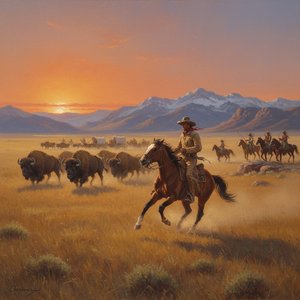
Frederic Remington (1861–1909) criou Ridden Down. Data de 1905. Pertence ao movimento American Regionalism”. É feito em Oil On Canvas. Está conservada no Amon Carter Museum of American Art, em Fort Worth, Estados Unidos da América.
- 1905
- Oil On Canvas
- Amon Carter Museum of American Art, Fort Worth

 Visualizar na parede

 Pintura a Óleo Feita à Mão
 Compartilhar
 Compartilhar
 Ficha técnica


 Baixar imagem
 Semelhantes
 Raio X
 Ver diaporama
 Perguntas e Respostas

 Estatísticas
Ridden Down, em resumo
- Título
- Ridden Down
- Artista
- Frederic Remington (1861–1909)
- Artista nascido em
- Canton, Estados Unidos
- Data
- 1905
- Técnica
- Oil On Canvas
- Onde ver
- Amon Carter Museum of American Art, Fort Worth, Estados Unidos da América
- Movimento
- American Regionalism”
- Tema
- american west, native american, horseback riding, desert landscape, remington art, western theme
O que Ridden Down retrata?
A Lone Figure Against the Vastness: Frederic Remington’s “Ridden Down”
Frederic Remington's "Ridden Down," painted in 1905, isn’t merely a depiction of cowboys and horses; it’s a profound meditation on solitude, resilience, and the enduring spirit of the American West. This oil-on-canvas masterpiece, currently residing within the Amon Carter Museum of American Art in Fort Worth, Texas, captures a pivotal moment – a lone Native American rider silhouetted against an expansive, undulating sand dune landscape under a brilliant, cloudless sky. Remington, a master of portraying the frontier, expertly blends realism with an impressionistic sensibility, creating an image that simultaneously feels immediate and deeply symbolic.
The painting’s composition immediately draws the eye to the central figures: a man, clad in a simple green shirt, riding a powerful mustang. The horse is positioned behind him, its head lowered as if acknowledging the immensity of the terrain. Remington skillfully employs horizontal lines created by the towering sand dunes, which dominate the scene and establish a sense of overwhelming scale. These sweeping forms contrast sharply with the verticality of the rider and horse, emphasizing their vulnerability against the backdrop of nature’s grandeur. Two birds soar high above, adding a touch of fleeting beauty to this otherwise stark landscape – perhaps representing freedom or a distant hope.
The Brushstroke and Palette: A Window into Remington's Technique
Remington’s technique is immediately recognizable—bold, expressive brushstrokes that convey both the physicality of the scene and an underlying sense of movement. He doesn’t shy away from visible texture; the sand dunes are rendered with a rough, grainy quality, while the horse’s coat appears almost sculpted by the artist's hand. The color palette is dominated by warm yellows and ochres, reflecting the sun-baked earth and creating a feeling of intense heat. Cool blues in the sky provide a striking contrast, highlighting the vastness of the space and adding depth to the composition. Remington masterfully uses light and shadow to sculpt the forms, lending them a remarkable three-dimensionality.
The painting’s dynamic energy is further enhanced by his use of color—a vibrant, almost feverish application that captures the intensity of the desert environment. Notice how he subtly shifts tones within the sand dunes, suggesting variations in texture and depth. This attention to detail, combined with his confident brushwork, elevates “Ridden Down” beyond a simple landscape painting; it becomes a visceral experience for the viewer.
Symbolism and Context: A Portrait of the West
"Ridden Down" is more than just a visual record of the American West; it’s imbued with layers of symbolic meaning. The lone rider, often interpreted as a Native American figure, embodies themes of survival, adaptation, and resilience in the face of an increasingly encroaching civilization. The posture of the horse—lowered head, steady gait—suggests both respect for the land and a quiet determination to endure. Considering Remington’s own career, which coincided with a period of significant change and displacement for Native American communities, the painting can be viewed as a poignant commentary on this historical context.
Painted in 1905, “Ridden Down” reflects the waning days of the frontier era. Remington’s work often depicted scenes of cowboys, Indians, and the wild west—a romanticized vision that captured the imagination of a nation eager to define its identity. However, it's important to note that Remington’s portrayal was not without its complexities; he sometimes perpetuated stereotypes while simultaneously capturing the raw beauty and inherent drama of the West. The painting stands as a testament to his skill as an artist and a valuable window into a transformative period in American history.
A Legacy of Western Art: Exploring “Ridden Down” Further
To delve deeper into Frederic Remington’s artistic legacy, consider examining "The Wounded Buffalo," another iconic work showcasing his mastery of capturing the spirit of the West. You can explore more of his paintings and writings at OriginalUniqueArt.com, where you'll find a curated selection of his most celebrated works. For further insights into Remington’s life and career, visit the Amon Carter Museum of American Art (here) or explore his biography on Wikipedia (here). And for a visual journey through the world of Frederic Remington, be sure to visit this page.
Em qual museu se encontra Ridden Down?
Amon Carter Museum of American Art
Fort Worth, Estados Unidos da América
Um Legado de Visão e Paisagem Aninhado no vibrante Distrito Cultural de Fort Worth, o Amon Carter Museum of American Art ergue-se como um profundo testemunho do espírito duradouro do Oeste Americano e do poder transformador do olhar criativo. A instituição nasceu de uma paixão profundamente pessoal pela beleza rústica e pelas narrativas históricas da fronteira, começando como um repositório dedicado a obras que celebram a herança do Texas. Através de décadas de curadoria cuidadosa, floresceu para se tornar um farol nacionalmente reconhecido da criatividade americana, oferecendo um santuário onde a poeira das planícies encontra a sofisticação elegante da expressão artística moderna.


Imagens em alta resolução de Ridden Down

Frederic Remington, Ridden Down (1905), Amon Carter Museum of American Art. Domínio público.
Perguntas sobre Ridden Down respondidas
Onde posso ver a obra original "Ridden Down", de Frederic Remington?
"Ridden Down", de Frederic Remington está em exibição no Amon Carter Museum of American Art, Fort Worth, Estados Unidos da América. A referência ao museu diz respeito à obra original, não a reproduções.
Em que ano foi criada a obra "Ridden Down", de Frederic Remington?
"Ridden Down" data de 1905. A data situa a obra na carreira de Frederic Remington e em sua época.
Qual é a técnica utilizada em "Ridden Down", de Frederic Remington?
Frederic Remington utilizou a técnica de Oil On Canvas para "Ridden Down". A técnica define a natureza material da obra original.
Quais temas aparecem em "Ridden Down", de Frederic Remington?
Os temas presentes em "Ridden Down", de Frederic Remington incluem american west, native american, horseback riding, desert landscape, remington art, western theme, lone figure, dynamic scene”. Juntos, eles sintetizam o assunto da obra.
"Ridden Down" está em domínio público?
"Ridden Down", de Frederic Remington está em em domínio público — seus direitos autorais expiraram. Este status determina como a imagem da obra pode ser reproduzida.
Quem criou "Ridden Down"?
O artista por trás de "Ridden Down" é Frederic Remington. A obra está catalogada sob o nome de Frederic Remington.
A qual estilo pertence "Ridden Down"?
"Ridden Down", de Frederic Remington pertence ao movimento American Regionalism”. Este movimento fornece o contexto estilístico da obra.
A que período da carreira de Frederic Remington pertence "Ridden Down"?
Dentro da trajetória de Frederic Remington, "Ridden Down" pertence ao período Mature Period”. Esta fase permite compará-la com outras obras do artista.
Qual era a idade de Frederic Remington ao criar "Ridden Down" em 1905?
Frederic Remington tinha 44 anos quando criou "Ridden Down" em 1905. A idade é calculada a partir do ano de nascimento do artista, 1861.
Sobre o artista, Frederic Remington

1861–1909, Estados Unidos
Frederic Remington
A Chronicler of the Vanishing West: The Life and Art of Frederic Remington Frederic Sackrider Remington, nascido em Canton, Nova York, em 4 de outubro de 1861, não era um produto do Velho Oeste que tão vívidamente retratava; ao contrário, ele era um oriental que forjou sua identidade artística através da fascinação e estudo dedicado. Sua linhagem sugeria uma vida distante das trilhas poeirentas e cargas de cavalaria – ancestralidade francesa basca misturada com raízes republicanas do Novo Inglês, um pai que era coronel e editor de jornais da Guerra Civil, e conexões com a famosa Remington Arms Dynasty através de parentes distantes. No entanto, uma exposição precoce a temas militares, combinada com um espírito inquieto e um olhar aguçado para a narrativa, o levaram a trilhar um caminho em direção a se tornar, sem dúvida, o artista mais reconhecível do Oeste americano. Sua infância mudou para Bloomington, Illinois, depois de volta a Canton e finalmente Ogdensburg, Nova York, mas sua imaginação permaneceu cativada por contos de vida na fronteira.
Sobre Frederic Remington Obras notáveis de Frederic Remington
Também de Frederic Remington
 The Old Stage-Coach of the Plains1901
 Coming Through the Rye1902
 The Broncho Buster1895
 The Trooper1891
Ensaios sobre Ridden Down
 Spirit of the Blue Rider: The 25 Most Iconic Masterpieces by Franz MarcImmerse yourself in the vibrant world of German Expressionism with our curated guide to the 25 greatest Franz Marc masterpieces. Explore th…
 Timeless Elegance: Capturing the Romance of Horse-Drawn Carriages in Fine ArtDiscover the romantic allure of horse-drawn carriages through fine art. Explore exquisite oil reproductions and custom equestrian portraits…
 Charles Marion Russell: Capturing the American West Through a Romantic LensExplore the captivating world of Charles Marion Russell, 'the cowboy artist.' Discover his life, iconic paintings, advocacy for Native Amer…