Retrato de David Cox

As 100 Pinturas Mais Famosas de David Cox, uma Seleção da Galeria

Atualizado em Novembro 2026 · classificado pela nossa pontuação de popularidade (pesquisas, visitas e pedidos de cada obra) · 498 obras de David Cox em nosso catálogo

Em resumo

De todas as obras originais que David Cox deixou, a mais famosa é Going to the Hayfield (1850). Logo atrás vêm George IV Embarking for Scotland at Greenwich (1823) e Going to the Hayfield (1849). Nosso catálogo contém 498 obras de David Cox; a galeria preservou as 100 que o mundo mais admira, cada uma exibida com sua data, seu museu e sua história.

1783 – 1859, Birmingham Romanticism Mais obras: Birmingham Museum and Art Gallery

As 10 principais pinturas de David Cox: a escolha da galeria

1
Going to the Hayfield (1850) de David Cox

Going to the Hayfield

1850 · Watercolor

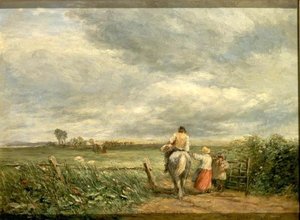
The scene unfolds in "Going to the Hayfield," a work created by the artist David Cox. In this 1849 composition, the quiet rhythms of rural life take center stage. Figures move through the landscape, their presence tied to the seasonal tasks of the countryside. The air feels heavy with the atmosphere of a specific afternoon, capturing a moment of simple, everyday activity within the English landscape.

2
George IV Embarking for Scotland at Greenwich (1823) de David Cox

George IV Embarking for Scotland at Greenwich

1823 · Watercolor

The watercolor depicts a bustling maritime scene at Greenwich, centered on the ceremonial embarkation of George IV for Scotland. Numerous vessels occupy the water, some positioned near the shore and others further out. These boats carry various figures, and several are adorned with flags. On the banks, crowds of people gather to observe the event, some standing near the water's edge while others remain further back. A horse is visible…

3
Going to the Hayfield (1849) de David Cox

Going to the Hayfield

1849 · Oil On Canvas · Birmingham Museum and Art Gallery, Birmingham

David Cox's "Going to the Hayfield," painted in 1849, isn’t merely a landscape; it’s a carefully constructed distillation of Romantic sensibility and a profound connection to the English countryside. This evocative piece, now beautifully reproduced, transports us to a specific moment – a quiet afternoon as figures journey towards a hayfield bathed in the diffused light of an overcast sky. Cox, a pivotal figure bridging the gap between earlier landscape…

4
Rhyl Sands (1854) de David Cox

Rhyl Sands

1854 · Oil On Canvas · Tate Gallery, Londres

David Cox’s “Rhyl Sands,” painted in 1854, isn't merely a depiction of a beach; it’s a carefully constructed evocation of the Romantic spirit – a yearning for the sublime beauty and untamed power of nature. Cox, a pivotal figure within the Birmingham School of watercolourists, masterfully captures a fleeting moment along the Welsh coast, imbuing the scene with an atmosphere of both tranquility and dramatic intensity. The painting transports us…

5
Study of a Dog (1840) de David Cox

Study of a Dog

1840 · Watercolor

In this intimate watercolor study, titled Study of a Dog, the viewer encounters a quiet moment of observation. The subject is a single dog, an animal captured in a state of repose. David Cox, a British artist who lived from 1783 to 1859, brings a sense of immediacy to this piece. The work emerges from the 1840s, a period when the artist's hand moved with increasing freedom. It belongs to…

6
The Skylark (1849) de David Cox

The Skylark

1849 · Oil On Canvas · Birmingham Museum and Art Gallery, Birmingham

In the vast tapestry of English landscape painting, few works capture the ephemeral beauty of the countryside with as much soul as David Cox’s The Skylark. Created in 1849, this masterpiece serves as a profound window into a serene, pastoral era, inviting the viewer to pause and breathe in the quietude of the rural landscape. The painting presents a sprawling field of grass that stretches toward a distant, hazy horizon,…

7
Storm off the Coast, Hastings (1813) de David Cox

Storm off the Coast, Hastings

1813 · Oil · Birmingham Museum and Art Gallery, Birmingham

There is a certain gravity in how the sky meets the sea in this 1813 work. The composition draws the eye along a diagonal path, moving from the heavy, dark presence of the cliffs in the foreground toward a lighter, mist-filled horizon. It is a scene of movement and tension, where the elements of sea, sky, and stone are caught in a moment of profound unrest. The palette relies on…

8
The Old Bridge at Bridgnorth, Shropshire (1809) de David Cox

The Old Bridge at Bridgnorth, Shropshire

1809 · Watercolor

The watercolor painting titled The Old Bridge at Bridgnorth, Shropshire, captures a quiet moment in the English countryside. Created by David Cox in 1809, the work presents a view of a small town nestled along the curves of a river. The scene focuses on the architecture of the bridge as it spans the water, anchoring the landscape within its natural setting.

9
Cornfield (1814) de David Cox

Cornfield

1814 · Watercolor

The air feels heavy and damp, thick with the scent of wet earth and the promise of rain. In this hazy landscape, a vast cornfield stretches toward a soft, clouded horizon, its breadth emphasized by long, horizontal strokes of ochre and muted green. Figures move through the middle ground, their forms softened by the mist, tending to a cart pulled by horses. There is a rhythmic, slow quality to their…

10
Near the Pont d'Arcole, Paris (1829) de David Cox

Near the Pont d'Arcole, Paris

1829 · Watercolor

The scene unfolds in the heart of a bustling Parisian street, captured in the work titled Near the Pont d'Arcole, Paris. This watercolor painting brings us into a moment of urban life, where the architecture of the city meets the movement of its people. The artist, David Cox, directs our gaze toward the structures and the atmosphere of the streets near the Pont d'Arcole.

A seleção de David Cox continua, de 11 a 100

11Pont Neuf from the Quai de l'Ecole, Paris (1829) de David CoxPont Neuf from the Quai de l'Ecole, Paris1829 12Place du Palais Royal, Paris (1829) de David CoxPlace du Palais Royal, Paris1829 · Birmingham Museum and Art Gallery 13The Welsh Funeral (1848) de David CoxThe Welsh Funeral1848 · Birmingham Museum and Art Gallery 14Untitled (AQTKGL) (1853) de David CoxUntitled (AQTKGL)1853 15The Cross Roads (1850) de David CoxThe Cross Roads1850 · Birmingham Museum and Art Gallery 16Rhyl Sands (1854) de David CoxRhyl Sands1854 · Birmingham Museum and Art Gallery 17Scene in a Lane (1858) de David CoxScene in a Lane1858 18Beach Scene Sunrise (1820) de David CoxBeach Scene Sunrise1820 · Yale Center for British Art 19Fishing off Hastings (1810) de David CoxFishing off Hastings1810 · Yale Center for British Art 20The Junction of the Severn and the Wye with Chepstow in the Distance (1830) de David CoxThe Junction of the Severn and the Wye with Chepstow in the Distance1830 · Yale Center for British Art 21The Wyndcliff, River Wye (1842) de David CoxThe Wyndcliff, River Wye1842 · Birmingham Museum and Art Gallery 22German Der Strand von Rhyl (1854) de David CoxGerman Der Strand von Rhyl1854 · Manchester Art Gallery 23Left at a Girls' School (1812) de David CoxLeft at a Girls' School1812 · Birmingham Museum and Art Gallery 24Lake Scene, North Wales (1811) de David CoxLake Scene, North Wales1811 · Birmingham Museum and Art Gallery 25A View of Westminster Bridge, Looking West towards Lambeth Palace and Westminster Abbey (1811) de David CoxA View of Westminster Bridge, Looking West towards Lambeth Palace and Westminster Abbey1811 26In Windsor Park (1807) de David CoxIn Windsor Park1807 27Westminster from Lambeth (1813) de David CoxWestminster from Lambeth1813 28Sunset, Hastings: Beached Fishing Vessels (1811) de David CoxSunset, Hastings: Beached Fishing Vessels1811 29Gipsies on Dulwich Common (1808) de David CoxGipsies on Dulwich Common1808 · Birmingham Museum and Art Gallery 30Pastoral Scene in Herefordshire (1820) de David CoxPastoral Scene in Herefordshire1820 31Lugg Meadows, near Hereford (1817) de David CoxLugg Meadows, near Hereford1817 32Tour d'Horloge, Rouen (1829) de David CoxTour d'Horloge, Rouen1829 33The Opening of the New London Bridge (1831) de David CoxThe Opening of the New London Bridge1831 34St. Mary's Church and the Shire Hall, Warwick (1828) de David CoxSt. Mary's Church and the Shire Hall, Warwick1828 35Place St. Barthélemy, Rouen (1829) de David CoxPlace St. Barthélemy, Rouen1829 36Carthage: Aeneas and Achates (1825) de David CoxCarthage: Aeneas and Achates1825 37Junction of the Severn and the Wye with a Rainbow (1827) de David CoxJunction of the Severn and the Wye with a Rainbow1827 38Dockyard - Building a Sloop (1823) de David CoxDockyard - Building a Sloop1823 39Still LIfe: Basket, Foxgloves, Clothes and Other Objects (1823) de David CoxStill LIfe: Basket, Foxgloves, Clothes and Other Objects1823 · Birmingham Museum and Art Gallery 40A View of the Pavillon de Flore and the Tuileries from the Seine, Notre Dame, Paris (1829) de David CoxA View of the Pavillon de Flore and the Tuileries from the Seine, Notre Dame, Paris1829 41Hay on Wye (1824) de David CoxHay on Wye1824 42Porte St. Denis, Paris (1829) de David CoxPorte St. Denis, Paris1829 43Pirates' Isle (1826) de David CoxPirates' Isle1826 44Pavillon de Flore, Tuileries, Paris (1830) de David CoxPavillon de Flore, Tuileries, Paris1830 45St. Eustache, Paris (1829) de David CoxSt. Eustache, Paris1829 46Handsworth Old Church, Birmingham (1828) de David CoxHandsworth Old Church, Birmingham1828 47Ulverston Sands (1835) de David CoxUlverston Sands1835 · Birmingham Museum and Art Gallery 48Crossing Lancaster Sands (1835) de David CoxCrossing Lancaster Sands1835 49Street in Beauvais (1832) de David CoxStreet in Beauvais1832 50The Pont des Arts with the Louvre and Tuileries from the Quai Conti (1838) de David CoxThe Pont des Arts with the Louvre and Tuileries from the Quai Conti1838 51The Long Gallery, Hardwick Hall, Derbyshire (1839) de David CoxThe Long Gallery, Hardwick Hall, Derbyshire1839 52The Poplar Avenue, after Hobbema (1835) de David CoxThe Poplar Avenue, after Hobbema1835 53The Long Gallery, Hardwick Hall, Derbyshire (1839) de David CoxThe Long Gallery, Hardwick Hall, Derbyshire1839 54Going Out Hawking (1838) de David CoxGoing Out Hawking1838 55Peace and War: Lympne Church and Castle (1838) de David CoxPeace and War: Lympne Church and Castle1838 · Birmingham Museum and Art Gallery 56A Terrace, with Figures, Haddon Hall (1834) de David CoxA Terrace, with Figures, Haddon Hall1834 · Birmingham Museum and Art Gallery 57Windermere during the Regatta (1832) de David CoxWindermere during the Regatta1832 58Rhaiadr Cwm, North Wales (1836) de David CoxRhaiadr Cwm, North Wales1836 59Pass of Llanberis, Caernarvonshire, Wales (1836) de David CoxPass of Llanberis, Caernarvonshire, Wales1836 60The Long Gallery, Hardwick Hall, Derbyshire (1839) de David CoxThe Long Gallery, Hardwick Hall, Derbyshire1839 · Chatsworth House 61Crossing Lancaster Sands (1840) de David CoxCrossing Lancaster Sands1840 62View near Bettws-y-Coed (1846) de David CoxView near Bettws-y-Coed1846 · Birmingham Museum and Art Gallery 63On Lancaster Sands, Low Tide (1840) de David CoxOn Lancaster Sands, Low Tide1840 64Vale of Clwyd (1848) de David CoxVale of Clwyd1848 65Near Knaresborough (1844) de David CoxNear Knaresborough1844 66A Welsh Road (1846) de David CoxA Welsh Road1846 67The Vale of Dolwyddelan (1846) de David CoxThe Vale of Dolwyddelan1846 68A Country Track Leading to Harlech Castle (1842) de David CoxA Country Track Leading to Harlech Castle1842 69Carreg Cennan Castle (1844) de David CoxCarreg Cennan Castle1844 70Cottage Interior (1840) de David CoxCottage Interior1840 · Birmingham Museum and Art Gallery 71Outskirts of a Wood, with Gypsies (1843) de David CoxOutskirts of a Wood, with Gypsies1843 72Vale of Clwyd (1846) de David CoxVale of Clwyd1846 73Going to the Hayfield (1853) de David CoxGoing to the Hayfield1853 · Yale Center for British Art 74On the Medway (1850) de David CoxOn the Medway1850 75Horses Drinking (1855) de David CoxHorses Drinking1855 76A Mountain Torrent (1850) de David CoxA Mountain Torrent1850 77Flying the Kite (1853) de David CoxFlying the Kite1853 78On Carrington Moss, Cheshire (1851) de David CoxOn Carrington Moss, Cheshire1851 79Mountain Heights, Cader Idris (1850) de David CoxMountain Heights, Cader Idris1850 80Penman Bach (1852) de David CoxPenman Bach1852 81The Night Train (1849) de David CoxThe Night Train1849 82Vale of Clwyd (1849) de David CoxVale of Clwyd1849 83The Challange (1853) de David CoxThe Challange1853 84Peat Gatherers (1850) de David CoxPeat Gatherers1850 85Kenilworth Castle (1857) de David CoxKenilworth Castle1857 · Birmingham Museum and Art Gallery 86Darley Churchyard (1858) de David CoxDarley Churchyard1858 87On the Moors, near Bettws-y-Coed (1856) de David CoxOn the Moors, near Bettws-y-Coed1856 88Crossing the Moor (1858) de David CoxCrossing the Moor1858 89Stepping Stones, Bettws-y-Coed (1857) de David CoxStepping Stones, Bettws-y-Coed1857 90Clouds (1857) de David CoxClouds1857 91Moonlight Landscape (1850) de David CoxMoonlight Landscape1850 · Yale Center for British Art 92The Night Train (1849) de David CoxThe Night Train1849 · City Art Gallery 93Midday Rest de David CoxMidday Rest 94The Thames At Battersea de David CoxThe Thames At Battersea 95Returning Home de David CoxReturning Home 96Lancaster Sands 1 de David CoxLancaster Sands 1 97A Child With A Dog, Outside A Cottage de David CoxA Child With A Dog, Outside A Cottage 98The Jetty, Calais de David CoxThe Jetty, Calais 99Young Welsh Girl de David CoxYoung Welsh Girl 100In The Hayfield 1 de David CoxIn The Hayfield 1

Pinturas famosas de David Cox, período por período

Os temas que cativaram o olhar de David Cox

Os quatro temas que mais se repetem nestas obras originais, cada um com o seu melhor exemplo.

Os museus que guardam os originais de David Cox

Os 6 museus que detêm a maioria das pinturas desta página.

Museus Cidade Obras de David Cox Pinturas desta lista
Birmingham Museum and Art Gallery, BirminghamBirmingham Museum and Art Gallery Birmingham 54 Going to the Hayfield, The Skylark, Storm off the Coast, Hastings
Yale Center for British Art, New HavenYale Center for British Art New Haven 6 Beach Scene Sunrise, Fishing off Hastings, The Junction of the Severn and the Wye with Chepstow in the Distance
Tate Gallery, LondresTate Gallery Londres 1 Rhyl Sands
Manchester Art Gallery, ManchesterManchester Art Gallery Manchester 1 German Der Strand von Rhyl
Chatsworth House, BakewellChatsworth House Bakewell 1 The Long Gallery, Hardwick Hall, Derbyshire
City Art Gallery, BirminghamCity Art Gallery Birmingham 1 The Night Train

David Cox década a década: a obra original que define cada uma

Obras por década

Escolha uma década para ver a obra original que a define.

Perguntas de colecionadores sobre as pinturas de David Cox

Por qual obra David Cox é mais conhecido(a)?Revelar a resposta

Going to the Hayfield (1850). George IV Embarking for Scotland at Greenwich (1823) e Going to the Hayfield (1849) vêm a seguir.

Qual era a idade de David Cox quando Going to the Hayfield foi feita?Revelar a resposta

67 anos: Going to the Hayfield data de 1850, e David Cox nasceu em 1783.

Quais são as dez pinturas mais famosas de David Cox?Revelar a resposta

Going to the Hayfield, George IV Embarking for Scotland at Greenwich, Going to the Hayfield, Rhyl Sands, Study of a Dog, The Skylark, Storm off the Coast, Hastings, The Old Bridge at Bridgnorth, Shropshire, Cornfield e Near the Pont d'Arcole, Paris. O ranking acima apresenta o ano e o museu de cada uma.

Quantas pinturas David Cox deixou?Revelar a resposta

Nosso catálogo contém 498 obras de David Cox, datadas de 1807 a 1858.

Em quais museus estão expostas as obras-primas de David Cox?Revelar a resposta

Principalmente em Birmingham Museum and Art Gallery (Birmingham), Yale Center for British Art (New Haven) e Tate Gallery (Londres). A tabela de museus acima lista todos eles.

Em que anos David Cox pintou as suas obras mais famosas?Revelar a resposta

Em 1850s: 24 das 100 obras nesta página foram feitas então, sendo Going to the Hayfield delas.

Quais são as primeiras e as últimas obras originais famosas de David Cox?Revelar a resposta

Nesta página, a mais antiga é In Windsor Park (1807) e a mais recente é Scene in a Lane (1858).

Quais temas David Cox escolheu com mais frequência?Revelar a resposta

Landscape (13), Sky (10) e British countryside (8), entre as 100 obras nesta página.

Qual técnica David Cox mais utilizou?Revelar a resposta

Watercolor, para 13 das 100 obras nesta página.

A qual movimento artístico pertence David Cox?Revelar a resposta

Romanticism, a julgar pelos originais nesta página.

Quais obras de David Cox estão expostas no Birmingham Museum and Art Gallery?Revelar a resposta

Going to the Hayfield, The Skylark e Storm off the Coast, Hastings: o Birmingham Museum and Art Gallery, Birmingham detém 18 das obras desta página.

David Cox: vida e obra

David Cox: Uma Vida em Paisagens

Primeiros Anos e Formação

  • Nascimento: 29 de abril de 1783, em Deritend, Birmingham, Reino Unido.
  • O pai de David Cox era ferreiro e artesão, fornecendo componentes para o comércio de armas de Birmingham. Sua mãe, vinda de uma origem rural, possuía uma educação superior e um caráter forte.
  • Inicialmente, ele se matriculou na academia de Joseph Barber, na Great Charles Street, onde conheceu seus colegas de classe Charles Barber e William Radclyffe.
  • Aos 15 anos, Cox tornou-se aprendiz de Albert Fielder, um pintor de Birmingham especializado em miniaturas de retratos e pinturas decorativas para objetos como caixas de rapé. Este treinamento precoce proporcionou-lhe as habilidades fundamentais de sua arte.

Desenvolvimento da Carreira e Jornada Artística

  • Em 1804, Cox mudou-se para Londres e casou-se com Mary Ragg, filha de seu senhorio.
  • Uma viagem crucial ao País de Gales em 1805, acompanhado por Charles Barber, marcou o início de inúmeras expedições de esboço ao longo de sua vida. Essas viagens influenciaram profundamente seu estilo artístico.
  • Ele expôs regularmente na Royal Academy a partir de 1805, ganhando inicialmente a vida como mestre de desenho. O Coronel Hon. H. Windsor tornou-se um de seus primeiros alunos em 1808.
  • O trabalho inicial de Cox concentrava-se em paisagens detalhadas em aquarela, frequentemente retratando cenas rurais e temas arquitetônicos.

Estilo Artístico e Influências

    O estilo de Cox evoluiu com o tempo. Ele transitou de representações topográficas precisas para uma abordagem mais expressiva e atmosférica.
  • Influências: Embora as influências específicas sejam debatidas, sua obra demonstra afinidade com os pintores de paisagem holandeses do século XVII e uma observação aguçada da natureza que remete a Constable.
  • Ele tornou-se conhecido por suas pinceladas soltas, cores vibrantes e pela habilidade de capturar os efeitos da luz e do clima. Suas pinturas a óleo tardias foram particularmente inovadoras.

Grandes Conquistas e Legado

  • Cox pintou mais de 300 obras a óleo no final de sua carreira, hoje reconhecidas como “uma das maiores, porém menos reconhecidas, conquistas de qualquer pintor britânico”.
  • Ele é considerado um dos maiores pintores de paisagem ingleses e uma figura central da Era de Ouro da Aquarela Inglesa.
  • Sua obra influenciou significativamente as gerações subsequentes de artistas de paisagem.
  • Obras Notáveis: The Wind on the Heath, Cottage in Herefordshire, Junction of the Severn and the Wye with Chepstow in the distance e Moonlight Landscape estão entre suas pinturas mais celebradas.

Significância Histórica

  • David Cox é reconhecido como um precursor precoce do Impressionismo. Sua ênfase em capturar efeitos atmosféricos fugazes e suas pinceladas soltas anteciparam muitas das técnicas adotadas posteriormente pelos impressionistas.
  • Ele desempenhou um papel crucial no estabelecimento da pintura de paisagem britânica como um gênero distinto, afastando-se de representações puramente topográficas em direção a interpretações mais expressivas e emocionais da natureza.
  • Sua obra continua a ser admirada por sua beleza, sensibilidade e apelo duradouro.