Retrato de Carlo Maratta

As 100 Pinturas Mais Famosas de Carlo Maratta, Cada Uma Única

Atualizado em Novembro 2026 · classificado pela nossa pontuação de popularidade (pesquisas, visitas e pedidos de cada obra) · 130 obras de Carlo Maratta em nosso catálogo

Em resumo

André Le Nôtre (1681) é a pintura de Carlo Maratta que mais atrai olhares; a obra original pertence ao Château de Versailles, Versalhes. Depois disso, o olhar recai sobre Apollo Chasing Daphne (1681) e Saint John the Baptist Pointing to Christ in a Landscape (1656). Entre as 130 obras de Carlo Maratta em nosso catálogo, estas 100 são as mais famosas, cada uma uma original única apresentada com o seu ano, o seu museu e a razão pela qual perdura.

1625 – 1713, Camerano Baroque Mais obras: Bavarian State Painting Collections

As 10 principais pinturas de Carlo Maratta, sob o olhar da galeria

1
André Le Nôtre (1681) de Carlo Maratta

André Le Nôtre

1681 · Acrylic On Canvas · Château de Versailles, Versalhes

André Le Nôtre’s portrait, painted in 1681 by Carlo Maratta, offers a glimpse into the mind of a man who fundamentally reshaped the landscape of Europe. More than simply a gardener, Le Nôtre was the “King of Gardeners,” Controller General of Buildings, Arts and Manufactures for France, and, crucially, Gardener to the King – a position that afforded him unparalleled influence over the aesthetic sensibilities of his era. The painting…

2
Apollo Chasing Daphne (1681) de Carlo Maratta

Apollo Chasing Daphne

1681 · Acrylic On Canvas · Musées Royaux des Beaux-Arts, Bruxelas

Carlo Maratta’s “Apollo Chasing Daphne,” completed in 1681, isn't merely a depiction of Greek mythology; it’s an exquisitely crafted distillation of humanist ideals within the Baroque aesthetic. Hanging proudly at the Musées Royaux des Beaux-Arts in Brussels—a testament to Belgian cultural heritage—the canvas commands attention with its serene composure and subtle dynamism.

3
Saint John the Baptist Pointing to Christ in a Landscape (1656) de Carlo Maratta

Saint John the Baptist Pointing to Christ in a Landscape

1656 · Oil · Harvard Art Museums, Cambridge

A single arm cuts through the air, a diagonal line of intent that directs the eye from the rugged foreground toward a distant, blue-mantled figure. Saint John the Baptist reclines in the landscape, his body angled toward the viewer while his gaze seeks something beyond the immediate frame. He wears a heavy, magenta cloak that anchors the composition, a deep splash of color against the earthy browns and muted greens…

4
Saint John the Evangelist on Patmos (1700) de Carlo Maratta

Saint John the Evangelist on Patmos

1700 · Oil On Canvas · Rijksmuseum, Amsterdã

The oil on canvas titled Saint John the Evangelist on Patmos is a work by the Roman painter Carlo Maratta. Created between about 1680 and about 1720, the painting captures a moment of divine transcription. The subject focuses on the evangelist Johannes as he writes upon the island of Patmos.

5
Death of Saint Joseph (1676) de Carlo Maratta

Death of Saint Joseph

1676 · Oil On Canvas · Kunsthistorisches Museum, Viena

The air in the room feels heavy with the weight of a final breath. In this 1676 oil painting, the earthly realm and the heavens collide in a single, breathless moment. Below, the mortal figures gather around the bed where Saint Joseph lies in his final hours. The Virgin Mary, Jesus, and Joseph form a central triangle of light, their faces illuminated by a theatrical glow that cuts through the…

6
Portrait of Cavalier Burnes (1676) de Carlo Maratta

Portrait of Cavalier Burnes

1676 · Oil · Statens Museum For Kunst, Copenhague

Portrait of Cavalier Burnes is a painting by the Italian artist Carlo Maratta. Executed about 1676, this work belongs to the genre of portraiture. It presents a single male figure, capturing the likeness of a man through a focused, bust-length composition.

7
The Flight into Egypt (1664) de Carlo Maratta

The Flight into Egypt

1664 · Oil On Canvas · Metropolitan Museum of Art, Nova York

The air feels heavy with the weight of a sudden departure. In this scene, the Holy Family moves through a landscape that seems to pulse with both urgency and divine grace. The Virgin Mary sits upon a rocky bank, her form draped in a deep blue mantle that rests heavily over a pink robe. She cradles the Christ Child closely, her gaze fixed on the path ahead. To her side,…

8
Madonna and Child (1660) de Carlo Maratta

Madonna and Child

1660 · Oil On Canvas · Kunsthistorisches Museum, Viena

This oil painting on canvas presents a close-up view of the upper bodies of the Madonna and Child. The figures are positioned along a diagonal axis that moves from the top left toward the bottom right of the frame. A beam of light descends from the upper left corner, striking the faces of both the mother and the infant. This lighting creates a chiaroscuro effect, where bright highlights on skin…

9
The Painter Andrea Sacchi (1661) de Carlo Maratta

The Painter Andrea Sacchi

1661 · Oil On Canvas · Museu do Prado, Madrid

The light enters from the upper left, striking a face etched with quiet intelligence. It is the portrait of Andrea Sacchi, captured in the year 1661. A sharp white collar cuts through the darkness, providing a crisp boundary between the skin and the deep blacks of his clothing. The subject sits slightly off-center, his gaze meeting the viewer with a solemn weight. Dark, wavy hair falls in soft, blended strands…

10
The Vanity of the Earthly (1669) de Carlo Maratta

The Vanity of the Earthly

1669 · Oil · Bavarian State Painting Collections, Munique

The scene unfolds within The Vanity of the Earthly, an allegorical oil painting that captures a moment of profound stillness and reflection. Created by Carlo Maratta, the work emerges from the mid-seventeenth century, dating to about 1669. It exists as a window into the Baroque era, where the weight of existence meets the fleeting nature of worldly pursuits. The subject matter invites a quiet wonder regarding the transient beauty of…

Pinturas famosas de Carlo Maratta, números 11 a 100

11Madonna and Child Enthroned with Angels and Saints (1680) de Carlo MarattaMadonna and Child Enthroned with Angels and Saints1680 · Santa Maria in Vallicella 12Virgin and Child with St John (1704) de Carlo MarattaVirgin and Child with St John1704 · Kunsthistorisches Museum 13Adoration of the Shepherds (1690) de Carlo MarattaAdoration of the Shepherds1690 · Museu Hermitage 14Rebecca and Eliezer at the Well (1655) de Carlo MarattaRebecca and Eliezer at the Well1655 · Museum of Art 15Portrait of a Cardinal (Barberini) (1650) de Carlo MarattaPortrait of a Cardinal (Barberini)1650 16Prédication de Saint Jean Baptiste (1655) de Carlo MarattaPrédication de Saint Jean Baptiste1655 · Musée des Beaux-Arts de Pau 17Portrait of Giovanni Pietro Bellori (1650) de Carlo MarattaPortrait of Giovanni Pietro Bellori1650 18Magdalene in the desert (1650) de Carlo MarattaMagdalene in the desert1650 · Museu do Prado 19The Angel of the Annunciation in a Garland of Flowers (1651) de Carlo MarattaThe Angel of the Annunciation in a Garland of Flowers1651 20Study for the altarpiece of Saint Rosalie among the Plague-Stricken (1658) de Carlo MarattaStudy for the altarpiece of Saint Rosalie among the Plague-Stricken1658 · Yale University Art Gallery 21Portrait of a gentleman (1650) de Carlo MarattaPortrait of a gentleman1650 22Christ and the Samaritan woman. (1650) de Carlo MarattaChrist and the Samaritan woman.1650 23Alpheus and Arethusa (1655) de Carlo MarattaAlpheus and Arethusa1655 24Depiction in the Temple (1669) de Carlo MarattaDepiction in the Temple1669 · Bavarian State Painting Collections 25Sleeping, Naked Child (1669) de Carlo MarattaSleeping, Naked Child1669 · Bavarian State Painting Collections 26Christ on the Mount of Olives (1669) de Carlo MarattaChrist on the Mount of Olives1669 · Bavarian State Painting Collections 27Mary with Child and Infant John (1669) de Carlo MarattaMary with Child and Infant John1669 · Bavarian State Painting Collections 28Madonna and Child (1669) de Carlo MarattaMadonna and Child1669 · Bavarian State Painting Collections 29Pope Clement IX (1669) de Carlo MarattaPope Clement IX1669 · Bavarian State Painting Collections 30Carolus (1669) de Carlo MarattaCarolus1669 · Bavarian State Painting Collections 31Bathing wood nymph (1669) de Carlo MarattaBathing wood nymph1669 · Bavarian State Painting Collections 32Caritas by Carlo Maratti (1669) de Carlo MarattaCaritas by Carlo Maratti1669 · Bavarian State Painting Collections 33Portrait of Maria Madalena Rospigliosi (1664) de Carlo MarattaPortrait of Maria Madalena Rospigliosi1664 34Portrait of Giovanna Garzoni (1665) de Carlo MarattaPortrait of Giovanna Garzoni1665 35Portrait of Maria Maddalena Rospigliosi Panciatichi (1664) de Carlo MarattaPortrait of Maria Maddalena Rospigliosi Panciatichi1664 36The Rape of Europa (1682) de Carlo MarattaThe Rape of Europa1682 · National Gallery of Ireland 37The Flight into Egypt (1677) de Carlo MarattaThe Flight into Egypt1677 38The Vision of Saint Stanislas Kostka (1685) de Carlo MarattaThe Vision of Saint Stanislas Kostka1685 · Royal Collection 39The Origin of the Red Rose (1676) de Carlo MarattaThe Origin of the Red Rose1676 · Statens Museum For Kunst 40The finding of Romulus and Remus (1686) de Carlo MarattaThe finding of Romulus and Remus1686 41Bath of Diana (1684) de Carlo MarattaBath of Diana1684 42Flora (1690) de Carlo MarattaFlora1690 43Virgin and Child (1697) de Carlo MarattaVirgin and Child1697 · Statens Museum For Kunst 44The Adoration of the Shepherds (1689) de Carlo MarattaThe Adoration of the Shepherds1689 · Statens Museum For Kunst 45Cupids and Garlands of Flowers with a Parrot (1694) de Carlo MarattaCupids and Garlands of Flowers with a Parrot1694 46Portrait of Francesca Gommi Maratti (1701) de Carlo MarattaPortrait of Francesca Gommi Maratti1701 · Cleveland Museum of Art 47Marchese Niccolò Maria Pallavicini (1650-1714) guided to the Temple of Virtù by Apollo with a Self-portrait of the Artist (1705) de Carlo MarattaMarchese Niccolò Maria Pallavicini (1650-1714) guided to the Temple of Virtù by Apollo with a Self-portrait of the Artist1705 48Madonna and Child (1711) de Carlo MarattaMadonna and Child1711 · Minneapolis Institute of Art 49The Judgment of Paris (1708) de Carlo MarattaThe Judgment of Paris1708 · Tsarskoye Selo 50Assumption of Mary (1713) de Carlo MarattaAssumption of Mary1713 · Fries Museum 51Annunciation (1713) de Carlo MarattaAnnunciation1713 52Hagar and Ishmael (1701) de Carlo MarattaHagar and Ishmael1701 · Museu do Prado 53Saint John on Patmos (1669) de Carlo MarattaSaint John on Patmos1669 · Bavarian State Painting Collections 54The Virgin and Child in Glory (1680) de Carlo MarattaThe Virgin and Child in Glory1680 · Museu do Prado 55Portrait of Count Franz Anton Berka of Dubá (1670) de Carlo MarattaPortrait of Count Franz Anton Berka of Dubá1670 · National Gallery Prague 56Adoration of the Shepherds (1690) de Carlo MarattaAdoration of the Shepherds1690 · Museu Hermitage 57A Young Man (1663) de Carlo MarattaA Young Man1663 · Staatliche Museen zu Berlin 58Virgin in contemplation de Carlo MarattaVirgin in contemplationMuseu do Prado 59Self-portrait (1684) de Carlo MarattaSelf-portrait1684 · British Museum 60Adoração dos Magos (em Garland) de Carlo MarattaAdoração dos Magos (em Garland)Museu Hermitage 61Time driving a boat ferries the four seasons and a sleeping figure toward death (1713) de Carlo MarattaTime driving a boat ferries the four seasons and a sleeping figure toward death1713 · Museus Cívicos de Reggio Emilia 62The Holy Night (The Nativity) (1656) de Carlo MarattaThe Holy Night (The Nativity)1656 · Staatliche Kunstsammlungen Dresden 63Retrato de Faustina Maratti. (1686) de Carlo MarattaRetrato de Faustina Maratti.1686 64The Virgin Appearing to St Philip Neri (1675) de Carlo MarattaThe Virgin Appearing to St Philip Neri1675 · Galleria Palatina 65St. Mark the Evangelist de Carlo MarattaSt. Mark the EvangelistMuseu Thyssen-Bornemisza 66Self-portrait de Carlo MarattaSelf-portrait 67Assumption and the Doctors of the Church (1689) de Carlo MarattaAssumption and the Doctors of the Church1689 · Santa Maria del Popolo 68The Virgin teaching the infant Christ to read de Carlo MarattaThe Virgin teaching the infant Christ to readFitzwilliam Museum 69The Annunciation de Carlo MarattaThe AnnunciationRoyal Collection 70Virgin and Child de Carlo MarattaVirgin and ChildFinnish National Gallery 71The Flagellation of Christ de Carlo MarattaThe Flagellation of ChristMuseu de Belas Artes de Boston 72Virgin Mary de Carlo MarattaVirgin Mary 73Nativity de Carlo MarattaNativityMuseu Nacional de Cracóvia 74The Visitation de Carlo MarattaThe Visitation 75The Martyrdom of St. Andrew de Carlo MarattaThe Martyrdom of St. Andrew 76The Holy Family With Angels de Carlo MarattaThe Holy Family With Angels 77Annunciation de Carlo MarattaAnnunciation 78The Birth of the Virgin de Carlo MarattaThe Birth of the Virgin 79The Assumption of the Virgin de Carlo MarattaThe Assumption of the Virgin 80The Adoration of the Magi de Carlo MarattaThe Adoration of the Magi 81The Madonna with the Young Christ Sleeping de Carlo MarattaThe Madonna with the Young Christ Sleeping 82The Virgin and Child with the Young St. John the Baptist de Carlo MarattaThe Virgin and Child with the Young St. John the Baptist 83Christ and the Samaritan Woman de Carlo MarattaChrist and the Samaritan Woman 84Studies for the head of Jael de Carlo MarattaStudies for the head of Jael 85Painter Andrea Sacchi de Carlo MarattaPainter Andrea Sacchi 86The Madonna and Child de Carlo MarattaThe Madonna and Child 87Rebecca and Eliezer at the Well de Carlo MarattaRebecca and Eliezer at the Well 88Madonna and Child de Carlo MarattaMadonna and Child 89Judith de Carlo MarattaJudithMuseus Capitolinos 90Madonna and Child with the Young Saint John the Baptist de Carlo MarattaMadonna and Child with the Young Saint John the BaptistDetroit Institute of Arts 91Arcangelo Corelli (1700) de Carlo MarattaArcangelo Corelli1700 · Royal College of Music Museum 92The Holy Family de Carlo MarattaThe Holy FamilyToledo Museum of Art 93The Sleep of the Infant Jesus, with Musician Angels (1697) de Carlo MarattaThe Sleep of the Infant Jesus, with Musician Angels1697 · Museu do Louvre 94Study for a Statue of the Apostle Peter (1703) de Carlo MarattaStudy for a Statue of the Apostle Peter1703 · Kunstpalast 95Maria Immaculata (1688) de Carlo MarattaMaria Immaculata1688 · Galeria de Pinturas do Sanssouci 96Hercules and Onfalia de Carlo MarattaHercules and Onfalia 97Madonna with Saints Verso de Carlo MarattaMadonna with Saints Verso 98The Annunciation de Carlo MarattaThe Annunciation 99Holy Family de Carlo MarattaHoly Family 100Faith and Justice Enthroned de Carlo MarattaFaith and Justice Enthroned

Pinturas famosas de Carlo Maratta, período por período

Os temas que cativaram o olhar de Carlo Maratta

Os quatro temas que mais se repetem nestas obras originais, cada um com o seu melhor exemplo.

Os museus que guardam os originais de Carlo Maratta

Os 8 museus que detêm a maioria das pinturas desta página.

Museus Cidade Obras de Carlo Maratta Pinturas desta lista
Bavarian State Painting Collections, MuniqueBavarian State Painting Collections Munique 11 The Vanity of the Earthly, Depiction in the Temple, Sleeping, Naked Child
Museu do Prado, MadridMuseu do Prado Madrid 5 The Painter Andrea Sacchi, Magdalene in the desert, Hagar and Ishmael
Statens Museum For Kunst, CopenhagueStatens Museum For Kunst Copenhague 4 Portrait of Cavalier Burnes, The Origin of the Red Rose, Virgin and Child
Museu Hermitage, São PetersburgoMuseu Hermitage São Petersburgo 4 Adoration of the Shepherds, Adoration of the Shepherds, Adoração dos Magos (em Garland)
Kunsthistorisches Museum, VienaKunsthistorisches Museum Viena 3 Death of Saint Joseph, Madonna and Child, Virgin and Child with St John
Royal Collection, LondresRoyal Collection Londres 2 The Vision of Saint Stanislas Kostka, The Annunciation
National Gallery of Ireland, DublinNational Gallery of Ireland Dublin 2 The Rape of Europa
Fitzwilliam MuseumFitzwilliam Museum 2 The Virgin teaching the infant Christ to read

Carlo Maratta ao longo das décadas: uma obra original única para cada uma

Obras por década

Escolha uma década para ver a obra original que a define.

Pinturas de Carlo Maratta: perguntas para a galeria

Qual é a obra mais famosa de Carlo Maratta?Revelar a resposta

André Le Nôtre (1681), Château de Versailles, Versalhes. Apollo Chasing Daphne (1681) e Saint John the Baptist Pointing to Christ in a Landscape (1656) vêm a seguir.

Com que idade Carlo Maratta criou André Le Nôtre?Revelar a resposta

56 anos: André Le Nôtre data de 1681, e Carlo Maratta nasceu em 1625.

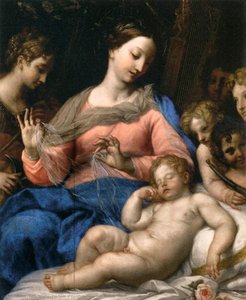
Quais são as dez pinturas mais famosas de Carlo Maratta?Revelar a resposta

André Le Nôtre, Apollo Chasing Daphne, Saint John the Baptist Pointing to Christ in a Landscape, Saint John the Evangelist on Patmos, Death of Saint Joseph, Portrait of Cavalier Burnes, The Flight into Egypt, Madonna and Child, The Painter Andrea Sacchi e The Vanity of the Earthly. O ranking acima apresenta o ano e o museu de cada uma.

Quantas obras de Carlo Maratta são conhecidas?Revelar a resposta

Nosso catálogo contém 130 obras de Carlo Maratta, datadas de 1650 a 1713.

Onde se pode ver os originais mais famosos de Carlo Maratta?Revelar a resposta

Principalmente em Bavarian State Painting Collections (Munique), Museu do Prado (Madrid) e Statens Museum For Kunst (Copenhague). A tabela de museus acima lista todos eles.

Em que período Carlo Maratta criou as suas pinturas mais conhecidas?Revelar a resposta

Em 1660s: 18 das 100 obras nesta página foram feitas então, sendo The Flight into Egypt delas.

Qual pintura famosa de Carlo Maratta é a mais antiga e qual é a mais recente?Revelar a resposta

Nesta página, a mais antiga é Portrait of a Cardinal (Barberini) (1650) e a mais recente é Assumption of Mary (1713).

Quais temas Carlo Maratta preferia?Revelar a resposta

Woman (38), Man (22) e Clouds (18), entre as 100 obras nesta página.

Com quais materiais Carlo Maratta mais pintou?Revelar a resposta

Oil On Canvas, para 36 das 100 obras nesta página.

A qual movimento pertence a obra de Carlo Maratta?Revelar a resposta

Baroque, a julgar pelos originais nesta página.

Quais originais de Carlo Maratta posso ver no Bavarian State Painting Collections?Revelar a resposta

The Vanity of the Earthly, Depiction in the Temple e Sleeping, Naked Child: o Bavarian State Painting Collections, Munique detém 11 das obras desta página.

Carlo Maratta: um retrato do artista

Um Mestre Romano do Estilo Barroco Classicista

Carlo Maratta, frequentemente conhecido como Maratti, posiciona-se como uma figura fundamental na pintura italiana do século XVII, personificando a transição do Alto Barroco para uma estética mais refinada e de inspiração clássica. Nascido em 15 de maio de 1625, em Camerano, nos Estados Papais — hoje parte da Itália —, sua jornada artística teve início com uma mudança precoce para Roma aos onze anos de idade. Essa mudança revelou-se transformadora, pois ele ingressou no ateliê de Andrea Sacchi, um pintor renomado por suas composições medidas e pelo compromisso com os ideais clássicos. A influência de Sacchi moldaria profundamente o estilo em desenvolvimento de Maratta, instilando nele uma dedicação à clareza, ao equilíbrio e a um emocionalismo contido que o distinguia de seus contemporâneos barrocos mais exuberantes. Este aprendizado não foi meramente um treinamento técnico; foi uma imersão em uma abordagem filosófica da arte, que priorizava o rigor intelectual e o design harmonioso em detrimento do espetáculo dramático. Maratta absorveu esses princípios, mas não permaneceu confinado a eles, demonstrando uma habilidade notável de sintetizar os fundamentos clássicos com as correntes predominantes da sensibilidade barroca.

A Carreira Florescente em Roma

O talento de Maratta floresceu rapidamente e, em meados da década de 1650, ele já começava a atrair encomendas significativas. Suas obras iniciais, como A Visitação (1656) para Santa Maria della Pace, revelam um domínio magistral da luz e do movimento, aliados a uma capacidade emergente de imbuir cenas religiosas com um sentido palpável de profundidade espiritual. Ele não estava simplesmente replicando modelos estabelecidos; ele os infundia com sua própria visão única, caracterizada por figuras graciosas, drapeados elegantes e um uso sutil, porém poderoso, da cor. Este período também testemunhou a criação de O Mistério da Trindade Revelado a Santo Agostinho (cerca de 1655), uma obra que exemplifica sua habilidade em equilibrar o idealismo clássico com o dinamismo barroco. À medida que sua reputação crescia, aumentavam também a escala e o prestígio de seus encargos. Ele tornou-se um artista predileto entre as proeminentes famílias romanas e, crucialmente, do próprio papado. Ao longo de seis décadas, Maratta recebeu o patrocínio de nada menos que seis papas — um testemunho de sua destreidade artística e perspicácia política. Este apoio papal constante não apenas proporcionou segurança financeira, mas também o posicionou no coração da vida artística e cultural de Roma.

Uma Síntese de Estilos e Influências

O estilo de Maratta é frequentemente descrito como “Barroco Classicista”, um termo que encapsula sua posição única no cenário da história da arte. Embora profundamente enraizado na tradição clássica derivada de Rafael, ele não estava imune à influência das tendências mais teatrais do Barroco. Seu contemporâneo, Giovanni Bellori, reconheceu essa síntese, documentando a abordagem artística de Maratta em uma biografia precoce. O artista integrou habilidosamente o uso dramático de luz e sombra, característico da pintura barroca, com a clareza de forma e o equilíbrio composicional favorecidos pelos classicistas. Essa fusão resultou em obras que eram simultaneamente emocionalmente envolventes e intelectualmente satisfatórias. Sua paleta, embora vibrante, era muitas vezes contida, priorizando relações cromáticas harmoniosas em vez de contrastes ousados. Ele se destacava na representação de narrativas religiosas, imbuindo-as de um senso de reverência e intensidade espiritual. A Aparição da Virgem a São Filipe Neri (cerca de 1675), hoje abrigada no Palácio Pitti, em Florença, é um exemplo primordial de sua capacidade de interpretar tais temas com graça e profunda ressonância emocional.

Além da Pintura: Restauração e Legado

As contribuições de Maratta estenderam-se para além da criação de novas obras de arte; ele também foi encarregado de preservar o patrimônio artístico de Roma. Em 1702-1703, Inocêncio XI nomeou-o surintendent des chambres du vatican e incumbiu-o de reparar os afrescos de Rafael nas Stanze do Vaticano — uma responsabilidade que sublinhava seu status como uma autoridade líder na arte clássica. Este empreendimento não era apenas uma questão de restauração técnica; era um ato de reverência a um dos maiores tesouros artísticos da Itália, confiado a um mestre que compreendia sua magnitude. Maratta continuou trabalhando prolificamente até sua morte em Roma, em 15 de dezembro de 1713, deixando para trás um corpo de trabalho vasto e influente. Seu legado como mestre do estilo barroco classicista tardio perdurou por todo o século XVIII, influenciando gerações de artistas com sua ênfase na clareza, no equilíbrio e na composição harmoniosa. Hoje, suas pinturas podem ser encontradas em museus ao redor do mundo, garantindo que sua visão artística continue a inspirar e cativar o público através dos séculos.

Obras Principais e Impacto Duradouro

  • Apolo Perseguindo Dafne: Uma representação dinâmica do mito clássico, exibindo a habilidade de Maratta em retratar movimento e emoção.
  • Adoração dos Magos (em Guirlanda): Uma composição ricamente detalhada que exemplifica seu domínio da cor e da forma.
  • Adoração dos Pastores: Uma obra-prima barroca de 1690, celebrada por seu simbolismo divino e arranjo dinâmico.
  • A Visitação: Uma obra inicial que demonstra o talento emergente de Maratta para a luz e o movimento dentro de um contexto religioso.
  • O Mistério da Trindade Revelado a Santo Agostinho: Um exemplo convincente de sua capacidade de fundir o idealismo clássico com elementos barrocos.
A influência de Maratta vai além de pinturas específicas; reside na articulação de um estilo que uniu duas eras, oferecendo uma alternativa refinada e intelectualmente envolvente às tendências mais abertamente dramáticas do Alto Barroco. Ele permanece como uma figura significativa para a compreensão da evolução da arte italiana e seu legado duradouro na tradição artística ocidental.