

 Visualizar na parede
 Compartilhar
 Compartilhar
 Detalhes

 Baixar imagem
 Semelhantes
 Raio X
 Slideshow
CALLIGRAPHY IN REGULAR SCRIPT
 Traditional Chinese Art
 95.0 x 23.0 cm
 Ler mais
Reprodução em Óleo Feita à Mão
Óleo sobre tela pintado à mão no tamanho e moldura de sua escolha, feito sob encomenda pelos nossos artistas. ( Comprar impressão Comprar imagem)




P118B $10

P118H $10

P118W $10

P438Z $10

P508JH $12

P508YH $12

P805H $10

P805Z $10

P919BZ $10

P919G $10

P919XJ $10

P959ZH $10

P968JZ $12

W106C $8

W218G $10

W218JH $8

W218Y $10

W307PJ $10

W316G $10

W316PJ $8

W316Y $10

W398PJ $8

W4111J $10

W500HY $15

W500JH $15

W692G $12

W849H $8

W940BG $15

W953PJ $8




Escolha entre os nossos tamanhos pré-definidos que respeitam as proporções originais da obra de arte.

Pode inserir as suas próprias dimensões para se adequar a uma moldura ou espaço específico. Se o tamanho selecionado não corresponder às proporções da imagem original, iremos cortar a obra de arte ou estender a pintura com elementos adicionais pintados à mão. Um esboço digital será enviado para sua aprovação antes do início da produção.
Tenha em atenção que a pré-visualização no ecrã não reflete o corte ou extensão real. Apenas o esboço mostrará com precisão a composição final.
Embora tamanhos personalizados estejam disponíveis, recomendamos selecionar uma dimensão da lista predefinida para preservar as proporções originais.
Após o pedido, a equipa OriginalUniqueArt.com enviará um e-mail ao cliente para solicitar instruções e fornecer uma prévia do esboço.
Entrega mundial () em 3 a 4 semanas, em vez das 5 semanas padrão. (29 Agosto). Sem comprometer a qualidade.

Envio expresso gratuito para todo o mundo

Tela de Linho de Alta Qualidade

Seguro de transporte completo

Garantia de Reembolso de Impostos Alfandegários

Garantia de Fidelidade Cromática

Política de Devolução em 60 Dias (Apenas para Defeitos)

Garantia de reembolso de 100%

Oferta de desconto por quantidade
 A opção de vidro está disponível apenas para tamanhos inferiores a 110 cm

CALLIGRAPHY IN REGULAR SCRIPT
Técnica de Reprodução
Tamanho da Reprodução
-


Preço Total
$ 300
Biografia do Artista
A Legacy of Ink and Authority: The Life of Zhang Zhiwan
In the grand tapestry of the Qing Dynasty, few figures embodied the harmonious union of scholarly elegance and political fortitude as profoundly as Zhang Zhiwan. Born in 1811 into a distinguished gentry family in Nanpi, Jiangsu Province, his early years were steeped in the rich traditions of Confucian scholarship. As the son of Zhang Yuce, an official in Zhili, Zhiwan was raised within the upper echelons of Chinese intellectual life, a background that provided him with the classical foundation necessary to ascend the imperial ranks. His journey through the rigorous imperial examination system culminated in his achievement of the Jinshi degree, one of the highest academic honors in the empire, which subsequently secured his prestigious position within the Hanlin Academy.
The life of Zhang Zhiwan was not merely defined by the quiet contemplation of scrolls, but by the turbulent winds of a changing China. His career unfolded against the backdrop of immense social upheaval, most notably during the Taiping Rebellion. Serving as an advisor to the Qing court and working under the military command of Sengge Rinchen, he demonstrated a rare capacity for strategic leadership. Whether suppressing the Nian rebellion in Nanyang or managing the complex defenses of northern Jiangsu, Zhiwan navigated the chaos of war with the same precision he applied to his brushwork. His ascent through the administrative ranks—serving as Governor of Shanxi and later as Viceroy of several vital provinces—marked him as a statesman of immense influence, a man capable of maintaining imperial stability during one of China's most precarious eras.
The Soul of the Brush: Artistic Mastery and Technique
While history remembers him as a formidable minister and a member of the Grand Council, the art world celebrates Zhang Zhiwan as a master of the shan shui tradition. His artistic practice was an extension of his philosophical life, deeply rooted in Daoist principles of harmony and the interconnectedness of all living things. In his landscape paintings, one finds a breathtaking synthesis of meticulous observation and poetic imagination. He did not merely seek to replicate the physical world but to capture its spiritual essence through subtle tonal gradations and evocative compositions that invite the viewer into a meditative state.
His mastery extended equally to the art of calligraphy, where his command of the regular script showcased a disciplined yet fluid energy. The rhythmic flow of his ink work reflected the structured elegance of his administrative life, yet it remained imbued with a profound emotional depth. In his hands, the brush became a tool for expressing the cosmic balance between strength and softness, much like the balance he sought to maintain in the governance of provinces. His works are characterized by:
- Intricate Brushwork: A meticulous approach to texture and form that honors the classical traditions of the Qing masters.
- Tonal Sophistication: The use of varying ink washes to create depth, atmosphere, and a sense of misty, ethereal landscapes.
- Calligraphic Precision: A seamless integration of text and image, where the strength of the character complements the serenity of the landscape.
Historical Significance and Enduring Influence
The passing of Zhang Zhiwan in 1897 marked the end of an era for both the Qing administration and the classical literati tradition. As a cousin to the prominent politician Zhang Zhidong, he was part of a powerful intellectual lineage that shaped the late imperial period. His ability to hold high-ranking positions, such as the Secretary of the Grand Secretariat and the Grand Secretary of the Eastern Library, speaks to a lifetime of service that bridged the gap between the scholarly pursuit of beauty and the heavy responsibilities of statecraft.
Today, the works of Zhang Zhiwan serve as vital windows into the aesthetic and political soul of 19th-century China. His landscapes are more than mere depictions of nature; they are reflections of a scholar-official's attempt to find permanence and peace amidst the shifting tides of history. Through his enduring legacy in ink and stone, he remains a pivotal figure whose artistic sensitivity continues to resonate with those who seek the profound beauty found in the balance of nature and the discipline of the human spirit.

zhang zhiwan
1810 - 1897
Dados Rápidos
- Artistic Movement Or Style: Landscape Painting
- Artists Or Movements Influenced By This Artist: ['Zhang Zhidong']
- Artists Who Influenced This Artist: ['']
- Date Of Death: 1897
- Full Name: Zhang Zhiwan
- Nationality: Chinese
- Notable Artworks:
- Calligraphy in Regular Script
- Landscape
- Place Of Birth: Nanpi
Artigos Relacionados
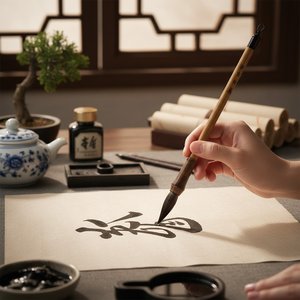
The Timeless Beauty of Chinese Calligraphy: An Exploration of Ink, Spirit, and the Art of the Brush
Embark on a profound journey through the soul of Chinese calligraphy. Explore the historical mastery of ink, brush, and script, from ancient Zhuanshu to elegant running script, and discover how this timeless art form reflects the enduring spirit of classical East Asian aesthetics.

Timeless Elegance: Discovering the Soulful Beauty of Chinese Calligraphy for Sophisticated Home Interiors
Elevate your home with the serene beauty of Chinese calligraphy art. Explore our collection of hand-painted ink wash reproductions and bespoke commissions at OriginalUniqueArt.com. Discover museum-quality pieces designed to bring cultural elegance and tranquility to your modern interior.

Ephemeral Expressions: Exploring the Nuances of Ink on Paper Through History & Contemporary Art
Explore the captivating world of ink wash painting – from its ancient origins to contemporary masters. Discover techniques, symbolism & conservation insights with OriginalUniqueArt.com.
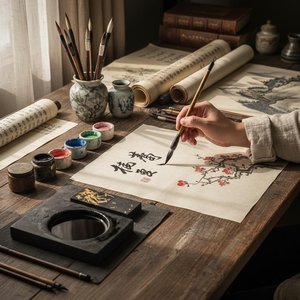
The Alchemy of Ink: Mastering the Timeless Beauty and Art History of Paper and Brush
Embark on a sophisticated exploration of ink wash painting and Sumi-e. Uncover the profound historical lineages, Zen philosophies, and technical mastery behind this timeless medium in our authoritative guide for fine art enthusiasts.

Mastering Ink on Paper: The Timeless Art of Precision, Flow, and Calligraphic Heritage
Explore the profound mastery of ink on paper. From Japanese haiku traditions to Ming Dynasty calligraphy, discover the delicate balance of precision and flow that defines this timeless art form through an expert historical lens.

