Mountain
Abstract Art
Modern
106.0 x 106.0 cm
Reprodução em Óleo Feita à Mão
Óleo sobre tela pintado à mão no seu tamanho e moldura, feito sob encomenda pelos nossos artistas.
Escolha entre os nossos tamanhos pré-definidos que respeitam as proporções originais da obra de arte.

Pode inserir as suas próprias dimensões para se adequar a uma moldura ou espaço específico. Se o tamanho selecionado não corresponder às proporções da imagem original, iremos cortar a obra de arte ou estender a pintura com elementos adicionais pintados à mão. Um esboço digital será enviado para sua aprovação antes do início da produção.
Tenha em atenção que a pré-visualização no ecrã não reflete o corte ou extensão real. Apenas o esboço mostrará com precisão a composição final.
Embora tamanhos personalizados estejam disponíveis, recomendamos selecionar uma dimensão da lista predefinida para preservar as proporções originais.
Após o pedido, a equipa OriginalUniqueArt.com enviará um e-mail ao cliente para solicitar instruções e fornecer uma prévia do esboço.
Entrega Mundial () em 3 a 4 semanas, em vez das 5 semanas padrão. (24 Julho). Sem comprometer a qualidade.
Envio Expresso Gratuito para todo o Mundo
Tela de Linho Premium
Seguro de envio completo
Garantia de Reembolso de Impostos Alfandegários
Garantia de Fidelidade de Cores
Política de Devolução de 60 Dias (Apenas para Defeitos)
Garantia de 100% de Reembolso
Desconto para múltiplas unidades
Mountain
Técnica de Reprodução
Dimensões da Reprodução
-
Preço Total Final
-
Descrição da Obra
A Symphony of Form and Color
In the vast, silent expanse of the desert landscape, Yoo Youngkuk’s Mountain emerges as a profound meditation on the intersection of nature and abstraction. This striking piece invites the viewer into a world where the physical boundaries of the earth dissolve into a rhythmic dance of geometry and light. The composition is dominated by majestic peaks rendered in deep purged and vibrant reds, creating a visual pulse that resonates with the raw energy of the Korean landscape. Rather than offering a literal depiction of terrain, the painting distills the essence of the mountains into a series of layered, overlapping shapes that suggest both immense weight and ethereal lightness. The interplay between the warm orange background and the cool, violet shadows creates a chromatic tension that captures the fleeting magic of a desert sunset, pulling the observer into a state of quiet contemplation.
The technique employed in this work reflects Yoo Youngkuk’s mastery as a pioneer of Korean abstraction. Through a deliberate use of color blocking and sharp, clean edges, the artist achieves a sense of structural permanence. There is a rhythmic quality to the way the smaller hills and larger massifs are positioned, guiding the eye across the canvas in a continuous loop of discovery. While the mountains themselves are composed of rigorous, almost architectural forms, the inclusion of tiny, scattered figures provides a vital sense of scale and human connection. These small silhouettes serve as a poignant reminder of our own place within the grandeur of the natural world, transforming what could be a cold, geometric study into a deeply emotive narrative about exploration and the human spirit's yearning for the sublime.
A Legacy of Abstract Vision
To possess a reproduction of Mountain is to bring a piece of art history into one's personal space. Yoo Youngkuk’s career was defined by his ability to translate the rugged beauty of his homeland into a universal language of form. As a central figure in the development of modernism in South Korea, his work transcends cultural boundaries, offering a sophisticated aesthetic that complements both contemporary and classic interior designs. For the collector or interior designer, this painting serves as a powerful focal point—a window into a landscape where color becomes emotion and shape becomes meaning. The piece does not merely decorate a room; it anchors it with a sense of tranquility, strength, and an enduring appreciation for the elemental beauty of our planet.
Biografia do Artista
Yoo Youngkuk: A Pioneer of Korean Abstract Art
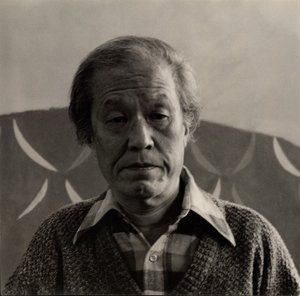
Yoo Youngkuk (劉永國; denoted as YYK) stands as a monumental figure in the history of Korean art, recognized universally as the first abstract painter and one of the foremost masters of modern Korean painting. His artistic journey began amidst profound societal transformations—the annexation by Japan, World War II, and the Korean War—yet he steadfastly pursued his vision of abstraction, forging a distinctive aesthetic that continues to inspire artists today. Born in 1916 in Uljin-gun, Gyeongsangbuk-do Province, Yoo’s formative years were steeped in the majesty of Taebaek Mountains, an experience that would subtly permeate even his most geometrically precise compositions. This connection to nature instilled within him a deep appreciation for its elemental forces and served as a cornerstone of his artistic philosophy. ### Early Life & Education Yoo’s formal training commenced at Bunka Gakuin University in Tokyo in 1938, where he immersed himself in Western abstract movements spearheaded by Murai Masanari and Hasegawa Saburo—influences that irrevocably shaped his nascent style. Recognizing the transformative potential of abstraction, Yoo embraced experimentation with diverse mediums, including wood relief and photography, demonstrating a remarkable adaptability to evolving artistic trends. His engagement with Japanese avant-garde artists solidified his commitment to challenging conventional artistic norms and pushing the boundaries of visual expression. ### Sinsasil-pa & The Birth of Korean Abstractism In 1948 Yoo joined forces with Kim Whanki and Lee Kyusang to establish *Sinsasil-pa* (新寫實派, New Realism Group), marking a pivotal moment in Korean art history. This collective bravely confronted the limitations of representational art, advocating for an aesthetic that mirrored the realities of postwar Korea through abstraction—a bold declaration that ignited debate and propelled Korean modern art forward. Yoo’s early works during this period showcased dynamic interplay between color fields and emerging geometric forms, hinting at the trajectory his style would take in subsequent years. ### The Mountain Motif & Artistic Evolution Throughout the 1950s and early 60s Yoo Youngkuk’s artistic style underwent a dramatic metamorphosis. While initially exploring color field painting, he gradually incorporated more defined geometric shapes—influenced by ongoing dialogue with nature—resulting in his signature motif: “the mountain.” Yoo didn't depict mountains literally; rather, he abstracted their essence—their solidity, grandeur, and spiritual resonance—into powerful compositions of color and form. The mountain became a symbol of Korea itself, representing resilience, endurance, and the enduring spirit of the nation. His exploration of minimalist aesthetics further cemented his reputation as a visionary artist. ### Legacy & Recognition Yoo Youngkuk’s contributions to Korean modern art were widely acknowledged during his lifetime, culminating in a comprehensive survey by *Monthly Art* magazine that hailed him as the most outstanding artist among over a hundred contemporaries. His work has been exhibited extensively both domestically and internationally, securing his position as a leading figure in the global abstract art scene. Yoo’s unwavering dedication to artistic innovation—coupled with his profound connection to Korean culture and landscape—continues to inspire artists today. His ability to translate the emotional and spiritual qualities of nature into pure abstraction remains a testament to his enduring artistry and lasting influence.Yoo Youngkuk
1916 - 2002 , Coreia do Sul
Informações Rápidas
- Artistic Movement Or Style: Abstração geométrica
- Artists Or Movements Influenced By This Artist:
- Constructivismo russo
- Suprematismo
- Artists Who Influenced This Artist:
- Murai Masanari
- Hasegawa Saburo
- Date Of Birth: 1916
- Date Of Death: 2002
- Full Name: Yoo Youngkuk
- Nationality: Coreano
- Notable Artworks:
- Montanha
- Trabalho
- Place Of Birth: Uljin, Coreia do Sul

A opção de vidro está disponível apenas para tamanhos inferiores a 110 cm