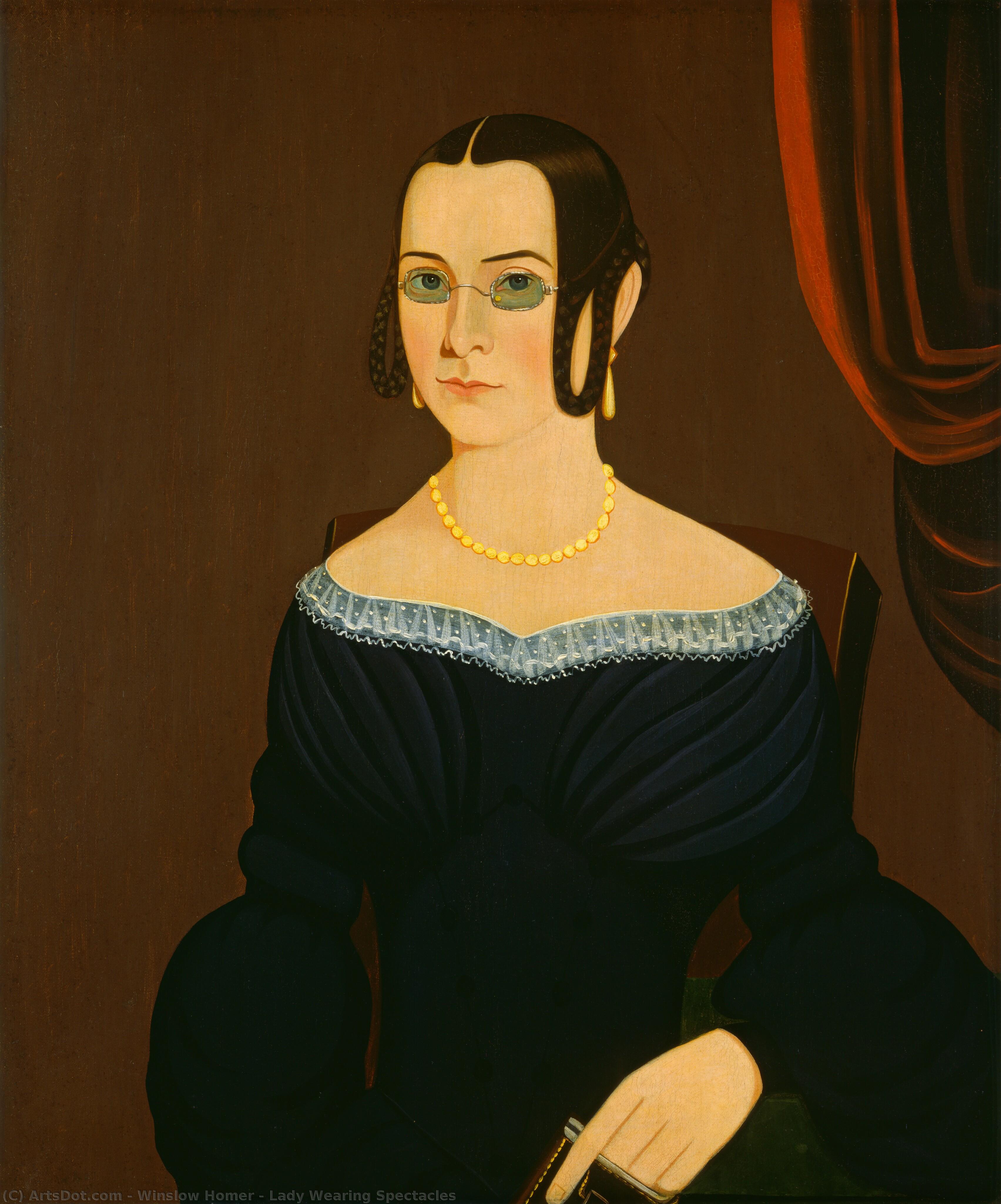
Lady Wearing Spectacles
Acrylic On Canvas
WallArt
American Realism
1840
94.0 x 82.0 cm
Reprodução em Óleo Feita à Mão
Óleo sobre tela pintado à mão no tamanho e moldura de sua escolha, feito sob encomenda pelos nossos artistas. ( Comprar impressão
Comprar imagem)
P118B $10
P118H $10
P118W $10
P438Z $10
P508JH $12
P508YH $12
P805H $10
P805Z $10
P919BZ $10
P919G $10
P919XJ $10
P959ZH $10
P968JZ $12
W106C $8
W218G $10
W218JH $8
W218Y $10
W307PJ $10
W316G $10
W316PJ $8
W316Y $10
W398PJ $8
W4111J $10
W500HY $15
W500JH $15
W692G $12
W849H $8
W940BG $15
W953PJ $8
Escolha entre os nossos tamanhos pré-definidos que respeitam as proporções originais da obra de arte.

Pode inserir as suas próprias dimensões para se adequar a uma moldura ou espaço específico. Se o tamanho selecionado não corresponder às proporções da imagem original, iremos cortar a obra de arte ou estender a pintura com elementos adicionais pintados à mão. Um esboço digital será enviado para sua aprovação antes do início da produção.
Tenha em atenção que a pré-visualização no ecrã não reflete o corte ou extensão real. Apenas o esboço mostrará com precisão a composição final.
Embora tamanhos personalizados estejam disponíveis, recomendamos selecionar uma dimensão da lista predefinida para preservar as proporções originais.
Após o pedido, a equipa OriginalUniqueArt.com enviará um e-mail ao cliente para solicitar instruções e fornecer uma prévia do esboço.
Entrega mundial () em 3 a 4 semanas, em vez das 5 semanas padrão. (29 Agosto). Sem comprometer a qualidade.
Envio expresso gratuito para todo o mundo
Tela de Linho de Alta Qualidade
Seguro de transporte completo
Garantia de Reembolso de Impostos Alfandegários
Garantia de Fidelidade Cromática
Política de Devolução em 60 Dias (Apenas para Defeitos)
Garantia de reembolso de 100%
Oferta de desconto por quantidade
Lady Wearing Spectacles
Técnica de Reprodução
Tamanho da Reprodução
-
Preço Total
$ 300
Lady Wearing Spectacles – Winslow Homer
Winslow Homer, a renowned American artist, is celebrated for his captivating and detailed oil paintings. Among his notable works is the painting titled Lady Wearing Spectacles, which showcases his exceptional skill in capturing the essence of his subjects.Artistic Details and Historical Context
The painting measures 94 x 82 cm and was created using oil on canvas, a medium that Homer mastered throughout his career. The subject of the painting is a woman dressed in a long black dress, which suggests she might be from an earlier time period. Her glasses are prominently visible, adding to the realism of the scene. The chair she sits on is also well-defined, providing depth and perspective to the painting. Homer’s meticulous attention to detail—the subtle folds of fabric, the precise rendering of facial features—is characteristic of his style and reflects a deep understanding of observation. This piece speaks to the Victorian era's fascination with portraiture and its concern for documenting individual identity.Artistic Significance
Winslow Homer's Lady Wearing Spectacles is an impressive piece that highlights his ability to convey emotion through visual representation. The woman’s attire and posture suggest she could be a portrait or a historical figure, making the painting both intriguing and thought-provoking. Homer skillfully employs chiaroscuro—the dramatic interplay of light and shadow—to sculpt form and create atmosphere, drawing inspiration from Rembrandt and Caravaggio. This technique enhances the sense of realism and invites contemplation about the subject’s inner life.Other Notable Works by Winslow Homer
Winslow Homer was prolific in his artistic endeavors, creating numerous works that are highly regarded today. Some of his other notable paintings include:- Sisters (60 x 75 cm, Oil On Canvas)
- Baby in Blue Cradle (83 x 72 cm, Oil On Canvas)
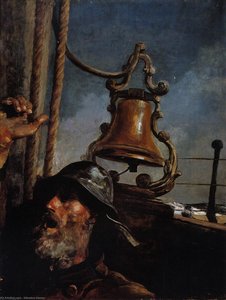
- The Morning Bell
Discovering More Artworks
For those interested in exploring more artworks and learning about various artists, the University of St Mark & St John in Plymouth, United Kingdom, is a valuable resource. Established in 1840, it has evolved into a public university with a rich history and cultural significance. To discover more about Winslow Homer's works and other famous paintings, visit Winslow Homer: Lady Wearing Spectacles on OriginalUniqueArt. This platform provides detailed information about the painting and offers the opportunity to own a handmade reproduction of this masterpiece. In conclusion, Winslow Homer's Lady Wearing Spectacles stands as a testament to his artistic prowess and unwavering dedication to capturing the human experience with unparalleled sensitivity.Biografia do Artista
A Brush with the American Spirit: The Life and Art of Winslow Homer
Winslow Homer, born in Boston in 1836, wasn’t sculpted by the traditional European art academies that shaped so many of his contemporaries. Instead, he emerged from a distinctly American experience, one rooted in practicality and observation. His journey began not with grand historical canvases, but as a commercial illustrator at the tender age of twelve for Harper's Weekly. This early apprenticeship was formative, honing an exceptional ability to capture scenes with clarity and detail – skills that would become hallmarks of his mature work. He wasn’t learning perspective in Paris; he was learning to *see* America, its people, and its unfolding story. The bustling streets of Boston, the quiet dignity of rural New England life, these were his first subjects, rendered with a precision born of necessity for the demands of print media. This foundation allowed him to transition into painting, initially in watercolor, before fully embracing the expressive potential of oil paints.Early Life and Artistic Beginnings
Winslow Homer’s childhood was marked by a profound connection to nature—a formative influence that would permeate his entire artistic career. Born Charles Savage Homer Jr., he descended from Captain John Homer, the Englishman who arrived in Boston in 1630 aboard the *Anne Dorcas*, establishing one of the earliest English settlements in Massachusetts Bay Colony. His father, Charles Savage Homer Sr., was a merchant and instilled in Winslow a strong work ethic and an appreciation for craftsmanship. Henrietta Maria Benson, his mother, possessed artistic talent herself—a passion for painting flowers that nurtured Winslow’s early fascination with visual representation. From a young age, he demonstrated remarkable drawing skills, sketching landscapes and portraits with astonishing accuracy. This innate aptitude was further cultivated by his brother, Charles S. Homer Jr., who worked as a chemist and encouraged Winslow's artistic pursuits. By 19, Homer secured an apprenticeship with John Bufford’s lithographic firm in Boston—a crucial step toward developing his skills as an illustrator and gaining experience in the burgeoning print media industry.The Influence of Harper’s Weekly and Commercial Illustration
Winslow Homer’s initial professional endeavors centered around Harper's Weekly, where he began illustrating scenes from daily life and capturing the spirit of American society. This early engagement with printmaking instilled in him a meticulous attention to detail—a characteristic that would define his artistic style throughout his career. Unlike many artists of his time who pursued formal training abroad, Homer honed his observational skills through direct experience, immersing himself in the landscapes and communities of New England. His illustrations for Harper’s showcased his ability to convey emotion and narrative effectively—skills he would later translate into equally compelling paintings. The firm's demand for precise renderings solidified his technique and established a foundation for his future artistic endeavors. Homer’s early works depicted Boston’s elite, capturing the elegance and sophistication of Victorian society with remarkable realism. He quickly gained recognition as a talented illustrator, securing commissions from prominent publishers and establishing himself as a respected figure in the American art world.The Civil War Years: Witnessing History Through Art
The outbreak of the American Civil War profoundly impacted Winslow Homer’s artistic vision—transforming his focus from idyllic landscapes to confronting the brutal realities of conflict. Recognizing Harper's Weekly's need for visual documentation, Homer volunteered as a war correspondent, traveling extensively throughout Virginia and documenting the experiences of soldiers and civilians alike. Unlike many artists who glorified warfare, Homer eschewed heroic narratives and grand strategies—instead, he sought to portray the human cost of the war with unflinching honesty. His sketches from Camp Douglas and Richmond captured the grim conditions endured by Union prisoners—a poignant reminder of the suffering inflicted upon ordinary people during wartime. Homer’s depictions of battle scenes were notable for their lack of romanticism—he eschewed heroic poses and idealized imagery, opting instead for gritty realism that conveyed the psychological impact of combat. His photographs from Gettysburg and Petersburg powerfully documented the devastation wrought by the war—capturing the solemnity of remembrance and conveying the profound grief experienced by those who had lost loved ones. Homer’s Civil War illustrations stand as testament to his commitment to portraying history with compassion and accuracy—a legacy that continues to inspire artists today.A Master of Landscape Painting and Symbolism
Winslow Homer's artistic style evolved dramatically after the Civil War, embracing a bolder approach characterized by textured surfaces and expressive brushstrokes. He moved from Boston to Gloucester, Massachusetts, establishing a studio overlooking Cape Ann—a location that would serve as his home for decades and inspire countless paintings depicting the rugged beauty of the Maine coast. Homer’s landscapes are imbued with a palpable sense of atmosphere—capturing the shifting moods of sea and sky with remarkable sensitivity. He skillfully employed color to convey emotion—using vibrant hues to depict sunsets ablaze with glory or muted tones to evoke feelings of melancholy and solitude. Homer's technique involved layering paint thickly onto canvas—creating tactile surfaces that mirrored the textures of the natural world. His paintings often explored themes of isolation, resilience, and humanity’s relationship with nature—reflecting his own contemplative spirit and conveying profound philosophical insights. Breezing Up (A Fair Wind) exemplifies Homer's masterful command of light and color—a celebration of maritime life that captures the exhilaration of sailing under a brilliant summer sun. Similarly, *The Gulf Stream*, painted in 1899, portrays a lone fisherman battling the forces of nature—a powerful metaphor for human struggle against overwhelming odds. Homer’s enduring legacy rests on his ability to transform observation into art—creating images that resonate with viewers across generations and capturing the essence of American identity.- His paintings are celebrated for their emotional depth and psychological insight
- Homer's technique—thick impasto—became synonymous with American Realism
Winslow Homer
1836 - 1910 , Estados Unidos da América
Dados Rápidos
- Artistic Movement Or Style: Realismo americano
- Artists Or Movements Influenced By This Artist: ['American painters']
- Artists Who Influenced This Artist:
- Escola Barbizon
- Courbet
- Millet
- Date Of Birth: 24 de fevereiro de 1836
- Date Of Death: 29 de setembro de 1910
- Full Name: Winslow Homer
- Nationality: Americano
- Notable Artworks:
- Breezing Up (A Fair Wind)
- O Fluxo Marinho
- Inocência
- Place Of Birth: Boston, Estados Unidos

A opção de vidro está disponível apenas para tamanhos inferiores a 110 cm