Visualizar em escala
 Enviar
 Compartilhar
 Ver detalhes
 Guia de Obras do Aluno

 Baixar imagem
 Semelhantes
 Raio X
 Apresentação de slides
 Estatísticas
The Sleeping Model


 Ver mais
Giclée / Impressão de Arte
Impressão giclée ou em tela de qualidade de museu, com produção rápida e opções flexíveis de acabamento. ( Encomendar reprodução pintada à mão Ver Imagem Digital)




P118B €10

P118H €10

P118W €10

P438Z €10

P508JH €12

P508YH €12

P805H €10

P805Z €10

P919BZ €10

P919G €10

P919XJ €10

P959ZH €10

P968JZ €12

W106C €8

W218G €10

W218JH €8

W218Y €10

W307PJ €10

W316G €10

W316PJ €8

W316Y €10

W398PJ €8

W4111J €10

W500HY €15

W500JH €15

W692G €12

W849H €8

W940BG €15

W953PJ €8




Escolha entre os nossos tamanhos pré-definidos que respeitam as proporções originais da obra de arte.

Digite a largura e a altura de que necessita, para se ajustar à sua moldura ou à sua parede. Uma impressão só pode ser cortada, nunca ampliada além da imagem original, pelo que um tamanho com uma proporção diferente perderá parte da imagem. Enviamos-lhe uma maquete digital para aprovação antes de imprimirmos qualquer coisa. A imagem apresentada nesta página não mostra o corte real — apenas a maquete o faz.
Entrega mundial () em 2 semanas, em vez das 4/5 semanas padrão. (21 Outubro)

Envio expresso gratuito para todo o mundo

Tela de Linho Premium

Seguro de transporte total

Garantia de Reembolso de Impostos Alfandegários

Garantia de Fidelidade de Cor

Política de Devolução em 100 Dias (Apenas para Defeitos)

Garantia de reembolso de 100%

Desconto para múltiplas unidades
 A opção de vidro está disponível apenas para tamanhos inferiores a 110 cm

The Sleeping Model
Giclée / Impressão de Arte
Dimensões da Reprodução
-


Preço Total
€ 70
A Moment Frozen in Victorian Tranquility
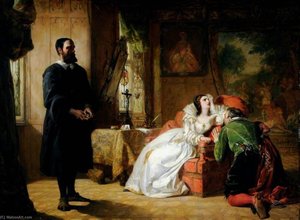
In the quiet corners of a nineteenth-century studio, where the scent of oil paint and turpentine lingers, William Powell Frith captures a scene of profound, unexpected stillness. The Sleeping Model is not merely a portrait of rest; it is a window into the delicate social fabric of the Victorian era. The painting presents a woman reclining gracefully in a chair, her head surrendered to sleep as it rests heavily upon her hand. This image, while seemingly peaceful, carries an underlying tension that speaks to the societal anxieties of the time. During this period, the presence of women in artistic spaces was often viewed through a lens of suspicion, and Frith masterfully navigates these complexities by presenting a moment of vulnerability that feels both intimate and deeply human.
The composition is a masterful study in chiaroscuro, where the dramatic interplay between light and shadow sculpts the woman’s form against the rich, deep tones of the room. Frith, heavily influenced by the domestic realism of Sir David Wilkie, employs a meticulous oil technique characterized by layered brushstrokes that lend a luminous quality to the skin and fabric. As the eye wanders through the studio, one notices the fine details that ground the scene in reality: the sturdy easel holding a canvas, the humble basket resting on the floor, and the subtle presence of other figures that suggest a larger, bustling world existing just beyond this momentary lapse into slumber. The red walls of the studio provide a warm, dramatic backdrop, pulling the viewer into the heart of the artist's sanctuary.
Symbolism and the Artist's Vision
Beyond its surface beauty, the painting serves as a poignant narrative about class and identity. The model herself—historically identified as an orange seller whom Frith encountered in the street—represents the intersection of different social strata within the artist's workspace. Her posture, caught between the exhaustion of labor and the grace of repose, acts as a quiet defiance of the rigid expectations placed upon women of her standing. There is a profound sense of contemplation embedded in her stillness; even in sleep, she commands the space, inviting the viewer to reflect on the unseen lives that move through the shadows of history.
For the discerning collector or interior designer, this piece offers more than just aesthetic elegance. It provides a focal point of intellectual and emotional depth. The painting’s ability to evoke a sense of nostalgic peace while maintaining a sophisticated, academic rigor makes it an ideal centerpiece for a curated collection. Whether placed in a sunlit gallery or a moody, classic study, The Sleeping Model brings with it the weight of history and the timeless allure of a story caught in mid-breath. It is a celebration of the fleeting moments that define our existence, rendered with the unparalleled skill of one of Britain's greatest chroniclers of social life.
Perguntas e Respostas
Como o movimento e a época se encontram em "The Sleeping Model" de William Powell Frith?
Em "The Sleeping Model" de William Powell Frith, o movimento Victorian Realism encontra a era Século XIX.
Qual paleta e cor predominante definem "The Sleeping Model"?
"The Sleeping Model" de William Powell Frith utiliza uma paleta Earthy, com Khaki (#dfc68f) como cor dominante.
A que período da carreira de William Powell Frith pertence "The Sleeping Model"?
"The Sleeping Model" representa o Mature Period de William Powell Frith.
Biografia do Artista
Early Life and Artistic Beginnings
William Powell Frith’s journey into the world of art began in a surprisingly modest setting: Aldfield, a small village nestled near Ripon in North Yorkshire, England. Born on January 9, 1819, he was the son of an innkeeper, a profession that initially seemed far removed from the realm of artistic creation. However, his father recognized and nurtured a nascent talent within young William, recognizing a keen eye for detail and a natural inclination towards visual representation.
Unlike many artists who benefited from privileged backgrounds, Frith’s early education was somewhat rudimentary. He received instruction in basic literacy and arithmetic before transitioning to the teachings of a local church school. Yet, it was his father's astute observation that steered him toward a more formal artistic training. This pivotal decision marked a turning point, setting him on a path towards becoming one of Britain’s most celebrated genre painters.
Frith’s initial aspirations leaned towards the practical profession of an auctioneer, a common pursuit for young men in his era. However, his father, recognizing his son's artistic potential, gently encouraged him to pursue his passion. This guidance led Frith to enroll at Sass’s Academy in Charlotte Street, London – a prestigious institution renowned for its rigorous training and exposure to the latest artistic trends. There, he honed his skills under the tutelage of accomplished instructors, laying the foundation for his future success.
Influences and Artistic Style
Frith's artistic development was profoundly shaped by several key influences, most notably the work of Sir David Wilkie, a prominent painter known for his captivating depictions of domestic scenes. Wilkie’s ability to capture the nuances of everyday life with remarkable realism and detail served as a significant model for Frith. He particularly admired Wilkie's approach to portraying social interactions within public spaces – a theme that would become central to Frith’s own artistic vision.
Furthermore, Frith was deeply impacted by the literary works of Charles Dickens, whose vivid descriptions of London life provided him with rich source material. He frequently drew inspiration from Dickens' novels and short stories, translating their scenes and characters onto canvas with meticulous precision. This collaboration between literature and art is evident in many of his most celebrated paintings.
Frith’s artistic style was characterized by an extraordinary level of detail and a commitment to realism. He meticulously observed the world around him, capturing the appearance of clothing, architecture, and human expressions with remarkable accuracy. His compositions often featured numerous figures arranged within complex, crowded scenes – a hallmark of his distinctive approach. He skillfully employed photographic studies, particularly those created by Robert Howlett, to ensure that every element in his paintings was rendered with utmost precision.
Notable Works and Artistic Achievements
William Powell Frith’s career produced a remarkable body of work, each painting offering a unique glimpse into Victorian society. Among his most iconic creations are Ramsgate Sands (1854), a vibrant depiction of seaside life that captures the energy and excitement of a popular resort town; The Derby Day (1858), a sprawling panorama of the Epsom Downs Racecourse, teeming with elegantly dressed spectators and spirited horses; and The Railway Station (1862), a detailed portrayal of Paddington Station, showcasing the bustling activity of London’s transportation hub.
His painting *The Sleeping Model* (1853) holds particular significance as his Diploma work at the Royal Academy. This piece demonstrated his technical mastery and artistic vision, solidifying his position within the art world. Another notable work is *The Crossing Sweeper* (1858), a poignant scene that starkly contrasts the opulence of the wealthy with the poverty of the working class – a commentary on social inequality that resonated deeply with Victorian audiences.
Frith’s success was not merely artistic; it was also commercial. His paintings were immensely popular, attracting large crowds to exhibitions and generating significant revenue. He became one of the most commercially successful artists of his time, a testament to his talent and the appeal of his subject matter.
Later Years and Legacy
As he matured, Frith continued to produce works that reflected both his artistic skill and his social awareness. His later paintings often explored themes of wealth, poverty, and morality, offering critical observations on Victorian society. He wrote two autobiographies, *My Autobiography* (1887) and *Further Reminiscences* (1888), providing valuable insights into his life, artistic process, and the cultural context in which he worked.
Frith remained active as an artist until his death on November 2, 1909, at the age of 90. He continued to exhibit his work throughout his later years, maintaining a strong presence within the British art scene. His legacy endures as one of the most important genre painters of the Victorian era, celebrated for his meticulous realism, social commentary, and captivating depictions of everyday life.
His paintings continue to be exhibited in museums and galleries around the world, offering a valuable window into 19th-century England. Frith’s work serves as a reminder of the power of art to document history, explore social issues, and capture the essence of human experience.

William Powell Frith
1819 - 1909 , Reino Unido
Informações Rápidas
- Artistic Movement Or Style: Pintura de gênero
- Artists Or Movements Influenced By This Artist: ['The Clique']
- Artists Who Influenced This Artist: ['David Wilkie']
- Date Of Birth: 9 jan 1819
- Date Of Death: 2 nov 1909
- Full Name: William Powell Frith
- Nationality: Inglês
- Notable Artworks:
- Ramsgate Sands
- Derby Day
- Estação Ferroviária
- Place Of Birth: Aldfield, Reino Unido
Artigos Relacionados

William Salter: A Life Immersed in Colour – Victorian Botanical Art & Social Vision
Explore the life & art of William Salter (1804-1875), a Victorian master renowned for his botanical illustrations and striking portraits. Discover his social vision & legacy at OriginalUniqueArt.
R.A. Benjamin Williams: Victorian Genre Painting & Social Commentary
Explore the captivating world of Benjamin Williams Leader's Victorian genre paintings. Discover his mastery of naturalism, social commentary & lasting influence on British art. Expert insights at OriginalUniqueArt.

William Powell Frith: Narratives of Victorian Society & the Rise of Realist Painting
Explore the life & works of William Powell Frith, the 'greatest British painter of social scenes.' Discover his iconic Victorian genre paintings and learn about his lasting impact on realist art. Hand-painted reproductions available.

William James Müller: Navigating Victorian Sentiment & Realism in British Landscape Painting
Explore the captivating landscapes of William James Müller, the leading artist of the Bristol School. Discover his Victorian masterpieces, Egyptian travels & Lycian sketches – a journey through 19th-century art and technique.
The Allure of the Pose: Representations of 'Model' Through Art History
Explore the fascinating history of the 'art model' through centuries of painting! Discover academic techniques, social contexts & the evolving role of models in art. OriginalUniqueArt offers custom reproductions and expert consultation.