Neoclassicism
Plate five, from A Rake's Progress (William Hogarth)
William Hogarth (1697–1764) criou Plate five, from A Rake's Progress. Pertence ao movimento Neoclassicism. É feito em Acrylic On Canvas.
- Acrylic On Canvas

 Visualizar na parede

 Pintura a Óleo Feita à Mão
 Compartilhar
 Compartilhar
 Ficha técnica


 Baixar imagem
 Semelhantes
 Raio X
 Ver diaporama
 Perguntas e Respostas

 Estatísticas
Plate five, from A Rake's Progress, em resumo
- Título
- Plate five, from A Rake's Progress
- Artista
- William Hogarth (1697–1764)
- Artista nascido em
- Londres, Reino Unido
- Técnica
- Acrylic On Canvas
- Movimento
- Neoclassicism
- Período
- Renaissance
- Tema
- deception, fraud, morality, social commentary, 18th century, engraving
O que Plate five, from A Rake's Progress retrata?
A Scene of Deceit: Unveiling Hogarth’s “Plate Five” from A Rake's Progress
This striking engraving, *Plate Five* from William Hogarth’s renowned series *A Rake’s Progress*, offers a chilling glimpse into the downward spiral of Tom Rakewell. More than just a narrative illustration, it is a powerful social commentary and a masterclass in 18th-century artistic technique. The scene unfolds within a dimly lit, cluttered interior – likely a pawnbroker's or merchant’s shop – brimming with symbolic details that reveal the protagonist’s desperate circumstances.Narrative & Historical Context
Created between 1732 and 1734, *A Rake’s Progress* was Hogarth’s ambitious attempt to visually depict a moral tale for a burgeoning middle-class audience. The series follows Tom Rakewell, a young man who inherits a substantial fortune and proceeds to squander it on gambling, prostitution, and extravagant living. *Plate Five* marks a pivotal moment: Tom, recently imprisoned for debt, is being manipulated by unscrupulous characters. This scene reflects the anxieties of the era regarding social mobility, financial ruin, and the moral failings of the wealthy. Hogarth’s work resonated deeply with a society grappling with rapid economic change and increasing urbanization.Artistic Style & Technique
Hogarth's style is characterized by its realism, meticulous detail, and satirical edge. He masterfully employs engraving techniques – utilizing fine lines and hatching to create depth, texture, and dramatic lighting. The composition is deliberately crowded and dynamic, drawing the viewer’s eye to the central interaction between Tom and the deceitful figures surrounding him. While seemingly realistic, Hogarth subtly exaggerates features and expressions for comedic and critical effect—a hallmark of his satirical approach. The monochrome palette further enhances the somber mood and emphasizes the stark realities of Tom's situation.Decoding the Symbolism
Every element within *Plate Five* carries symbolic weight.- The Chain: Represents not only Tom’s literal imprisonment but also his metaphorical entrapment by debt, vice, and his own poor choices.
- The False Document: Symbolizes the deception and exploitation that surround Tom, highlighting the predatory nature of those who profit from his misfortune.
- The Cluttered Interior: Reflects the chaos and moral decay that have consumed Tom’s life. The abundance of goods suggests a society obsessed with material possessions.
- The Suspicious Figures: Their expressions and gestures convey a sense of untrustworthiness, emphasizing the lack of genuine compassion in Tom's world.
Emotional Impact & Lasting Legacy
*Plate Five* evokes a powerful sense of unease and pity. While Hogarth satirizes Tom’s folly, he also elicits empathy for his plight. The scene serves as a cautionary tale about the dangers of excess, the fragility of fortune, and the importance of moral integrity. Hogarth's innovative use of sequential imagery paved the way for modern comic strips and graphic novels. His commitment to social commentary continues to inspire artists today. His work remains remarkably relevant, prompting viewers to reflect on timeless themes of morality, class, and human vulnerability.Bringing Hogarth’s Vision Home
A high-quality reproduction of *Plate Five* is a compelling addition to any art collection or interior space. Its intricate detail and thought-provoking subject matter make it a conversation starter and a testament to the enduring power of artistic storytelling. Whether displayed in a study, living room, or gallery wall, this engraving offers a sophisticated touch of historical elegance and intellectual depth.Imagens em alta resolução de Plate five, from A Rake's Progress

William Hogarth, Plate five, from A Rake's Progress. Domínio público.
Perguntas sobre Plate five, from A Rake's Progress respondidas
De que técnica é feita a obra "Plate five, from A Rake's Progress"?
William Hogarth utilizou a técnica de Acrylic On Canvas para "Plate five, from A Rake's Progress". A técnica define a natureza material da obra original.
O que representa "Plate five, from A Rake's Progress"?
"Plate five, from A Rake's Progress", de William Hogarth retrata: deception, fraud, morality, social commentary, 18th century, engraving, satire.
"Plate five, from A Rake's Progress" está em domínio público?
"Plate five, from A Rake's Progress", de William Hogarth está em em domínio público — seus direitos autorais expiraram. Este status determina como a imagem da obra pode ser reproduzida.
A qual artista "Plate five, from A Rake's Progress" é atribuída?
"Plate five, from A Rake's Progress" é atribuída a William Hogarth.
A qual movimento artístico "Plate five, from A Rake's Progress", de William Hogarth pertence?
"Plate five, from A Rake's Progress" é uma obra do Neoclassicism. O movimento indica a tradição artística da qual a obra faz parte.
A que fase da trajetória de William Hogarth "Plate five, from A Rake's Progress" pertence?
"Plate five, from A Rake's Progress" pertence ao Mature Period da carreira de William Hogarth. Esta classificação relaciona a obra ao desenvolvimento do artista.
Qual é a situação dos direitos autorais de "Plate five, from A Rake's Progress", de William Hogarth?
"Plate five, from A Rake's Progress", de William Hogarth está em em domínio público — seus direitos autorais expiraram. O período de direitos autorais conta a partir do falecimento do artista, ocorrido em 1764.
Como "Plate five, from A Rake's Progress" se integra aos temas e ao estilo de William Hogarth?
"Plate five, from A Rake's Progress" integra a produção Neoclassicism de William Hogarth, cujos temas recorrentes incluem key series example, early successes, moralistic narrative, foundation of style, satirical tradition, moralizing prints, classical engraving, british printmaking.
De que forma o tema de "Plate five, from A Rake's Progress" se relaciona com os temas habituais de William Hogarth?
Entre os temas recorrentes de William Hogarth — key series example, early successes, moralistic narrative, foundation of style, satirical tradition, moralizing prints, classical engraving, british printmaking — "Plate five, from A Rake's Progress" traz seu próprio foco em deception, fraud, morality, social commentary, 18th century, engraving, satire.
Sobre o artista, William Hogarth

1697–1764, Reino Unido
William Hogarth
A Vida de William Hogarth Londres, 1697. O ar em Bartholomew Close é denso, preenchido pelos sons de uma metrópole em constante crescimento. É neste cenário que William Hogarth entra em um mundo de estabilidade precária. Seu pai, Richard Hogarth, luta para garantir o sustento como mestre de escola de latim e autor de livros didáticos.
Também de William Hogarth
 Placa uma, de A Rake’s Progress
 Plate seis, de A Rake's Progress
 Gin Lane1750
 O Contrato de Casamento1745

Ensaios sobre Plate five, from A Rake's Progress
 Abstração Geométrica: 10 Obras-Primas que Moldaram a Arte Moderna | OriginalUniqueArt.comDescubra as 10 obras-primas da Abstração Geométrica que revolucionaram a arte moderna! Explore Kandinsky, Mondrian e outros artistas icônic…
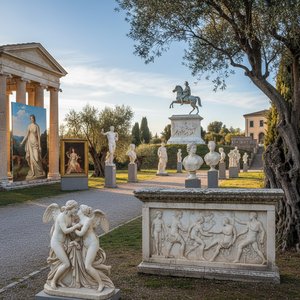 Os 10 Grandes Mestres do Neoclassicismo: Arte, História e DecoraçãoDescubra os 10 grandes mestres do Neoclassicismo! Explore a história, técnica e beleza de obras icônicas de David, Ingres e outros. Encontr…
 Masterpieces of Satire: The Top 25 William Hogarth ArtworksExplore the biting satire of William Hogarth's top 25 masterpieces. Discover the full collection online at OriginalUniqueArt.com.