
 Visualizar em escala
 Enviar
 Compartilhar
 Ver detalhes

 Baixar
 Semelhantes
 Raio X
 Apresentação de slides
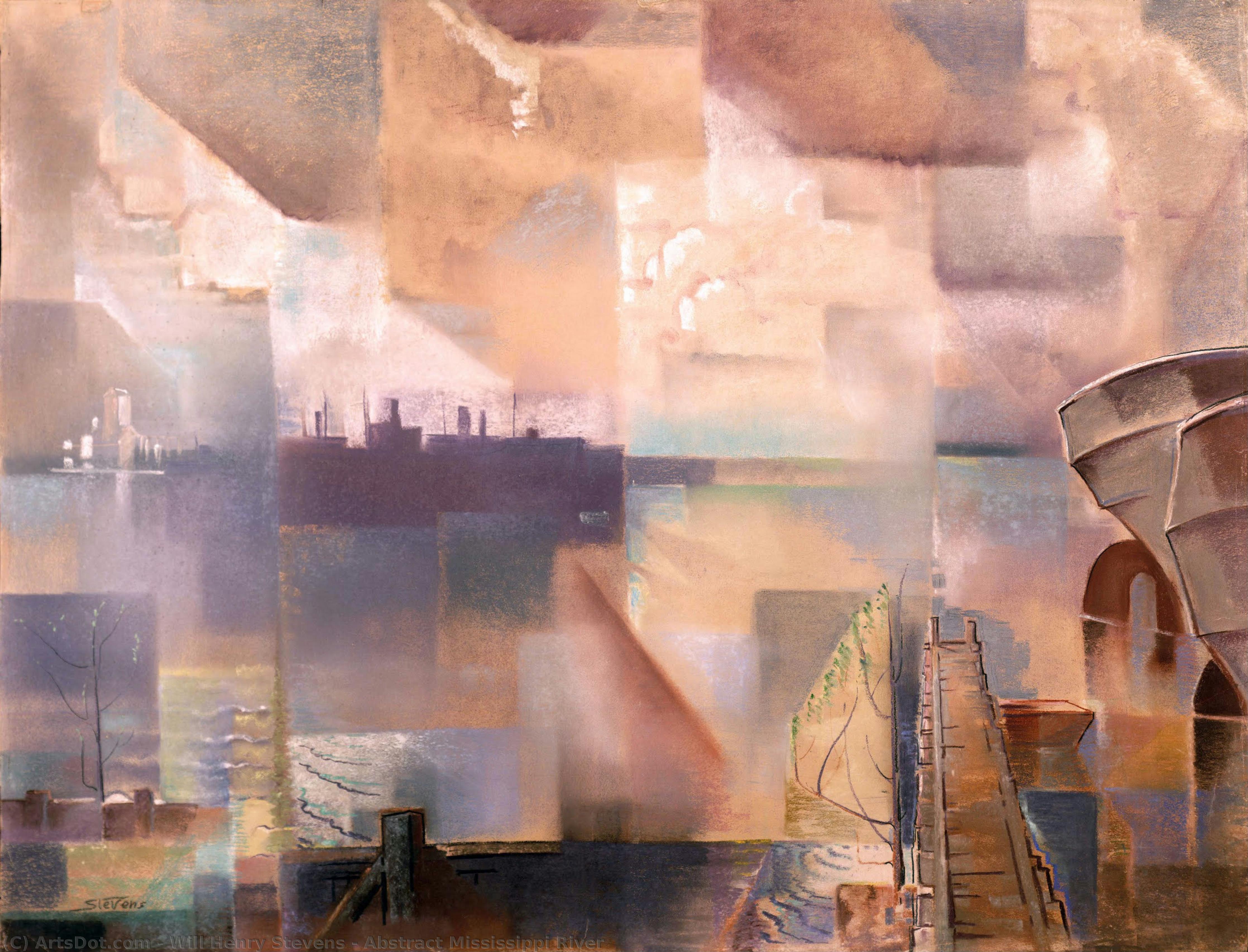
Abstract Mississippi River


 Ver mais
Giclée / Impressão de Arte
Impressão giclée ou em tela de qualidade de museu, com produção rápida e opções flexíveis de acabamento. ( Encomendar reprodução pintada à mão Comprar imagem em alta resolução)




































Escolha entre os nossos tamanhos pré-definidos que respeitam as proporções originais da obra de arte.

Você pode inserir suas próprias dimensões para se ajustar a uma moldura ou espaço específico. Se o tamanho selecionado não corresponder às proporções da imagem original, iremos recortar a obra de arte ou estender a imagem com uma borda espelhada ou preenchimento sólido. Um mockup digital será enviado para sua aprovação antes do início da produção.
Por favor, observe que a visualização na tela não reflete o recorte ou a extensão real. Apenas o mockup mostrará com precisão a composição final.
Embora tamanhos personalizados estejam disponíveis, recomendamos selecionar uma dimensão da lista predefinida para preservar as proporções originais.
Entrega mundial () em 2 semanas, em vez das 4/5 semanas padrão. (20 Agosto)

Envio Expresso Gratuito para todo o Mundo

Tela de Linho Premium

Seguro de transporte total

Garantia de Reembolso de Impostos Alfandegários

Garantia de Fidelidade de Cor

Política de Devolução de 60 Dias (Apenas para Defeitos)

Garantia de reembolso de 100%

Desconto para múltiplas unidades
 A opção de vidro está disponível apenas para tamanhos inferiores a 110 cm

Abstract Mississippi River
Giclée / Impressão de Arte
Dimensões da Reprodução
-


Preço Total
$ 80
Descrição do Item
Biografia do Artista
The Alchemist of Southern Light
Will Henry Stevens stands as a singular figure in American modernist painting, celebrated for his evocative depictions of the rural South and his pioneering exploration of tonal pastel mediums. Born November 28, 1881, in Vevay, Indiana—a town nestled along the banks of the Ohio River—Stevens’ artistic journey unfolded against the backdrop of a burgeoning interest in naturalism and a profound connection to the landscapes of his formative years. His father, an apothecary, instilled in him a meticulous attention to detail and a foundational understanding of chemistry, skills that would later prove invaluable in his experimental approach to pigment formulations.
Stevens’ formal artistic education began at the Cincinnati Art Academy, where he honed his drawing skills before embarking on a career path marked by serendipitous encounters and intellectual stimulation. Notably, he befriended Jonas Lie, Van Dearing Perrine, and Albert Pinkham Ryder—artists who championed the principles of naturalism and encouraged Stevens to prioritize observation over idealized representation. These formative relationships profoundly shaped his artistic vision, fostering an appreciation for the philosophical explorations of nature found in the works of Emerson, Thoreau, and Whitman. The influence of Whistler and Twachtman further solidified his commitment to tonal painting—a technique prioritizing subtle gradations of color and emphasizing the expressive qualities of light and shadow over conventional, heavy brushstrokes.
Innovation Through Chemistry and Color
What truly distinguished Stevens from many of his contemporaries was his scientific approach to the medium itself. He did not merely use art supplies; he created them. Drawing upon the chemical knowledge inherited from his father, Stevens developed a unique pastel medium, meticulously crafted through the careful grinding and mixing of raw pigments. This innovative approach liberated him from the constraints of traditional oil painting, allowing for an unparalleled freedom in capturing the fleeting, ephemeral moments of Southern light and atmosphere. His ability to manipulate texture and tone allowed him to bridge the gap between representational landscape and pure abstraction.
His career was a beautiful duality of styles. While he is often categorized as a modernist, his work remained deeply rooted in a love for the natural world. He moved seamlessly between two distinct modes:
- The Representational: Detailed, realistic landscapes that captured the soul of the Southern terrain, particularly during his summers in the mountains of Western North Carolina and Eastern Tennessee.
- The Abstract: Non-objective works and abstractions of nature that explored the underlying rhythms, shapes, and energies of the environment.
A Legacy Etched in the American Landscape
As Stevens transitioned into his later years, he became a fixture of the Southern art scene, notably serving on the faculty of Newcomb College of Art in New Orleans. This period marked a significant evolution toward modernism, as he successfully integrated the nationalistic spirit of the American Regionalists with the groundbreaking philosophies of the European avant-garde. Even as his work moved toward more abstract forms, it never lost its connection to the earth and the light that defines it.
Today, the historical significance of Will Henry Stevens is preserved in some of the most prestigious institutions in the United States. His ability to capture the "spirit" of a place through the lens of modern technique has earned him a permanent place in the canon of American art. His works can be found in the collections of:
- The Smithsonian American Art Museum
- The Museum of Fine Arts, Boston
- The Los Angeles County Museum of Art (LACMA)
- The North Carolina Museum of Art
- The Ogden Museum of Southern Art
Through his mastery of the pastel medium and his unwavering devotion to the nuances of nature, Stevens left behind a body of work that serves as both a scientific achievement in pigmentary innovation and a poetic tribute to the enduring beauty of the American landscape.

Will Henry Stevens
1881 - 1949 , United States of America
Informações Rápidas
- Artistic Movement Or Style: Naturalism & Modernism
- Artists Or Movements Influenced By This Artist: ['James McNeill Whistler']
- Artists Who Influenced This Artist:
- Ralph Waldo Emerson
- Henry David Thoreau
- Walt Whitman
- Date Of Birth: November 28, 1881
- Date Of Death: August 25, 1949
- Full Name: Will Henry Stevens
- Nationality: American
- Notable Artworks: ['Abstract Mississippi River']
- Place Of Birth: Vevay, United States
Artigos Relacionados

Kandinsky: As 25 Obras-Primas que Definem o Abstracionismo | OriginalUniqueArt
Descubra as 25 obras-primas de Wassily Kandinsky, pioneiro da arte abstrata! Explore a história, cores e significado por trás de cada pintura. Encontre reproduções de alta qualidade e inspire sua decoração em OriginalUniqueArt.com.

Top 10 Obras-Primas do Expressionismo Abstrato: Arte para Decorar e Inspirar | OriginalUniqueArt.com
Descubra as 10 obras-primas do Expressionismo Abstrato com Jackson Pollock, Mark Rothko e mais! Explore a história, técnica e emoção por trás de cada pintura. Encontre reproduções de arte exclusivas para decorar sua casa em OriginalUniqueArt.com.

Abstração Geométrica: 10 Obras-Primas que Moldaram a Arte Moderna | OriginalUniqueArt.com
Descubra as 10 obras-primas da Abstração Geométrica que revolucionaram a arte moderna! Explore Kandinsky, Mondrian e outros artistas icônicos. Encontre reproduções de alta qualidade para decorar sua casa com OriginalUniqueArt.com.

Kazimir Malevich: As 25 Obras-Primas Essenciais da Arte Abstrata | OriginalUniqueArt
Descubra as 25 obras-primas de Kazimir Malevich, pioneiro do suprematismo e da arte abstrata. Explore a história por trás de 'Black Square' e outras pinturas icônicas. Encontre reproduções de alta qualidade para transformar sua casa com OriginalUniqueArt.com!
Paul Klee: As 25 Obras-Primas que Definem um Mestre da Arte Moderna | OriginalUniqueArt
Descubra as 25 obras-primas de Paul Klee, um mestre da arte moderna! Explore a história, cores e significado por trás de seus quadros icônicos. Encontre reproduções de alta qualidade para decorar sua casa com estilo em OriginalUniqueArt.com.

