
 Visualizar em escala
 Enviar
 Compartilhar
 Ver detalhes
 Guia de Obras do Aluno

 Baixar imagem
 Semelhantes
 Raio X
 Apresentação de slides
 Estatísticas
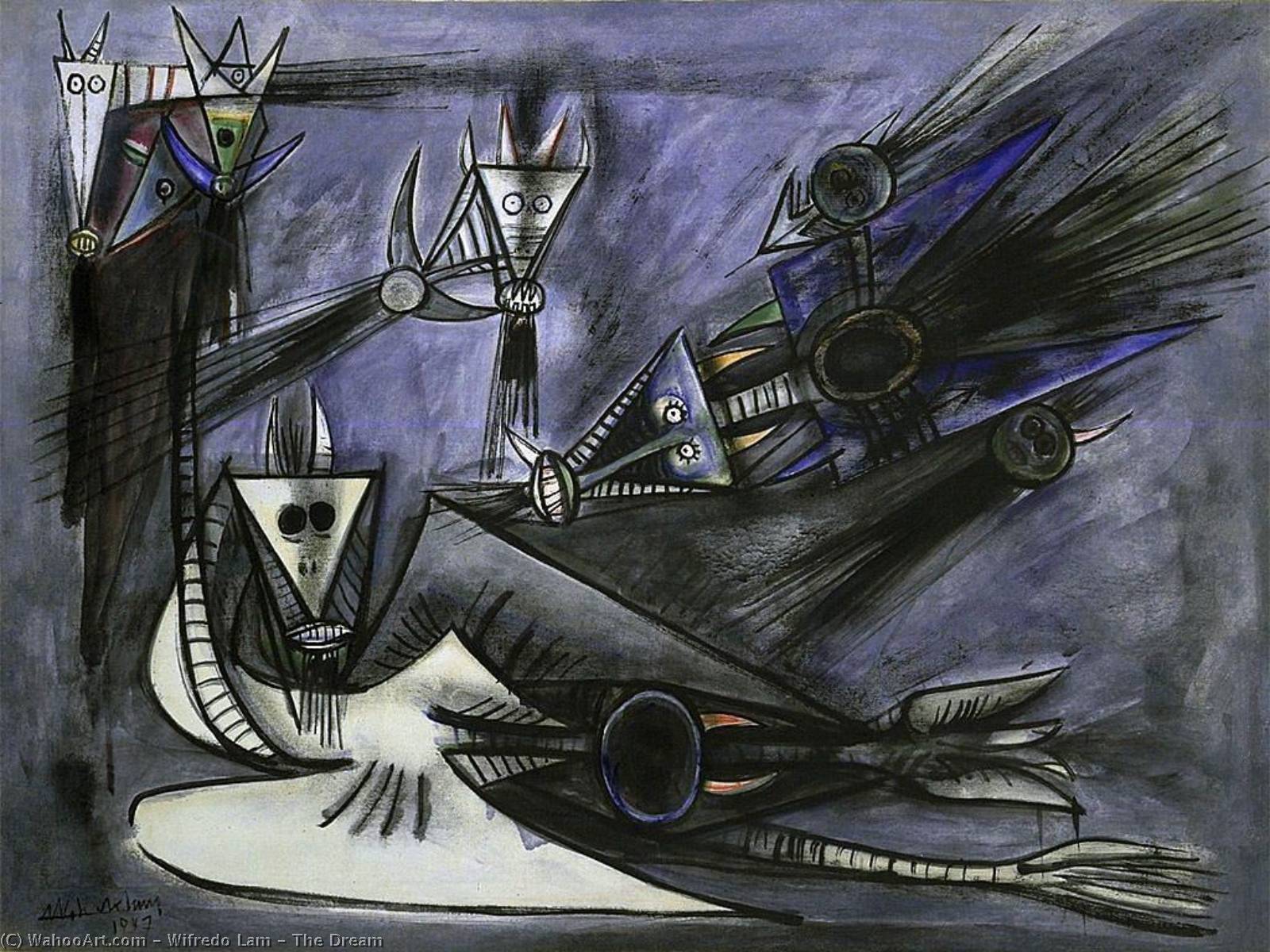
The Dream
 1947
1947 77.0 x 102.0 cm
 Ver mais
A obra de arte exibida nesta página é protegida por leis de direitos autorais, o que significa que não podemos criar ou vender legalmente uma reprodução idêntica. Esta proteção é aplicada por meio de acordos internacionais, tais como a Convenção de Berna e pelas leis nacionais, incluindo as estabelecidas por Lei de Direitos Autorais dos EUA - Título 17.
Este método cumpre plenamente as regulamentações de direitos autorais, pois não envolve a cópia ou duplicação da obra protegida. Em vez disso, trata-se de uma reinterpretação criativa — uma nova pintura que é influenciada pela original, mas não idêntica a ela.
Giclée / Impressão de Arte
Impressão giclée ou em tela de qualidade de museu, com produção rápida e opções flexíveis de acabamento. ( Encomendar reprodução pintada à mão Ver Imagem Digital)




































Escolha entre os nossos tamanhos pré-definidos que respeitam as proporções originais da obra de arte.

Digite a largura e a altura de que necessita, para se ajustar à sua moldura ou à sua parede. Uma impressão só pode ser cortada, nunca ampliada além da imagem original, pelo que um tamanho com uma proporção diferente perderá parte da imagem. Enviamos-lhe uma maquete digital para aprovação antes de imprimirmos qualquer coisa. A imagem apresentada nesta página não mostra o corte real — apenas a maquete o faz.
Entrega mundial () em 2 semanas, em vez das 4/5 semanas padrão. (23 Outubro)

Envio expresso gratuito para todo o mundo

Tela de Linho Premium

Seguro de transporte total

Garantia de Reembolso de Impostos Alfandegários

Garantia de Fidelidade de Cor

Política de Devolução em 100 Dias (Apenas para Defeitos)

Garantia de reembolso de 100%

Desconto para múltiplas unidades
 A opção de vidro está disponível apenas para tamanhos inferiores a 110 cm

The Dream
Giclée / Impressão de Arte
Dimensões da Reprodução
-


Preço Total
€ 70
Surrealist Influences
The Dream is a prime example of surrealist art, which emphasizes the subconscious and the world of dreams. Wifredo Lam was influenced by other notable surrealist artists, such as Max Ernst and Frida Kahlo. The painting features a group of strange creatures or beings in various positions throughout the canvas, creating a sense of chaos and disorder. Surrealism was a cultural movement that emerged in the early 20th century, seeking to challenge traditional notions of art, culture, and society. Wifredo Lam's work is characterized by its use of bold colors and distorted forms, which adds to the overall sense of unease and uncertainty.Artistic Style
The Dream showcases Wifredo Lam's unique artistic style, which blends elements of cubism, surrealism, and African art. The painting features a mix of geometric shapes and organic forms, creating a sense of tension and conflict. The use of bold colors and distorted forms adds to the overall sense of drama and emotion.- Oil on canvas: View painting details
- Surrealist artwork: Learn more about surrealist art movement
- Artist: Wifredo Lam: View similar artists
The Hirshhorn Museum and Sculpture Garden is one of the premier modern art museums in the world, featuring a collection of over 12,000 works of art. Visitors can view The Dream in person, along with other notable surrealist artworks.
In conclusion, The Dream by Wifredo Lam is a masterpiece of surrealist art that showcases the artist's unique style and technique. With its bold colors and distorted forms, this painting is a must-see for anyone interested in modern art.
Perguntas e Respostas
Qual é a intensidade de cor de "The Dream" de Wifredo Lam?
"The Dream" de Wifredo Lam apresenta uma intensidade de cor Monochromatic.
"The Dream" de Wifredo Lam utiliza contrastes fortes ou harmonias suaves?
A composição cromática de "The Dream" de Wifredo Lam combina um contraste Bold com uma harmonia Softly Mixed Palette.
Posso ver "The Dream" como um slideshow em tela cheia?
"The Dream" de Wifredo Lam pode ser visualizada como um slideshow na página de Apresentação de slides da obra.
Biografia do Artista
Wifredo Lam - A Crossroads of Cultures: The Life and Art of Wifredo Lam
Wifredo Óscar de la Concepción Lam y Castilla, known simply as Wifredo Lam, was a painter who embodied the complexities of cultural identity in the 20th century. Born in Sagua La Grande, Cuba, in 1902, his very lineage spoke to the island’s layered history – a father descended from Chinese immigrants and a mother tracing her roots back to Spanish conquistadors and enslaved Africans. This multicultural heritage wasn't merely biographical detail; it became the wellspring of his artistic vision, fueling a unique style that fused European modernism with Afro-Cuban spirituality and symbolism. Lam’s early life was marked by an initial pursuit of law in Havana, but even amidst legal studies, he found himself drawn to the natural world, spending time at the botanical gardens – a foreshadowing of the organic forms that would later dominate his canvases. Formal artistic training followed at the Escuela de Bellas Artes in Havana and then in Madrid under Fernando Álvarez de Sotomayor y Zaragoza, where he absorbed traditional techniques while simultaneously beginning to question their limitations.Early Life and Influences
Wifredo Lam’s birth into a family steeped in multicultural traditions profoundly shaped his artistic trajectory. His father, Enrique Lam-Yam, was a Chinese immigrant from Canton (Guangdong province) who arrived in Cuba as part of the late-19th-century wave of Chinese laborers and merchants. Enrique instilled in Wifredo a fascination with Eastern aesthetics and philosophy—a connection that would resonate throughout his artistic explorations. Simultaneously, Ana Serafina Castilla’s ancestry encompassed both Spanish conquistadors and enslaved Africans, exposing Lam to the legacy of colonialism and shaping his understanding of Cuban history. This heritage fostered an acute awareness of racial inequality and social injustice, themes he consistently addressed in his artwork. From a young age, Lam demonstrated exceptional talent for drawing and painting, honing his skills at Havana’s Escuela de Bellas Artes and later refining them under Fernando Álvarez de Sotomayor y Zaragoza in Madrid. He was particularly captivated by the monumental canvases of Velázquez and Goya—artists who tackled ambitious social and political narratives—and he absorbed their stylistic innovations with meticulous attention.European Encounters and the Birth of a Hybrid Style
Lam’s formative years in Spain were marked by immersion in the artistic heritage of the Prado Museum, where he encountered the fantastical worlds of Hieronymus Bosch and Pieter Bruegel the Elder. These artists challenged conventional representations of reality, injecting unsettling visions and symbolic allegories into their paintings—a stylistic impulse that would become central to Lam’s own artistic practice. He recognized the transformative potential of confronting established traditions and questioned their limitations, embracing experimentation and innovation as guiding principles. Crucially, his encounter with Pablo Picasso in 1937 proved decisive. Picasso introduced Lam to fellow artists—Joan Miró, André Breton, Óscar Domínguez—and writers—Benjamin Péret—creating a vibrant intellectual circle that fostered collaboration and artistic dialogue. This connection to Surrealism profoundly influenced Lam’s aesthetic sensibilities, prompting him to explore the subconscious mind and embrace automatistic techniques. The Surrealist movement encouraged Lam to liberate his imagination from rational constraints and delve into realms of dreamlike imagery—a stylistic approach he would champion throughout his career.The Surrealist Years and Artistic Development
Lam’s arrival in Paris in 1938 coincided with the escalating tensions leading up to World War II, propelling him into a whirlwind of artistic activity. He joined André Breton’s Surrealist group, participating in collaborative projects—such as *Cadavre Exquis*—and experimenting with innovative visual languages. His exploration of Cubism continued alongside his engagement with Surrealism, resulting in a distinctive hybrid style characterized by fragmented forms and distorted perspectives—a stylistic hallmark that distinguishes Lam’s oeuvre from many other artists of the era. He meticulously studied the works of Picasso, Matisse, and Miró, absorbing their techniques and conceptual frameworks—artists who pushed the boundaries of artistic expression. During this period, Lam developed his signature visual vocabulary: masks—often adorned with vibrant colors and symbolic motifs—became recurring figures in his paintings, reflecting both African and European influences. He sought to convey complex ideas about identity, spirituality, and social justice through a language that defied easy categorization—a stylistic ambition that underscored his commitment to artistic innovation.Legacy and Major Achievements
Wifredo Lam’s artistic legacy extends far beyond the canvases he created during his lifetime. His groundbreaking exploration of Afro-Cuban culture—informed by his engagement with Santería rituals and Vodou traditions—challenged dominant narratives of Western art history and championed a vision of cultural hybridity as a source of creative inspiration. He achieved international recognition for his monumental painting *La Jungla* (1943), which embodies the essence of his artistic style—a bold synthesis of Surrealism, Cubism, and Caribbean iconography. Lam’s work continues to inspire artists today who grapple with questions of identity, colonialism, and cultural exchange. His unwavering dedication to artistic experimentation cemented his place as one of the most influential figures in modern art—a testament to the transformative power of confronting tradition and forging a unique visual language that transcends boundaries and speaks to universal human experiences. Lam’s enduring influence is evident in the work of countless artists who cite him as an inspiration, ensuring that his vision of cultural hybridity and artistic innovation remains relevant for generations to come.
Wifredo Lam
1902 - 1982 , Cuba
Informações Rápidas
- Artistic Movement Or Style: Surrealismo, Cubismo
- Artists Or Movements Influenced By This Artist: ['Afro-Cubanos']
- Artists Who Influenced This Artist:
- Pablo Picasso
- Henri Matisse
- Bosch
- Bruegel o Velho
- Date Of Birth: 8 Dezembro 1902
- Full Name: Wifredo Óscar de la Concepción Lam y Castilla
- Nationality: Cubano
- Notable Artworks:
- A Jungla
- Duas Cabeças
- A Sonha
- Place Of Birth: Sagua La Grande, Cuba
