

 Visualizar em escala
 Enviar
 Compartilhar
 Ver detalhes
 Guia de Obras do Aluno

 Baixar imagem
 Semelhantes
 Raio X
 Apresentação de slides
 Estatísticas
Cicely Hey
 Oil On Canvas
- WallArt
- Symbolism/Expressionism
 1923
1923- Modern
 64.0 x 77.0 cm
 Coleção do Conselho Britânico
 Ver mais
Giclée / Impressão de Arte
Impressão giclée ou em tela de qualidade de museu, com produção rápida e opções flexíveis de acabamento. ( Encomendar reprodução pintada à mão Ver Imagem Digital)




P118B €10

P118H €10

P118W €10

P438Z €10

P508JH €12

P508YH €12

P805H €10

P805Z €10

P919BZ €10

P919G €10

P919XJ €10

P959ZH €10

P968JZ €12

W106C €8

W218G €10

W218JH €8

W218Y €10

W307PJ €10

W316G €10

W316PJ €8

W316Y €10

W398PJ €8

W4111J €10

W500HY €15

W500JH €15

W692G €12

W849H €8

W940BG €15

W953PJ €8




Escolha entre os nossos tamanhos pré-definidos que respeitam as proporções originais da obra de arte.

Você pode inserir suas próprias dimensões para se ajustar a uma moldura ou espaço específico. Se o tamanho selecionado não corresponder às proporções da imagem original, iremos recortar a obra de arte ou estender a imagem com uma borda espelhada ou preenchimento sólido. Um mockup digital será enviado para sua aprovação antes do início da produção.
Por favor, observe que a visualização na tela não reflete o recorte ou a extensão real. Apenas o mockup mostrará com precisão a composição final.
Embora tamanhos personalizados estejam disponíveis, recomendamos selecionar uma dimensão da lista predefinida para preservar as proporções originais.
Entrega mundial () em 2 semanas, em vez das 4/5 semanas padrão. (3 Outubro)

Envio expresso gratuito para todo o mundo

Tela de Linho Premium

Seguro de transporte total

Garantia de Reembolso de Impostos Alfandegários

Garantia de Fidelidade de Cor

Política de Devolução em 100 Dias (Apenas para Defeitos)

Garantia de reembolso de 100%

Desconto para múltiplas unidades
 A opção de vidro está disponível apenas para tamanhos inferiores a 110 cm

Cicely Hey
Giclée / Impressão de Arte
Dimensões da Reprodução
-


Preço Total
€ 69
A Gaze Through the Veil of Time
In the quiet intensity of Walter Richard Sickert’s 1923 masterpiece, “Cicely Hey,” we encounter more than just a portrait; we step into a profound psychological landscape. The painting captures a young woman in a moment of suspended animation, where her outward serenity is subtly undercut by an unmistakable sense of inner distress. As the viewer approaches this canvas, the subject's gaze pulls us into a state of deep contemplation, inviting us to share in her vulnerability. It is a work that transcends the boundaries of traditional portraiture, moving away from mere physical likeness to explore the turbulent, often unseen, currents of the human spirit.
The emotional weight of the piece is anchored by Sickert’s masterful use of Symbolist and early Expressionist sensibilities. Rather than seeking the polished perfection of academic realism, the artist embraces a deliberate distortion of form to communicate truth. The composition focuses our attention intensely on the subject's face and upper body, creating an intimate, almost claustrophobic encounter that mirrors the feeling of being lost in one's own thoughts. This sense of urgency is heightened by the dynamic lines that sculpt her features, suggesting a fleeting instant of emotional upheaval captured forever in oil.
The Tactile Language of Emotion
To behold “Cicely Hey” is to experience the physical presence of the paint itself. Sickert employs a heavy impasto technique, applying thick, vigorous layers of oil that transform the canvas into a textured, vibrating surface. These visible, gestural brushstrokes are far from decorative; they are the very pulse of the painting. The rugged texture around the subject's face and within the dark, receding background adds a palpable depth, making the atmosphere feel heavy with unspoken words. This tactile approach ensures that the artwork does not merely sit upon the wall but interacts with the light and space of its surroundings.
The lighting in this work is equally dramatic, appearing to emanate from an unseen source that casts deep, evocative shadows across the subject's features. These shadows do more than define shape; they act as symbols of the unknown and the subconscious. The flattened perspective and organic, somewhat distorted shapes reject idealized beauty in favor of a raw, honest representation of human fragility. For the collector or interior designer, this creates a focal point of immense character—a piece that commands attention through its complexity and refuses to be overlooked.
A Legacy of Modernist Experimentation
The historical significance of “Cicely Hey” is deeply intertwined with the vibrant intellectual energy of the Bloomsbury Group. Painted during a period of immense artistic upheaval in Britain, the work reflects the era's fascination with psychology and the subjective experience. Sickert, a pivotal figure in the transition from Impressionism to Modernism, utilized his connection to this circle of thinkers to push the boundaries of what a portrait could achieve. He moved beyond the surface of the skin to document the "inner landscape," making him a precursor to many of the expressive movements that would follow.
For those seeking to bring a sense of historical depth and sophisticated drama into a curated space, this reproduction offers an unparalleled opportunity. It is a piece that speaks to the soul, offering a window into the anxieties and beauties of the early 20th century. Whether placed in a quiet study or as a bold statement in a contemporary gallery, “Cicely Hey” serves as a timeless reminder of the power of art to capture the most delicate and profound moments of our shared human experience.
Perguntas e Respostas
A qual artista "Cicely Hey" é atribuída?
"Cicely Hey" é atribuída a Walter Richard Sickert.
Qual é a luminosidade de "Cicely Hey" de Walter Richard Sickert?
As cores de "Cicely Hey" apresentam uma luminância Dark.
Em que parte da casa uma reprodução de "Cicely Hey" ficaria bem?
O espaço recomendado para "Cicely Hey" de Walter Richard Sickert é uma Living Room. A sugestão pode, naturalmente, ser adaptada ao seu interior.
Quão clara é a obra "Cicely Hey" no geral?
No geral, "Cicely Hey" é registrado como deep_shadow. A luminosidade percebida descreve o quão clara ou escura a obra parece ser.
Qual é a data de criação de "Cicely Hey" de Walter Richard Sickert?
"Cicely Hey" de Walter Richard Sickert foi criado em 1923.
Qual era a idade de Walter Richard Sickert ao criar "Cicely Hey" em 1923?
Walter Richard Sickert tinha 63 anos quando criou "Cicely Hey" em 1923. A idade é calculada a partir do ano de nascimento do artista, 1860.
Quando foi criada a obra "Cicely Hey" e a qual movimento ela pertence?
"Cicely Hey" foi realizada em 1923, dentro do movimento Symbolism/Expressionism.
Biografia do Artista
A Life Painted in Shadows and Light
Walter Richard Sickert, born in Munich in 1860, was a figure perpetually caught between worlds – German by birth, British by adoption, and an artist forever oscillating between the established traditions of painting and the burgeoning currents of modernism. His early life was marked by movement; the family’s relocation to England in 1868, prompted by political shifts in Europe, instilled within him a sense of displacement that perhaps fueled his lifelong fascination with outsiders and marginalized figures. Though descended from a lineage of artists – his father, Oswald Sickert, was a Danish painter – young Walter initially harbored ambitions for the stage, briefly treading the boards as an actor alongside the renowned Sir Henry Irving. This early exposure to performance, to the art of illusion and character, would profoundly shape his artistic vision, imbuing his paintings with a theatricality and psychological depth that set him apart from his contemporaries. However, the allure of visual expression proved stronger, leading him to enroll at the Slade School in 1881 and subsequently become a devoted pupil of James Abbott McNeill Whistler. This mentorship was formative, instilling in Sickert a preference for tonal studies painted *alla prima*, directly from nature, and a refined aesthetic sensibility that would underpin his early work. The influence of Whistler wasn’t merely technical; it fostered an appreciation for artistic independence and a willingness to challenge conventional norms.London's Underbelly and the Allure of Modern Life
Sickert’s artistic compass quickly gravitated towards the vibrant, often gritty realities of London life. He became captivated by the atmosphere of the city’s music halls – spaces teeming with energy, spectacle, and a diverse cross-section of society. His paintings from this period, such as Katie Lawrence at Gatti's, are remarkable for their unflinching portrayal of these environments and their inhabitants. These weren’t simply depictions; they were explorations of modern urban existence, capturing the fleeting moments and raw emotions experienced within those walls. He sought to paint life as it was lived, not as it was idealized, a radical departure from Victorian artistic conventions. The figures in his paintings—often women performers, street vendors, or casual observers—were rendered with a keen eye for detail and an understanding of their social context. Critics of the time often dismissed these scenes as vulgar and unsettling, but Sickert’s work offered a starkly honest portrayal of London's underbelly – a world largely ignored by mainstream art. His fascination with this milieu continued throughout his career, informing many of his most iconic works.The Influence of Whistler and the Pursuit of Tone
James Abbott McNeill Whistler profoundly shaped Sickert’s artistic approach. The American painter championed *tonality*—the use of color and light to create mood and atmosphere—over detailed representation. This philosophy resonated deeply with Sickert, who developed a distinctive style characterized by subtle gradations of tone and a deliberate avoidance of sharp outlines. He favored *alla prima* painting—working directly onto the canvas without preliminary sketches—to capture the fleeting effects of light and shadow. Whistler’s emphasis on “art for art's sake” encouraged Sickert to prioritize aesthetic expression over narrative or moralistic themes, a principle that would become central to his artistic practice. This commitment to tonal harmony and atmospheric effect is evident in many of his early works, particularly those depicting landscapes and interiors.The Camden Town Group and the Embrace of Modernism
As the 20th century dawned, Sickert became a central figure in the burgeoning British avant-garde movement. He joined the New English Art Club in 1888, aligning himself with artists who embraced French Impressionist principles. Later, he played a pivotal role in establishing the Camden Town Group in 1911 – a collective of artists dedicated to portraying modern life with unflinching honesty and stylistic innovation. Sickert’s influence on this group was profound, encouraging them to break away from traditional academic constraints and explore new forms of expression. He championed an unromanticized vision of the urban landscape, focusing on everyday scenes and ordinary people. His paintings during this period often featured unsettling subject matter, such as his Camden Town Murder series, reflecting a growing fascination with crime and psychological tension. This willingness to confront difficult themes cemented his reputation as a provocative and challenging artist.Legacy and Lingering Mysteries
Walter Richard Sickert’s legacy extends far beyond his prolific output. He was a catalyst for change in British art, paving the way for subsequent generations of artists to embrace modernism and explore new avenues of expression. His influence can be seen in the work of numerous painters who followed, particularly those associated with the London Group and other avant-garde movements. Sickert’s pioneering spirit, his commitment to realism, and his willingness to challenge societal norms continue to resonate with artists today. While controversies surrounding his life – including speculation about his potential involvement in the Jack the Ripper murders – have added layers of intrigue to his story, they do not diminish his artistic achievements. These theories, though largely dismissed by scholars, speak to the unsettling quality of his work and its preoccupation with themes of violence and urban decay. His paintings remain powerful testaments to a changing world, offering glimpses into the lives and experiences of those often overlooked by traditional art history. He was an artist who dared to look beyond the surface, to confront the uncomfortable truths of modern life, and to capture them on canvas with unflinching honesty.Key Details & Influences
- Born: May 31, 1860, Munich, Bavaria
- Died: January 22, 1942, Bathampton, England
- Key Influences: James Abbott McNeill Whistler, Edgar Degas
- Associated Groups: New English Art Club, Camden Town Group

Walter Richard Sickert
1860 - 1942 , Alemanha
Informações Rápidas
- Artistic Movement Or Style: Pós-Impressionismo
- Artists Or Movements Influenced By This Artist: ['Camden Town Group']
- Artists Who Influenced This Artist:
- Whistler
- Degas
- Date Of Birth: 31 de maio de 1860
- Date Of Death: 22 de janeiro de 1942
- Full Name: Walter Richard Sickert
- Nationality: Britânico
- Notable Artworks:
- Katie Lawrence
- Sinn Féiners
- L'Hotel Royal
- Place Of Birth: Munique, Alemanha
Artigos Relacionados

O Legado Duradouro da Pintura a Óleo sobre Tela: Técnica, História e Prática Contemporânea
Explore a história e as técnicas da pintura a óleo com especialistas. Descubra os mestres, materiais essenciais e o futuro desta arte atemporal. Reproduções de qualidade museológica.

The Enduring Power of Painting: A Historical & Contemporary Exploration of Form and Emotion
Explore the rich history & enduring techniques of oil painting with OriginalUniqueArt. Discover masterpieces, learn about art collecting, and find authentic handmade reproductions crafted by skilled artists.

Oil on Canvas: A Historical & Technical Exploration of a Timeless Artistic Medium
Explore the rich history & enduring techniques of oil painting on canvas. Discover the science behind its longevity, conservation practices, and contemporary relevance. Expert insights for art enthusiasts.

The Enduring Legacy of Oil on Canvas: Technique, History & Aesthetic Impact
Explore the rich history & techniques of oil painting – from Renaissance masters to Impressionism. Discover pigments, layering methods, and why this timeless medium endures. Expert insights for artists & art enthusiasts.
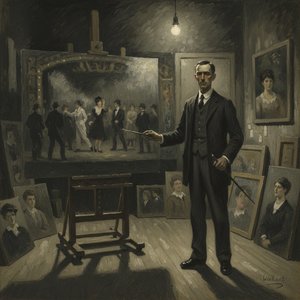
Walter Sickert: A Shadowy Realism & the Modern British Canvas
Explore the life & work of Walter Sickert, a pivotal British painter bridging Impressionism to Modernism. Discover his evocative scenes of London life, controversial legacy, and lasting influence on 20th-century art.