

 Visualizar na parede
 Compartilhar
 Compartilhar
 Detalhes

 Baixar imagem
 Semelhantes
 Raio X
 Slideshow
 Estatísticas
St Stephen is Consecrated Deacon
 Acrylic On Canvas
- WallArt
- Venetian Renaissance
 1511
1511 148.0 x 231.0 cm
 Museus Estatais de Berlim
 Ler mais
Reprodução em Óleo Feita à Mão
Óleo sobre tela pintado à mão no tamanho e moldura de sua escolha, feito sob encomenda pelos nossos artistas. ( Alternar para Impressão Alternar para Imagem Digital)




P118B $10

P118H $10

P118W $10

P438Z $10

P508JH $12

P508YH $12

P805H $10

P805Z $10

P919BZ $10

P919G $10

P919XJ $10

P959ZH $10

P968JZ $12

W106C $8

W218G $10

W218JH $8

W218Y $10

W307PJ $10

W316G $10

W316PJ $8

W316Y $10

W398PJ $8

W4111J $10

W500HY $15

W500JH $15

W692G $12

W849H $8

W940BG $15

W953PJ $8




Escolha entre os nossos tamanhos pré-definidos que respeitam as proporções originais da obra de arte.

Pode inserir as suas próprias dimensões para se adequar a uma moldura ou espaço específico. Se o tamanho selecionado não corresponder às proporções da imagem original, iremos cortar a obra de arte ou estender a pintura com elementos adicionais pintados à mão. Um esboço digital será enviado para sua aprovação antes do início da produção.
Tenha em atenção que a pré-visualização no ecrã não reflete o corte ou extensão real. Apenas o esboço mostrará com precisão a composição final.
Embora tamanhos personalizados estejam disponíveis, recomendamos selecionar uma dimensão da lista predefinida para preservar as proporções originais.
Após o pedido, a equipa OriginalUniqueArt.com enviará um e-mail ao cliente para solicitar instruções e fornecer uma prévia do esboço.
Entrega mundial () em 3 a 4 semanas, em vez das 5 semanas padrão. (14 Setembro). Sem comprometer a qualidade.

Envio expresso gratuito para todo o mundo

Tela de Linho de Alta Qualidade

Seguro de transporte completo

Garantia de Reembolso de Impostos Alfandegários

Garantia de Fidelidade Cromática

Política de Devolução de 100 Dias (Apenas Defeitos)

Garantia de reembolso de 100%

Oferta de desconto por quantidade
 A opção de vidro está disponível apenas para tamanhos inferiores a 110 cm

St Stephen is Consecrated Deacon
Técnica de Reprodução
Tamanho da Reprodução
-


Preço Total
$ 300
The Sacred Narrative of Vittore Carpaccio’s “St Stephen is Consecrated Deacon”
Vittore Carpaccio's "St Stephen is Consecrated Deacon," painted in 1511, isn’t merely a depiction of a biblical event; it’s a vibrant tableau brimming with Venetian artistry and profound spiritual resonance. This tempera on panel masterpiece, now residing within the Staatliche Museen in Berlin, transports us to a bustling Roman street scene, meticulously rendered with an almost photographic realism that was revolutionary for its time. Carpaccio, deeply influenced by the early Italian Renaissance – particularly Antonello da Messina’s mastery of perspective and detail – eschewed the prevailing humanist trends, instead embracing a more conservative style rooted in Byzantine iconography and the meticulous observation of the world around him. The painting captures not just a moment in St Stephen's life, but also the very essence of Venetian civic pride and religious fervor.A Scene of Ceremony and Community
The heart of the composition is undoubtedly St. Stephen himself, kneeling before St. Peter, who bestows upon him the sacred mantle of deacon. Carpaccio masterfully orchestrates a complex arrangement of figures – at least fourteen individuals are visible within the frame – creating a dynamic sense of movement and engagement. The scene unfolds against a backdrop of an identifiable Roman street, complete with architectural details that hint at the grandeur of the city. A striking horse stands to the left, adding a touch of theatricality and emphasizing the importance of this momentous occasion. The crowd is diverse, reflecting the cosmopolitan nature of Venice itself – merchants in their finery mingle with ordinary citizens, all drawn together by the spectacle unfolding before them. Carpaccio’s skill lies not just in depicting individual faces but in conveying the collective energy of a community witnessing a pivotal religious event.Technique and Symbolism: A Venetian Masterpiece
Carpaccio's technique is characterized by its meticulous detail and rich, layered colors. The tempera medium allowed for incredible luminosity and depth, particularly evident in the rendering of fabrics, textures, and architectural elements. Notice the subtle gradations of color used to depict the folds of clothing, the sheen of metal, and the varied surfaces of the buildings. The painting’s composition is carefully balanced, drawing the eye from St. Stephen's kneeling posture towards St. Peter and then outwards to encompass the entire scene. The use of perspective, though not entirely groundbreaking for its time, is remarkably sophisticated, creating a convincing illusion of depth and space. Symbolically, the painting is rich with meaning. The presence of the horse could represent Christ’s sacrifice, while the diverse crowd symbolizes the universal appeal of St. Stephen's message. The act of consecration itself signifies a transition – from earthly concerns to divine service – a central theme in Christian theology.Historical Context and Artistic Legacy
“St Stephen is Consecrated Deacon” was created during a period of significant artistic innovation in Venice, where the influence of Northern European painting—particularly the meticulous detail and realism of Flemish artists—was increasingly felt. Carpaccio skillfully blended these influences with his own distinctive style, creating a unique and compelling visual language. The painting’s subject matter – a biblical narrative – was also highly popular during this period, reflecting the growing importance of religious imagery in Venetian society. It's fascinating to consider that Carpaccio painted this work shortly before the completion of his monumental “Legend of St. Ursula,” demonstrating his continued engagement with large-scale narrative cycles. The painting’s enduring appeal lies not only in its technical brilliance but also in its ability to evoke a sense of immediacy and emotional connection, transporting us back to a vibrant moment in Christian history.A Timeless Reflection on Faith and Community
Ultimately, “St Stephen is Consecrated Deacon” transcends the boundaries of mere historical documentation. It’s a powerful meditation on faith, community, and the transformative power of belief. The painting's enduring legacy lies in its ability to capture the spirit of a pivotal moment – the consecration of St. Stephen as a deacon – with remarkable clarity and emotional depth. Reproductions of this masterpiece offer an opportunity to bring this extraordinary work into any setting, allowing viewers to experience firsthand the artistry and spiritual resonance that have captivated audiences for centuries.Biografia do Artista
Early Life and Training
Vittore Carpaccio, a pivotal figure in Venetian Renaissance painting, was born around 1465 in Venice, Italy—a city renowned for its artistic patronage during the era. Little is known definitively about his formative years, yet it’s understood that he commenced his artistic education under the tutelage of Gentile Bellini, arguably the most influential artist of the Venetian School at the time. This apprenticeship proved instrumental in shaping Carpaccio's future artistic trajectory and establishing him as a master craftsman. Bellini’s meticulous attention to detail and masterful use of color undoubtedly instilled within Carpaccio a foundational understanding of Venetian painting techniques.Artistic Style and Influences
Carpaccio’s distinctive style stood apart from the broader humanist currents sweeping across Italy during his lifetime—a movement that dramatically reshaped artistic expression. Unlike many of his contemporaries, he eschewed experimentation with innovative approaches, prioritizing instead a conservative aesthetic rooted in tradition. His artistic vision drew heavily from Antonello da Messina's groundbreaking style and, crucially, incorporated elements of early Netherlandish art. This singular blend resulted in an unparalleled Venetian painting style characterized by its serene compositions, luminous color palettes, and profound narrative depth. The influence of Flemish artists is particularly evident in Carpaccio’s meticulous depiction of drapery folds and his masterful manipulation of light—techniques that would become hallmarks of Venetian art for decades to come.Notable Works
Carpaccio's artistic legacy rests upon a remarkable corpus of paintings executed between 1490 and 1519, cementing his position as one of the foremost masters of the Venetian Renaissance. Among his most celebrated achievements is “The Legend of Saint Ursula,” a monumental cycle comprising nine canvases now housed in the Gallerie dell’Accademia—a testament to Carpaccio's unparalleled skill in storytelling through visual imagery. The series exemplifies his ability to convey complex narratives with remarkable clarity and emotional resonance, captivating audiences for centuries. Equally impressive is “Glory of St. Ursula Altarpiece,” where Carpaccio skillfully captures the ethereal beauty of Saint Ursula’s chapel—a masterpiece that showcases his mastery of color and light, mirroring Bellini's stylistic brilliance. Furthermore, "Miracle of the Relic of the Cross at the Ponte di Rialto" demonstrates Carpaccio’s exceptional compositional prowess and his capacity to imbue scenes with palpable drama—a feat achieved through careful attention to perspective and dramatic lighting.Career Highlights and Legacy
Carpaccio’s artistic career unfolded against the backdrop of Venice's flourishing cultural landscape, securing him a prominent place within Venetian art history. He honed his craft under Bellini, Vivarini and Bastiani, absorbing their expertise and furthering the Venetian School’s reputation for excellence. His orientalist inclinations—evident in “St. George Baptizing the Selenites”—reflected a burgeoning fascination with the Levant during the Renaissance, introducing exotic motifs into Venetian art. Despite being somewhat overshadowed by luminaries like Bellini and Giorgione, Carpaccio's enduring influence persists through his masterful depictions of biblical narratives and his contribution to establishing Venice as a center for artistic innovation—a legacy that continues to inspire artists today.References and Further Reading
Discover more about Vittore Carpaccio and the Venetian School on OriginalUniqueArt.
Vittore Carpaccio
1465 - 1526 , Itália
Dados Rápidos
- Artistic Movement Or Style: Early Venetian Renaissance
- Artists Who Influenced This Artist:
- Gentile Bellini
- Antonello da Messina
- Date Of Birth: Venice, Italy (c. 1465)
- Date Of Death: 1526
- Full Name: Vittore Carpaccio
- Nationality: Italian
- Notable Artworks:
- The Legend of Saint Ursula
- Glory of St. Ursula Altarpiece
- Miracle of the Relic of the Cross at the Ponte di Rialto
- Place Of Birth: Venice
Artigos Relacionados

El Greco: As 25 Obras-Primas que Definem um Gênio da Pintura | OriginalUniqueArt
Descubra as 25 obras-primas de El Greco, o mestre renascentista espanhol! Explore a história, técnica e emoção por trás de quadros icônicos como 'O Enterro do Conde Orgaz'. Encontre reproduções de arte exclusivas e inspire sua decoração em OriginalUniqueArt.com.
Illuminating Surfaces: A Comprehensive Exploration of Tempera on Panel Painting Techniques & Historical Significance
Explore the rich history & techniques of tempera painting! Discover Renaissance masters like Botticelli & Fra Angelico, conservation insights, and the enduring legacy of this captivating art form. Learn more now!
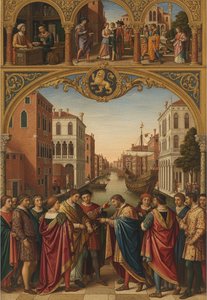
Vittore Carpaccio: Venetian Renaissance Narrative & the Poetics of Detail
Explore the captivating world of Vittore Carpaccio, a master storyteller of the Venetian Renaissance. Discover his intricate details, narrative cycles like 'The Legend of St. Ursula,' and unique artistic style.
Illuminating History: A Comprehensive Exploration of Tempera Painting Techniques & Artistic Legacy
Explore the rich history & techniques of tempera painting! Discover Renaissance masters like Botticelli & Fra Angelico, conservation insights, and the enduring legacy of this captivating art form.
Giotto di Bondone: As 25 Obras-Primas que Definiram a Arte Renascentista | OriginalUniqueArt
Descubra as 25 obras-primas de Giotto di Bondone, o mestre da Renascença! Explore a história por trás dos afrescos icônicos, cores vibrantes e emoção atemporal. Reproduções de arte exclusivas para decorar sua casa com elegância em OriginalUniqueArt.com.


