Alternar para Impressão
 Ler mais







































 Para obras de arte ou reproduções com mais de 105 cm (aproximadamente 41 polegadas) em qualquer um dos lados, a moldura será enviada como um kit desmontado. Este método garante uma entrega segura e evita danos durante o transporte.


Saint Peter Martyr: A Venetian Masterpiece Reflecting Faith and Tradition
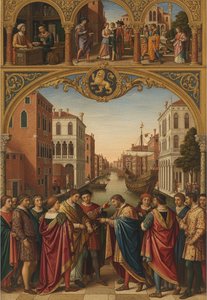
Vittore Carpaccio’s “Saint Peter Martyr,” painted in 1505, stands as a testament to the enduring power of Venetian artistic tradition. Produced during the High Renaissance, this portrait transcends mere representation; it embodies a profound spiritual contemplation rooted in humanist ideals tempered by meticulous craftsmanship.
Subject Matter and Composition
The painting depicts Saint Peter Martyr, a Roman saint venerated for his unwavering faith despite persecution and martyrdom. Carpaccio skillfully captures Peter’s solemn gaze and posture—a man holding a book—symbolizing knowledge and divine inspiration. The composition is balanced and dignified, emphasizing the saint's spiritual stature against a subtly textured background reminiscent of early Netherlandish art.
Style and Technique: Venetian Conservatism Revisited
Carpaccio’s style distinguishes itself from the burgeoning humanist fervor sweeping across Italy at the time. Unlike many contemporaries experimenting with innovative perspectives and vibrant palettes, Carpaccio adhered to a more conservative aesthetic—a conscious decision that reflects his artistic lineage and influences. His technique is characterized by meticulous layering of thin glazes—a hallmark of Venetian painting—creating luminous surfaces and conveying subtle tonal variations. This painstaking process underscores the artist’s dedication to achieving visual realism while maintaining stylistic coherence.
Historical Context: Renaissance Venice and Patronage
Venice in 1505 was a thriving center of artistic patronage, fueled by wealth derived from maritime trade. Carpaccio's work benefited from the support of influential families—particularly the Mocenigo family—who commissioned ambitious cycles of paintings intended to glorify saints and commemorate religious events. The painting’s placement within this context speaks to the Venetian commitment to upholding Christian piety and preserving artistic heritage.
Symbolism: Light, Knowledge, and Spiritual Reflection
The book held by Saint Peter Martyr is laden with symbolic significance—representing divine wisdom and intellectual pursuit. Carpaccio employs diffused light to illuminate Peter’s face and hands, creating an atmosphere of serenity and spiritual contemplation. This masterful use of illumination aligns with the broader Venetian tradition of portraying saints as beacons of faith and moral virtue.
Emotional Impact: A Portrait of Inner Devotion
"Saint Peter Martyr" transcends its formal depiction to evoke a palpable sense of inner devotion—a reflection of the saint’s unwavering commitment to his beliefs. Carpaccio's subtle brushstrokes convey an emotional depth that resonates with viewers centuries later, reminding us of the enduring power of art to inspire contemplation and communicate spiritual truths.
Perguntas e Respostas
"São Pedro Martir", de Vittore Carpaccio é uma obra de arte clara ou escura?
Em termos de luminosidade percebida, "São Pedro Martir", de Vittore Carpaccio é sombra.
Qual tamanho de impressão devo escolher para "São Pedro Martir" no meu quarto?
Para um(a) Sala de Estar, sugere-se que "São Pedro Martir" seja impresso no tamanho Grande formato.
Que sentimento "São Pedro Martir", de Vittore Carpaccio expressa dentro de Venetian Renaissance?
A emoção Calma de "São Pedro Martir" acompanha seu estilo Venetian Renaissance.
 Visualizar na parede
 Compartilhar
 Compartilhar
 Detalhes
 Guia
Guia

 Baixar imagem
 Semelhantes
 Raio X
 Ver diaporama
 Q&A
Q&A Estatísticas