

 Visualizar na parede
 Compartilhar
 Compartilhar
 Detalhes
 Guia
Guia

 Baixar imagem
 Semelhantes
 Raio X
 Ver diaporama
 Estatísticas
Holy Conversation
 High Renaissance
 1505
1505- Renascimento
 92.0 x 126.0 cm
 Musée du Petit Palais
 Ler mais
Giclée / Impressão de Arte
Impressão giclée ou em tela de qualidade de museu, com produção rápida e opções flexíveis de acabamento. ( Comprar pintura feita à mão Alternar para Imagem Digital)




P118B €10

P118H €10

P118W €10

P438Z €10

P508JH €12

P508YH €12

P805H €10

P805Z €10

P919BZ €10

P919G €10

P919XJ €10

P959ZH €10

P968JZ €12

W106C €8

W218G €10

W218JH €8

W218Y €10

W307PJ €10

W316G €10

W316PJ €8

W316Y €10

W398PJ €8

W4111J €10

W500HY €15

W500JH €15

W692G €12

W849H €8

W940BG €15

W953PJ €8




Escolha entre os nossos tamanhos pré-definidos que respeitam as proporções originais da obra de arte.

Insira a largura e a altura desejadas para se ajustarem à sua moldura ou parede. Uma impressão pode ser apenas cortada, nunca ampliada além da imagem original; portanto, um tamanho com proporções diferentes resultará na perda de parte da imagem. Enviamos uma maquete digital para sua aprovação antes de realizarmos a impressão. A imagem exibida nesta página não mostra o corte real — apenas a maquete o faz.
Entrega mundial () em 2 semanas, em vez das 4/5 semanas padrão. (26 Outubro)

Envio expresso gratuito para todo o mundo

Tela de Linho de Alta Qualidade

Seguro de transporte completo

Garantia de Reembolso de Impostos Alfandegários

Garantia de Fidelidade Cromática

Política de Devolução em 100 Dias (Apenas para Defeitos)

Garantia de reembolso de 100%

Oferta de desconto por quantidade
 A opção de vidro está disponível apenas para tamanhos inferiores a 110 cm

Holy Conversation
Giclée / Impressão de Arte
Tamanho da Reprodução
-


Preço Total
€ 70
Holy Conversation: A Venetian Masterpiece Revisited
Vittore Carpaccio’s “Holy Conversation,” completed around 1505 in Venice, stands as a testament to the enduring power of narrative painting within the High Renaissance. More than just a depiction of biblical figures—Jesus Christ and Mary Magdalene—it's an immersive experience into a pivotal moment of spiritual contemplation, skillfully rendered with meticulous detail and infused with Venetian artistic sensibilities.
Style & Influences: Carpaccio’s approach diverges markedly from the humanist fervor sweeping across Italy at the time. Unlike many contemporaries preoccupied with philosophical treatises and idealized portraits, Carpaccio remained firmly rooted in tradition, drawing inspiration primarily from Antonello da Messina's pioneering use of oil paint—a technique that allowed for unprecedented luminosity and realism—and early Netherlandish art’s emphasis on atmospheric perspective.
Technique & Materials: The painting utilizes tempera on canvas, a medium favored by Venetian artists for its durability and ability to achieve vibrant colors. Carpaccio's painstaking brushwork captures the textures of drapery, skin, and stone with remarkable accuracy. Observe how he masterfully employs chiaroscuro—the dramatic interplay of light and shadow—to sculpt form and convey emotion, mirroring the stylistic innovations originating from Flanders.
Historical Context: “Holy Conversation” emerged during a period marked by religious fervor and artistic experimentation. Venice, at the apex of its maritime empire and cultural prestige, fostered an environment where artists like Carpaccio could explore both established conventions and emerging trends. The painting reflects the Venetian preoccupation with portraying biblical narratives in a psychologically nuanced manner—a departure from simpler iconographic representations.
Symbolism & Emotional Impact: Beyond its literal depiction of Jesus and Mary Magdalene engaged in dialogue, “Holy Conversation” resonates with deeper symbolic meanings. The setting—a tranquil outdoor gathering—suggests serenity and contemplation, inviting viewers to reflect on faith and spirituality. Carpaccio’s masterful use of color contributes to the painting's emotional impact, conveying a sense of solemn reverence and capturing the ethereal beauty of the Venetian landscape.
Notable Reproduction: The masterpiece resides in the Gallerie dell’Accademia in Venice, where visitors can marvel at its original grandeur. Reproductions offer an opportunity to appreciate Carpaccio’s artistic vision from afar, preserving the essence of this iconic work for generations to come.
Perguntas e Respostas
Onde posso comprar reproduções pintadas à mão de "Holy Conversation", de Vittore Carpaccio?
"Holy Conversation" está disponível como uma reprodução a óleo pintada à mão sobre tela de linho. O pedido pode ser feito em sua página de Reprodução Pintada à Mão, com escolha de tamanhos.
A qual movimento artístico pertence "Holy Conversation", de Vittore Carpaccio?
"Holy Conversation", de Vittore Carpaccio pertence ao movimento High Renaissance. Este movimento fornece o contexto estilístico da obra.
Qual é a proporção de "Holy Conversation", de Vittore Carpaccio e quais são as suas dimensões?
O formato de "Holy Conversation" é Formato paisagem e a obra original mede 92 x 126 cm. Ambas as informações são úteis ao planejar uma reprodução.
Biografia do Artista
Early Life and Training
Vittore Carpaccio, a pivotal figure in Venetian Renaissance painting, was born around 1465 in Venice, Italy—a city renowned for its artistic patronage during the era. Little is known definitively about his formative years, yet it’s understood that he commenced his artistic education under the tutelage of Gentile Bellini, arguably the most influential artist of the Venetian School at the time. This apprenticeship proved instrumental in shaping Carpaccio's future artistic trajectory and establishing him as a master craftsman. Bellini’s meticulous attention to detail and masterful use of color undoubtedly instilled within Carpaccio a foundational understanding of Venetian painting techniques.Artistic Style and Influences
Carpaccio’s distinctive style stood apart from the broader humanist currents sweeping across Italy during his lifetime—a movement that dramatically reshaped artistic expression. Unlike many of his contemporaries, he eschewed experimentation with innovative approaches, prioritizing instead a conservative aesthetic rooted in tradition. His artistic vision drew heavily from Antonello da Messina's groundbreaking style and, crucially, incorporated elements of early Netherlandish art. This singular blend resulted in an unparalleled Venetian painting style characterized by its serene compositions, luminous color palettes, and profound narrative depth. The influence of Flemish artists is particularly evident in Carpaccio’s meticulous depiction of drapery folds and his masterful manipulation of light—techniques that would become hallmarks of Venetian art for decades to come.Notable Works
Carpaccio's artistic legacy rests upon a remarkable corpus of paintings executed between 1490 and 1519, cementing his position as one of the foremost masters of the Venetian Renaissance. Among his most celebrated achievements is “The Legend of Saint Ursula,” a monumental cycle comprising nine canvases now housed in the Gallerie dell’Accademia—a testament to Carpaccio's unparalleled skill in storytelling through visual imagery. The series exemplifies his ability to convey complex narratives with remarkable clarity and emotional resonance, captivating audiences for centuries. Equally impressive is “Glory of St. Ursula Altarpiece,” where Carpaccio skillfully captures the ethereal beauty of Saint Ursula’s chapel—a masterpiece that showcases his mastery of color and light, mirroring Bellini's stylistic brilliance. Furthermore, "Miracle of the Relic of the Cross at the Ponte di Rialto" demonstrates Carpaccio’s exceptional compositional prowess and his capacity to imbue scenes with palpable drama—a feat achieved through careful attention to perspective and dramatic lighting.Career Highlights and Legacy
Carpaccio’s artistic career unfolded against the backdrop of Venice's flourishing cultural landscape, securing him a prominent place within Venetian art history. He honed his craft under Bellini, Vivarini and Bastiani, absorbing their expertise and furthering the Venetian School’s reputation for excellence. His orientalist inclinations—evident in “St. George Baptizing the Selenites”—reflected a burgeoning fascination with the Levant during the Renaissance, introducing exotic motifs into Venetian art. Despite being somewhat overshadowed by luminaries like Bellini and Giorgione, Carpaccio's enduring influence persists through his masterful depictions of biblical narratives and his contribution to establishing Venice as a center for artistic innovation—a legacy that continues to inspire artists today.References and Further Reading
Discover more about Vittore Carpaccio and the Venetian School on OriginalUniqueArt.
Vittore Carpaccio
1465 - 1526 , Itália
Dados Rápidos
- Artistic Movement Or Style: Early Venetian Renaissance
- Artists Who Influenced This Artist:
- Gentile Bellini
- Antonello da Messina
- Date Of Birth: Venice, Italy (c. 1465)
- Date Of Death: 1526
- Full Name: Vittore Carpaccio
- Nationality: Italian
- Notable Artworks:
- The Legend of Saint Ursula
- Glory of St. Ursula Altarpiece
- Miracle of the Relic of the Cross at the Ponte di Rialto
- Place Of Birth: Venice
Artigos Relacionados
The Venetian Renaissance: A Masterclass in Colorito, Light, and the Birth of Atmospheric Brilliance
Explore the breathtaking mastery of the Venetian Renaissance. Discover how legends like Titian revolutionized art through Colorito, capturing the luminous light and vibrant pigments of the Venetian lagoon in a visual journey of unparalleled color and texture.
Venetian Renaissance: The Golden Age of Color, Light, and Luminous Artistry
Embark on a journey through the Venetian Renaissance. Discover how masters like Giorgione and Titian revolutionized art through luminous color and light. Explore the profound legacy of the Venetian School and its enduring influence on the world of fine art.
Jacopo Tintoretto: As 25 Obras-Primas do Mestre da Luz e Drama | OriginalUniqueArt
Descubra as 25 obras-primas de Jacopo Tintoretto, o mestre veneziano do Renascimento! Explore a história, técnica e emoção por trás de pinturas icônicas como 'O Milagre de São Marcos'. Encontre reproduções de arte exclusivas para decorar sua casa com OriginalUniqueArt.com.
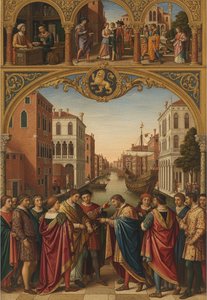
Vittore Carpaccio: Venetian Renaissance Narrative & the Poetics of Detail
Explore the captivating world of Vittore Carpaccio, a master storyteller of the Venetian Renaissance. Discover his intricate details, narrative cycles like 'The Legend of St. Ursula,' and unique artistic style.

Venetian Renaissance: The Mastery of Color, Light, and the Art of Colorito
Explore the luminous mastery of the Venetian Renaissance. Discover how masters like Titian and Giorgione revolutionized art through colorito, light, and atmosphere. An expert guide to the golden age of Italian painting for collectors and enthusiasts.


