Menu

() ·

A painting made for you, by hand

Sikra-Z

Reprodução em Óleo Feita à Mão

Óleo sobre tela pintado à mão no tamanho e moldura de sua escolha, feito sob encomenda pelos nossos artistas. ( Alternar para Impressão Alternar para Imagem Digital)

Descrição do Item

Explore Victor Vasarely's 'Sikra-Z,' a vibrant 1966 Op Art masterpiece! Dive into its geometric design, bold colors & optical illusions – perfect for art enthusiasts.

Biografia do Artista

Explore o universo geométrico de Victor Vasarely (1906-1997), pioneiro da Op Art e da arte cinética! Descubra suas abstrações óticas, ilusões visuais e influência duradoura na arte moderna.

from ·

Chapter 1

How large should it be?

Slide to change the size; the picture on the left shows the frame at its real width. The proportions of the original are kept.

Tamanho padrão
personalizado
CM
INCH

Escolha entre os nossos tamanhos pré-definidos que respeitam as proporções originais da obra de arte.

largura
altura

Insira a largura e a altura desejadas para se ajustarem à sua moldura ou parede. Como esta obra é pintada à mão, para um tamanho com proporções diferentes, o artista poderá pintar um pouco mais ao redor da imagem ou reduzir ligeiramente a composição — você escolhe. Enviamos uma maquete digital para sua aprovação antes de iniciar a pintura. A imagem exibida nesta página não representa o resultado real — apenas a maquete mostra o resultado final.

Chapter 2

How should it arrive?

Choose the edges of the stretched canvas

Choose your frame

Corner sample of the WhiteWrap canvas edge finish, stretched on madeira maciça bars
White €1
Corner sample of the BlurSideWrap canvas edge finish, stretched on madeira maciça bars
Blurside €1
Corner sample of the ExtendedWrap canvas edge finish, stretched on madeira maciça bars
Extended €1
Corner sample of the P118B picture frame: poliestireno moldado, 5 cm wide and 3 cm thick
P118B €10
Corner sample of the P118H picture frame: poliestireno moldado, 5 cm wide and 3 cm thick
P118H €10
Corner sample of the P118W picture frame: poliestireno moldado, 5 cm wide and 3 cm thick
P118W €10
Corner sample of the P438Z picture frame: poliestireno moldado, 5.5 cm wide and 3.5 cm thick
P438Z €10
Corner sample of the P508JH picture frame: poliestireno moldado, 7 cm wide and 3.5 cm thick
P508JH €12
Corner sample of the P508YH picture frame: poliestireno moldado, 7 cm wide and 3.5 cm thick
P508YH €12
Corner sample of the P805H picture frame: poliestireno moldado, 5 cm wide and 3.5 cm thick
P805H €10
Corner sample of the P805Z picture frame: poliestireno moldado, 5 cm wide and 3.5 cm thick
P805Z €10
Corner sample of the P919BZ picture frame: poliestireno moldado, 7 cm wide and 3.5 cm thick
P919BZ €10
Corner sample of the P919G picture frame: poliestireno moldado, 7 cm wide and 3.5 cm thick
P919G €10
Corner sample of the P919XJ picture frame: poliestireno moldado, 7 cm wide and 3.5 cm thick
P919XJ €10
Corner sample of the P959ZH picture frame: poliestireno moldado, 5 cm wide and 3 cm thick
P959ZH €10
Corner sample of the P968JZ picture frame: poliestireno moldado, 6 cm wide and 4 cm thick
P968JZ €12
Corner sample of the W106C picture frame: madeira maciça, 5 cm wide and 3 cm thick
W106C €8
Corner sample of the W218G picture frame: madeira maciça, 5 cm wide and 3 cm thick
W218G €10
Corner sample of the W218JH picture frame: madeira maciça, 5 cm wide and 3 cm thick
W218JH €8
Corner sample of the W218Y picture frame: madeira maciça, 5 cm wide and 3 cm thick
W218Y €10
Corner sample of the W307PJ picture frame: madeira maciça, 6 cm wide and 3 cm thick
W307PJ €10
Corner sample of the W316G picture frame: madeira maciça, 6 cm wide and 3 cm thick
W316G €10
Corner sample of the W316PJ picture frame: madeira maciça, 6 cm wide and 3 cm thick
W316PJ €8
Corner sample of the W316Y picture frame: madeira maciça, 6 cm wide and 3 cm thick
W316Y €10
Corner sample of the W398PJ picture frame: madeira maciça, 5 cm wide and 3 cm thick
W398PJ €8
Corner sample of the W4111J picture frame: madeira maciça, 6.5 cm wide and 3.5 cm thick
W4111J €10
Corner sample of the W500HY picture frame: madeira maciça, 7 cm wide and 5 cm thick
W500HY €15
Corner sample of the W500JH picture frame: madeira maciça, 7 cm wide and 5 cm thick
W500JH €15
Corner sample of the W692G picture frame: madeira maciça, 8 cm wide and 4 cm thick
W692G €12
Corner sample of the W849H picture frame: madeira maciça, 5 cm wide and 3 cm thick
W849H €8
Corner sample of the W940BG picture frame: madeira maciça, 7.5 cm wide and 4.5 cm thick
W940BG €15
Corner sample of the W953PJ picture frame: madeira maciça, 6 cm wide and 3.5 cm thick
W953PJ €8
Corner sample of the H24-GOLD picture frame: madeira entalhada com gesso, 10 cm wide and 6 cm thick
H24-GOLD €30
Corner sample of the H24-SILVER picture frame: madeira entalhada com gesso, 10 cm wide and 6 cm thick
H24-SILVER €30
Corner sample of the H36-GOLD picture frame: madeira entalhada com gesso, 15 cm wide and 6.5 cm thick
H36-GOLD €45
Corner sample of the H36-SILVER picture frame: madeira entalhada com gesso, 15 cm wide and 6.5 cm thick
H36-SILVER €45
Prévia da moldura
Com moldura

Moulding: . Overall size with the frame: .

Chapter 3

Who paints it, and should anything change?

Examples of what can be changed: Replace face with customer photo; Add pet (e.g., replace cat with dog); Include hidden message in background; Change background landscape or elements.
After order, OriginalUniqueArt.com team will email client for instructions and provide a mockup preview

Entrega mundial () em 3 a 4 semanas, em vez das 5 semanas padrão. (29 Outubro). Sem comprometer a qualidade.

Chapter 4

The finishing touches

A nameplate, as in a museum?

Detalhes da Placa de Bronze Gravada

This elegant plaque features the artist's name and the title of the artwork, finely engraved for a timeless presentation.

It is made from bronze with a refined, elegant finish. The text is precisely laser-engraved for a sharp and permanent result. Measuring 9x2 cm, the plaque is compact yet easy to read. It's built to be durable and scratch-resistant, offering a professional, museum-quality look. Mounting is simple thanks to the included adhesive backing.

Detalhes da Placa de Acrílico Transparente

The plaque includes essential engraved details such as the artist's name, the title of the artwork, the date it was created, the type of media used-like oil on canvas or watercolor-a brief description of the piece, and a QR code that links to the complete artwork information.

It is crafted from clear acrylic, offering a sleek, modern appearance. The text is UV-engraved in black to ensure strong visual contrast. With a size of 10x15 cm, it ensures optimal readability. It comes equipped with two metal hooks for secure wall mounting. The plaque is designed to be weather-resistant, making it suitable for various environments, and it includes interactive features that work seamlessly with smartphone scanning.

Detalhes da Placa de Acrílico Preto

This elegant plaque includes engraved information such as the artist's name, the title of the artwork, the date it was created, the type of media used (like oil on canvas or watercolor), a short description of the artwork, and a QR code for quick access to more information.

The plaque itself is made from refined black acrylic with a premium finish. The text is laser-engraved in white for high contrast and readability. Its size is 10x15 cm, designed to be easy to read. It comes with two metal hooks for professional mounting. The design is sleek and fits any interior style. It is also weather-resistant and durable, with built-in digital integration for mobile compatibility.

A protective varnish?

When do you need it?

Chapter 5

Your painting, as you ordered it

Sikra-Z

Técnica de Reprodução

Tamanho da Reprodução

-

Artista Sênior de Elite

Mais detalhes, refinamento e tempo de produção adicional

-

Moldura para Reprodução

-

-

Para obras de arte ou reproduções com mais de 105 cm (aproximadamente 41 polegadas) em qualquer um dos lados, a moldura será enviada como um kit desmontado. Este método garante uma entrega segura e evita danos durante o transporte.

Montagem profissional necessária — este não é um produto DIY (faça você mesmo).
O kit deve ser montado e a tela esticada por um profissional de molduraria experiente, utilizando cola de madeira (não inclusa), um alicate de esticar tela e grampos para manter as travessas alinhadas enquanto a cola seca. A montagem incorreta ou a tensão desigual da tela podem danificar permanentemente a obra de arte e não estão cobertas pela nossa garantia.

  • Todas as barras de madeira maciça estão incluídas, precisamente cortadas ao tamanho certo.

  • Montado com os parafusos fornecidos, além de cola para madeira para as junções dos cantos, que não está inclusa e deve ser providenciada pelo seu moldurista.

  • São necessárias ferramentas profissionais não incluídas: um alicate de estiramento de tela (esticador) e grampos para manter as ripas alinhadas enquanto a cola seca.

Importante:
As junções dos cantos requerem cola para madeira, as ripas devem ser mantidas com grampos até que a cola esteja completamente seca, e o estiramento da tela na moldura montada requer um alicate de esticar tela. Nenhum destes itens está incluído no kit. Por favor, certifique-se de contar com um profissional de molduraria experiente antes de encomendar este tamanho.

Etiqueta de identificação

-

-

Verniz de Proteção

Verniz brilhante (realça as cores e protege contra a luz e a umidade)

-

Personalizar minha obra

Exemplos de alterações possíveis: Substituir o rosto por uma foto do cliente; Adicionar um animal de estimação (ex.: substituir gato por cachorro); Incluir uma mensagem oculta no fundo; Alterar a paisagem ou os elementos do fundo.

-

Urgente

Entrega mundial () em 3 a 4 semanas, em vez das 5 semanas padrão. (29 Outubro). Sem comprometer a qualidade.

-

Envio Expresso

Entrega mundial para em 5 semanas. (5 Novembro).

Com envio incluído

Preço Total

€ 265

Preço Total € 265

A opção de vidro está disponível apenas para tamanhos inferiores a 110 cm

Included with every order

  • Envio expresso gratuito para todo o mundo
  • Tela de Linho de Alta Qualidade
  • Seguro de transporte completo
  • Garantia de Reembolso de Impostos Alfandegários
  • Garantia de Fidelidade Cromática
  • Política de Devolução em 100 Dias (Apenas para Defeitos)
  • Garantia de reembolso de 100%
  • Oferta de desconto por quantidade

A Symphony of Geometry: Exploring Victor Vasarely's "Sikra-Z"

Victor Vasarely, a name synonymous with Op Art and kinetic art, dedicated his life to unraveling the mysteries of perception through geometric abstraction. Born Károly Vásárhelyi in Pécs, Austria-Hungary (now Croatia), his journey from aspiring medical student to pioneering artist is a testament to the power of visual expression. "Sikra-Z," painted in 1966, stands as a vibrant embodiment of Vasarely’s systematic approach and unwavering belief in the democratization of art—a piece designed not just to be viewed, but experienced. This artwork isn't merely an arrangement of shapes and colors; it is an exploration of how our eyes and brains interpret visual information, creating illusions of depth, movement, and even three-dimensionality on a flat surface.

The Language of Form: Style and Technique

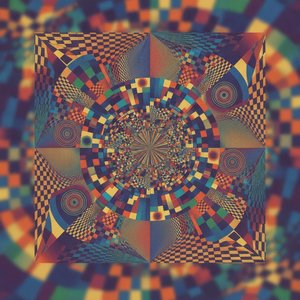
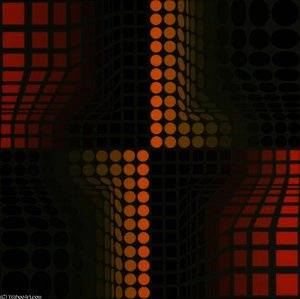
"Sikra-Z" exemplifies Vasarely’s signature style—a meticulously crafted blend of geometric forms and vibrant hues. The painting is divided into distinct sections, each pulsating with its own energy yet harmoniously integrated within the larger composition. Circles, in varying sizes and intensities of blue, green, yellow, purple, and orange, dominate the canvas, their placement carefully calculated to create a dynamic interplay of visual forces. These aren't random arrangements; they are the result of Vasarely’s unique system—a mathematical approach to art-making that sought to unlock universal principles of perception. He employed grids and precise calculations to generate patterns that would actively engage the viewer, challenging their assumptions about space and form. The technique itself is a testament to his dedication: while original works often involved screen printing or other reproducible methods, our hand-painted reproductions meticulously recreate the nuances of color and texture, ensuring an authentic visual experience.

A Historical Context: Op Art and Beyond

The 1960s witnessed the rise of Op Art (Optical Art), a movement that sought to exploit the eye's sensitivity to patterns and colors to create illusions of movement and depth. Vasarely was arguably its leading figure, though he resisted being confined by any single label. "Sikra-Z" emerged during this period, reflecting the era’s fascination with technology, science, and the exploration of new visual frontiers. However, Vasarely's ambitions extended beyond mere optical illusion. He envisioned a world where art was accessible to everyone, transcending the traditional boundaries of galleries and museums. His work aimed to integrate into everyday life—appearing on buildings, textiles, and other surfaces—transforming the mundane into something visually stimulating and engaging. This desire for accessibility is reflected in the bold simplicity of "Sikra-Z," a piece that resonates with viewers regardless of their art historical knowledge.

Symbolism and Emotional Impact

While Vasarely eschewed traditional symbolism, “Sikra-Z” evokes a powerful emotional response through its sheer visual dynamism. The vibrant colors and geometric patterns create a sense of energy and movement, drawing the viewer into a captivating dance of light and shadow. The circles, recurring motifs in Vasarely’s work, can be interpreted as representations of wholeness, continuity, or even cosmic cycles. More than that, however, "Sikra-Z" is about the *experience* of seeing—it's an invitation to actively participate in the creation of meaning. The painting doesn't dictate a specific interpretation; instead, it stimulates our senses and encourages us to question our own perceptions. It’s a piece that can energize a space, spark conversation, and serve as a constant source of visual delight. Owning a hand-painted reproduction of "Sikra-Z" is not just acquiring an artwork; it's embracing a legacy of innovation and a celebration of the power of perception.

Perguntas e Respostas

O que "Sikra-Z", de Victor Vasarely retrata?

Os temas de "Sikra-Z" são geometric, abstract, optical, circles, colors, composition, pattern.

Em que ambiente sugere-se exibir "Sikra-Z", considerando a sua paleta de cores?

Com sua paleta de cores Nature, "Sikra-Z" é uma sugestão ideal para um(a) Living Room.

Posso encomendar uma reprodução a óleo de "Sikra-Z"?

Você pode encomendar uma reprodução pintada à mão de "Sikra-Z", de Victor Vasarely diretamente em sua página de Reprodução Pintada à Mão: uma reprodução a óleo pintada à mão sobre tela de linho, feita sob encomenda.

More about this painting

Visualizar na parede Visualizar em RA Alternar para Impressão Alternar para Imagem Digital Compartilhar
Detalhes Guia Adicionar aos favoritos Baixar imagem Semelhantes Raio X Ver diaporama Q&A Estatísticas

In numbers

  • 1966the year it was painted
  • 29frames to choose from
  • standard sizes, in its own proportions
  • 5weeks to paint and deliver it

About the original

Victor Vasarely

Victor Vasarely

1906 - 1997, Croácia

Quick facts about Victor Vasarely

  • Artistic Movement Or Style: Op Art, Arte Cinética
  • Artists Or Movements Influenced By This Artist:
    • Design gráfico
    • Design de interiores
  • Artists Who Influenced This Artist:
    • Piet Mondrian
    • Kazimir Malevich
  • Date Of Birth: 9 de abril de 1906
  • Date Of Death: 15 de março de 1997
  • Full Name: Victor Vasarely
  • Nationality: Húngaro-Francês
  • Notable Artworks:
    • Zebra
    • Markeb-Neg
    • Vega
  • Place Of Birth: Pécs, Croácia

Biografia do Artista

A Life Forged in Geometry: The World of Victor Vasarely

Victor Vasarely (Pécs, 9 de abril de 1906 — Paris, 15 de março de 1997) foi um pintor e artista gráfico húngaro-francês, cuja jornada para se tornar um pioneiro do Op Art e da arte cinética não foi predeterminada. Sua vida inicial prenunciava um caminho distante da tela; inicialmente, estudou medicina na Universidade Eötvös Loránd em Budapeste. No entanto, o fascínio pela expressão visual provou ser mais forte, levando-o a abandonar a medicina para o mundo da pintura em 1927, matriculando-se na Academia Podolini-Volkmann. Essa decisão marcou não apenas uma mudança de vocação, mas o início de uma exploração contínua dos princípios fundamentais que governam a percepção e a forma. Um momento crucial foi sua inscrição no workshop de Sándor Bortnyik – Műhely, uma escola profundamente influenciada pelo movimento Bauhaus. Ali, Vasarely absorveu os preceitos do design funcional e da abstração geométrica, sementes que floresceriam em seu estilo característico. Esses anos formativos não foram apenas sobre adquirir técnica; eram sobre desmontar as convenções artísticas tradicionais e abraçar uma nova linguagem visual enraizada na lógica e na precisão.

Early Abstraction and the Dawn of Op Art

As décadas de 1920 e 1930 testemunharam a gradual partida de Vasarely da arte representacional, mergulhando mais profundamente no reino da abstração geométrica. Obras como “Estudo Azul” e “Estudo Verde”, criadas em 1929, exemplificam essa transição – uma renúncia deliberada do conteúdo narrativo em favor da forma pura e das relações de cores. Influenciado por mestres como Piet Mondrian e Kazimir Malevich, Vasarely não se contentava em simplesmente imitar seus estilos. Ele buscava transcender as composições estáticas de seus predecessores, visando uma dinâmica que engajaria ativamente a percepção do espectador. Essa busca o levou a Paris em 1930, onde se estabeleceu como designer gráfico e artista publicitário, aprimorando suas habilidades enquanto continuava a desenvolver sua visão artística única. Foi durante este período que começou a experimentar técnicas que mais tarde se tornariam marcas registradas do Op Art – manipulando formas e cores para criar ilusões de movimento e profundidade. As sementes foram plantadas para uma revolução na experiência visual.


The Systematic Illusion: Defining a Movement

Na década de 1960, Victor Vasarely emergiu plenamente como uma figura proeminente no emergente movimento Op Art. Ao contrário de muitos artistas que se baseavam na intuição e na expressão espontânea, Vasarely abordava seu trabalho com uma metodologia distinta. Ele empregava grades e princípios matemáticos para gerar padrões que criavam poderosas ilusões ópticas – vibrações visuais, efeitos giratórios e sensações de profundidade onde não existiam fisicamente. Não se tratava de truque; era sobre revelar a dinâmica inerente à percepção em si. Ele acreditava na reprodutibilidade e no apelo popular, buscando democratizar a arte tornando-a acessível além dos limites das galerias e museus. Sua obra desafiou os espectadores a questionar sua própria experiência visual, forçando-os a participar ativamente da criação de significado. Essa interação deliberada com a percepção o diferenciava e consolidava seu lugar na vanguarda desse movimento. Ele não estava simplesmente pintando imagens; ele estava construindo experiências.

Historical Significance

A contribuição de Vasarely à história da arte é multifacetada. Ele se moveu além das técnicas tradicionais de pintura para criar obras que engajam ativamente a percepção do espectador. Sua abordagem sistemática desafiou as noções convencionais de criatividade artística e abriu o caminho para a arte gerada por computador e o design digital. Ao abraçar a reprodutibilidade e as aplicações comerciais, Vasarely borrou os limites entre a arte fina e a cultura popular, deixando uma marca duradoura tanto em ambos os campos. Ele não estava simplesmente criando objetos esteticamente agradáveis; ele estava conduzindo experimentos visuais que revelaram verdades fundamentais sobre como vemos o mundo. Sua obra continua a ressoar hoje, lembrando-nos do poder da abstração, da beleza da geometria e das infinitas possibilidades da criatividade humana.

Key Achievements and Legacy

A carreira de Vasarely foi marcada por inúmeras conquistas e um legado duradouro. Ele recebeu o Prêmio Guggenheim em Nova York em 1964 e o Prêmio de Melhor Exposição na Bienal de São Paulo em 1970. Sua obra influenciou profundamente a área do design gráfico, da moda, do design de interiores e até mesmo dos primeiros gráficos digitais. A Fundação Vasarely, estabelecida em Aix-en-Provence, garante a preservação e promoção de sua extensa obra, enquanto um evento notável – a inclusão de serigrafias a bordo da nave espacial soviético-francesa Salyut 7 em 1982 – simbolizou o reconhecimento global de sua arte e sua conexão com o empreendimento humano mais amplo de exploração.

Informações Rápidas

  • Medium: Painting
  • Artist: Victor Vasarely
  • Notable elements or techniques: Geometric design, optical illusions
  • Year: 1966

Quiz de Arte

Cada pergunta possui apenas uma resposta correta.

Pergunta 1:
What artistic movement is Victor Vasarely most famously associated with?
Pergunta 2:
According to the description, what are some of the prominent colors used in 'Sikra-Z'?
Pergunta 3:
What was Victor Vasarely’s original field of study before dedicating himself to art?
Pergunta 4:
The artwork 'Sikra-Z' is described as having a visual effect that makes it appear like what?
Pergunta 5:
In what year was 'Sikra-Z' created?