
 Visualizar na parede
 Compartilhar
 Compartilhar
 Detalhes
 Guia
Guia

 Baixar imagem
 Semelhantes
 Raio X
 Ver diaporama
 Perguntas e Respostas
 Estatísticas
Incorrigible One

- 87.0 x 113.0 cm


 Ler mais
Obtenha um arquivo pronto para impressão que vai muito além da visualização na web. Cada imagem digital que vendemos provém de um arquivo mestre de alta resolução em nosso banco de dados — geralmente entre 5.000 e 15.000 pixels de largura — para que você possa imprimir em grandes formatos, realizar cortes precisos ou reproduzir detalhes minuciosos com total confiança.
Nenhum arquivo sai do nosso estúdio sem passar por um cuidadoso processo de revisão. Um especialista digital verifica as cores em relação à pintura original e as corrige se necessário, aumentando então a clareza e o detalhe com ferramentas profissionais de retoque — sempre mantendo a fidelidade às pinceladas e ao estilo do artista. O resultado é uma imagem que se assemelha à pintura, e não a um scan com filtros.
Aprovação antes da finalização: nosso especialista enviará a imagem por e-mail em até 72 horas para sua revisão. Não ficou satisfeito? Solicite melhorias ou correções, ou peça o reembolso caso a qualidade não atenda às suas expectativas.
Esta é a qualidade em que confiam editoras, estúdios de design, galerias e gráficas.
Imagem Digital
Baixe um arquivo de alta resolução para exibição pessoal, impressão e projetos criativos. ( Alternar para Impressão Comprar pintura feita à mão)
Incluído em cada compra de imagem digital
Entrega Digital Especializada e Garantida
Ao escolher o OriginalUniqueArt.com, você não está apenas adquirindo uma imagem — você está recebendo uma obra de arte digital profissionalmente aprimorada, elaborada com precisão e com garantia de satisfação. Aqui está tudo o que acompanha seu pedido, automaticamente:

Entrega rápida por e-mail
O seu arquivo de imagem digital em alta resolução será enviado por e-mail em até 72 horas após o pedido — pronto para uso imediato.

Arquivo Digital com IA Otimizado
Sua obra de arte é otimizada profissionalmente por meio de ferramentas avançadas de IA e edição manual, garantindo o máximo de detalhes, clareza e precisão de cores.

Reenvio gratuito vitalício
Apagou ou perdeu o seu ficheiro acidentalmente? Não se preocupe – nós reenviamos para si a qualquer momento, gratuitamente.

Sem Taxas de Importação - Sempre
Desfrute da sua obra de arte instantaneamente, sem taxas alfandegárias, impostos ou custos de entrega — downloads digitais são sempre isentos de taxas.

Garantia de Fidelidade de Cores
Garantimos que sua imagem digital reflita as cores originais com a maior fidelidade possível, utilizando ferramentas profissionais e gerenciamento de cores.

Garantia de satisfação de 100 dias
Se não estiver satisfeito com a sua imagem digital, nós a revisaremos ou reembolsaremos 100% dentro de 100 dias — sem perguntas.

Garantia de Reembolso 100%
Não está satisfeito? Receba o reembolso total em até 100 dias após o recebimento do seu arquivo digital — sem perguntas.

Descontos para pedidos em lote
Compre 3 imagens, economize 10% - Compre 5, economize 15% - Compre 10+, economize 20%. Ideal para projetos criativos, galerias e agências.
A Moment of Unyielding Spirit
In the profound depths of Vasily Grigoryevich Perov’s 1873 masterpiece, Incorrigible One, we are thrust into a visceral scene of tension and social friction. The painting captures a raw, cinematic moment: a man in a striking red shirt is being forcibly restrained, his hands bound behind his back. This central figure, the eponymous "incorrigible" soul, stands as a defiant focal point amidst a landscape of looming authority. Surrounding him, two men engage in a grim dialogue of discipline; one holds a whip, a symbol of impending retribution, while another stands sentinel with a stick. The setting—an outdoor space characterized by rugged stone walls and the rustic presence of a horse—adds a layer of earthy realism that grounds the drama in the tangible, often harsh, reality of 19th-century Russian life.
Perov’s mastery of Critical Realism is on full display here. Rather than seeking to beautify the scene, he employs a meticulous technique to document the psychological weight of the encounter. The artist uses light and shadow to sculpt the figures, drawing our eyes to the vibrant crimson of the captive's shirt, which serves as both a visual anchor and a metaphor for his burning, unextinguished spirit. Every detail, from the texture of the brickwork to the curious, watchful gaze of the horse, is rendered with an observational precision that invites the viewer to step into the frame and feel the heavy atmosphere of the courtyard.
The Soul of the Peredvizhniki Movement
To understand this work, one must look toward the historical heartbeat of the Peredvizhniki (The Wanderers) movement, of which Perov was a founding pillar. This era of Russian art sought to move away from the polished, academic traditions of the past and instead bring art to the people, focusing on the poignant, often uncomfortable truths of social inequality and peasant life. In Incorrigible One, Perov does not merely paint a scene of punishment; he paints a commentary on the struggle between individual will and societal control. The presence of the fireplace in the background and the quiet benches suggest a domesticity that has been interrupted by this sudden act of coercion, creating a jarring contrast between peace and violence.
For the discerning collector or interior designer, this painting offers more than just aesthetic value; it provides a profound narrative depth. The composition’s balance of movement and stillness makes it an extraordinary centerpiece for a room that demands conversation and intellectual engagement. Whether placed in a sophisticated study or a grand gallery-style living space, the artwork’s rich textures and emotive power serve as a window into a bygone era of social awakening. It is a piece that resonates with anyone who appreciates art that dares to look closely at the human condition, making it an enduring choice for those seeking a high-quality reproduction that embodies both historical significance and timeless emotional impact.
Perguntas e Respostas
Para que tipo de uso se recomenda uma impressão de "Incorrigible One"?
O uso sugerido para "Incorrigible One", de Vasily Perov é Conversation, podendo também ser utilizado para outros fins.
Como posso obter uma versão digital de "Incorrigible One", de Vasily Perov?
"Incorrigible One" está disponível como download de imagem digital em alta resolução, podendo ser adquirido diretamente em sua página de Imagem Digital de Alta Resolução.
Quão clara é a obra "Incorrigible One" no geral?
Em termos de luminosidade percebida, "Incorrigible One", de Vasily Perov é deep_shadow.
Biografia do Artista
A Life Etched in Realism: Vasily Perov and the Soul of Russia
Vasily Grigoryevich Perov, born Vasily Vasiliev on January 2, 1834 (December 21, 1833 Old Style) in the remote Siberian town of Tobolsk, wasn’t destined for a life of privilege or artistic ease. His early years were marked by an unconventional upbringing—an illegitimate son of Baron Grigory Kridener, the provincial prosecutor for the region of Arzamas, and Akulina Ivanova. This circumstance instilled within him a profound sensitivity to social inequalities, shaping his artistic vision in ways that would profoundly impact Russian art. The adoption of the surname “Perov,” derived from the Russian word "pero" (pen), a nod to his early skill in calligraphy, foreshadowed his dedication to meticulously detailing the world around him—a world often obscured by societal indifference. His formal artistic journey began at the Alexander Stupin Art School in Arzamas, where he honed fundamental skills before progressing to the Moscow School of Painting, Sculpture and Architecture in 1853. This period was crucial, not just for technical training, but also for exposing him to a broader range of artistic influences that would later inform his distinctive style. Early recognition came swiftly—silver and gold medals awarded by the Imperial Academy of Arts for works like “Commissary of Rural Police Investigating” and, most notably, "Sermon in a Village" in 1861—a painting that catapulted him into national prominence and secured him the opportunity to study abroad.The Voice of the Voiceless: Themes and Techniques
Perov’s artistic vision was fundamentally rooted in a commitment to portraying Russian society with unflinching honesty, rejecting the idealized depictions favored by many of his contemporaries. He wasn't interested in romanticizing poverty or suffering; rather, he sought to present it with dignity and empathy, forcing viewers to confront uncomfortable truths about their own society. His paintings are not mere representations of reality; they are powerful social commentaries that expose the hardships, injustices, and spiritual emptiness prevalent in 19th-century Russia. “Sermon in a Village,” for example, subtly critiques religious hypocrisy by depicting a disengaged congregation during a church service, while "The Queue at the Fountain" starkly illustrates the daily struggles of rural life—the long waits, the meager resources, and the pervasive sense of hopelessness. His technique was characterized by meticulous detail, somber color palettes – often dominated by browns, grays, and muted greens – and a masterful use of light and shadow to create dramatic effect. He wasn’t interested in flattering his subjects; he presented them as they were, warts and all. His skill extended beyond oil painting; he also excelled in etching, as demonstrated by the powerful monochromatic work “Naushnitsa. Before the storm,” which showcases his mastery of chiaroscuro and intricate detail. The choice of subject matter—peasants, laborers, the marginalized, and the forgotten—was deliberate, a conscious effort to give voice to those typically ignored by the art establishment.Founding a Movement: The Peredvizhniki
Perov’s dedication to realism aligned perfectly with the burgeoning spirit of artistic rebellion that led to the formation of the Peredvizhniki (Wanderers) in 1870. This collective of Russian realist painters broke away from the constraints of the Academy, establishing an independent society dedicated to exhibiting art throughout Russia—reaching audiences beyond the confines of St. Petersburg and Moscow. The Peredvizhniki aimed to bring art directly to the people, to address social issues through their work, and to promote a uniquely Russian artistic identity. Perov wasn’t merely a member; he was a founding force, instrumental in shaping the movement’s ideals and advocating for its principles. His commitment to portraying the lives of ordinary Russians resonated deeply with the Peredvizhniki's mission, solidifying his position as a leading figure within the group. The Wanderers’ exhibitions became immensely popular, attracting large crowds and sparking important conversations about art, society, and national identity.Major Achievements and Notable Works
Perov’s career was marked by a prolific output of powerful and emotionally resonant paintings. Some of his most celebrated works include:- Sermon in a Village (1861): A seminal painting that exposed the hypocrisy of religious institutions.
- The Queue at the Fountain (1865): A poignant depiction of rural poverty and hardship.
- Last Journey (1865): A somber portrayal of a peasant funeral procession, highlighting themes of mortality and social inequality.
- Troika: Apprentice Workmen Carrying Water (1866): A scene of everyday labor, capturing the physical exertion and camaraderie of rural life.
- Drowned Woman (1867): A haunting image of a policeman discovering a drowned body, raising questions about justice and morality.
- Portrait of Fyodor Dostoyevsky (1872): A rare portrait that captures the intellectual intensity of the renowned author.
Legacy and Enduring Influence
Vasily Perov’s untimely death from tuberculosis in 1882 at the age of 48 marked a significant loss for Russian art. However, his legacy continued to inspire generations of artists who followed in his footsteps. His influence can be seen in the works of Ilya Repin and Vasily Surikov, both masters of realist painting who further developed the tradition he helped establish. Perov’s paintings remain relevant today not only for their artistic merit but also for their enduring social commentary. They serve as a powerful reminder of the hardships faced by ordinary people throughout history and continue to provoke empathy and understanding. His works are now housed in prominent collections, including the Tropinin and Contemporary Moscow Artists Museum, ensuring that his vision continues to resonate with audiences worldwide. Perov’s contribution extends beyond mere artistic skill; he was a social conscience etched onto canvas, a voice for the voiceless, and a pioneer of Russian realism. He left behind a body of work that not only documented his time but also challenged it, forever changing the landscape of Russian art.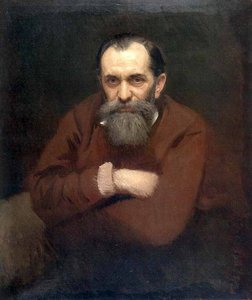
Vasily Perov
1833 - 1882 , Rússia
Breve Biografia
- Artistic Movement Or Style: Realismo crítico
- Artists Or Movements Influenced By This Artist:
- Repin
- Surikov
- Artists Who Influenced This Artist: ['Stupin']
- Date Of Birth: 2 jan 1834
- Date Of Death: 29 mai 1882
- Full Name: Vasily Grigorevich Perov
- Nationality: Russo
- Notable Artworks:
- Sermão em um vilarejo
- Fila na fonte
- Última jornada
- Place Of Birth: Tobolsk, Rússia