

 Visualizar na parede
 Compartilhar
 Compartilhar
 Detalhes
 Guia
Guia

 Baixar imagem
 Semelhantes
 Raio X
 Ver diaporama
 Estatísticas
The Reaper

 Ler mais
Giclée / Impressão de Arte
Impressão giclée ou em tela de qualidade de museu, com produção rápida e opções flexíveis de acabamento. ( Comprar pintura feita à mão Alternar para Imagem Digital)




P118B €10

P118H €10

P118W €10

P438Z €10

P508JH €12

P508YH €12

P805H €10

P805Z €10

P919BZ €10

P919G €10

P919XJ €10

P959ZH €10

P968JZ €12

W106C €8

W218G €10

W218JH €8

W218Y €10

W307PJ €10

W316G €10

W316PJ €8

W316Y €10

W398PJ €8

W4111J €10

W500HY €15

W500JH €15

W692G €12

W849H €8

W940BG €15

W953PJ €8




Escolha entre os nossos tamanhos pré-definidos que respeitam as proporções originais da obra de arte.

Insira a largura e a altura desejadas para se ajustarem à sua moldura ou parede. Uma impressão pode ser apenas cortada, nunca ampliada além da imagem original; portanto, um tamanho com proporções diferentes resultará na perda de parte da imagem. Enviamos uma maquete digital para sua aprovação antes de realizarmos a impressão. A imagem exibida nesta página não mostra o corte real — apenas a maquete o faz.
Entrega mundial () em 2 semanas, em vez das 4/5 semanas padrão. (27 Outubro)

Envio expresso gratuito para todo o mundo

Tela de Linho de Alta Qualidade

Seguro de transporte completo

Garantia de Reembolso de Impostos Alfandegários

Garantia de Fidelidade Cromática

Política de Devolução em 100 Dias (Apenas para Defeitos)

Garantia de reembolso de 100%

Oferta de desconto por quantidade
 A opção de vidro está disponível apenas para tamanhos inferiores a 110 cm

The Reaper
Giclée / Impressão de Arte
Tamanho da Reprodução
-


Preço Total
€ 70
A Moment of Profound Transition: Decoding Boccioni’s “The Reaper”
- Subject and Narrative: “The Reaper” presents a deeply moving scene – a man cradling an infant, standing alongside a woman, before the imposing facade of a church. The presence of an umbrella suggests impending or recent rainfall, adding to the painting’s somber atmosphere. While seemingly straightforward, the image resonates with layers of symbolic meaning relating to life, death, and faith.
- Futurist Roots & Departure: Umberto Boccioni (1882-1916) is best known as a leading figure in the Italian Futurist movement. However, “The Reaper” represents a fascinating divergence from his more overtly dynamic and fragmented style – works like *Unique Forms of Continuity in Space*. While traces of his interest in form simplification are present, this painting leans towards a more figurative and emotionally charged representation. It’s believed to be one of Boccioni's last paintings before his untimely death during World War I.
- Technique & Style: The painting demonstrates Boccioni’s evolving technique. Though not fully abandoning representational form, he employs a simplified approach to figures and architecture. Brushstrokes are visible, contributing to the work's textural quality and emotional intensity. The color palette is muted, dominated by earth tones and grays, reinforcing the sense of melancholy and gravity.
- Historical Context & Symbolism: Created during a period of immense social and political upheaval leading up to and during World War I, “The Reaper” can be interpreted as an allegory for loss and mortality. The church in the background symbolizes faith and tradition, while the reaper figure (implied rather than explicitly depicted) evokes themes of death and transition. The baby represents innocence and the continuation of life, creating a poignant contrast with the looming specter of mortality.
- Emotional Impact & Interpretation: “The Reaper” is not merely a depiction of figures; it’s an exploration of universal human experiences – grief, hope, and the search for meaning in the face of adversity. The painting evokes a sense of quiet contemplation and invites viewers to reflect on their own mortality and connection to something larger than themselves. The ambiguity inherent in the scene allows for multiple interpretations, making it a compelling work for both personal reflection and artistic analysis.
- For Collectors & Designers: This artwork’s subdued palette and emotionally resonant subject matter make it suitable for a variety of interior settings. It would complement spaces designed to foster contemplation or evoke a sense of history and depth. A high-quality reproduction captures the painting's textural nuances and emotional power, adding a touch of artistic sophistication to any collection.
Perguntas e Respostas
Existe uma ficha informativa sobre "The Reaper", de Umberto Boccioni para estudantes?
O guia para "The Reaper" é a página de Ficha informativa da obra — uma ficha informativa imprimível que apresenta a obra com sua legenda, autoria e tabela de identificação (artista, datas, técnica, tamanho original, coleção).
Quão harmoniosas são as cores de "The Reaper", de Umberto Boccioni?
"The Reaper", de Umberto Boccioni apresenta uma harmonia de cores Balanced Harmony.
Qual é a atmosfera geral de "The Reaper", de Umberto Boccioni?
"The Reaper", de Umberto Boccioni é descrito como tendo um clima Nostalgic. Esta classificação pode ajudar a combinar a obra com um ambiente.
Biografia do Artista
A Life Forged in Motion: The Revolutionary Vision of Umberto Boccioni
Umberto Boccioni, born in Reggio Calabria in 1882, was a figurehead of the Italian Futurist movement—a force that sought to shatter artistic conventions and embrace the dynamism of the modern world. His life, though tragically cut short at just thirty-three, became a testament to this fervent belief in progress, speed, and the intoxicating energy of the machine age. Boccioni’s early years were marked by constant relocation due to his father's civil service position, an upbringing that exposed him to diverse landscapes and instilled within him a restless spirit. This nomadic existence eventually led him to Rome, where he initially pursued studies in decorative arts before gravitating towards painting, absorbing influences from the Liberty style poster artists of the time. However, it was his encounter with Futurism, ignited by the writings of Filippo Tommaso Marinetti, that truly set his artistic trajectory ablaze.Embracing the Whirlwind: The Rise of a Futurist
The year 1910 proved pivotal for Boccioni. He signed the *Manifesto dei Pittori Futuristi*, solidifying his commitment to a movement that celebrated technology, velocity, and even violence as emblems of modernity. This wasn’t merely an aesthetic choice; it was a philosophical rebellion against the weight of tradition, a desire to capture the very essence of a world hurtling towards an uncertain future. Boccioni quickly became one of Futurism's most articulate theorists, expanding upon Marinetti’s initial pronouncements and applying them to the visual arts. He argued for a complete break from representational accuracy, advocating instead for paintings that conveyed not just *what* things looked like, but *how* they felt in motion—the sensation of speed, the fragmentation of form, the overwhelming energy of urban life. His early works, while still hinting at Impressionist and Divisionist influences, began to demonstrate this burgeoning obsession with dynamism. Paintings such as *The City Rises* (1910-1911) are monumental in scale and ambition, depicting the chaotic construction of a modern metropolis—a swirling vortex of human figures, buildings, and machinery that embodies the Futurist ideal. The painting is not a static representation but an attempt to capture the feeling of growth and transformation inherent in urban development.Deconstructing Reality: Technique and Themes
Boccioni’s artistic development was characterized by an increasingly radical approach to form. He moved away from traditional notions of perspective and composition, embracing fragmentation as a means of conveying movement and energy. Objects were broken down into their constituent parts, lines of force radiated outwards, and colors blended in swirling patterns—all designed to create a sense of visual vibration. This deconstruction wasn’t merely stylistic; it was rooted in Boccioni's belief that reality itself was fluid and constantly changing. He sought to represent not the static appearance of things, but their dynamic essence. Key themes emerged throughout his oeuvre: dynamism, the celebration of modernity, and a fascination with the human body as a vehicle for expressing energy and motion. This is powerfully illustrated in works like *Dynamism of a Human Body* (1913), where a figure is depicted not as a solid form but as a series of fragmented shapes suggesting movement through space. The painting captures the sensation of a person in motion, emphasizing speed and force rather than a fixed pose. He experimented with various techniques to achieve this effect, including layering paint and using contrasting colors to create a sense of depth and movement. Perhaps his most iconic creation, *Unique Forms of Continuity in Space* (1913), transcends painting altogether—a bronze sculpture that embodies the Futurist ideal with breathtaking force. The figure appears to be caught mid-stride, its limbs and torso elongated and distorted, conveying a sense of unstoppable momentum. The sculpture’s dynamic form challenges traditional notions of representation, suggesting movement and energy rather than static solidity.Influences and Legacy
Boccioni's artistic journey was shaped by a confluence of influences. He initially studied with Giacomo Balla in Rome, absorbing the techniques of Divisionism—a method of painting that involved breaking down colors into small, separate dots to create an optical effect. Marinetti’s *Manifesto del Futurismo* provided the theoretical framework for his artistic practice, encouraging him to reject the past and embrace the dynamism of modern life. He also drew inspiration from Cubism's fragmentation of form and the philosophical writings of Nietzsche, who challenged traditional values and advocated for a celebration of the individual will. Boccioni’s untimely death in 1916, during World War I, cut short his career but left behind a profound legacy. His ideas and artworks continued to resonate long after his passing, influencing subsequent Futurist artists and shaping the course of modern art. He is remembered as a pioneer who dared to challenge artistic conventions and explore new ways of representing reality—a visionary whose work continues to inspire artists today. His sculptures remain powerful symbols of dynamism and modernity, reminding us of the energy and movement that define our world.- Key Influences: Giacomo Balla’s Divisionism, Filippo Tommaso Marinetti's Futurism, Nietzschean philosophy.
- Notable Techniques: Layered paint application, contrasting colors, fragmentation of form.
- Major Themes: Dynamism, modernity, the human body in motion.
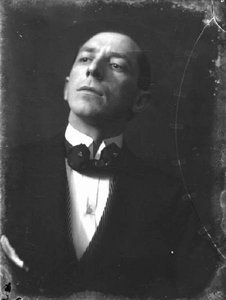
Umberto Boccioni
1882 - 1916 , Itália
Dados Rápidos
- Artistic Movement Or Style: Futurismo
- Artists Or Movements Influenced By This Artist:
- Constructivismo
- Expressionismo
- Artists Who Influenced This Artist:
- Giacomo Balla
- Cubismo
- Date Of Birth: 1882-10-19
- Date Of Death: 1916-08-17
- Full Name: Umberto Boccioni
- Nationality: Italiano
- Notable Artworks:
- Cidade que sobe
- Formas Únicas
- Corpo em movimento
- Place Of Birth: Reggio Calabria, Itália
Artigos Relacionados

Umberto Boccioni: Dynamism, Futurist Ideals & the Evolution of Modern Sculpture
Explore the revolutionary art of Umberto Boccioni, a leading figure of Futurism. Discover his iconic sculptures & paintings, and delve into the movement's impact on modern art history with OriginalUniqueArt.

Carlo Carrà: Futurist Visions & Metaphysical Transformations in Early 20th-Century Italian Painting
Explore the artistic journey of Carlo Carrà, a pivotal figure in Italian Futurism & Metaphysical painting. Discover his dynamic compositions, collaborations with de Chirico, and lasting influence on modern art history.
The Eloquence of Arrangement: Compositional Strategies in Western Art from the Renaissance to Modernism
Explore the evolution of compositional strategies in Western art! Discover how masters like Raphael & Zurbaran used perspective, proportion, and dynamic arrangement to create timeless masterpieces. Enhance your art appreciation today!
Mario Sironi: A Poetic of Modern Italian Identity Through Symbolism & Social Commentary
Explore the profound works of Mario Sironi, a key figure in Italian Modernism. Discover his evolution from Futurism to Metaphysical painting and his powerful social commentary. Learn about his legacy at OriginalUniqueArt.

Speed, Power, and Motion: A Definitive Guide to the Italian Futurist Art Movement
Explore the dynamic world of Italian Futurism. Discover how masters like Umberto Boccioni captured speed, power, and modernity through revolutionary techniques. A definitive guide for art historians and collectors seeking to understand the movement that redefined the machine age.


