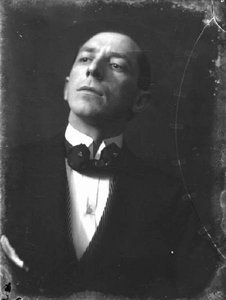
() ·

A painting made for you, by hand

The Mother

Reprodução em Óleo Feita à Mão

Óleo sobre tela pintado à mão no tamanho e moldura de sua escolha, feito sob encomenda pelos nossos artistas. ( Alternar para Impressão Alternar para Imagem Digital)

Descrição do Item

Biografia do Artista

Umberto Boccioni (1882-1916): Pioneiro do Futurismo italiano! Explore pinturas e esculturas dinâmicas, capturando movimento, modernidade e formas fragmentadas. Descubra 'Dynamism of a Human Body' & mais!

from ·

Chapter 1

How large should it be?

Slide to change the size; the picture on the left shows the frame at its real width. The proportions of the original are kept.

Tamanho padrão
personalizado
CM
INCH

Escolha entre os nossos tamanhos pré-definidos que respeitam as proporções originais da obra de arte.

largura
altura

Insira a largura e a altura desejadas para se ajustarem à sua moldura ou parede. Como esta obra é pintada à mão, para um tamanho com proporções diferentes, o artista poderá pintar um pouco mais ao redor da imagem ou reduzir ligeiramente a composição — você escolhe. Enviamos uma maquete digital para sua aprovação antes de iniciar a pintura. A imagem exibida nesta página não representa o resultado real — apenas a maquete mostra o resultado final.

Chapter 2

How should it arrive?

Choose the edges of the stretched canvas

Choose your frame

Corner sample of the WhiteWrap canvas edge finish, stretched on madeira maciça bars
White €1
Corner sample of the BlurSideWrap canvas edge finish, stretched on madeira maciça bars
Blurside €1
Corner sample of the ExtendedWrap canvas edge finish, stretched on madeira maciça bars
Extended €1
Corner sample of the P118B picture frame: poliestireno moldado, 5 cm wide and 3 cm thick
P118B €10
Corner sample of the P118H picture frame: poliestireno moldado, 5 cm wide and 3 cm thick
P118H €10
Corner sample of the P118W picture frame: poliestireno moldado, 5 cm wide and 3 cm thick
P118W €10
Corner sample of the P438Z picture frame: poliestireno moldado, 5.5 cm wide and 3.5 cm thick
P438Z €10
Corner sample of the P508JH picture frame: poliestireno moldado, 7 cm wide and 3.5 cm thick
P508JH €12
Corner sample of the P508YH picture frame: poliestireno moldado, 7 cm wide and 3.5 cm thick
P508YH €12
Corner sample of the P805H picture frame: poliestireno moldado, 5 cm wide and 3.5 cm thick
P805H €10
Corner sample of the P805Z picture frame: poliestireno moldado, 5 cm wide and 3.5 cm thick
P805Z €10
Corner sample of the P919BZ picture frame: poliestireno moldado, 7 cm wide and 3.5 cm thick
P919BZ €10
Corner sample of the P919G picture frame: poliestireno moldado, 7 cm wide and 3.5 cm thick
P919G €10
Corner sample of the P919XJ picture frame: poliestireno moldado, 7 cm wide and 3.5 cm thick
P919XJ €10
Corner sample of the P959ZH picture frame: poliestireno moldado, 5 cm wide and 3 cm thick
P959ZH €10
Corner sample of the P968JZ picture frame: poliestireno moldado, 6 cm wide and 4 cm thick
P968JZ €12
Corner sample of the W106C picture frame: madeira maciça, 5 cm wide and 3 cm thick
W106C €8
Corner sample of the W218G picture frame: madeira maciça, 5 cm wide and 3 cm thick
W218G €10
Corner sample of the W218JH picture frame: madeira maciça, 5 cm wide and 3 cm thick
W218JH €8
Corner sample of the W218Y picture frame: madeira maciça, 5 cm wide and 3 cm thick
W218Y €10
Corner sample of the W307PJ picture frame: madeira maciça, 6 cm wide and 3 cm thick
W307PJ €10
Corner sample of the W316G picture frame: madeira maciça, 6 cm wide and 3 cm thick
W316G €10
Corner sample of the W316PJ picture frame: madeira maciça, 6 cm wide and 3 cm thick
W316PJ €8
Corner sample of the W316Y picture frame: madeira maciça, 6 cm wide and 3 cm thick
W316Y €10
Corner sample of the W398PJ picture frame: madeira maciça, 5 cm wide and 3 cm thick
W398PJ €8
Corner sample of the W4111J picture frame: madeira maciça, 6.5 cm wide and 3.5 cm thick
W4111J €10
Corner sample of the W500HY picture frame: madeira maciça, 7 cm wide and 5 cm thick
W500HY €15
Corner sample of the W500JH picture frame: madeira maciça, 7 cm wide and 5 cm thick
W500JH €15
Corner sample of the W692G picture frame: madeira maciça, 8 cm wide and 4 cm thick
W692G €12
Corner sample of the W849H picture frame: madeira maciça, 5 cm wide and 3 cm thick
W849H €8
Corner sample of the W940BG picture frame: madeira maciça, 7.5 cm wide and 4.5 cm thick
W940BG €15
Corner sample of the W953PJ picture frame: madeira maciça, 6 cm wide and 3.5 cm thick
W953PJ €8
Corner sample of the H24-GOLD picture frame: madeira entalhada com gesso, 10 cm wide and 6 cm thick
H24-GOLD €30
Corner sample of the H24-SILVER picture frame: madeira entalhada com gesso, 10 cm wide and 6 cm thick
H24-SILVER €30
Corner sample of the H36-GOLD picture frame: madeira entalhada com gesso, 15 cm wide and 6.5 cm thick
H36-GOLD €45
Corner sample of the H36-SILVER picture frame: madeira entalhada com gesso, 15 cm wide and 6.5 cm thick
H36-SILVER €45
Prévia da moldura
Com moldura

Moulding: . Overall size with the frame: .

Chapter 3

Who paints it, and should anything change?

Examples of what can be changed: Replace face with customer photo; Add pet (e.g., replace cat with dog); Include hidden message in background; Change background landscape or elements.
After order, OriginalUniqueArt.com team will email client for instructions and provide a mockup preview

Entrega mundial () em 3 a 4 semanas, em vez das 5 semanas padrão. (1 Novembro). Sem comprometer a qualidade.

Chapter 4

The finishing touches

A nameplate, as in a museum?

Detalhes da Placa de Bronze Gravada

This elegant plaque features the artist's name and the title of the artwork, finely engraved for a timeless presentation.

It is made from bronze with a refined, elegant finish. The text is precisely laser-engraved for a sharp and permanent result. Measuring 9x2 cm, the plaque is compact yet easy to read. It's built to be durable and scratch-resistant, offering a professional, museum-quality look. Mounting is simple thanks to the included adhesive backing.

Detalhes da Placa de Acrílico Transparente

The plaque includes essential engraved details such as the artist's name, the title of the artwork, the date it was created, the type of media used-like oil on canvas or watercolor-a brief description of the piece, and a QR code that links to the complete artwork information.

It is crafted from clear acrylic, offering a sleek, modern appearance. The text is UV-engraved in black to ensure strong visual contrast. With a size of 10x15 cm, it ensures optimal readability. It comes equipped with two metal hooks for secure wall mounting. The plaque is designed to be weather-resistant, making it suitable for various environments, and it includes interactive features that work seamlessly with smartphone scanning.

Detalhes da Placa de Acrílico Preto

This elegant plaque includes engraved information such as the artist's name, the title of the artwork, the date it was created, the type of media used (like oil on canvas or watercolor), a short description of the artwork, and a QR code for quick access to more information.

The plaque itself is made from refined black acrylic with a premium finish. The text is laser-engraved in white for high contrast and readability. Its size is 10x15 cm, designed to be easy to read. It comes with two metal hooks for professional mounting. The design is sleek and fits any interior style. It is also weather-resistant and durable, with built-in digital integration for mobile compatibility.

A protective varnish?

When do you need it?

Chapter 5

Your painting, as you ordered it

The Mother

Técnica de Reprodução

Tamanho da Reprodução

-

Artista Sênior de Elite

Mais detalhes, refinamento e tempo de produção adicional

-

Moldura para Reprodução

-

-

Para obras de arte ou reproduções com mais de 105 cm (aproximadamente 41 polegadas) em qualquer um dos lados, a moldura será enviada como um kit desmontado. Este método garante uma entrega segura e evita danos durante o transporte.

Montagem profissional necessária — este não é um produto DIY (faça você mesmo).
O kit deve ser montado e a tela esticada por um profissional de molduraria experiente, utilizando cola de madeira (não inclusa), um alicate de esticar tela e grampos para manter as travessas alinhadas enquanto a cola seca. A montagem incorreta ou a tensão desigual da tela podem danificar permanentemente a obra de arte e não estão cobertas pela nossa garantia.

  • Todas as barras de madeira maciça estão incluídas, precisamente cortadas ao tamanho certo.

  • Montado com os parafusos fornecidos, além de cola para madeira para as junções dos cantos, que não está inclusa e deve ser providenciada pelo seu moldurista.

  • São necessárias ferramentas profissionais não incluídas: um alicate de estiramento de tela (esticador) e grampos para manter as ripas alinhadas enquanto a cola seca.

Importante:
As junções dos cantos requerem cola para madeira, as ripas devem ser mantidas com grampos até que a cola esteja completamente seca, e o estiramento da tela na moldura montada requer um alicate de esticar tela. Nenhum destes itens está incluído no kit. Por favor, certifique-se de contar com um profissional de molduraria experiente antes de encomendar este tamanho.

Etiqueta de identificação

-

-

Verniz de Proteção

Verniz brilhante (realça as cores e protege contra a luz e a umidade)

-

Personalizar minha obra

Exemplos de alterações possíveis: Substituir o rosto por uma foto do cliente; Adicionar um animal de estimação (ex.: substituir gato por cachorro); Incluir uma mensagem oculta no fundo; Alterar a paisagem ou os elementos do fundo.

-

Urgente

Entrega mundial () em 3 a 4 semanas, em vez das 5 semanas padrão. (1 Novembro). Sem comprometer a qualidade.

-

Envio Expresso

Entrega mundial para em 5 semanas. (8 Novembro).

Com envio incluído

Preço Total

€ 267

Preço Total € 267

A opção de vidro está disponível apenas para tamanhos inferiores a 110 cm

Included with every order

  • Envio expresso gratuito para todo o mundo
  • Tela de Linho de Alta Qualidade
  • Seguro de transporte completo
  • Garantia de Reembolso de Impostos Alfandegários
  • Garantia de Fidelidade Cromática
  • Política de Devolução em 100 Dias (Apenas para Defeitos)
  • Garantia de reembolso de 100%
  • Oferta de desconto por quantidade

The Artist's Mother: A Study in Expressionist Minimalism

Umberto Boccioni’s “The Artist’s Mother,” painted in 1907, stands as a pivotal work within the burgeoning Futurist movement and a testament to Boccioni’s profound engagement with Impressionism and Divisionism. Created during his formative years in Padua, Italy—a city brimming with artistic fervor—the painting embodies the spirit of its time while simultaneously forging a distinctive visual language that anticipates the radical innovations of Expressionism. This intimate portrait captures his mother's face and upper torso against a muted backdrop, prioritizing form and texture over detailed representation—a deliberate choice reflecting Boccioni’s stylistic evolution away from purely naturalistic observation.
  • Style & Technique: The artwork leans heavily into Divisionist principles, mirroring the influence of Giacomo Balla's pioneering explorations of optical blending and fragmented brushstrokes. However, unlike Balla’s dynamic compositions, “The Artist’s Mother” adopts a restrained aesthetic—characterized by dense hatching and crosshatching—to achieve tonal variations and convey an overwhelming sense of emotion. The artist meticulously renders the subject’s skin with subtle gradations of gray, emphasizing the materiality of the canvas itself.
  • Composition & Color Palette: The composition is strikingly simple, focusing on a tightly cropped view of the woman's visage—a compositional strategy that directs the viewer’s gaze and minimizes distractions. The monochromatic grayscale palette—ranging from deep blacks to delicate whites—amplifies the painting’s expressive power, stripping away color to heighten awareness of surface texture and contour lines.
  • Line & Texture: Dominating the canvas is an expansive network of interwoven lines that swirl around the woman's head and torso. These lines aren’t intended for precise anatomical depiction but serve as conduits for emotional energy—suggesting turbulence, introspection, and perhaps a quiet sorrow. The artist employs short, dense strokes to build up textural surfaces, mirroring the roughness of skin and hair, creating an immersive experience for the viewer.
  • Symbolism & Context: “The Artist’s Mother” transcends mere portraiture; it delves into themes of familial devotion and maternal wisdom—concepts central to Boccioni's artistic worldview. The woman’s gaze—slightly averted—hints at contemplation and vulnerability, inviting viewers to consider the complexities of human experience. Furthermore, the painting’s genesis within Padua’s vibrant artistic milieu underscores the influence of Impressionist ideals and the broader cultural dialogue surrounding the burgeoning Futurist movement.
  • Historical Significance: Produced in 1907, “The Artist’s Mother” represents a crucial step in Boccioni's stylistic journey—marking his departure from Impressionistic naturalism toward Expressionist abstraction. It foreshadows the expressive fervor and emotional intensity that would characterize his later masterpieces, establishing him as one of Italy’s foremost artists of the early 20th century.
Further Exploration: Consider examining similar works by Francesco Filippini—particularly “Portrait of the mother”—to appreciate the stylistic precedents informing Boccioni's artistic vision. Also, delve into the broader context of Futurist art and its engagement with themes of dynamism, speed, and technological advancement.

Perguntas e Respostas

Onde posso comprar uma reprodução pintada à mão de "The Mother", de Umberto Boccioni?

Você pode encomendar uma reprodução pintada à mão de "The Mother", de Umberto Boccioni diretamente em sua página de Reprodução Pintada à Mão: uma reprodução a óleo pintada à mão sobre tela de linho, feita sob encomenda.

Qual é a saturação e a intensidade de "The Mother", de Umberto Boccioni?

As cores de "The Mother", de Umberto Boccioni apresentam uma saturação Muted com uma intensidade Monochromatic.

Como "The Mother" equilibra luz e sombra?

"The Mother", de Umberto Boccioni apresenta um brilho de brilliant, com uma luminância de Bright Balance.

More about this painting

Visualizar na parede Visualizar em RA Alternar para Impressão Alternar para Imagem Digital Compartilhar
Detalhes Guia Adicionar aos favoritos Baixar imagem Semelhantes Raio X Ver diaporama Q&A Estatísticas

In numbers

  • 29frames to choose from
  • standard sizes, in its own proportions
  • 5weeks to paint and deliver it
Umberto Boccioni

Umberto Boccioni

1882 - 1916, Itália

Quick facts about Umberto Boccioni

  • Artistic Movement Or Style: Futurismo
  • Artists Or Movements Influenced By This Artist:
    • Constructivismo
    • Expressionismo
  • Artists Who Influenced This Artist:
    • Giacomo Balla
    • Cubismo
  • Date Of Birth: 1882-10-19
  • Date Of Death: 1916-08-17
  • Full Name: Umberto Boccioni
  • Nationality: Italiano
  • Notable Artworks:
    • Cidade que sobe
    • Formas Únicas
    • Corpo em movimento
  • Place Of Birth: Reggio Calabria, Itália

Biografia do Artista

A Life Forged in Motion: The Revolutionary Vision of Umberto Boccioni

Umberto Boccioni, born in Reggio Calabria in 1882, was a figurehead of the Italian Futurist movement—a force that sought to shatter artistic conventions and embrace the dynamism of the modern world. His life, though tragically cut short at just thirty-three, became a testament to this fervent belief in progress, speed, and the intoxicating energy of the machine age. Boccioni’s early years were marked by constant relocation due to his father's civil service position, an upbringing that exposed him to diverse landscapes and instilled within him a restless spirit. This nomadic existence eventually led him to Rome, where he initially pursued studies in decorative arts before gravitating towards painting, absorbing influences from the Liberty style poster artists of the time. However, it was his encounter with Futurism, ignited by the writings of Filippo Tommaso Marinetti, that truly set his artistic trajectory ablaze.

Embracing the Whirlwind: The Rise of a Futurist

The year 1910 proved pivotal for Boccioni. He signed the *Manifesto dei Pittori Futuristi*, solidifying his commitment to a movement that celebrated technology, velocity, and even violence as emblems of modernity. This wasn’t merely an aesthetic choice; it was a philosophical rebellion against the weight of tradition, a desire to capture the very essence of a world hurtling towards an uncertain future. Boccioni quickly became one of Futurism's most articulate theorists, expanding upon Marinetti’s initial pronouncements and applying them to the visual arts. He argued for a complete break from representational accuracy, advocating instead for paintings that conveyed not just *what* things looked like, but *how* they felt in motion—the sensation of speed, the fragmentation of form, the overwhelming energy of urban life. His early works, while still hinting at Impressionist and Divisionist influences, began to demonstrate this burgeoning obsession with dynamism. Paintings such as *The City Rises* (1910-1911) are monumental in scale and ambition, depicting the chaotic construction of a modern metropolis—a swirling vortex of human figures, buildings, and machinery that embodies the Futurist ideal. The painting is not a static representation but an attempt to capture the feeling of growth and transformation inherent in urban development.

Deconstructing Reality: Technique and Themes

Boccioni’s artistic development was characterized by an increasingly radical approach to form. He moved away from traditional notions of perspective and composition, embracing fragmentation as a means of conveying movement and energy. Objects were broken down into their constituent parts, lines of force radiated outwards, and colors blended in swirling patterns—all designed to create a sense of visual vibration. This deconstruction wasn’t merely stylistic; it was rooted in Boccioni's belief that reality itself was fluid and constantly changing. He sought to represent not the static appearance of things, but their dynamic essence. Key themes emerged throughout his oeuvre: dynamism, the celebration of modernity, and a fascination with the human body as a vehicle for expressing energy and motion. This is powerfully illustrated in works like *Dynamism of a Human Body* (1913), where a figure is depicted not as a solid form but as a series of fragmented shapes suggesting movement through space. The painting captures the sensation of a person in motion, emphasizing speed and force rather than a fixed pose. He experimented with various techniques to achieve this effect, including layering paint and using contrasting colors to create a sense of depth and movement. Perhaps his most iconic creation, *Unique Forms of Continuity in Space* (1913), transcends painting altogether—a bronze sculpture that embodies the Futurist ideal with breathtaking force. The figure appears to be caught mid-stride, its limbs and torso elongated and distorted, conveying a sense of unstoppable momentum. The sculpture’s dynamic form challenges traditional notions of representation, suggesting movement and energy rather than static solidity.

Influences and Legacy

Boccioni's artistic journey was shaped by a confluence of influences. He initially studied with Giacomo Balla in Rome, absorbing the techniques of Divisionism—a method of painting that involved breaking down colors into small, separate dots to create an optical effect. Marinetti’s *Manifesto del Futurismo* provided the theoretical framework for his artistic practice, encouraging him to reject the past and embrace the dynamism of modern life. He also drew inspiration from Cubism's fragmentation of form and the philosophical writings of Nietzsche, who challenged traditional values and advocated for a celebration of the individual will. Boccioni’s untimely death in 1916, during World War I, cut short his career but left behind a profound legacy. His ideas and artworks continued to resonate long after his passing, influencing subsequent Futurist artists and shaping the course of modern art. He is remembered as a pioneer who dared to challenge artistic conventions and explore new ways of representing reality—a visionary whose work continues to inspire artists today. His sculptures remain powerful symbols of dynamism and modernity, reminding us of the energy and movement that define our world.
  • Key Influences: Giacomo Balla’s Divisionism, Filippo Tommaso Marinetti's Futurism, Nietzschean philosophy.
  • Notable Techniques: Layered paint application, contrasting colors, fragmentation of form.
  • Major Themes: Dynamism, modernity, the human body in motion.
Umberto Boccioni remains a potent symbol of artistic innovation—a testament to the power of embracing change and challenging the status quo. He wasn’t simply an artist; he was a prophet of modernity, capturing the spirit of a world on the cusp of transformation and leaving behind a legacy that continues to reverberate through the art world today. His work is not merely about depicting motion; it's about embodying it.

Informações Rápidas

  • Artistic style: Expressionism
  • Medium: Oil on canvas
  • Year: 1907
  • Artist: Umberto Boccioni
  • Movement: Divisionist
  • Title: The Mother