
 Visualizar na parede
 Compartilhar
 Compartilhar
 Detalhes
 Guia
Guia

 Baixar imagem
 Semelhantes
 Raio X
 Ver diaporama
 Q&A
Q&A Estatísticas
The Athlete

- 14.0 x 23.0 cm


 Ler mais
Obtenha um arquivo pronto para impressão que vai muito além da visualização na web. Cada imagem digital que vendemos provém de um arquivo mestre de alta resolução em nosso banco de dados — geralmente entre 5.000 e 15.000 pixels de largura — para que você possa imprimir em grandes formatos, realizar cortes precisos ou reproduzir detalhes minuciosos com total confiança.
Nenhum arquivo sai do nosso estúdio sem passar por um cuidadoso processo de revisão. Um especialista digital verifica as cores em relação à pintura original e as corrige se necessário, aumentando então a clareza e o detalhe com ferramentas profissionais de retoque — sempre mantendo a fidelidade às pinceladas e ao estilo do artista. O resultado é uma imagem que se assemelha à pintura, e não a um scan com filtros.
Aprovação antes da finalização: nosso especialista enviará a imagem por e-mail em até 72 horas para sua revisão. Não ficou satisfeito? Solicite melhorias ou correções, ou peça o reembolso caso a qualidade não atenda às suas expectativas.
Esta é a qualidade em que confiam editoras, estúdios de design, galerias e gráficas.
Imagem Digital
Baixe um arquivo de alta resolução para exibição pessoal, impressão e projetos criativos. ( Alternar para Impressão Comprar pintura feita à mão)
Incluído em cada compra de imagem digital
Entrega Digital Especializada e Garantida
Ao escolher o OriginalUniqueArt.com, você não está apenas adquirindo uma imagem — você está recebendo uma obra de arte digital profissionalmente aprimorada, elaborada com precisão e com garantia de satisfação. Aqui está tudo o que acompanha seu pedido, automaticamente:

Entrega rápida por e-mail
O seu arquivo de imagem digital em alta resolução será enviado por e-mail em até 72 horas após o pedido — pronto para uso imediato.

Arquivo Digital com IA Otimizado
Sua obra de arte é otimizada profissionalmente por meio de ferramentas avançadas de IA e edição manual, garantindo o máximo de detalhes, clareza e precisão de cores.

Reenvio gratuito vitalício
Apagou ou perdeu o seu ficheiro acidentalmente? Não se preocupe – nós reenviamos para si a qualquer momento, gratuitamente.

Sem Taxas de Importação - Sempre
Desfrute da sua obra de arte instantaneamente, sem taxas alfandegárias, impostos ou custos de entrega — downloads digitais são sempre isentos de taxas.

Garantia de Fidelidade de Cores
Garantimos que sua imagem digital reflita as cores originais com a maior fidelidade possível, utilizando ferramentas profissionais e gerenciamento de cores.

Garantia de satisfação de 100 dias
Se não estiver satisfeito com a sua imagem digital, nós a revisaremos ou reembolsaremos 100% dentro de 100 dias — sem perguntas.

Garantia de Reembolso 100%
Não está satisfeito? Receba o reembolso total em até 100 dias após o recebimento do seu arquivo digital — sem perguntas.

Descontos para pedidos em lote
Compre 3 imagens, economize 10% - Compre 5, economize 15% - Compre 10+, economize 20%. Ideal para projetos criativos, galerias e agências.
The Athlete: A Symphony of Motion and Silence
Umberto Boccioni’s “The Athlete” isn't merely a depiction of a man riding horseback; it’s an embodiment of Futurism’s core tenets—a fervent celebration of dynamism, technological advancement, and the visceral thrill of movement captured in static form. Executed around 1907, this drypoint etching offers a glimpse into the artistic fervor that gripped Italy at the turn of the century, marking a decisive break from academic traditions.
- Composition & Technique: The artist’s masterful use of lines—sketchy yet purposeful—defines the contours of the rider and horse, conveying an impression of immediacy and energy. Unlike traditional etching techniques prioritizing detail, Boccioni opted for a deliberately reductive style, emphasizing gesture and capturing the essence of movement rather than precise representation. This technique reflects Futurism's rejection of illusionistic realism in favor of expressive abstraction.
- Historical Context: Futurism emerged as a reaction to Impressionism and Post-Impressionism, fueled by anxieties surrounding industrialization and urbanization. Filippo Tommaso Marinetti’s manifesto declared war on “the old values,” advocating for speed, violence, and the glorification of machines—themes powerfully reflected in Boccioni's oeuvre. The etching was created during a period of intense artistic experimentation, mirroring the broader cultural upheaval of the era.
- Symbolism & Emotion: Beyond its formal qualities, “The Athlete” resonates with deeper symbolic meanings. The horse symbolizes strength and nobility, while the rider embodies determination and control—visual metaphors for overcoming obstacles and achieving goals. The scattered birds contribute to a sense of freedom and fleeting beauty, hinting at the ephemeral nature of experience.
- Material & Craftsmanship: Crafted on creamy paper using ink or charcoal, the etching showcases Boccioni’s meticulous attention to detail despite his stylistic choices. The subtle textural variations within the lines enhance the impression of movement and depth, demonstrating a sophisticated understanding of printmaking techniques.
- Contemporary Relevance: “The Athlete” continues to inspire admiration for its bold aesthetic and conceptual innovation. Its exploration of motion and energy speaks to timeless themes of perseverance and aspiration—qualities that resonate powerfully with audiences today. It serves as a reminder that art can transcend time, capturing not only visual beauty but also the spirit of an era.
A reproduction of this iconic artwork would bring a touch of Futurist dynamism into any interior space, offering a captivating dialogue between history and artistic vision.
Perguntas e Respostas
Posso usar realidade aumentada para ver "The Athlete", de Umberto Boccioni no meu ambiente?
"The Athlete" possui uma prévia em realidade aumentada: a página de Prévia em RA da obra permite visualizá-la no seu próprio espaço através de um dispositivo compatível.
Posso visualizar "The Athlete", de Umberto Boccioni antes de fazer o pedido?
A página de Pré-visualização de "The Athlete" permite visualizar a obra de arte antes de fazer o pedido.
Onde posso baixar "The Athlete", de Umberto Boccioni?
"The Athlete", de Umberto Boccioni pode ser descarregado na página de Download da obra, como download de imagem digital em alta resolução.
Biografia do Artista
A Life Forged in Motion: The Revolutionary Vision of Umberto Boccioni
Umberto Boccioni, born in Reggio Calabria in 1882, was a figurehead of the Italian Futurist movement—a force that sought to shatter artistic conventions and embrace the dynamism of the modern world. His life, though tragically cut short at just thirty-three, became a testament to this fervent belief in progress, speed, and the intoxicating energy of the machine age. Boccioni’s early years were marked by constant relocation due to his father's civil service position, an upbringing that exposed him to diverse landscapes and instilled within him a restless spirit. This nomadic existence eventually led him to Rome, where he initially pursued studies in decorative arts before gravitating towards painting, absorbing influences from the Liberty style poster artists of the time. However, it was his encounter with Futurism, ignited by the writings of Filippo Tommaso Marinetti, that truly set his artistic trajectory ablaze.Embracing the Whirlwind: The Rise of a Futurist
The year 1910 proved pivotal for Boccioni. He signed the *Manifesto dei Pittori Futuristi*, solidifying his commitment to a movement that celebrated technology, velocity, and even violence as emblems of modernity. This wasn’t merely an aesthetic choice; it was a philosophical rebellion against the weight of tradition, a desire to capture the very essence of a world hurtling towards an uncertain future. Boccioni quickly became one of Futurism's most articulate theorists, expanding upon Marinetti’s initial pronouncements and applying them to the visual arts. He argued for a complete break from representational accuracy, advocating instead for paintings that conveyed not just *what* things looked like, but *how* they felt in motion—the sensation of speed, the fragmentation of form, the overwhelming energy of urban life. His early works, while still hinting at Impressionist and Divisionist influences, began to demonstrate this burgeoning obsession with dynamism. Paintings such as *The City Rises* (1910-1911) are monumental in scale and ambition, depicting the chaotic construction of a modern metropolis—a swirling vortex of human figures, buildings, and machinery that embodies the Futurist ideal. The painting is not a static representation but an attempt to capture the feeling of growth and transformation inherent in urban development.Deconstructing Reality: Technique and Themes
Boccioni’s artistic development was characterized by an increasingly radical approach to form. He moved away from traditional notions of perspective and composition, embracing fragmentation as a means of conveying movement and energy. Objects were broken down into their constituent parts, lines of force radiated outwards, and colors blended in swirling patterns—all designed to create a sense of visual vibration. This deconstruction wasn’t merely stylistic; it was rooted in Boccioni's belief that reality itself was fluid and constantly changing. He sought to represent not the static appearance of things, but their dynamic essence. Key themes emerged throughout his oeuvre: dynamism, the celebration of modernity, and a fascination with the human body as a vehicle for expressing energy and motion. This is powerfully illustrated in works like *Dynamism of a Human Body* (1913), where a figure is depicted not as a solid form but as a series of fragmented shapes suggesting movement through space. The painting captures the sensation of a person in motion, emphasizing speed and force rather than a fixed pose. He experimented with various techniques to achieve this effect, including layering paint and using contrasting colors to create a sense of depth and movement. Perhaps his most iconic creation, *Unique Forms of Continuity in Space* (1913), transcends painting altogether—a bronze sculpture that embodies the Futurist ideal with breathtaking force. The figure appears to be caught mid-stride, its limbs and torso elongated and distorted, conveying a sense of unstoppable momentum. The sculpture’s dynamic form challenges traditional notions of representation, suggesting movement and energy rather than static solidity.Influences and Legacy
Boccioni's artistic journey was shaped by a confluence of influences. He initially studied with Giacomo Balla in Rome, absorbing the techniques of Divisionism—a method of painting that involved breaking down colors into small, separate dots to create an optical effect. Marinetti’s *Manifesto del Futurismo* provided the theoretical framework for his artistic practice, encouraging him to reject the past and embrace the dynamism of modern life. He also drew inspiration from Cubism's fragmentation of form and the philosophical writings of Nietzsche, who challenged traditional values and advocated for a celebration of the individual will. Boccioni’s untimely death in 1916, during World War I, cut short his career but left behind a profound legacy. His ideas and artworks continued to resonate long after his passing, influencing subsequent Futurist artists and shaping the course of modern art. He is remembered as a pioneer who dared to challenge artistic conventions and explore new ways of representing reality—a visionary whose work continues to inspire artists today. His sculptures remain powerful symbols of dynamism and modernity, reminding us of the energy and movement that define our world.- Key Influences: Giacomo Balla’s Divisionism, Filippo Tommaso Marinetti's Futurism, Nietzschean philosophy.
- Notable Techniques: Layered paint application, contrasting colors, fragmentation of form.
- Major Themes: Dynamism, modernity, the human body in motion.
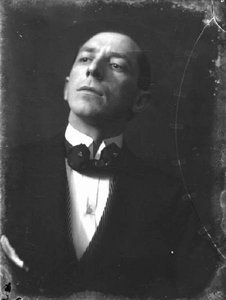
Umberto Boccioni
1882 - 1916 , Itália
Breve Biografia
- Artistic Movement Or Style: Futurismo
- Artists Or Movements Influenced By This Artist:
- Constructivismo
- Expressionismo
- Artists Who Influenced This Artist:
- Giacomo Balla
- Cubismo
- Date Of Birth: 1882-10-19
- Date Of Death: 1916-08-17
- Full Name: Umberto Boccioni
- Nationality: Italiano
- Notable Artworks:
- Cidade que sobe
- Formas Únicas
- Corpo em movimento
- Place Of Birth: Reggio Calabria, Itália