Visualizar em escala
 Enviar
 Compartilhar
 Ver detalhes

 Baixar
 Semelhantes
 Raio X
 Apresentação de slides
Mother and Child


 Ver mais
Giclée / Impressão de Arte
Impressão giclée ou em tela de qualidade de museu, com produção rápida e opções flexíveis de acabamento. ( Encomendar reprodução pintada à mão Comprar imagem em alta resolução)




P118B $10

P118H $10

P118W $10

P438Z $10

P508JH $12

P508YH $12

P805H $10

P805Z $10

P919BZ $10

P919G $10

P919XJ $10

P959ZH $10

P968JZ $12

W106C $8

W218G $10

W218JH $8

W218Y $10

W307PJ $10

W316G $10

W316PJ $8

W316Y $10

W398PJ $8

W4111J $10

W500HY $15

W500JH $15

W692G $12

W849H $8

W940BG $15

W953PJ $8




Escolha entre os nossos tamanhos pré-definidos que respeitam as proporções originais da obra de arte.

Você pode inserir suas próprias dimensões para se ajustar a uma moldura ou espaço específico. Se o tamanho selecionado não corresponder às proporções da imagem original, iremos recortar a obra de arte ou estender a imagem com uma borda espelhada ou preenchimento sólido. Um mockup digital será enviado para sua aprovação antes do início da produção.
Por favor, observe que a visualização na tela não reflete o recorte ou a extensão real. Apenas o mockup mostrará com precisão a composição final.
Embora tamanhos personalizados estejam disponíveis, recomendamos selecionar uma dimensão da lista predefinida para preservar as proporções originais.
Entrega mundial () em 2 semanas, em vez das 4/5 semanas padrão. (20 Agosto)

Envio Expresso Gratuito para todo o Mundo

Tela de Linho Premium

Seguro de transporte total

Garantia de Reembolso de Impostos Alfandegários

Garantia de Fidelidade de Cor

Política de Devolução de 60 Dias (Apenas para Defeitos)

Garantia de reembolso de 100%

Desconto para múltiplas unidades
 A opção de vidro está disponível apenas para tamanhos inferiores a 110 cm

Mother and Child
Giclée / Impressão de Arte
Dimensões da Reprodução
-


Preço Total
$ 80
Descrição do Item
A Moment Frozen in Pastel Light: Exploring Umberto Boccioni’s “Mother and Child”
The artwork "Mother and Child," executed by Italian Futurist painter Umberto Boccioni in 1906, transcends mere representation; it embodies the revolutionary spirit of its time while simultaneously capturing a poignant portrayal of familial tenderness. This pastel masterpiece isn't simply a depiction of a mother cradling her child—it’s an invitation to contemplate the dynamism inherent within stillness and the profound beauty found in domestic tranquility.The Futurist Vision: Embracing Motion Amidst Form
Boccioni’s affiliation with Futurism fundamentally shaped his artistic approach. Born in Reggio Calabria, he experienced a nomadic upbringing that fostered a restless curiosity—a characteristic perfectly mirrored in his art. Influenced by Filippo Tommaso Marinetti's manifesto, Futurists rejected academic conventions and championed speed, technology, and the energy of urban life. Yet, within this outwardly turbulent movement resided a surprising sensitivity to emotion and psychological depth. “Mother and Child” exemplifies this duality; it’s rendered with loose brushstrokes and flattened planes—techniques deliberately designed to convey movement—but these energetic gestures serve to heighten the emotional resonance of the scene. The artist skillfully utilizes pastel colors – predominantly muted pinks, yellows, and browns – creating a hazy atmosphere that softens the contours of the figures and emphasizes their faces.Technique and Material: Layered Pastel Light
The execution of “Mother and Child” speaks volumes about Boccioni’s artistic process. Primarily utilizing pastels or chalk on paper or board, he achieved remarkable luminosity through layering delicate shades of color. This technique isn't merely decorative; it’s integral to conveying the artwork’s mood—a subtle blend of warmth and nostalgia. Notice how the artist builds up tones gradually, creating textures that mimic the softness of fabric and skin. The simplified forms of the mother and child prioritize expressive gesture over anatomical precision, reflecting Futurism’s desire to capture fleeting moments of experience rather than idealized representations. Furthermore, the slightly angled table adds a subtle element of perspective, guiding the viewer's gaze into the heart of the composition.Symbolic Resonance: Domesticity Illuminated
Beyond its stylistic innovations, “Mother and Child” carries significant symbolic weight. It speaks to universal themes of maternal love, protection, and connection—values deeply rooted in humanist tradition. However, Boccioni’s Futurism infused these familiar motifs with a new dimension. The pastel palette isn't merely aesthetically pleasing; it symbolizes the ephemeral beauty of memory and the comforting glow of domestic warmth. Consider the inclusion of a potted plant and a lamp – seemingly insignificant details that contribute to the overall atmosphere of serenity and contemplation. They represent elements of the natural world and illumination, respectively, reinforcing the artwork’s message of peace and quietude amidst the relentless pace of modern life.A Legacy of Emotional Impressionism
“Mother and Child” stands as a testament to Umberto Boccioni's ability to synthesize Futurist dynamism with profound emotional sensitivity. It’s more than just a beautiful pastel portrait; it’s a window into the artistic spirit of its era—a celebration of human connection and an exploration of psychological depth achieved through masterful technique and evocative color palettes. Reproductions offer art lovers, collectors, and interior designers alike the opportunity to experience this timeless masterpiece firsthand, capturing its luminous beauty and conveying its enduring message of tenderness and contemplation.Biografia do Artista
A Life Forged in Motion: The Revolutionary Vision of Umberto Boccioni
Umberto Boccioni, born in Reggio Calabria in 1882, was a figurehead of the Italian Futurist movement—a force that sought to shatter artistic conventions and embrace the dynamism of the modern world. His life, though tragically cut short at just thirty-three, became a testament to this fervent belief in progress, speed, and the intoxicating energy of the machine age. Boccioni’s early years were marked by constant relocation due to his father's civil service position, an upbringing that exposed him to diverse landscapes and instilled within him a restless spirit. This nomadic existence eventually led him to Rome, where he initially pursued studies in decorative arts before gravitating towards painting, absorbing influences from the Liberty style poster artists of the time. However, it was his encounter with Futurism, ignited by the writings of Filippo Tommaso Marinetti, that truly set his artistic trajectory ablaze.Embracing the Whirlwind: The Rise of a Futurist
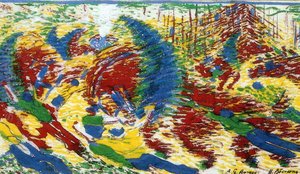
The year 1910 proved pivotal for Boccioni. He signed the *Manifesto dei Pittori Futuristi*, solidifying his commitment to a movement that celebrated technology, velocity, and even violence as emblems of modernity. This wasn’t merely an aesthetic choice; it was a philosophical rebellion against the weight of tradition, a desire to capture the very essence of a world hurtling towards an uncertain future. Boccioni quickly became one of Futurism's most articulate theorists, expanding upon Marinetti’s initial pronouncements and applying them to the visual arts. He argued for a complete break from representational accuracy, advocating instead for paintings that conveyed not just *what* things looked like, but *how* they felt in motion—the sensation of speed, the fragmentation of form, the overwhelming energy of urban life. His early works, while still hinting at Impressionist and Divisionist influences, began to demonstrate this burgeoning obsession with dynamism. Paintings such as *The City Rises* (1910-1911) are monumental in scale and ambition, depicting the chaotic construction of a modern metropolis—a swirling vortex of human figures, buildings, and machinery that embodies the Futurist ideal. The painting is not a static representation but an attempt to capture the feeling of growth and transformation inherent in urban development.Deconstructing Reality: Technique and Themes
Boccioni’s artistic development was characterized by an increasingly radical approach to form. He moved away from traditional notions of perspective and composition, embracing fragmentation as a means of conveying movement and energy. Objects were broken down into their constituent parts, lines of force radiated outwards, and colors blended in swirling patterns—all designed to create a sense of visual vibration. This deconstruction wasn’t merely stylistic; it was rooted in Boccioni's belief that reality itself was fluid and constantly changing. He sought to represent not the static appearance of things, but their dynamic essence. Key themes emerged throughout his oeuvre: dynamism, the celebration of modernity, and a fascination with the human body as a vehicle for expressing energy and motion. This is powerfully illustrated in works like *Dynamism of a Human Body* (1913), where a figure is depicted not as a solid form but as a series of fragmented shapes suggesting movement through space. The painting captures the sensation of a person in motion, emphasizing speed and force rather than a fixed pose. He experimented with various techniques to achieve this effect, including layering paint and using contrasting colors to create a sense of depth and movement. Perhaps his most iconic creation, *Unique Forms of Continuity in Space* (1913), transcends painting altogether—a bronze sculpture that embodies the Futurist ideal with breathtaking force. The figure appears to be caught mid-stride, its limbs and torso elongated and distorted, conveying a sense of unstoppable momentum. The sculpture’s dynamic form challenges traditional notions of representation, suggesting movement and energy rather than static solidity.Influences and Legacy
Boccioni's artistic journey was shaped by a confluence of influences. He initially studied with Giacomo Balla in Rome, absorbing the techniques of Divisionism—a method of painting that involved breaking down colors into small, separate dots to create an optical effect. Marinetti’s *Manifesto del Futurismo* provided the theoretical framework for his artistic practice, encouraging him to reject the past and embrace the dynamism of modern life. He also drew inspiration from Cubism's fragmentation of form and the philosophical writings of Nietzsche, who challenged traditional values and advocated for a celebration of the individual will. Boccioni’s untimely death in 1916, during World War I, cut short his career but left behind a profound legacy. His ideas and artworks continued to resonate long after his passing, influencing subsequent Futurist artists and shaping the course of modern art. He is remembered as a pioneer who dared to challenge artistic conventions and explore new ways of representing reality—a visionary whose work continues to inspire artists today. His sculptures remain powerful symbols of dynamism and modernity, reminding us of the energy and movement that define our world.- Key Influences: Giacomo Balla’s Divisionism, Filippo Tommaso Marinetti's Futurism, Nietzschean philosophy.
- Notable Techniques: Layered paint application, contrasting colors, fragmentation of form.
- Major Themes: Dynamism, modernity, the human body in motion.
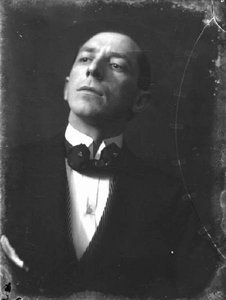
Umberto Boccioni
1882 - 1916 , Itália
Informações Rápidas
- Artistic Movement Or Style: Futurismo
- Artists Or Movements Influenced By This Artist:
- Constructivismo
- Expressionismo
- Artists Who Influenced This Artist:
- Giacomo Balla
- Cubismo
- Date Of Birth: 1882-10-19
- Date Of Death: 1916-08-17
- Full Name: Umberto Boccioni
- Nationality: Italiano
- Notable Artworks:
- Cidade que sobe
- Formas Únicas
- Corpo em movimento
- Place Of Birth: Reggio Calabria, Itália
Artigos Relacionados

Carlo Carrà: Futurist Visions & Metaphysical Transformations in Early 20th-Century Italian Painting
Explore the artistic journey of Carlo Carrà, a pivotal figure in Italian Futurism & Metaphysical painting. Discover his dynamic compositions, collaborations with de Chirico, and lasting influence on modern art history.

Umberto Boccioni: Dynamism, Futurist Ideals & the Evolution of Modern Sculpture
Explore the revolutionary art of Umberto Boccioni, a leading figure of Futurism. Discover his iconic sculptures & paintings, and delve into the movement's impact on modern art history with OriginalUniqueArt.

The Subtleties of Pastel: A Comprehensive Exploration of Technique, History & Emotional Resonance
Explore the captivating world of pastel art! Discover its rich history, Impressionistic masters like Degas, emotional power & unique techniques. Find museum-quality reproductions at OriginalUniqueArt.
The Soft Power of Pastel: A Connoisseur's Guide to History, Technique, and the Art of Texture
Explore the ethereal beauty of pastel art. From Renaissance origins to Impressionist mastery, discover the history, technique, and velvety textures that define this luminous medium in our expert guide for art connoisseurs.

The Subdued Radiance of Pastel: Exploring Nuance & Emotion in Art
Explore the nuanced world of pastel art! Discover its history, techniques & emotional power with expert insights from OriginalUniqueArt.com. Find museum-quality reproductions and learn about collecting this delicate medium.