

 Visualizar na parede
 Compartilhar
 Compartilhar
 Detalhes

 Baixar imagem
 Semelhantes
 Raio X
 Slideshow
 Estatísticas
Venus de Urbino
 Óleo sobre tela
- Arte de Parede
- Baroque
 1538
1538- Renascimento
 119.0 x 165.0 cm
 Galleria degli Uffizi
 Ler mais
Giclée / Impressão de Arte
Impressão giclée ou em tela de qualidade de museu, com produção rápida e opções flexíveis de acabamento. ( Comprar pintura feita à mão Alternar para Imagem Digital)




P118B $10

P118H $10

P118W $10

P438Z $10

P508JH $12

P508YH $12

P805H $10

P805Z $10

P919BZ $10

P919G $10

P919XJ $10

P959ZH $10

P968JZ $12

W106C $8

W218G $10

W218JH $8

W218Y $10

W307PJ $10

W316G $10

W316PJ $8

W316Y $10

W398PJ $8

W4111J $10

W500HY $15

W500JH $15

W692G $12

W849H $8

W940BG $15

W953PJ $8




Escolha entre os nossos tamanhos pré-definidos que respeitam as proporções originais da obra de arte.

Você pode inserir suas próprias dimensões para se ajustar a uma moldura ou espaço específico. Se o tamanho selecionado não corresponder às proporções da imagem original, iremos recortar a obra de arte ou estender a imagem com uma borda espelhada ou preenchimento sólido. Um mockup digital será enviado para sua aprovação antes do início da produção.
Por favor, observe que a visualização na tela não reflete o recorte ou a extensão real. Apenas o mockup mostrará com precisão a composição final.
Embora tamanhos personalizados estejam disponíveis, recomendamos selecionar uma dimensão da lista predefinida para preservar as proporções originais.
Entrega mundial () em 2 semanas, em vez das 4/5 semanas padrão. (11 Setembro)

Envio expresso gratuito para todo o mundo

Tela de Linho de Alta Qualidade

Seguro de transporte completo

Garantia de Reembolso de Impostos Alfandegários

Garantia de Fidelidade Cromática

Política de Devolução de 100 Dias (Apenas Defeitos)

Garantia de reembolso de 100%

Oferta de desconto por quantidade
 A opção de vidro está disponível apenas para tamanhos inferiores a 110 cm

Venus de Urbino
Giclée / Impressão de Arte
Tamanho da Reprodução
-


Preço Total
$ 80
A Renaissance Icon of Beauty & Sensuality
Titian’s Venus of Urbino (1538) remains one of the most celebrated and influential paintings in Western art history. This iconic depiction of a reclining nude transcends mere portraiture, becoming a powerful statement on beauty, desire, and the female gaze within the context of the High Renaissance.
Artistic Style & Technique
Embodying the Venetian school’s mastery of color and texture, Titian employs rich oil paints to create a luminous and sensuous surface. The painting showcases his signature *sfumato* technique – subtle gradations of light and shadow that soften forms and imbue the figure with an almost palpable presence. Unlike earlier, more idealized depictions of Venus, Titian’s subject is strikingly realistic, possessing a tangible physicality and directness. His loose brushwork, particularly evident in the fabrics and background details, anticipates later Baroque innovations.
Historical Context & Commission
Created during a period of artistic flourishing in Venice, this work likely served as both a celebration of beauty and a sophisticated gift. While its original commission remains debated – possibilities include Cardinal Ippolito de’ Medici or Guidobaldo II della Rovere, Duke of Urbino – the painting reflects the patronage of powerful Renaissance figures who valued art as a symbol of status and refinement. It diverges from purely mythological representations, hinting at a possible portraiture element, perhaps even depicting a real woman of the time.
Symbolism & Interpretation
The composition is laden with symbolic meaning. Venus’s pose, though relaxed, echoes classical *Venus Pudica* motifs (modest Venus), yet her direct gaze challenges conventional modesty. The bouquet of roses signifies love and beauty, while the sleeping dog at her feet traditionally represents fidelity. Two attending women in the background suggest themes of companionship or perhaps observation, adding a narrative layer to the scene. The open cassone – chest – hints at marriage and domesticity, further enriching the painting’s complex symbolism.
Emotional Impact & Lasting Legacy
Venus of Urbino evokes a sense of intimate contemplation and quiet sensuality. Titian masterfully captures not just physical beauty but also an inner world of confidence and self-awareness in his subject. Her gaze directly engages the viewer, creating a powerful connection that transcends time. This painting profoundly influenced generations of artists, inspiring countless reinterpretations and solidifying its place as a cornerstone of Western art. A reproduction allows you to bring this timeless masterpiece – and its captivating allure – into your own space.
Artist Information
Tiziano Vecellio, known to the world as Titian, stands as a monumental figure of the Italian Renaissance—perhaps its most celebrated colorist and a master who redefined the possibilities of oil painting. Born around 1490 in Pieve di Cadore, nestled amidst the dramatic landscapes of the Venetian Alps, his journey from humble beginnings to international acclaim is a testament to prodigious talent and an unwavering dedication to artistic innovation. The details surrounding Titian’s early life remain somewhat shrouded in mystery, but we know he was one of several children born to Gregorio Vecellio, a military man, and Lucia. Recognizing their sons' potential, the family arranged for young Tiziano and his brother Francesco to apprentice with an artist in Venice—a decision that would irrevocably alter the course of art history.
Venice at the turn of the 16th century was a vibrant hub of commerce, culture, a city brimming with artistic ambition. Titian’s formative years were spent honing his skills under the tutelage of Giovanni Bellini and Gentile Bellini—artists who had already established themselves as masters of Venetian painting and whose workshops exerted considerable influence on young artists like Tiziano.
Francesco Vecellio, Titian's brother, while more workmanlike in his approach to painting and lacking Titian’s talent, was able to achieve some notice in his home town of Cadore and the Bellunese area around it. Giorgio Martinioni mentions in his edition (1663) of Sansovino's guide to Venice a fresco of Hercules painted by Titian above the entrance to the Morosini house, a painting that would have been one of his earliest works, although Marco Boschini rejected this attribution.
During his long life, Titian’s artistic manner changed drastically, but he retained a lifelong interest in color. Although his mature works may not contain the vivid, luminous tints of his early pieces, they are remarkable and original in their loose brushwork and subtlety of tone.
Additional Research
The Venus of Urbino (also known as Reclining Venus) is an oil painting by Italian painter Titian, depicting a nude young woman, traditionally identified with the goddess Venus, reclining on a couch or bed in the sumptuous surroundings of a Renaissance palace. Work on the painting seems to have begun anywhere from 1532 or 1534, and was perhaps completed in 1534, but not sold until 1538. It is currently held in the Galleria degli Uffizi in Florence.
The figure’s pose derives from the * Dresden Venus* made around 1510–11, traditionally attributed to Giorgione but with the landscape completed by Titian. In this painting, Titian places Venus indoors, meets the viewer’s gaze, and makes her sensuality explicit.
Iconographic interpretations of the painting among art historians fall into two groups; both agree that the painting has a powerful erotic charge, but beyond that, it is seen either as a portrait of a courtesan, perhaps Zaffetta, or as a painting celebrating the marriage of its first owner (who according to some may not have commissioned it).
For Charles Hope, “It has yet to be shown that the most famous example of this genre, Titian's *Venus of Urbino*, is anything other than a representation of a beautiful nude woman on a bed, devoid of classical or even allegorical content”. Edgar Wind, the indefatigable finder of allegories drawing on Renaissance Neoplatonism, had to admit that in this case “an undisguised hedonism had at last dispelled the Platonic metaphors”.
The Venus of Urbino is considered one of Titian’s most important paintings. It has been studied extensively by art historians and critics alike.
Biografia do Artista
The Venetian Titan: A Life in Color and Canvas
Tiziano Vecellio, mundialmente conhecido como Titian, emerge como uma figura monumental do Renascimento italiano – talvez sua mais celebrada colorista e um mestre que redefiniu as possibilidades da pintura a óleo. Nascido por volta de 1490 em Pieve di Cadore, aninhado entre os dramáticos cenários das montanhas Dolomitas venezianas, sua jornada de origens humildes ao reconhecimento internacional é um testemunho do talento prodigioso e de uma dedicação inabalável à inovação artística. Os detalhes sobre a vida inicial de Titian permanecem em certa medida envoltos em mistério, mas sabemos que ele era um dos filhos de Gregorio Vecellio, um militar, e Lucia. Reconhecendo o potencial de seus filhos, a família organizou para que jovens Tiziano e seu irmão Francesco aprendessem com um artista em Veneza – uma decisão que alteraria irrevogavelmente o curso da história da arte. Veneza, no início do século XVI, era um centro vibrante de comércio, cultura e fermento artístico. O treinamento inicial de Titian ocorreu dentro do ateliê de Sebastiano Zuccato, um mosaicista, seguido por breves períodos sob a tutela de Gentile Bellini e, crucialmente, seu irmão Giovanni. No entanto, sua associação com Giorgione – um pintor veneziano cuja obra possuía uma qualidade poética etérea – provou ser a mais formativa. Os dois artistas colaboraram em vários projetos, incluindo os afrescos externos para o Fondaco dei Tedeschi, um movimentado centro comercial para comerciantes alemães. Mesmo nessas obras iniciais, a excepcional habilidade de Titian se tornou evidente, ganhando-lhe reconhecimento entre seus contemporâneos e prenunciando o brilho que logo floresceria.A Evolução do Estilo de um Mestre
O desenvolvimento artístico de Titian pode ser caracterizado por uma versatilidade notável e uma exploração contínua das técnicas pictóricas. Suas obras iniciais, fortemente influenciadas por Giorgione, exibem lirismo delicado e um uso magistral da cor para criar efeitos atmosféricos. Pinturas como *A Man with a Quilted Sleeve* (cerca de 1509) demonstram seu talento emergente para o retrato, capturando não apenas a semelhança física de seus assuntos, mas também sua essência interior. À medida que amadurecia, Titian começou a se afastar das tonalidades sutis de Giorgione e a abraçar uma abordagem mais ousada e dramática à cor. *The Visitation of Mary and Elizabeth* (agora na Galleria Accademia, Veneza) exemplifica essa mudança, mostrando sua crescente confiança no manejo de composições complexas e cores vibrantes. Ao longo de sua longa carreira, Titian consistentemente desafiou os limites da expressão artística. Ele experimentou com diferentes pinceladas – desde superfícies suaves e fundidas até marcas soltas e expressivas – e desenvolveu uma técnica única para sobrepor cores para criar efeitos luminosos. Seus retratos tornaram-se renomados por sua profundidade psicológica e representação realista de texturas e tecidos. Simultaneamente, ele se destacou em temas mitológicos e religiosos, imbuindo-os com uma sensualidade e intensidade dramática que cativavam o público. *Venus of Urbino* é um exemplo primário dessa maestria, uma obra-prima que redefiniu a representação do corpo feminino nu e estabeleceu Titian como uma figura de destaque na pintura veneziana.Patrocínio, Prestígio e Influência Duradoura
O talento de Titian atraiu a atenção de poderosos mecenas em toda a Europa. Ele serviu como pintor de corte para o Imperador Carlos V, o Rei Filipe II da Espanha e o Papa Paulo III, entre outros. Esse patrocínio não apenas lhe proporcionou segurança financeira, mas também permitiu que ele criasse obras monumentais que exibissem sua habilidade artística em grande escala. Sua capacidade de adaptar seu estilo aos gostos de diferentes cortes, ao mesmo tempo em que mantinha sua própria voz distinta, é um testemunho de sua excepcional habilidade e diplomacia. Titian faleceu em Veneza em 1576, deixando para trás um extraordinário corpo de trabalho que continua a inspirar admiração e apreço. Suas pinturas podem ser encontradas em museus ao redor do mundo, incluindo a Galleria Palatina em Florença, o Prado Museum em Madri e a National Gallery em Londres. Para experimentar uma obra de Titian é encontrar um mestre artesão no auge de seus poderes – um pintor que possuía uma habilidade incomparável para capturar a beleza, o drama e a complexidade da condição humana.Explorando Mais
- Museus & Coleções: Descubra as obras de Titian na Scuola del Santo em Pádua e San Salvador em Veneza, ambas exibindo seus deslumbrantes afrescos.
- Artistas Relacionados: Explore a influência de Giorgione no estilo inicial de Titian e o impacto posterior de Titian em artistas como Rubens e Delacroix.
- Contexto Histórico: Mergulhe no mundo da Renascença Italiana e da pintura veneziana para apreciar plenamente as conquistas artísticas de Titian.

Tiziano Vecellio
1490 - 1576 , Itália
Dados Rápidos
- Artistic Movement Or Style: Renascimento, Pintura Veneziana
- Artists Or Movements Influenced By This Artist:
- Pintores Ocidentais
- Renascimento Tardio
- Artists Who Influenced This Artist:
- Giovanni Bellini
- Giorgione
- Date Of Birth: c. 1490
- Date Of Death: 1576
- Full Name: Tiziano Vecellio
- Nationality: Italiano
- Notable Artworks:
- A Man com Mangas Quilted
- Assunção da Virgem
- Place Of Birth: Pieve di Cadore, Itália
Artigos Relacionados

The Golden Light of Innovation: Exploring the Venetian Renaissance Art Movement (1430–1580)
Explore the Golden Age of Venetian art (1430–1580). Discover Giorgione, Titian & Tintoretto's techniques, the 'colorito' revolution, and lasting influence. Expert insights for collectors & enthusiasts.

The Enduring Allure of the Nude: A Historical & Artistic Exploration of the Human Form
Explore the captivating history of nude art! Discover iconic paintings & artists from classical to modern eras. Uncover symbolism, techniques & find museum-quality reproductions at OriginalUniqueArt.

Mastering Color and Light: The Timeless Brilliance of Titian's Venetian Masterpieces
Explore the luminous mastery of Titian. Discover how the Venetian master revolutionized color and light through breathtaking Renaissance techniques, from Venus Anadyomene to profound allegories, and learn to bring this timeless brilliance into your private collection.

Oil on Canvas: A Historical & Technical Exploration of a Timeless Artistic Medium
Explore the rich history & enduring techniques of oil painting on canvas. Discover the science behind its longevity, conservation practices, and contemporary relevance. Expert insights for art enthusiasts.
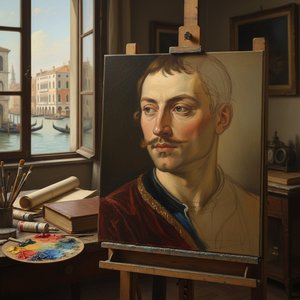
Titian: Innovation, Technique & the Venetian Renaissance Portrait Tradition
Explore the revolutionary techniques & enduring legacy of Titian, the master of Venetian Renaissance portraiture. Discover insights for collectors & appreciate his impact on art history.


