Impressionism · 1890
Spring (Thomas Wilmer Dewing, 1890)
Thomas Wilmer Dewing (1851–1938) criou Spring. Data de 1890. Pertence ao movimento Impressionism. É feito em Oil On Canvas. Está conservada no Smithsonian American Art Museum, em Washington, D.C., Estados Unidos da América. Mede 52 × 88 cm.
- 1890
- Oil On Canvas
- 52 × 88 cm
- Smithsonian American Art Museum, Washington, D.C.

 Visualizar na parede

 Pintura a Óleo Feita à Mão
 Compartilhar
 Compartilhar
 Ficha técnica


 Baixar imagem
 Semelhantes
 Raio X
 Ver diaporama
 Perguntas e Respostas

 Estatísticas
Spring, em resumo
- Título
- Spring
- Artista
- Thomas Wilmer Dewing (1851–1938)
- Artista nascido em
- Boston, Estados Unidos
- Data
- 1890
- Técnica
- Oil On Canvas
- Dimensões
- 52 × 88 cm
- Onde ver
- Smithsonian American Art Museum, Washington, D.C., Estados Unidos da América
- Movimento
- Impressionism
- Período
- 19th Century
- Tema
- pastoral scene, outdoor leisure, women in art, springtime, nature landscape, soft light
O que Spring retrata?
Identification of Spring by Thomas Dewing
Spring is an oil on canvas painting by the American artist Thomas Dewing. The work was executed in 1890. This specific piece measures 52 x 88 cm in size. It is currently held in the collection of the Hirshhorn Museum and Sculpture Garden located in the United States.
The artist, Thomas Dewing, was born in Boston, United States. His practice involved the use of oil paints to render figures within outdoor settings. This particular composition depicts a group of women situated in a field characterized by grass and trees. The scene includes figures in various positions, some seated on the ground and others standing, amidst a landscape that contains two birds.
The Composition and Visual Elements
The scene is organized within a lush field where a group of women is positioned amidst tall grass and surrounding trees. The arrangement of the figures creates a sense of depth across the landscape. Some women are standing upright while others are seated directly on the ground. These subjects are engaged in various activities, such as playing games or simply occupying the outdoor space. Two birds are visible within the composition, placed among the natural elements.
The spatial organization is divided into a foreground, a middle ground, and a background. In the foreground and middle ground, the figures interact within the greenery, while the background recedes toward distant, less distinct elements. The horizon line is emphasized by the horizontal expanse of the field. The lighting appears diffused, consistent with an overcast sky, which casts a soft light over the figures and the vegetation. This arrangement creates an atmosphere of movement and social interaction within the natural setting.
Technique and Artistic Style
The work is an oil painting on canvas executed in a loose, impressionistic style. The application of paint is visible throughout the surface, creating a textured, impasto-like quality particularly in the rendering of the grass and the sky. This technique emphasizes the physical presence of the medium. The composition is structured through a clear division of the foreground, middle ground, and background, establishing a sense of spatial depth. Predominantly horizontal lines define the landscape, emphasizing the expanse of the field and the flatness of the terrain.
Organic shapes constitute the primary forms within the scene, including the hills, the fields, and the human figures. The brushwork is spontaneous, utilizing broken color to capture the specific atmosphere of an overcast day. Lighting appears diffused across the landscape. The artist employs a muted color palette and soft, feathery brushstrokes to define the subjects and their surroundings. This approach prioritizes the immediate visual impression of the environment over precise, sharp detail.
Related Works by the Artist
The artist's body of work includes several notable compositions that explore similar themes of female figures in specific settings. The White Dress is identified as a key work within his oeuvre. Other significant pieces include Woman in Black: Portrait of Maria Oakey Dewing, which is an oil on panel, and Lady in Gold, painted in 1912. These works often feature the refined, aristocratic female figures that characterize his tonalist style.
Other compositions from his career include The Recitation, dated 1891, and Summer, also known as Moonrise, which was painted in 1893. These paintings contribute to a collection that includes various works held in museums and private collections across the United States, such as those found in the Freer Gallery of Art at the Smithsonian Institution.
Em qual museu se encontra Spring?
Smithsonian American Art Museum
Washington, D.C., Estados Unidos da América
Uma Crônica da Identidade Americana O Smithsonian American Art Museum, localizado em Washington, D.C., é a primeira coleção de arte americana do país. Como parte da Smithsonian Institution, ele abriga uma das maiores e mais inclusivas coleções de arte produzida nos Estados Unidos. Seu acervo representa um registro contínuo da experiência americana, capturando as aspirações, o caráter e a imaginação do povo, desde o período colonial até os dias atuais.


Imagens em alta resolução de Spring

Thomas Wilmer Dewing, Spring (1890), Smithsonian American Art Museum. Domínio público.
Perguntas sobre Spring respondidas
Em qual museu se encontra a obra original de "Spring"?
A obra original "Spring" pode ser vista no Smithsonian American Art Museum, Washington, D.C., Estados Unidos da América.
Em que ano foi criada a obra "Spring", de Thomas Wilmer Dewing?
"Spring" data de 1890. A data situa a obra na carreira de Thomas Wilmer Dewing e em sua época.
Qual técnica foi utilizada em "Spring", de Thomas Wilmer Dewing?
"Spring" é executada em Oil On Canvas.
Quais são as dimensões de "Spring", de Thomas Wilmer Dewing na vida real?
"Spring" mede 52 x 88 cm em sua forma original. As dimensões originais são uma referência útil ao escolher o tamanho de uma reprodução.
O que representa "Spring"?
Os temas presentes em "Spring", de Thomas Wilmer Dewing incluem pastoral scene, outdoor leisure, women in art, springtime, nature landscape, soft light, american art, impressionistic. Juntos, eles sintetizam o assunto da obra.
A imagem de "Spring", de Thomas Wilmer Dewing pode ser reproduzida livremente?
Quanto aos direitos autorais, "Spring" está em em domínio público — seus direitos autorais expiraram.
A qual artista "Spring" é atribuída?
O artista por trás de "Spring" é Thomas Wilmer Dewing. A obra está catalogada sob o nome de Thomas Wilmer Dewing.
A qual estilo pertence "Spring"?
O movimento associado a "Spring", de Thomas Wilmer Dewing é Impressionism. Esta classificação situa a obra entre artistas e obras de arte relacionados.
A que período da carreira de Thomas Wilmer Dewing pertence "Spring"?
Dentro da trajetória de Thomas Wilmer Dewing, "Spring" pertence ao período Mature Period. Esta fase permite compará-la com outras obras do artista.
Sobre o artista, Thomas Wilmer Dewing

1851–1938, Estados Unidos
Thomas Wilmer Dewing
A Vida e a Paleta Sonhadora de Thomas Wilmer Dewing Thomas Wilmer Dewing, nascido em Boston, Massachusetts, em 4 de maio de 1851, personificou a delicadeza e o mistério do movimento tonalista americano. Sua jornada artística não começou com pincéis e telas, mas sim com um aprendizado de litografia, uma técnica que lhe ensinou a precisão da linha e a sutileza das nuances de luz e sombra – habilidades que se tornariam a marca registrada de sua obra. Em 1887, Dewing embarcou para Paris, o coração pulsante do mundo artístico da época, onde estudou na prestigiada Académie Julian sob a orientação de Gustave Boulanger e Jules Lefebvre. Foi nesse ambiente fértil que ele começou a desenvolver seu estilo único, distanciando-se das tendências mais vibrantes e buscando uma atmosfera de introspecção e beleza etérea.
Sobre Thomas Wilmer Dewing Obras notáveis de Thomas Wilmer Dewing
Também de Thomas Wilmer Dewing
 Lady in Gold1912
 The Recitation1891
 The Sorcerer's Slave (The Young Sorcerer), (painting)1877
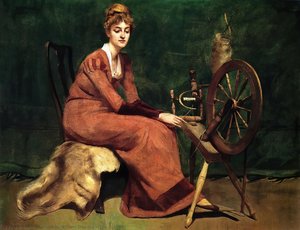 The Spinner1880

Ensaios sobre Spring
 Paisagens Impressionistas Icônicas: 10 Obras que Mudaram a Arte | OriginalUniqueArtDescubra as 10 obras impressionistas que revolucionaram a arte! Explore Monet, Renoir e outros mestres da paisagem. Encontre reproduções de…
 Bovines in Brushstrokes: Capturing the Peaceful Spirit of Pastoral ArtExplore the mastery of pastoral art through Munnings and Cole. Discover the soul of the landscape today.
 Thomas Wilmer Dewing: Atmospheric Landscapes & the American Tonalist VisionExplore the captivating world of Thomas Wilmer Dewing, a leading figure in American Tonalism. Discover his evocative paintings, artistic in…