Romanticism
A gun crew (Thomas Stothard)
Thomas Stothard (1755–1834) criou A gun crew. Pertence ao movimento Romanticism. É feito em Oil On Canvas.
- Oil On Canvas

 Visualizar na parede

 Pintura a Óleo Feita à Mão
 Compartilhar
 Compartilhar
 Ficha técnica


 Baixar imagem
 Semelhantes
 Raio X
 Ver diaporama
 Perguntas e Respostas

 Estatísticas
A gun crew, em resumo
- Título
- A gun crew
- Artista
- Thomas Stothard (1755–1834)
- Artista nascido em
- Londres, Reino Unido
- Técnica
- Oil On Canvas
- Movimento
- Romanticism
- Período
- 19th Century
- Tema
- maritime struggle, shipwreck rescue, human resilience, dramatic coastline, 18th century seafaring, historical labor
O que A gun crew retrata?
The Subject and Artist of the Work
In the dramatic scene of A gun crew, the viewer finds themselves amidst a chaotic struggle on a rugged, rocky shore. Sailors strain with every ounce of their strength, their bodies leaning into the heavy weight of a massive object—perhaps a piece of a shipwreck or a heavy fragment of debris—as they attempt to haul it from the sea. The air feels thick with the exertion of these men, caught in a moment of intense physical toil against the unyielding elements. This struggle highlights the sheer hardship and resilience required to survive the unpredictable nature of the ocean.
The artist behind this intense depiction is Thomas Stothard. Born in London, United Kingdom, Stothard brings a sense of narrative urgency to the canvas, focusing on the human cost of maritime life. He moves away from mere stillness to capture the very essence of desperation and the precariousness of existence at sea. Every figure in the composition seems locked in a battle against overwhelming forces, both natural and man-made, as they fight to reclaim something from the waves.
Composition and Visual Elements
The scene unfolds within a tightly packed space that pulls the viewer directly into the heart of the chaos. Figures cluster together in a frantic mass, their bodies overlapping to convey a sense of urgent, shared struggle. Every movement feels compressed, as if the very air is heavy with the effort of the men. Diagonal lines, formed by the straining ropes and the angled limbs of the sailors, cut through the frame to lead the eye toward the central point of action. This arrangement creates a feeling of immediacy, trapping the viewer within the struggle.
A flattened perspective heightens this sense of claustrophobia, making the rocky shore and the wreckage feel as though they are pressing inward. Light does not merely fall upon the scene; it seems to emanate from multiple sources, pouring down from above and glowing from within the wreckage itself. These light sources cast dramatic shadows that define the rugged textures of the environment and the straining muscles of the crew. The interplay of light and shadow emphasizes the desperation of the moment, highlighting the raw power of nature as it clashes against human resilience.
Technique and Artistic Style
The oil paint clings to the canvas with a heavy, impasto-like texture, particularly where the wreckage meets the shore. This thick application of pigment gives the scene a tactile, rugged quality, making the struggle feel physically present. The brushwork is not precise; instead, it is loose and expressive, using energetic strokes to capture the sudden movement and the chaotic energy of the sailors. Every layer of paint contributes to a sense of depth and turmoil, as if the medium itself is caught in the same upheaval as the figures on the rocks.
The style leans heavily into Romanticism, prioritizing raw emotion and the intensity of the moment over clinical realism. This emotional weight is carried by a dark and earthy color palette. Deep browns and blacks dominate the shadows, while strong, sudden bursts of red pull the eye through the darkness. Light emanates from multiple sources, appearing to glow from within the wreckage itself and from above, casting dramatic shadows that heighten the sense of urgency. The result is a scene defined by tension and the visceral power of the elements.
Imagens em alta resolução de A gun crew
Thomas Stothard, A gun crew. Domínio público.
Perguntas sobre A gun crew respondidas
Qual técnica foi utilizada em "A gun crew", de Thomas Stothard?
Thomas Stothard utilizou a técnica de Oil On Canvas para "A gun crew". A técnica define a natureza material da obra original.
O que "A gun crew", de Thomas Stothard retrata?
"A gun crew", de Thomas Stothard retrata: maritime struggle, shipwreck rescue, human resilience, dramatic coastline, 18th century seafaring, historical labor, force of nature.
A imagem de "A gun crew", de Thomas Stothard pode ser reproduzida livremente?
Quanto aos direitos autorais, "A gun crew" está em em domínio público — seus direitos autorais expiraram.
Quem é o artista por trás de "A gun crew"?
"A gun crew" foi criado por Thomas Stothard. As informações nesta página descrevem a obra original de Thomas Stothard.
A qual estilo pertence "A gun crew"?
"A gun crew" é uma obra do Romanticism. O movimento indica a tradição artística da qual a obra faz parte.
A que período da carreira de Thomas Stothard pertence "A gun crew"?
"A gun crew" pertence ao Mature Period da carreira de Thomas Stothard. Esta classificação relaciona a obra ao desenvolvimento do artista.
Qual é a situação dos direitos autorais de "A gun crew", de Thomas Stothard?
"A gun crew", de Thomas Stothard, está em em domínio público — seus direitos autorais expiraram. Os termos de direitos autorais são calculados a partir do falecimento do artista, e Thomas Stothard faleceu em 1834.
Como "A gun crew" se insere na trajetória artística de Thomas Stothard?
"A gun crew" integra a produção Romanticism de Thomas Stothard, cujos temas recorrentes incluem classical & romantic blend, seafaring hardship depicted, humanity vs. nature's force, british maritime history, stothard's sentimental style, illustrative historical scenes, moralizing narrative art.
"A gun crew" é típico do que Thomas Stothard costumava criar?
Entre os temas recorrentes de Thomas Stothard — classical & romantic blend, seafaring hardship depicted, humanity vs. nature's force, british maritime history, stothard's sentimental style, illustrative historical scenes, moralizing narrative art — "A gun crew" traz seu próprio foco em maritime struggle, shipwreck rescue, human resilience, dramatic coastline, 18th century seafaring, historical labor, force of nature.
Sobre o artista, Thomas Stothard

1755–1834, Reino Unido
Thomas Stothard
Thomas Stothard: Tecelão de Sonhos e Ecos Históricos Nascido no coração pulsante de Londres em 1755, a vida de Thomas Stothard foi uma tapeçaria tecida com fios de beleza delicada, aprendizado artístico e uma fascinação duradoura pela arte de contar histórias. Seus primeiros anos foram marcados por uma saúde frágil – uma infância passada, em grande parte, longe de casa devido à sua vulnerabilidade – mas esse período cultivou nele um profundo apreço pela contemplação silenciosa que mais tarde informaria sua arte. Ele iniciou sua jornada artística como desenhista de padrões para sedas brocadas, uma habilidade que lhe instilou um olhar aguçado para os detalhes e uma compreensão profunda de textura e cor — qualidades que ele posteriormente traduziria para suas célebulas ilustrações. A formação formal de Stothard começou na Royal Academy em 1778, um momento crucial que o impulsionou em direção a uma carreira dedicada à narrativa visual.
Também de Thomas Stothard
 The Supper by the Fountain1820
 Portrait Of General Francis Marion )1732
 The Return of Othello, 'Othello,' Act II, Scene II1799
 The Horrors of War, Sketch for Burghley House Mural1800
Ensaios sobre A gun crew
 Emotion vs. Observation: A Guide to Romanticism and RealismMaster the differences between Romanticism and Realism through expert analysis. Discover the art of emotion versus observation now.
 Echoes of Conflict: A Curated Exploration of Art Capturing the Intensity of War and Human ResilienceExplore a profound collection of historical war art. From visceral realism to poignant depictions of human resilience, discover museum-qual…
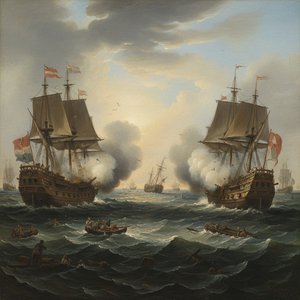 Masterpieces of Maritime Warfare: The Artistry and Intensity of Naval Combat in Historical PaintingExplore the dramatic intensity of naval combat through art history. From Romanticism to classical maritime masterpieces, discover how legen…