Contemporary Realism · 1898
Taking the Count (Thomas Eakins, 1898)
Thomas Eakins (1844–1916) criou Taking the Count. Data de 1898. Pertence ao movimento Contemporary Realism. É feito em Oil On Canvas. Está conservada no Yale University Art Gallery, em Hartford, Estados Unidos da América.
- 1898
- Oil On Canvas
- Yale University Art Gallery, Hartford

 Visualizar na parede

 Pintura a Óleo Feita à Mão
 Compartilhar
 Compartilhar
 Ficha técnica


 Baixar imagem
 Semelhantes
 Raio X
 Ver diaporama
 Perguntas e Respostas

 Estatísticas
Taking the Count, em resumo
- Título
- Taking the Count
- Artista
- Thomas Eakins (1844–1916)
- Artista nascido em
- Filadélfia, Estados Unidos
- Data
- 1898
- Técnica
- Oil On Canvas
- Onde ver
- Yale University Art Gallery, Hartford, Estados Unidos da América
- Movimento
- Contemporary Realism
- Período
- 19th Century
- Tema
- boxing match, anatomy, crowd spectators, referee, philadelphia, realism
O que Taking the Count retrata?
The Raw Pulse of Philadelphia: A Masterclass in Realism
In the dim, electric atmosphere of Philadelphia’s Arena in 1898, a moment of profound human vulnerability is frozen in time. Thomas Eakins, a titan of American Realism, does not merely paint a boxing match; he dissects the very essence of endurance and physical struggle. In Taking the Count, we are thrust into the center of the ring, where the sweat, the tension, and the heavy breathing of the combatants feel almost palpable. This is not the romanticized, heroic athleticism often found in sporting art; instead, Eakins presents a gritty, unvarnished truth. The scene captures a fallen fighter at his most precarious moment, caught in the agonizing interval between a devastating blow and the referee's decisive count. It is a study of the human body under duress, rendered with a scientific precision that reflects Eakins’ lifelong obsession with anatomy.
The composition draws the eye through a complex web of gazes and physical postures. At the heart of the drama, the kneeling figure embodies a desperate struggle for recovery, his muscles taut and his spirit tested. Surrounding him, the referee and the standing opponent create a triangular tension that anchors the viewer within the ring. Beyond the immediate combatants, the presence of the crowd—a shadowy, watchful collective—adds a layer of psychological depth, reminding us that this private agony is being consumed as public spectacle. For the collector or the lover of fine art, this painting offers more than just a depiction of sport; it provides a window into the late 19th-century urban experience, where the boundaries between physical prowess and human frailty are perpetually blurred.
Anatomy of a Masterpiece: Technique and Light
Eakins’s technical mastery is most evident in his ability to marry scientific rigor with emotional resonance. Having spent years studying the intricacies of musculature and bone structure through dissection, he approaches the canvas with the eye of an anatomist. Every sinew and strained limb in Taking the Count is rendered with an uncompromising accuracy that makes the figures appear to possess weight and volume. His use of light does not serve to beautify the scene but to illuminate its harsh realities. The lighting within the arena creates deep, dramatic shadows that sculpt the bodies of the boxers, emphasizing the physical toll of the fight and adding a sense of cinematic gravity to the composition.
The palette, while grounded in the earthy, somber tones characteristic of Eakins’s realism, is used to direct the viewer's emotional journey. The muted colors of the background allow the pale, strained skin of the athletes to emerge from the gloom, focusing our attention on the visceral reality of the struggle. For interior designers seeking a centerpiece for a sophisticated space, this work offers a profound sense of gravitas. A high-quality reproduction of this masterpiece brings with it an air of intellectual depth and historical weight, making it an ideal choice for galleries, studies, or living spaces that value art which challenges the eye and stirs the soul.
A Legacy of Unflinching Honesty
To understand Taking the Count is to understand the rebellious spirit of Thomas Eakins himself. At a time when many of his contemporaries were retreating into the soft, fleeting impressions of light or the idealized myths of history, Eakins stood firm in his commitment to the real. He found beauty not in perfection, but in the truth of the human condition—in the grit of the city, the precision of science, and the raw intensity of life lived on the edge. This painting remains a testament to that courage.
Owning or displaying a reproduction of this work is an invitation to contemplate the themes of resilience and the cyclical nature of struggle. It serves as a powerful reminder that even in moments of defeat, there is a profound dignity in the attempt to rise again. Whether viewed as a historical document of Philadelphia’s sporting culture or as a timeless exploration of human anatomy, Taking the Count continues to captivate, offering an enduring source of inspiration for those who find beauty in the authentic and the unadorned.
Em qual museu se encontra Taking the Count?
Yale University Art Gallery
Hartford, Estados Unidos da América
Origens e História da Galeria A Yale University Art Gallery teve o seu início em 1832, tendo a sua fundação alicerçada no generoso legado da coleção de John Trumbull. Naqueles primeiros anos, o olhar da instituição voltava-se primordialmente para as pinturas que retratavam a Revolução Americana, um tema que constituiu o núcleo vital e inicial do acervo da instituição. Esta instituição detém a distinção de ser o museu de arte universitário mais antigo da América, ocupando também o prestigiado lugar de museu de arte universitário mais antigo de todo o Hemisfério Ocidental.


Imagens em alta resolução de Taking the Count
Thomas Eakins, Taking the Count (1898), Yale University Art Gallery. Domínio público.
Perguntas sobre Taking the Count respondidas
Onde posso ver a obra original "Taking the Count", de Thomas Eakins?
"Taking the Count", de Thomas Eakins está em exibição no Yale University Art Gallery, Hartford, Estados Unidos da América. A referência ao museu diz respeito à obra original, não a reproduções.
Em que ano foi criada a obra "Taking the Count", de Thomas Eakins?
"Taking the Count" data de 1898. A data situa a obra na carreira de Thomas Eakins e em sua época.
Qual é a técnica utilizada em "Taking the Count", de Thomas Eakins?
Thomas Eakins utilizou a técnica de Oil On Canvas para "Taking the Count". A técnica define a natureza material da obra original.
O que representa "Taking the Count"?
"Taking the Count", de Thomas Eakins retrata: boxing match, anatomy, crowd spectators, referee, philadelphia, realism, athlete.
"Taking the Count" está em domínio público?
Informação de direitos autorais para "Taking the Count", de Thomas Eakins: a obra está em em domínio público — seus direitos autorais expiraram. Isso determina se reproduções da imagem podem ser feitas livremente.
Quem criou "Taking the Count"?
"Taking the Count" foi criado por Thomas Eakins. As informações nesta página descrevem a obra original de Thomas Eakins.
A qual movimento artístico "Taking the Count", de Thomas Eakins pertence?
"Taking the Count", de Thomas Eakins pertence ao movimento Contemporary Realism. Este movimento fornece o contexto estilístico da obra.
A que período da carreira de Thomas Eakins pertence "Taking the Count"?
Dentro da trajetória de Thomas Eakins, "Taking the Count" pertence ao período Mature Period. Esta fase permite compará-la com outras obras do artista.
Com que idade Thomas Eakins criou "Taking the Count"?
Thomas Eakins tinha 54 anos quando criou "Taking the Count" em 1898. A idade é calculada a partir do ano de nascimento do artista, 1844.
Sobre o artista, Thomas Eakins

1844–1916, Estados Unidos
Thomas Eakins
A Vida de Thomas Eakins Nascido em Filadélfia, Pensilvânia, em 25 de julho de 1844, Thomas Eakins viveu uma existência profundamente enraizada na cidade de seu nascimento. Ele foi um homem de múltiplas disciplinas, atuando como pintor, fotógrafo, escultor e educador de belas artes. Embora seus interesses frequentemente o levassem ao exterior em busca de estudos, a geografia de sua existência permaneceu, em grande parte, centrada na Filadélfia. Ele transitou pelos círculos intelectuais e sociais da cidade, observando as pessoas e as realidades físicas que definiam a paisagem local.
Também de Thomas Eakins
 A Clínica da Grossa1875
 Natação1885
 Max Schmitt na Canoa Simples1871
 Portrait of Samuel Murray1889
Ensaios sobre Taking the Count
 Precision in Portraiture: The Technical Rigor of Anatomical Mastery and Hyper-RealismMaster the technical rigor of hyper-realism and anatomical precision. Explore the evolution of portraiture mastery now.
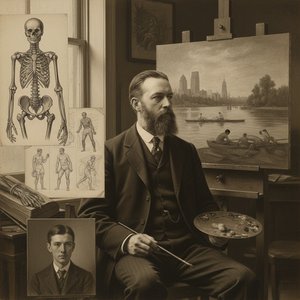 Thomas Eakins: Realism, Anatomy & the American Spirit – A Comprehensive Exploration of Life and LegacyExplore the life & legacy of Thomas Eakins, a pivotal American Realist painter. Discover his groundbreaking techniques, anatomical precisio…
 Romantic Realism's Finest: 10 Masterpieces for Your Home | OriginalUniqueArtExplore 10 defining masterpieces of Romantic Realism! Discover Courbet, Millet & Daumier's powerful paintings—capturing emotion and social …