() ·

A painting made for you, by hand

Swimming

Reprodução em Óleo Feita à Mão

Óleo sobre tela pintado à mão no tamanho e moldura de sua escolha, feito sob encomenda pelos nossos artistas. ( Alternar para Impressão Alternar para Imagem Digital)

Descrição do Item

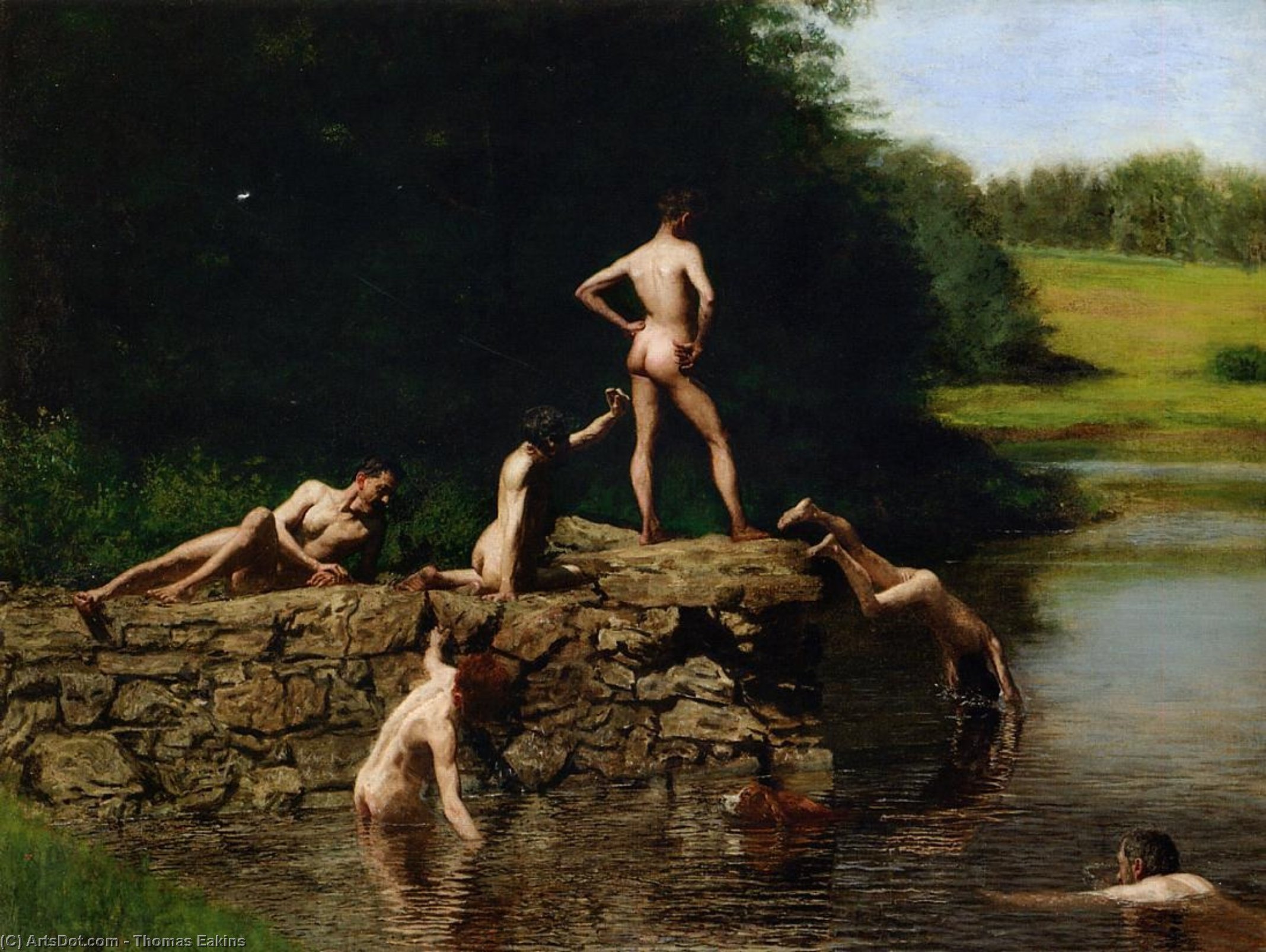
Explore Thomas Eakins’ ‘Swimming,’ a seminal American masterpiece! This 1884 oil painting captures nude male figures in motion with realism & intrigue. Discover its homoerotic themes & artistic significance.

Biografia do Artista

Thomas Eakins: um pintor realista americano icônico, conhecido por retratos cruéis, cenas de remo dinâmicas e precisão anatômica. Explore seu legado!

from ·

Chapter 1

How large should it be?

Slide to change the size; the picture on the left shows the frame at its real width. The proportions of the original are kept.

Tamanho padrão
personalizado
CM
INCH

Escolha entre os nossos tamanhos pré-definidos que respeitam as proporções originais da obra de arte.

largura
altura

Insira a largura e a altura desejadas para se ajustarem à sua moldura ou parede. Como esta obra é pintada à mão, para um tamanho com proporções diferentes, o artista poderá pintar um pouco mais ao redor da imagem ou reduzir ligeiramente a composição — você escolhe. Enviamos uma maquete digital para sua aprovação antes de iniciar a pintura. A imagem exibida nesta página não representa o resultado real — apenas a maquete mostra o resultado final.

Chapter 2

How should it arrive?

Choose the edges of the stretched canvas

Choose your frame

Corner sample of the WhiteWrap canvas edge finish, stretched on madeira maciça bars
White €1
Corner sample of the BlurSideWrap canvas edge finish, stretched on madeira maciça bars
Blurside €1
Corner sample of the ExtendedWrap canvas edge finish, stretched on madeira maciça bars
Extended €1
Corner sample of the P118B picture frame: poliestireno moldado, 5 cm wide and 3 cm thick
P118B €10
Corner sample of the P118H picture frame: poliestireno moldado, 5 cm wide and 3 cm thick
P118H €10
Corner sample of the P118W picture frame: poliestireno moldado, 5 cm wide and 3 cm thick
P118W €10
Corner sample of the P438Z picture frame: poliestireno moldado, 5.5 cm wide and 3.5 cm thick
P438Z €10
Corner sample of the P508JH picture frame: poliestireno moldado, 7 cm wide and 3.5 cm thick
P508JH €12
Corner sample of the P508YH picture frame: poliestireno moldado, 7 cm wide and 3.5 cm thick
P508YH €12
Corner sample of the P805H picture frame: poliestireno moldado, 5 cm wide and 3.5 cm thick
P805H €10
Corner sample of the P805Z picture frame: poliestireno moldado, 5 cm wide and 3.5 cm thick
P805Z €10
Corner sample of the P919BZ picture frame: poliestireno moldado, 7 cm wide and 3.5 cm thick
P919BZ €10
Corner sample of the P919G picture frame: poliestireno moldado, 7 cm wide and 3.5 cm thick
P919G €10
Corner sample of the P919XJ picture frame: poliestireno moldado, 7 cm wide and 3.5 cm thick
P919XJ €10
Corner sample of the P959ZH picture frame: poliestireno moldado, 5 cm wide and 3 cm thick
P959ZH €10
Corner sample of the P968JZ picture frame: poliestireno moldado, 6 cm wide and 4 cm thick
P968JZ €12
Corner sample of the W106C picture frame: madeira maciça, 5 cm wide and 3 cm thick
W106C €8
Corner sample of the W218G picture frame: madeira maciça, 5 cm wide and 3 cm thick
W218G €10
Corner sample of the W218JH picture frame: madeira maciça, 5 cm wide and 3 cm thick
W218JH €8
Corner sample of the W218Y picture frame: madeira maciça, 5 cm wide and 3 cm thick
W218Y €10
Corner sample of the W307PJ picture frame: madeira maciça, 6 cm wide and 3 cm thick
W307PJ €10
Corner sample of the W316G picture frame: madeira maciça, 6 cm wide and 3 cm thick
W316G €10
Corner sample of the W316PJ picture frame: madeira maciça, 6 cm wide and 3 cm thick
W316PJ €8
Corner sample of the W316Y picture frame: madeira maciça, 6 cm wide and 3 cm thick
W316Y €10
Corner sample of the W398PJ picture frame: madeira maciça, 5 cm wide and 3 cm thick
W398PJ €8
Corner sample of the W4111J picture frame: madeira maciça, 6.5 cm wide and 3.5 cm thick
W4111J €10
Corner sample of the W500HY picture frame: madeira maciça, 7 cm wide and 5 cm thick
W500HY €15
Corner sample of the W500JH picture frame: madeira maciça, 7 cm wide and 5 cm thick
W500JH €15
Corner sample of the W692G picture frame: madeira maciça, 8 cm wide and 4 cm thick
W692G €12
Corner sample of the W849H picture frame: madeira maciça, 5 cm wide and 3 cm thick
W849H €8
Corner sample of the W940BG picture frame: madeira maciça, 7.5 cm wide and 4.5 cm thick
W940BG €15
Corner sample of the W953PJ picture frame: madeira maciça, 6 cm wide and 3.5 cm thick
W953PJ €8
Corner sample of the H24-GOLD picture frame: madeira entalhada com gesso, 10 cm wide and 6 cm thick
H24-GOLD €30
Corner sample of the H24-SILVER picture frame: madeira entalhada com gesso, 10 cm wide and 6 cm thick
H24-SILVER €30
Corner sample of the H36-GOLD picture frame: madeira entalhada com gesso, 15 cm wide and 6.5 cm thick
H36-GOLD €45
Corner sample of the H36-SILVER picture frame: madeira entalhada com gesso, 15 cm wide and 6.5 cm thick
H36-SILVER €45
Prévia da moldura
Com moldura

Moulding: . Overall size with the frame: .

Chapter 3

Who paints it, and should anything change?

Examples of what can be changed: Replace face with customer photo; Add pet (e.g., replace cat with dog); Include hidden message in background; Change background landscape or elements.
After order, OriginalUniqueArt.com team will email client for instructions and provide a mockup preview

Entrega mundial () em 3 a 4 semanas, em vez das 5 semanas padrão. (2 Novembro). Sem comprometer a qualidade.

Chapter 4

The finishing touches

A nameplate, as in a museum?

Detalhes da Placa de Bronze Gravada

This elegant plaque features the artist's name and the title of the artwork, finely engraved for a timeless presentation.

It is made from bronze with a refined, elegant finish. The text is precisely laser-engraved for a sharp and permanent result. Measuring 9x2 cm, the plaque is compact yet easy to read. It's built to be durable and scratch-resistant, offering a professional, museum-quality look. Mounting is simple thanks to the included adhesive backing.

Detalhes da Placa de Acrílico Transparente

The plaque includes essential engraved details such as the artist's name, the title of the artwork, the date it was created, the type of media used-like oil on canvas or watercolor-a brief description of the piece, and a QR code that links to the complete artwork information.

It is crafted from clear acrylic, offering a sleek, modern appearance. The text is UV-engraved in black to ensure strong visual contrast. With a size of 10x15 cm, it ensures optimal readability. It comes equipped with two metal hooks for secure wall mounting. The plaque is designed to be weather-resistant, making it suitable for various environments, and it includes interactive features that work seamlessly with smartphone scanning.

Detalhes da Placa de Acrílico Preto

This elegant plaque includes engraved information such as the artist's name, the title of the artwork, the date it was created, the type of media used (like oil on canvas or watercolor), a short description of the artwork, and a QR code for quick access to more information.

The plaque itself is made from refined black acrylic with a premium finish. The text is laser-engraved in white for high contrast and readability. Its size is 10x15 cm, designed to be easy to read. It comes with two metal hooks for professional mounting. The design is sleek and fits any interior style. It is also weather-resistant and durable, with built-in digital integration for mobile compatibility.

A protective varnish?

When do you need it?

Chapter 5

Your painting, as you ordered it

Swimming

Técnica de Reprodução

Tamanho da Reprodução

-

Artista Sênior de Elite

Mais detalhes, refinamento e tempo de produção adicional

-

Moldura para Reprodução

-

-

Para obras de arte ou reproduções com mais de 105 cm (aproximadamente 41 polegadas) em qualquer um dos lados, a moldura será enviada como um kit desmontado. Este método garante uma entrega segura e evita danos durante o transporte.

Montagem profissional necessária — este não é um produto DIY (faça você mesmo).
O kit deve ser montado e a tela esticada por um profissional de molduraria experiente, utilizando cola de madeira (não inclusa), um alicate de esticar tela e grampos para manter as travessas alinhadas enquanto a cola seca. A montagem incorreta ou a tensão desigual da tela podem danificar permanentemente a obra de arte e não estão cobertas pela nossa garantia.

  • Todas as barras de madeira maciça estão incluídas, precisamente cortadas ao tamanho certo.

  • Montado com os parafusos fornecidos, além de cola para madeira para as junções dos cantos, que não está inclusa e deve ser providenciada pelo seu moldurista.

  • São necessárias ferramentas profissionais não incluídas: um alicate de estiramento de tela (esticador) e grampos para manter as ripas alinhadas enquanto a cola seca.

Importante:
As junções dos cantos requerem cola para madeira, as ripas devem ser mantidas com grampos até que a cola esteja completamente seca, e o estiramento da tela na moldura montada requer um alicate de esticar tela. Nenhum destes itens está incluído no kit. Por favor, certifique-se de contar com um profissional de molduraria experiente antes de encomendar este tamanho.

Etiqueta de identificação

-

-

Verniz de Proteção

Verniz brilhante (realça as cores e protege contra a luz e a umidade)

-

Personalizar minha obra

Exemplos de alterações possíveis: Substituir o rosto por uma foto do cliente; Adicionar um animal de estimação (ex.: substituir gato por cachorro); Incluir uma mensagem oculta no fundo; Alterar a paisagem ou os elementos do fundo.

-

Urgente

Entrega mundial () em 3 a 4 semanas, em vez das 5 semanas padrão. (2 Novembro). Sem comprometer a qualidade.

-

Envio Expresso

Entrega mundial para em 5 semanas. (9 Novembro).

Com envio incluído

Preço Total

€ 400

Preço Total € 400

A opção de vidro está disponível apenas para tamanhos inferiores a 110 cm

Included with every order

  • Envio expresso gratuito para todo o mundo
  • Tela de Linho de Alta Qualidade
  • Seguro de transporte completo
  • Garantia de Reembolso de Impostos Alfandegários
  • Garantia de Fidelidade Cromática
  • Política de Devolução em 100 Dias (Apenas para Defeitos)
  • Garantia de reembolso de 100%
  • Oferta de desconto por quantidade

The Genesis of a Revolutionary Image

Thomas Eakins’ “Swimming,” painted in 1884, isn't merely a depiction of men enjoying a summer day; it’s a profound exploration of the human form, movement, and the burgeoning spirit of American realism. Born from meticulous observation and a desire to capture not just appearances but the very essence of experience, this oil on canvas transcends simple representation, inviting viewers into a world of dynamic energy and subtle psychological depth. Eakins, deeply influenced by his scientific training – he’d studied anatomy at Jefferson Medical College – approached the subject with an almost clinical precision, yet infused it with a remarkable sensitivity to light, color, and the inherent beauty of the human body in motion.

The genesis of “Swimming” lies within Eakins' broader project: documenting the lives of Philadelphia’s elite. He sought subjects not for their social standing alone, but for their physicality – their strength, grace, and vulnerability. The painting itself emerged from a series of preparatory sketches and photographs taken at Dove Lake, a popular swimming spot outside the city. These studies reveal Eakins' painstaking process: capturing the precise angles of limbs in water, analyzing the interplay of light on skin, and meticulously charting the subtle shifts in posture as men plunged into the lake. The resulting image is not a spontaneous snapshot but the culmination of countless hours of observation and artistic refinement.

A Bold Statement of Form and Sexuality

“Swimming” immediately challenged the prevailing Victorian sensibilities surrounding nudity in art. While classical sculpture often idealized the male nude, Eakins presented figures stripped bare with an unapologetic directness. The painting’s composition—six men positioned within a rocky stream environment—creates a dynamic tableau of movement and camaraderie. The deliberate positioning of the bodies, particularly the prominent but subtly ambiguous rendering of one figure's lower torso, sparked considerable controversy at the time. Eakins wasn’t simply depicting a swimming scene; he was engaging with complex questions about masculinity, sexuality, and the role of the male body in American culture.

The homoerotic undertones within “Swimming” are undeniable, yet they aren't presented in a sensationalized or overtly provocative manner. Instead, Eakins’ focus remains firmly on capturing the physicality of the human form – the ripple of muscles, the sheen of wet skin, the fluidity of movement. The painting invites viewers to contemplate not just the act of swimming but also the unspoken connections between the men depicted, fostering a sense of intimacy and shared experience.

Technique and Atmosphere: A Symphony of Realism

Eakins’ mastery of technique is immediately apparent in “Swimming.” He employed a layered approach to oil paint, building up form through meticulous brushwork that captures the texture of skin, stone, and water. The use of light is particularly striking – soft, diffused illumination creates an atmosphere of hazy warmth, while carefully rendered shadows define the contours of the figures’ bodies. The painting's perspective draws the eye into the scene, guiding it from the foreground to the distant trees and hills, creating a sense of depth and immersion.

Furthermore, Eakins’ understanding of color is remarkable. He skillfully utilized muted earth tones—ochres, browns, greens—to evoke the natural setting while simultaneously highlighting the vibrant hues of skin and water. The subtle variations in tone create a dynamic interplay of light and shadow, adding to the painting's overall sense of realism and immediacy. The careful attention to detail – from the ripples on the water’s surface to the texture of the stone wall—demonstrates Eakins’ commitment to capturing every nuance of his subject.

A Legacy of Innovation

“Swimming” stands as a pivotal work in American art history, representing a significant departure from traditional academic painting. It exemplifies Eakins' pioneering approach to realism – his willingness to depict the human body with unflinching honesty and psychological insight. The painting’s influence can be seen in the works of subsequent generations of American artists who sought to capture the complexities of modern life with a similar blend of observation, emotion, and technical skill. Today, “Swimming” continues to captivate viewers with its dynamic composition, evocative atmosphere, and profound exploration of the human condition.

Perguntas e Respostas

As cores de "Swimming" parecem intensas ou suaves?

A intensidade de cor de "Swimming" é Monochromatic. A intensidade descreve o quão vibrantes as cores parecem ser.

Como "Swimming" se posiciona entre os temas recorrentes de Thomas Eakins?

Entre os temas recorrentes de Thomas Eakins — renaissance anatomical study, realist observation & detail, homosocial camaraderie", scientific inquiry's gaze, philadelphia social scene, eakins' provocative vision, exploration of male form", pushing artistic boundaries" — "Swimming" traz seu próprio foco em nude figures, swimming scene, male bathers, american art, motion & form, realistic depiction, lake landscape.

Qual tamanho de impressão devo escolher para "Swimming" no meu quarto?

Para um(a) Living Room, sugere-se que "Swimming" seja impresso no tamanho Large.

More about this painting

Visualizar na parede Visualizar em RA Alternar para Impressão Alternar para Imagem Digital Compartilhar
Detalhes Guia Adicionar aos favoritos Baixar imagem Semelhantes Raio X Ver diaporama Q&A Estatísticas

In numbers

  • 1884the year it was painted
  • 29frames to choose from
  • standard sizes, in its own proportions
  • 5weeks to paint and deliver it
Thomas Eakins

Thomas Eakins

1844 - 1916, Estados Unidos da América

Quick facts about Thomas Eakins

  • Artistic Movement Or Style: Realismo
  • Artists Or Movements Influenced By This Artist: ['Ashcan School']
  • Artists Who Influenced This Artist: ['Gérôme']
  • Date Of Birth: 25 de julho de 1844
  • Date Of Death: 25 de junho de 1916
  • Full Name: Thomas Eakins
  • Nationality: Americano
  • Notable Artworks:
    • Max Schmitt
    • Gross Clinic
    • Piscina
  • Place Of Birth: Philadelphia, EUA

Biografia do Artista

A Vida Dedicada à Realidade

Thomas Cowperthwait Eakins, nascido em Filadélfia em 25 de julho de 1844, emerge como uma figura monumental na arte americana – um pintor de realismo implacável que dedicou sua vida a capturar a essência da experiência humana. Ele não se contentava apenas em *representar* o mundo; buscava desmembrá-lo, compreender sua anatomia, tanto física quanto psicológica, e então reconstruí-lo sobre tela com uma honestidade que frequentemente beirava a provocação. O caminho de Eakins não foi um sucesso imediato, mas sim uma lenta ascensão de dedicação, controvérsia e, finalmente, reconhecimento duradouro como talvez o realista mais profundo do século XIX e início do século XX. Sua Filadélfia não era uma cidade de paisagens grandiosas ou ideais românticos; era um mundo de médicos, remoadores, caçadores e indivíduos comuns – e estes eram seus temas, retratados com uma precisão quase científica.

Influências Iniciais e Formação Artística

A criação de Eakins fomentou tanto a curiosidade intelectual quanto a inclinação artística. Seu pai, Benjamin Eakins, um mestre de escrita e calígrafo, inculcou nele o amor pela disciplina e observação meticulosa. Essa base foi reforçada por sua educação no Central High School e na Pennsylvania Academy of the Fine Arts, onde se destacou em desenho e anatomia – uma fascinação que permearia todo seu oeuvre. No entanto, é seu tempo na Europa, particularmente sob a tutela de Jean-Léon Gérôme em Paris, que realmente moldou sua abordagem artística. A ênfase de Gérôme no draftsmanship preciso e na precisão histórica ressoou com as próprias inclinações de Eakins, mas ele rapidamente se moveu além da mera imitação. Uma estadia na Espanha aprimorou ainda mais sua compreensão de luz, sombra e o poder da observação direta. Ele não estava satisfeito em simplesmente copiar os mestres antigos; queria *entender* como eles alcançavam seus efeitos e então aplicar esse conhecimento à sua própria visão única. Este período foi crucial para solidificar seu compromisso em pintar diretamente do *life*, uma prática que definiria sua carreira.

A Busca pela Verdade: Temas e Técnicas

O trabalho de Eakins é caracterizado por um compromisso inabalável com o realismo – uma recusa em idealizar ou romantizar seus temas. Seus retratos, numerados em centenas, não são representações enganosas projetadas para agradar o modelo; são estudos penetrantes de caráter, revelando tanto força quanto vulnerabilidade. Pintou indivíduos engajados em suas profissões – cirurgiões no *The Gross Clinic*, remoadores se esforçando contra a corrente em *Max Schmitt in a Single Scull* – capturando não apenas sua aparência física, mas também a intensidade de seu foco e as exigências de sua arte. Essa dedicação à verdade se estendeu à sua técnica. Eakins estudou anatomia meticulosamente, muitas vezes dissecando cadáveres para entender a estrutura subjacente do corpo humano. Ele até mesmo experimentou com fotografia, usando-a como uma ferramenta para analisar o movimento e alcançar maior precisão em suas pinturas. Seu uso de chiaroscuro – o contraste dramático entre luz e escuridão – realçou ainda mais a sensação de realismo e profundidade psicológica em sua obra.

Controvérsia e Legado

Apesar de seu brilho artístico, a carreira de Eakins foi marcada por controvérsia. Sua insistência em pintar diretamente do *life*, muitas vezes incluindo modelos nus, entrou em conflito com a sensibilidade conservadora da Filadélfia vitoriana. Suas práticas de ensino na Pennsylvania Academy também eram pouco convencionais; ele enfatizava a importância de estudar o corpo humano do *life* e encorajava seus alunos a desafiar as convenções artísticas tradicionais. Isso levou a atritos com seus colegas e, em última análise, resultou em sua demissão em 1886. Escândalos pessoais prejudicaram ainda mais sua reputação durante sua vida. No entanto, Eakins continuou a pintar e ensinar particularmente até que sua saúde começou a falhar. Após sua morte em 1916, seu trabalho foi gradualmente reconhecido, e ele é agora celebrado como uma figura fundamental na história da arte americana. Seu realismo implacável, sua dedicação à precisão anatômica e sua profunda compreensão do espírito humano continuam a inspirar artistas e cativar o público hoje. Ele deixou para trás não apenas pinturas, mas um legado de integridade artística e uma busca incessante pela verdade – um testemunho do poder da observação e da beleza duradoura do corpo humano.

Obras-Primas Chave e Influência Duradoura

Várias obras se destacam como marcos do gênio de Eakins. *Max Schmitt in a Single Scull* (1871), com sua representação magistral do movimento e da luz, é possivelmente sua pintura mais icônica. *The Gross Clinic* (1875), embora controversa na época por sua representação sem compromisso da cirurgia, permanece um testemunho poderoso da dedicação e habilidade dos profissionais médicos. William Rush and His Model (1908) demonstra seu estilo posterior, combinando retrato com elementos alegóricos. Além dessas pinturas específicas, a influência de Eakins pode ser vista no trabalho de inúmeros artistas que o seguiram – aqueles que buscavam representar o mundo ao seu redor com honestidade, precisão e uma profunda compreensão do espírito humano. Seu compromisso com o realismo abriu caminho para movimentos posteriores como o Ashcan School e continua a ressoar com artistas contemporâneos hoje. Ele permanece uma força vital na arte americana, um lembrete de que a verdadeira arte não reside na imitação ou embelezamento, mas na coragem de buscar a verdade.

Informações Rápidas

  • Subject or theme: Swimming, leisure
  • Notable elements: Nude figures, motion
  • Artistic style: Academic realism
  • Title: Swimming
  • Year: 1884

Quiz de Arte

Cada pergunta possui apenas uma resposta correta.

Pergunta 1:
What is the primary subject depicted in Thomas Eakins’ ‘Swimming’?
Pergunta 2:
In what year was ‘Swimming’ painted?
Pergunta 3:
Which of the following best describes Eakins’ artistic approach in ‘Swimming’?
Pergunta 4:
The painting ‘Swimming’ is considered significant within American art history primarily because it:
Pergunta 5:
What artistic movement did Eakins' work, including 'Swimming', align with?