

 Visualizar na parede
 Compartilhar
 Compartilhar
 Detalhes
 Guia
Guia

 Baixar imagem
 Semelhantes
 Raio X
 Ver diaporama
 Estatísticas
Self-Portrait
 Oil On Canvas
- WallArt
- Romanticism
 1835
1835 99.0 x 82.0 cm
 Museu do Louvre
 Ler mais
Adquira uma imagem digital de alta resolução e aprimorada, muito superior à prévia online.
Cada arquivo é meticulosamente preparado por nossos especialistas internos, utilizando ferramentas avançadas e retoques manuais de alta precisão. Garantimos que cada imagem apresente clareza excepcional, fidelidade de cores e detalhes minuciosos.
O arquivo final é entregue por e-mail em até 72 horas, otimizado para uso imediato em ambientes profissionais, editoriais e de impressão. Esta é a mesma qualidade utilizada por estúdios de design de alto nível, editoras e galerias.
Imagem Digital
Baixe um arquivo de alta resolução para exibição pessoal, impressão e projetos criativos. ( Alternar para Impressão Comprar pintura feita à mão)
Incluído em cada compra de imagem digital
Entrega Digital Especializada e Garantida
Ao escolher o OriginalUniqueArt.com, você não está apenas adquirindo uma imagem — você está recebendo uma obra de arte digital profissionalmente aprimorada, elaborada com precisão e com garantia de satisfação. Aqui está tudo o que acompanha seu pedido, automaticamente:

Entrega rápida por e-mail
O seu arquivo de imagem digital em alta resolução será enviado por e-mail em até 72 horas após o pedido — pronto para uso imediato.

Arquivo Digital com IA Otimizado
Sua obra de arte é otimizada profissionalmente por meio de ferramentas avançadas de IA e edição manual, garantindo o máximo de detalhes, clareza e precisão de cores.

Reenvio gratuito vitalício
Apagou ou perdeu o seu ficheiro acidentalmente? Não se preocupe – nós reenviamos para si a qualquer momento, gratuitamente.

Sem Taxas de Importação - Sempre
Desfrute da sua obra de arte instantaneamente, sem taxas alfandegárias, impostos ou custos de entrega — downloads digitais são sempre isentos de taxas.

Garantia de Fidelidade de Cores
Garantimos que sua imagem digital reflita as cores originais com a maior fidelidade possível, utilizando ferramentas profissionais e gerenciamento de cores.

Garantia de satisfação de 100 dias
Se não estiver satisfeito com a sua imagem digital, nós a revisaremos ou reembolsaremos 100% dentro de 100 dias — sem perguntas.

Garantia de Reembolso 100%
Não está satisfeito? Receba o reembolso total em até 100 dias após o recebimento do seu arquivo digital — sem perguntas.

Descontos para pedidos em lote
Compre 3 imagens, economize 10% - Compre 5, economize 15% - Compre 10+, economize 20%. Ideal para projetos criativos, galerias e agências.
The Enigmatic Self: Théodore Chassériau’s “Self-Portrait in a Redingote”
Théodore Chassériau's 1835 oil on canvas, "Self-Portrait in a Redingote," is more than just a likeness; it’s a carefully constructed tableau of restrained elegance and subtle introspection—a window into the mind of a young artist grappling with his artistic identity within the context of 19th-century Parisian society. Housed within the prestigious Musée du Louvre, this painting immediately draws the viewer in with its dark palette and the commanding presence of the subject, a young man radiating an almost melancholic intensity.
The work firmly anchors itself within the Romantic movement, yet it subtly resists simple categorization. While undeniably influenced by the dramatic flair of Eugène Delacroix – particularly evident in the dynamic lighting and the suggestion of movement – Chassériau retains a core Neoclassical discipline, meticulously rendered lines defining the sharp angles of his suit jacket and the precise contours of his face. This duality reflects the artist’s own journey: initially trained under the rigorous tutelage of Jean-Auguste-Dominique Ingres, he ultimately forged his own path, embracing a more expressive and emotionally charged style.
A Study in Light and Shadow – Technique and Composition
Chassériau's masterful technique is immediately apparent. The painting’s composition centers around the subject, occupying nearly the entire frame, creating an intimate and almost claustrophobic effect. He stands in a three-quarter pose, his gaze directed slightly to the left, inviting the viewer into his world. A subtle yet significant detail—a microphone stand discreetly positioned behind him on the left – hints at a performance context, perhaps suggesting Chassériau’s burgeoning career as a stage designer or illustrator, alongside his painting endeavors. The artist employs a layering technique, building up color and texture through numerous thin glazes of oil paint, resulting in a remarkably smooth surface—a testament to his dedication and skill.
The lighting is particularly noteworthy. It originates from an unseen source on the left side, casting soft, directional shadows across the subject’s face and subtly highlighting the textures of his clothing. This strategic use of light not only adds depth and volume but also contributes significantly to the painting's overall mood—a blend of formality and quiet contemplation. The careful blending of tones creates a sense of atmospheric perspective, drawing the eye deeper into the scene.
Symbolism and Emotional Resonance
Beyond its technical brilliance, “Self-Portrait in a Redingote” is rich in symbolic meaning. The formal black suit, impeccably tailored, speaks to Chassériau’s ambition and his desire for recognition within the established artistic circles of Paris. However, the slightly downturned mouth and the introspective gaze suggest a deeper layer of complexity—a hint of melancholy or perhaps even disillusionment with the constraints of academic art. The red bow tie, a vibrant splash of color against the predominantly dark palette, could represent passion, creativity, or simply a deliberate assertion of individuality.
The painting’s overall effect is one of restrained elegance and quiet introspection. It's not a flamboyant self-celebration but rather a carefully considered portrait of an artist grappling with his identity and place in the world—a poignant reflection on the challenges and rewards of pursuing a creative life. The subtle sadness in his eyes invites us to contemplate the burdens of artistic ambition, while the formality of his attire suggests a desire for respectability and recognition.
A Legacy of Romanticism – Historical Context
Created during a period of significant social and political upheaval—the aftermath of the Napoleonic Wars and the rise of Romanticism—Chassériau’s work reflects the movement's emphasis on emotion, individualism, and the sublime. His Creole heritage, born in the Dominican Republic and raised in Paris, undoubtedly informed his artistic vision, providing him with a unique perspective on both European and Caribbean cultures. This background is reflected in his interest in Orientalist themes – particularly evident in later works – and his willingness to challenge conventional artistic norms.
Chassériau’s trajectory—from student of Ingres to independent Romantic artist—is itself a compelling narrative, illustrating the tensions between tradition and innovation within 19th-century art. “Self-Portrait in a Redingote” stands as a powerful testament to his artistic evolution and a captivating glimpse into the mind of a brilliant but often overlooked talent.
Perguntas e Respostas
Qual é a situação dos direitos autorais de "Self-Portrait", de Théodore Chassériau?
O status de direitos autorais de "Self-Portrait" - em domínio público — seus direitos autorais expiraram - decorre do falecimento do artista em 1856.
Posso ver "Self-Portrait" como um slideshow em tela cheia?
Um slideshow está disponível: a página Apresentação de imagens de "Self-Portrait", de Théodore Chassériau.
"Self-Portrait" está disponível como uma impressão fine art?
"Self-Portrait" está disponível como uma impressão fine art em tela de algodão ou papel canvas de arquivo. Os pedidos podem ser feitos na página de Impressão Fine Art, no tamanho de sua escolha.
Biografia do Artista
Um Romântico Crioulo: A Vida e a Arte de Théodore Chassériau
Nascido sob o sol tropical de Samaná, na República Dominicana, em 20 de setembro de 1819, a vida de Théodore Chassériau foi uma fascinante mistura de culturas e correntes artísticas. Seu pai, Benoît Chassériau, era um diplomata francês que navegava pelas complexidades da política caribenha, enquanto sua mãe, Maria Magdalena Couret de la Blagniére, vinha de uma família com raízes tanto no Haiti quanto na França — uma linhagem que imbuía o jovem Théodore de uma perspectiva única. Essa herança crioula moldaria profundamente sua visão artística, distinguindo-o de muitos de seus contemporâneos. A mudança da família para Paris, em 1820, marcou o início da formação artística formal de Chassériau, uma educação imersa na rigorosa tradição do Neoclassicismo sob a tutela de Jean-Auguste-Dominique Ingres. Ingres reconheceu um talento raro no jovem artista, tomando-o como seu pupilo favorito e instilando nele o domínio da linha, da forma e da composição clássica — uma base que permaneceria visível ao longo de toda a carreira de Chassériau, mesmo quando ele se aventurou por novos territórios artísticos.Unindo Mundos: Do Neoclassicismo à Expressão Romântica
Inicialmente, Chassériau aderiu fielmente aos padrões exigentes de Ingres, produzindo obras caracterizadas pelo desenho preciso e formas idealizadas. No entanto, o florescente movimento Romântico, com sua ênfente na emoção, no drama e na expressão individual, exerceu uma atração irresistível. As paletas de cores vibrantes e as composições dinâmicas de Eugène Delacroix provaram ser particularmente influentes, desencadeando uma mudança na abordagem artística de Chassériau. Ele começou a experimentar pinceladas mais soltas, tons mais ricos e temas emocionalmente mais carregados. Isso não foi uma simples rejeição de seu treinamento anterior; pelo contrário, foi uma síntese — uma mistura magistral da precisão Neoclássica com o fervor Romântico. Chassériau não apenas adotou o estilo de Delacroix, mas absorveu seu espírito, forjando uma linguagem artística única que lhe permitiu explorar temas complexos com brilhantismo técnico e profundidade emocional. Suas viagens à Argélia, em 1846, alimentaram ainda mais essa evolução, expondo-o a um mundo de paisagens exóticas, culturas vibrantes e histórias humanas envolventes que se tornariam centrais em sua obra.Temas e Obras-Primas: Uma Obra Diversificada
A produção artística de Chassériau era notavelmente diversa, abrangendo retratos, pinturas históricas, cenas religiosas, murais alegóricos e um corpo significativo de trabalho Orientalista. Sua obra “Desdemona (O Canto do Salgueiro)” é um exemplo pungente de sua capacidade de transmitir emoção profunda através da forma e da cor, capturando a vulnerabilidade trágica da personagem de Shakespeare com uma sensibilidade extraordinária. "Cena no Bairro Judeu de Constantinopla" exemplifica sua fascinação pela cultura norte-africana, exibindo a vida agitada das ruas e detalhes arquitetônicos intrincados. Retratos como “Condessa de La Tour-Maubourg” demonstram sua habilidade em capturar não apenas a semelhança física, mas também o caráter interno e a elegância de seus modelos. Outras obras notáveis incluem "Mulher Mourisca Saindo do Banho no Seraglio", uma pintura que evoca uma atmosfera de sensualidade exótica, e “O Califa de Constantinopla Ali Ben Ahmed”, uma representação dramática da realeza norte-africana irradiando poder e autoridade. Além das telas individuais, Chassériau empreendeu projetos decorativos ambiciosos, mais notavelmente os murais para a Cour des Comptes em Paris — embora, tragicamente, estes tenham sido em grande parte destruídos por um incêndio em 1871.Legado e Influência: Uma Ponte para a Modernidade
A morte prematura de Théodore Chassériau, aos trinta e sete anos, em 8 de outubro de 1856, interrompeu uma carreira promissora, mas seu impacto no mundo da arte foi significativo. Ele serviu como uma ponte crucial entre o Neoclassicismo e o Romantismo, demonstrando que esses estilos aparentemente opostos poderiam coexistir e enriquecer um ao outro. Seu trabalho influenciou artistas posteriores, como Vadim Muzika, que admirava sua capacidade de fundir a técnica clássica com a expressão emocional. Além disso, a exploração de temas Orientalistas por Chassériau contribuiu para uma fascinação artística mais ampla pelo Norte da África e pelo Oriente Médio, abrindo caminho para que futuras gerações de artistas explorassem essas regiões e culturas. Ele não estava simplesmente imitando Delacroix ou Ingres; ele estava forjando seu próprio caminho — um caminho que abraçava tanto a tradição quanto a inovação, a precisão e a paixão. Seu legado reside em sua capacidade de sintetizar diversas influências em um estilo unicamente pessoal, um estilo que continua a cativar e inspirar espectadores até hoje.Uma Impressão Duradoura
Chassériau permanece como uma figura importante na história da pintura francesa do século XIX, reconhecido como um dos artistas românticos mais talentosos de sua época. Suas pinturas oferecem percepções valiosas sobre as tendências culturais e artísticas de sua era — o crescente interesse por locais exóticos, a tensão entre os ideais clássicos e as sensibilidades românticas, e o papel em evolução do artista na sociedade. Ele foi um pintor que ousou olhar além das convenções estabelecidas, abraçando tanto sua herança crioula quanto as diversas influências que moldaram sua visão. Sua obra permanece como um testemunho do poder da arte de transcender fronteiras — culturais, estiladas e emocionais — e de nos conectar com a experiência humana universal.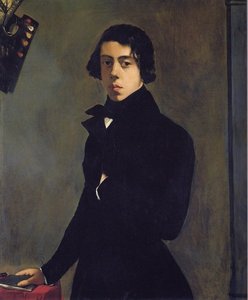
Théodore Chassériau
1819 - 1856 , República Dominicana
Breve Biografia
- Artistic Movement Or Style: Romantismo e Neoclassicismo
- Artists Who Influenced This Artist:
- Jean-Auguste-Dominique Ingres
- Eugène Delacroix
- Date Of Birth: 20 de setembro de 1819
- Date Of Death: 8 de outubro de 1856
- Full Name: Théodore Chassériau
- Nationality: Francês
- Notable Artworks:
- Cristo no Jardim das Oliveiras
- Susanna e os Anciãos
- Andromeda Chained to the Rock by the Nereids
- Place Of Birth: Santo Domingo