De Stijl · 1930
Simultaneous Counter Composition. (Theo van Doesburg, 1930)
Theo van Doesburg (1883–1931) criou Simultaneous Counter Composition.. Data de 1930. Pertence ao movimento De Stijl. É feito em Painting. Está conservada no MoMA - Museu de Arte Moderna, em Nova York, Estados Unidos da América. Mede 50 × 49 cm.
- 1930
- Painting
- 50 × 49 cm
- MoMA - Museu de Arte Moderna, Nova York

 Visualizar na parede

 Pintura a Óleo Feita à Mão
 Compartilhar
 Compartilhar
 Ficha técnica


 Baixar imagem
 Semelhantes
 Raio X
 Ver diaporama
 Perguntas e Respostas

 Estatísticas
Simultaneous Counter Composition., em resumo
- Título
- Simultaneous Counter Composition.
- Artista
- Theo van Doesburg (1883–1931)
- Artista nascido em
- Utreque, Países Baixos
- Data
- 1930
- Técnica
- Painting
- Dimensões
- 50 × 49 cm
- Onde ver
- MoMA - Museu de Arte Moderna, Nova York, Estados Unidos da América
- Movimento
- De Stijl
- Tema
- abstract art, geometric shapes, primary colors, compositional study, modernism, de stijl
O que Simultaneous Counter Composition. retrata?
The Geometry of Inner Harmony: Exploring Theo van Doesburg's Abstraction
To stand before Theo van Doesburg’s Simultaneous Counter Composition is not merely to observe paint on canvas; it is to step into a meticulously constructed intellectual space where color and form engage in a vibrant, calculated dialogue. This piece, dating from 1930, stands as a powerful testament to the revolutionary spirit of De Stijl, the movement that sought to purify art down to its most essential geometric truths. Van Doesburg, an architect of abstraction, believed that true reality could be found not in the messy chaos of visible nature, but in the underlying harmony of pure lines and primary colors. The painting immediately envelops the viewer in a field of structured energy, inviting the eye to wander across its carefully balanced quadrants.
A Masterclass in Primary Structure
The composition itself is breathtaking in its deliberate organization. Divided into distinct yet interconnected sections—left, center, and right—the canvas pulses with a controlled chromatic symphony. We see the bold interplay of red, yellow, blue, black, and white, colors that carry immense symbolic weight within modernist thought. These hues are not simply placed side-by-side; they interact, their adjacency creating optical vibrations. The varying sizes and shapes of the squares suggest a dynamic tension, as if opposing forces—structure versus fluidity, chaos versus order—are locked in a perfect, silent negotiation. It is an exercise in visual equilibrium, where every seemingly arbitrary block contributes to the whole.
Historical Echoes: De Stijl's Vision
Understanding this work requires acknowledging its historical cradle: the fervor of Neoplasticism. Van Doesburg was instrumental in guiding art away from mere representation and toward a universal language built on abstraction. This painting embodies that quest for universal harmony, echoing the philosophical underpinnings of the early 20th century desire to rebuild culture after periods of immense upheaval. The rigid geometry is not a limitation, but rather an assertion of underlying cosmic order—a belief that even in the most abstract arrangement, there exists profound, discernible beauty and balance.
Bringing Geometric Vibrancy Home
For the collector or designer seeking to infuse a space with intellectual depth and vibrant energy, Simultaneous Counter Composition offers unparalleled impact. Its bold, graphic nature means it functions as both a striking piece of art and a powerful architectural accent. Reproducing this work allows one to bring the disciplined passion of early modernism into contemporary living. Imagine its clean lines juxtaposed against soft furnishings or rich wood tones; the painting acts as a brilliant focal point, demanding contemplation while simultaneously providing visual rest through its inherent balance.
Emotional Resonance and Technique
The emotional impact of this piece is one of exhilarating clarity. It feels both rigorously intellectual and deeply soulful. The technique, characterized by flat planes of color meeting at sharp, decisive edges, celebrates the purity of the painted surface. When considering a reproduction, note how the vibrancy of these primary colors—the way they seem to vibrate against each other—is crucial. Owning this piece is owning a conversation between structure and spirit, a vibrant reminder that even in apparent complexity, perfect harmony can be found.
Em qual museu se encontra Simultaneous Counter Composition.?
MoMA - Museu de Arte Moderna
Nova York, Estados Unidos da América
Origens e História do MoMA - Museu de Arte Moderna As fundações do MoMA - Museu de Arte Moderna foram lançadas em 1929. Concebida por Abby Aldrich Rockefeller, Lillie P. Bliss e Mary Quinn Sullivan, a instituição emergiu durante um período de profunda transição global.


Imagens em alta resolução de Simultaneous Counter Composition.

Theo van Doesburg, Simultaneous Counter Composition. (1930), MoMA - Museu de Arte Moderna. Domínio público.
Perguntas sobre Simultaneous Counter Composition. respondidas
Onde posso ver a obra original "Simultaneous Counter Composition.", de Theo van Doesburg?
"Simultaneous Counter Composition.", de Theo van Doesburg está em exibição no MoMA - Museu de Arte Moderna, Nova York, Estados Unidos da América. A referência ao museu diz respeito à obra original, não a reproduções.
Em que ano foi criada a obra "Simultaneous Counter Composition.", de Theo van Doesburg?
"Simultaneous Counter Composition." data de 1930. A data situa a obra na carreira de Theo van Doesburg e em sua época.
Qual técnica foi utilizada em "Simultaneous Counter Composition.", de Theo van Doesburg?
"Simultaneous Counter Composition." é executada em Painting.
Quais são as dimensões de "Simultaneous Counter Composition.", de Theo van Doesburg na vida real?
As dimensões registradas de "Simultaneous Counter Composition.", de Theo van Doesburg são 50 x 49 cm. Reproduções podem ser encomendadas em outros tamanhos, mantendo as mesmas proporções.
O que "Simultaneous Counter Composition.", de Theo van Doesburg retrata?
Os temas de "Simultaneous Counter Composition." são abstract art, geometric shapes, primary colors, compositional study, modernism, de stijl.
"Simultaneous Counter Composition.", de Theo van Doesburg está em domínio público?
Quanto aos direitos autorais, "Simultaneous Counter Composition." está em em domínio público — seus direitos autorais expiraram.
A qual artista "Simultaneous Counter Composition." é atribuída?
"Simultaneous Counter Composition." é atribuída a Theo van Doesburg.
A qual estilo pertence "Simultaneous Counter Composition."?
"Simultaneous Counter Composition.", de Theo van Doesburg pertence ao movimento De Stijl. Este movimento fornece o contexto estilístico da obra.
A que período da carreira de Theo van Doesburg pertence "Simultaneous Counter Composition."?
"Simultaneous Counter Composition." representa o Neoplasticism Period de Theo van Doesburg.
Sobre o artista, Theo van Doesburg

1883–1931, Países Baixos
Theo van Doesburg
The Architect of Abstraction: A Life in Geometric Harmony Theo van Doesburg, born Christian Emil Marie Küpper in 1883 in Utrecht, Netherlands, wasn’t merely a painter; he was a revolutionary force who fundamentally reshaped the very foundations of modern art. His journey began amidst the lingering echoes of Impressionism and Post-Impressionism, initially mirroring styles reminiscent of Vincent van Gogh – both in subject matter and emotional intensity. However, this early phase served as a crucial prelude, a necessary stepping stone toward the radical transformation that would define his enduring legacy. A pivotal moment arrived in 1913 with his encounter with Wassily Kandinsky’s *Rückblicke*.
Também de Theo van Doesburg
 Counter composition XV1925
 Rhythm of a Russian Dance
 Troelstra1910
 Study for Composition VIII (The Cow)1918

Ensaios sobre Simultaneous Counter Composition.
 Beyond Color: Why Monochromatic Art is the Ultimate High-Impact Trend for Modern InteriorsDiscover why monochromatic art is the ultimate high-impact trend for modern spaces. Explore how bold textures and minimalist aesthetics cre…
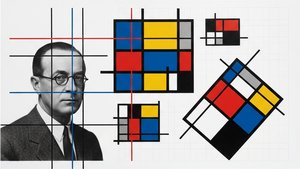 Theo van Doesburg: Pioneering De Stijl & the Evolution of Neo-PlasticismExplore the revolutionary De Stijl movement & Neo-Plasticism with our expert guide. Discover Piet Mondrian, Theo van Doesburg, and the last…
 Três Perspectivas, Uma Alma: A Escolha da Arte como Reflexo da Identidade e Expressão EmocionalDescubra como a arte reflete sua identidade e expressa suas emoções! Explore a psicologia das cores, o Expressionismo e o poder transformad…