- Início

- Impressão em tela
- Teodoro Clement Steele
- A Corrida Agradável
 Preview
 Encomendar pintura Comprar imagem em alta resolução
 Enviar
 Compartilhar
 Detalhes da obra
 Adicionar aos favoritos

 Baixar
 Semelhantes
 Raio X
 Slideshow
A Corrida Agradável
 Óleo sobre tela
- Arte de Parede
- American Impressionism
 1885
1885- Século XIX
 46.0 x 66.0 cm
 Indianapolis Museum of Art
 Ver mais
Giclê / Impressão de Arte
Impressão giclée ou em tela de qualidade de museu, com produção rápida e opções flexíveis de acabamento.




P118B $10

P118H $10

P118W $10

P438Z $10

P508JH $12

P508YH $12

P805H $10

P805Z $10

P919BZ $10

P919G $10

P919XJ $10

P959ZH $10

P968JZ $12

W106C $8

W218G $10

W218JH $8

W218Y $10

W307PJ $10

W316G $10

W316PJ $8

W316Y $10

W398PJ $8

W4111J $10

W500HY $15

W500JH $15

W692G $12

W849H $8

W940BG $15

W953PJ $8




Escolha entre os nossos tamanhos pré-definidos que respeitam as proporções originais da obra de arte.

Você pode inserir suas próprias dimensões para se ajustar a uma moldura ou espaço específico. Se o tamanho selecionado não corresponder às proporções da imagem original, iremos recortar a obra de arte ou estender a imagem com uma borda espelhada ou preenchimento sólido. Um mockup digital será enviado para sua aprovação antes do início da produção.
Por favor, observe que a visualização na tela não reflete o recorte ou a extensão real. Apenas o mockup mostrará com precisão a composição final.
Embora tamanhos personalizados estejam disponíveis, recomendamos selecionar uma dimensão da lista predefinida para preservar as proporções originais.
Entrega mundial () em 2 semanas, em vez das 4/5 semanas padrão. (26 Julho)

Envio Expresso Gratuito para todo o Mundo

Tela de Linho Premium

Seguro de envio completo

Garantia de Reembolso de Impostos Alfandegários

Garantia de Fidelidade de Cores

Política de Devolução de 60 Dias (Apenas para Defeitos)

Garantia de 100% de Reembolso

Desconto para múltiplas unidades
 A opção de vidro está disponível apenas para tamanhos inferiores a 110 cm

A Corrida Agradável
Giclê / Impressão de Arte
Dimensões da Reprodução
-


Preço Total Final
-
Descrição da Obra
A Essência da Serenidade: “Pleasant Run” de Theodore Clement Steele
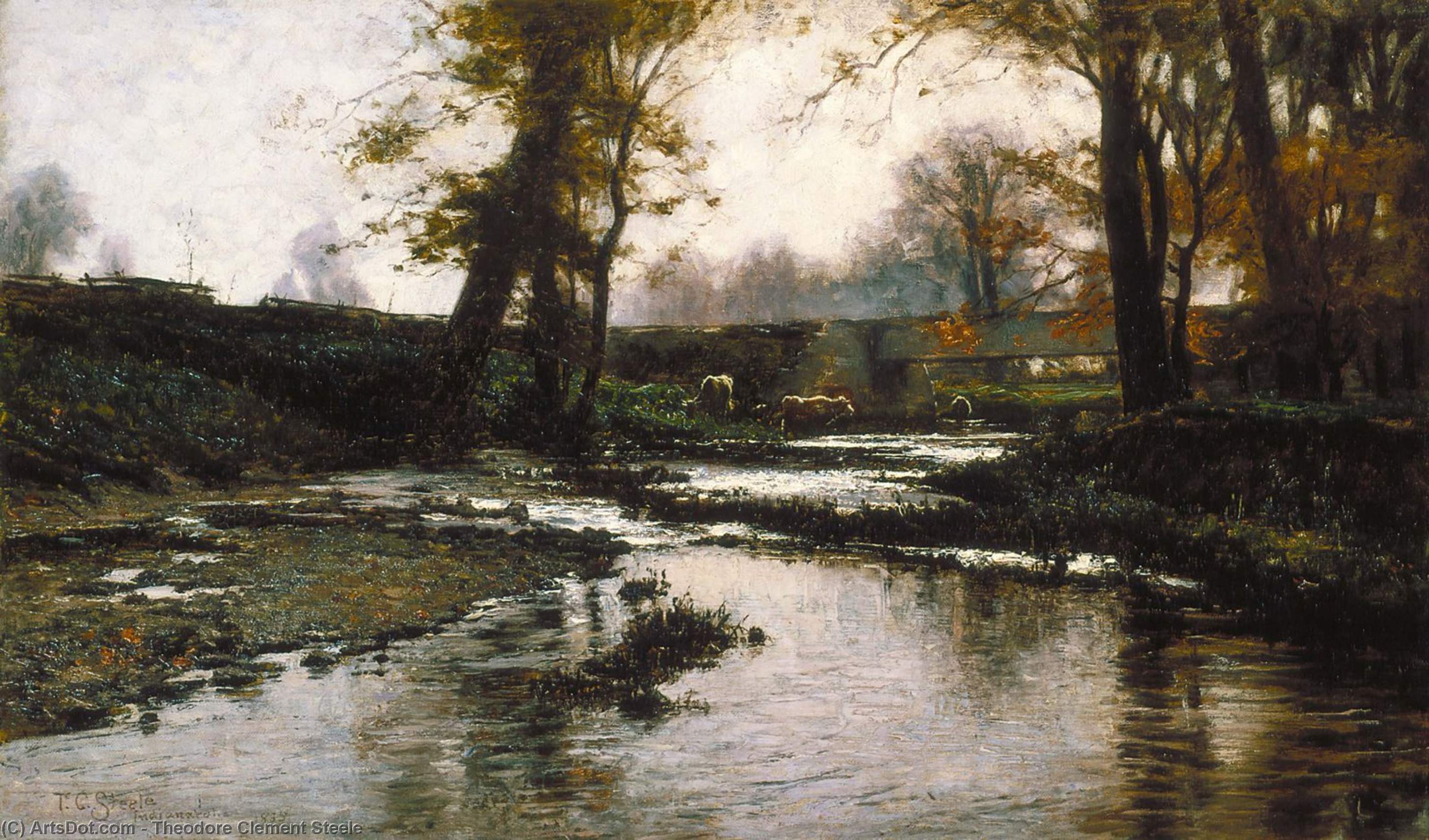
Em 1885, o pintor Theodore Clement Steele capturou em tela um momento de pura tranquilidade com "Pleasant Run". Esta obra-prima, que hoje encontramos em reproduções meticulosas como as oferecidas pela OriginalUniqueArt.com, é mais do que uma paisagem; é uma janela para a alma de um artista e um convite à contemplação. Steele, um dos pilares do Impressionismo americano, fundiu com maestria técnicas europeias com a crescente identidade visual da América, resultando em pinturas que irradiam uma beleza serena e luminosa – características evidentes em "Pleasant Run". A pintura retrata um curso de água sinuoso serpenteando por uma floresta outonal, envolta em uma névoa suave que confere à cena uma atmosfera quase etérea. As cores, predominantemente tons terrosos, verdes musgos e amarelos pálidos, são aplicadas com pinceladas soltas e expressivas, capturando a luz difusa de um dia nublado ou o crepúsculo dourado. A composição, dividida em primeiro plano, meio-termo e fundo, cria uma sensação de profundidade que nos transporta para o coração da paisagem.
- Artista: Theodore Clement Steele (1847-1926)
- Título: Pleasant Run
- Data: 1885
- Tamanho: 46 x 66 cm
A Alma Impressionista: Técnica e Atmosfera
O que torna "Pleasant Run" tão especial é a habilidade de Steele em traduzir a atmosfera em pinceladas. A técnica impressionista, com seus traços livres e vibrantes, não busca um detalhe minucioso, mas sim a essência da luz e da cor. As camadas de tinta se misturam e se sobrepõem, criando uma sensação de movimento e profundidade que desafia a perspectiva linear tradicional. Observe como a névoa é representada – não com linhas nítidas, mas com pinceladas suaves e translúcidas que sugerem a presença invisível da umidade no ar. A luz, filtrada pelas árvores e pela névoa, banha a cena em tons dourados e âmbar, conferindo-lhe uma qualidade quase irreal. Essa atenção meticulosa à atmosfera é o que distingue o trabalho de Steele dos estilos mais rígidos e acadêmicos da época.
Símbolos da Natureza e do Tempo
Mais do que uma simples representação de um rio e uma floresta, "Pleasant Run" carrega consigo uma rica simbologia. As cores outonais – o vermelho-terra das folhas secas, o verde musgo das árvores, o amarelo pálido do sol filtrado – evocam a transitoriedade da vida, a beleza efêmera da natureza e o ciclo inexorável das estações. A névoa que envolve a paisagem pode ser interpretada como um símbolo de introspecção, de reflexão sobre o tempo e a existência. O curso do rio, em movimento constante, representa a passagem do tempo e a fluidez da vida. A presença discreta de uma vaca à margem do rio adiciona um toque de familiaridade e rusticidade à cena, conectando-a com a vida rural e a simplicidade da natureza.
Um Legado Americano: Contexto Histórico
"Pleasant Run" foi criada em um período crucial para a arte americana, quando artistas como Steele buscavam definir uma identidade visual própria, livre das amarras do academicismo europeu. Influenciado por seus estudos na Alemanha, Steele retornou aos Estados Unidos com uma nova visão da paisagem americana – uma visão que valorizava a beleza natural e a autenticidade. A pintura reflete o interesse crescente dos artistas americanos em capturar a luz e a atmosfera de suas regiões nativas, criando obras que são ao mesmo tempo belas e profundamente enraizadas na cultura local. A obra se destaca como um marco no desenvolvimento do Impressionismo americano, demonstrando a capacidade de Steele de adaptar as técnicas europeias à sua própria sensibilidade artística e ao seu amor pela paisagem Indiana. Ao adquirir uma reprodução de "Pleasant Run", você não está apenas adicionando uma bela peça à sua coleção; você está também celebrando um legado artístico que continua a inspirar e encantar gerações.
Biografia do Artista
A Luminary of the American Landscape: The Life and Art of Theodore Clement Steele
Theodore Clement Steele, a name inextricably linked to the flourishing of American Impressionism, stands as a pivotal figure in the nation’s artistic heritage. Born in 1847 amidst the serene beauty of Owen County, Indiana, his journey was one marked by dedicated study, transatlantic influences, and an unwavering commitment to translating the soul of his native land onto canvas. His life unfolded during a period of profound transformation – a time when American art sought to break free from mere imitation of European masters, forging its own distinct visual language rooted in the experiences and landscapes of its own identity. From humble beginnings sketching in the rural heartland of Indiana, Steele embarked on a path that led him to Munich’s prestigious Royal Academy and back again, forever shaped by his experiences yet deeply connected to the landscapes he held dear. He wasn't simply painting what he saw; he was conveying an emotional resonance with nature, imbuing each work with a sense of quiet contemplation and profound beauty.European Training and the Embrace of Impressionism
Steele’s artistic inclinations were initially nurtured through his studies at Indiana State University, providing him with a solid foundation in drawing and painting techniques. However, recognizing the need for more rigorous training and exposure to contemporary artistic trends, he traveled to Europe in 1880, settling in Munich – a vibrant epicenter of artistic innovation during that era. It was here that Steele truly blossomed, immersing himself wholeheartedly in the burgeoning Impressionist movement. The influence of French masters like Monet and Pissarro is undeniably present in his evolving style; a shift away from the darker, more academic palettes prevalent in earlier art towards brighter, more luminous colors and the use of broken brushstrokes to capture fleeting effects of light and atmosphere. This wasn’t merely a superficial adoption of techniques; it represented a fundamental philosophical change. Steele began prioritizing capturing not just *what* he saw, but *how* it felt to be present within a particular moment – the warmth of sunlight on foliage, the subtle shifts in color as clouds drifted across the sky, the quiet serenity of a rural landscape. His time in Munich instilled within him a deep appreciation for *plein air* painting – working directly outdoors, capturing nature’s immediacy and vibrancy. This dedication to observing and translating light and atmosphere became a defining characteristic of his artistic practice.The Hoosier Group and a Distinctly American Vision
Upon returning to Indiana in 1885, Steele became an integral part of the “Hoosier Group,” a collective of artists dedicated to establishing a uniquely American style of landscape painting. Alongside contemporaries such as William Forsyth, J. Ottis Adams, Richard B. Gruelle, and Otto Stark, he championed the depiction of Midwestern landscapes – rolling hills, lush forests, and tranquil waterways – imbued with an authentic sense of place. While deeply influenced by European techniques and artistic principles, Steele and his colleagues were determined to create art that reflected *American* subjects and experiences. They sought to capture the spirit of their homeland, moving beyond mere imitation and forging a distinct visual language rooted in the beauty and character of Indiana. This synthesis resulted in works that possessed both technical sophistication and an undeniable emotional resonance – paintings that spoke directly to the heart of the American experience. His portraits also garnered recognition, including commissions to paint official portraits of several Indiana governors, demonstrating his versatility as an artist.The House of the Singing Winds and a Legacy of Inspiration
Steele’s artistic journey reached its zenith in Brown County, Indiana, where he purchased a substantial tract of land in 1907 and built “The House of the Singing Winds” – a home and studio that became both his personal sanctuary and a catalyst for the development of the renowned Brown County Art Colony. Surrounded by the rolling hills and dense forests of this picturesque region, Steele found renewed inspiration and dedicated himself to capturing the essence of this landscape. The house itself became a gathering place for artists, writers, and intellectuals – a hub of creativity and intellectual exchange that profoundly shaped the artistic landscape of Indiana. In 1922, he accepted an honorary professorship at Indiana University in Bloomington, further cementing his role as a mentor and advocate for the arts within the state. Steele’s legacy extends far beyond his paintings; he was a dedicated educator, lecturer, and champion of American art. His work continues to be celebrated for its beauty, its historical significance, and its profound connection to the spirit of America. His paintings are held in numerous prestigious collections across the country, including those of the Indianapolis Museum of Art, the Los Angeles County Museum of Art, and the Indiana University Art Museum.A Lasting Impression on American Art
Theodore Clement Steele’s contribution to American art is undeniable. He bridged the gap between European traditions and American innovation, helping to forge a uniquely American artistic identity. His paintings are not merely beautiful images; they are windows into a bygone era, offering glimpses of a rural America that was rapidly changing. His ability to translate light, color, and emotion onto canvas ensured his place as a true luminary in the history of American art – an artist whose work continues to inspire and captivate audiences today. His legacy lives on through his paintings, his teachings, and the enduring spirit of the Brown County Art Colony, a testament to his vision and dedication.
Teodoro Clement Steele
1847 - 1926 , Estados Unidos da América
Informações Rápidas
- Artistic Movement Or Style: Impressionismo Americano
- Artists Or Movements Influenced By This Artist: ['Artistas Hoosiers']
- Artists Who Influenced This Artist: ['Impressionistas Franceses']
- Date Of Birth: 1847
- Date Of Death: 1926
- Full Name: Theodore Clement Steele
- Nationality: Americano
- Notable Artworks:
- Indian Summer
- Jardim do Artista
- Árvores de Bétula
- Place Of Birth: Owen County, EUA
Artigos Relacionados
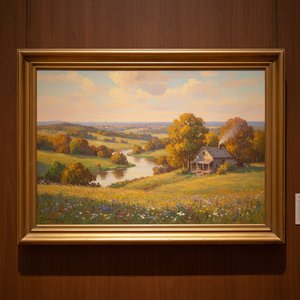
Theodore Clement Steele: American Impressionism's Hoosier Visionary – A Comprehensive Exploration of Life, Art, and Legacy
Explore the life & art of Theodore Clement Steele, a leading American Impressionist painter. Discover his luminous Indiana landscapes, contributions to the Hoosier Group, and enduring legacy. A comprehensive guide for art enthusiasts.

Paul Cézanne: As 25 Obras-Primas que Definiram um Gênio da Arte Moderna | OriginalUniqueArt
Descubra as 25 obras-primas de Paul Cézanne, o mestre do pós-impressionismo! Explore a história, técnica e cores vibrantes por trás de quadros icônicos como 'Les Baigneurs' e 'Mont Sainte-Victoire'. Encontre reproduções de arte exclusivas para decorar sua casa com elegância em OriginalUniqueArt.com.
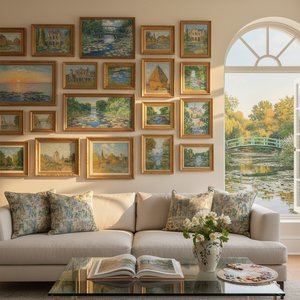
Claude Monet: As 25 Obras-Primas Essenciais para Amantes da Arte e Decoração
Descubra as 25 obras-primas de Claude Monet, o mestre do Impressionismo! Explore a história por trás dos nenúfares, paisagens e cores vibrantes que revolucionaram a arte. Encontre reproduções de alta qualidade para decorar sua casa com a beleza atemporal de Monet em OriginalUniqueArt.com.
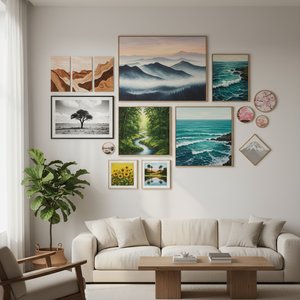
Os 10 Melhores Quadros de Paisagem: Arte, História e Decoração Inspiradora
Descubra os 10 quadros de paisagem mais icônicos da história da arte! Explore Monet, Van Gogh e outros mestres, suas técnicas e inspirações. Encontre reproduções de alta qualidade para decorar sua casa com beleza e elegância em OriginalUniqueArt.com.
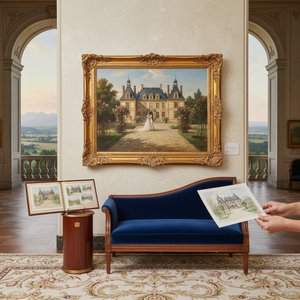
Imortalize o Local do Seu Casamento em uma Pintura Personalizada
Imortalize o local do seu casamento com uma pintura personalizada única! Artistas talentosos capturam a emoção do seu dia especial. Presentes originais e atemporais.



