Expressionism · 1915
Rocks, Gloucester (Stuart Davis, 1915)
Stuart Davis (1892–1964) criou Rocks, Gloucester. Data de 1915. Pertence ao movimento Expressionism. É feito em Oil On Canvas. Está conservada no New Orleans Museum of Art, em New Orleans, Estados Unidos da América. Mede 76 × 91 cm.
- 1915
- Oil On Canvas
- 76 × 91 cm
- New Orleans Museum of Art

 Visualizar na parede

 Pintura a Óleo Feita à Mão
 Compartilhar
 Compartilhar
 Ficha técnica


 Baixar imagem
 Semelhantes
 Raio X
 Ver diaporama
 Perguntas e Respostas

 Estatísticas
Rocks, Gloucester, em resumo
- Título
- Rocks, Gloucester
- Artista
- Stuart Davis (1892–1964)
- Artista nascido em
- Filadélfia, Estados Unidos
- Data
- 1915
- Técnica
- Oil On Canvas
- Dimensões
- 76 × 91 cm
- Onde ver
- New Orleans Museum of Art, New Orleans, Estados Unidos da América
- Movimento
- Expressionism
- Período
- Early Modern
- Tema
- american landscape, mountain peaks”, “bold colors”, “dynamic composition”, “abstract forms”, “urban energy”
O que Rocks, Gloucester retrata?
Rocks, Gloucester: A Transitional Masterpiece by Stuart Davis
Stuart Davis’s “Rocks, Gloucester,” painted in 1915, stands as a crucial bridge between the artist's early realist explorations and his eventual embrace of abstract expressionism. This vibrant landscape, measuring 76 x 91 cm, offers a compelling glimpse into the burgeoning artistic currents of early 20th-century America, particularly the shift away from traditional representation championed by figures like Robert Henri. The painting’s immediate impact lies in its bold use of color – a fiery palette dominated by reds, oranges, and yellows – which immediately evokes a sense of energy and dynamism. Davis wasn't simply depicting rocks; he was attempting to capture the frenetic pace of modern life, as he himself described, translating the “dynamics of city lights and sounds” onto canvas.
A Style in Formation: Expressionism and the American Landscape
“Rocks, Gloucester” exemplifies a transitional style, leaning heavily towards Expressionism while retaining elements of Davis’s earlier training. The visible brushwork, textured surface, and distorted forms – particularly evident in the jagged peaks of the mountains – betray an emotional intensity that anticipates his later abstract works. The artist's deliberate use of color isn't purely representational; it’s a vehicle for conveying feeling, mirroring the anxieties and excitement of a nation undergoing rapid transformation. The flattened perspective further emphasizes this emotional impact, prioritizing the viewer’s experience over strict adherence to realistic spatial relationships. This approach aligns with the broader artistic experimentation taking place at the time, fueled by influences from European modernism and the desire to forge a distinctly American aesthetic.
Technique and Materials: Oil on Canvas – A Gesture of Form
- Oil on Canvas: The painting is executed in oil on canvas, a technique that allows for rich color saturation and substantial textural variation.
- Visible Brushwork: Davis’s loose, gestural brushstrokes are immediately apparent, contributing to the painting's energetic feel and conveying a sense of immediacy.
- Layered Color: The use of layered colors creates depth and volume within the mountain forms, though the overall effect remains somewhat flattened, prioritizing emotional resonance over photographic realism.
- Undulating Foreground: The large, yellow-ochre mass in the foreground anchors the composition and adds to the sense of solidity and weight.
Symbolic Resonance: Mountains as Metaphor
Beyond its aesthetic qualities, “Rocks, Gloucester” carries symbolic weight. Mountains have long represented strength, resilience, and even the sublime – concepts deeply rooted in human experience. In Davis’s hands, they become a visual embodiment of these ideas, reflecting the challenges and aspirations of a nation grappling with modernity. The dark purple and grey sky provides a dramatic counterpoint to the warm tones below, further amplifying the sense of grandeur and perhaps hinting at an underlying tension between nature's power and humanity's place within it. The artist’s signature in the upper right corner confirms this work as a pivotal moment in Davis’s artistic evolution.
Em qual museu se encontra Rocks, Gloucester?
New Orleans Museum of Art
New Orleans, Estados Unidos da América
Uma Janela para New Orleans: A Alma da Arte no New Orleans Museum of Art Aninhado no abraço vibrante do City Park, um vasto oásis urbano maior que o próprio Central Park, o New Orleans Museum of Art (NOMA) ergue-se como muito mais do que um simples repositório de obras-primas; é um reflexo profundo da identidade única da Louisiana e um testemunho de seu espírito artístico duradouro. Fundado em 1911 pelo visionário Isaac Delgado, o NOMA nasceu com um objetivo simples, porém ambicioso: proporcionar a New Orleans um refúgio seguro onde a arte pudesse ser valorizada, exibida e celebrada por todos. Hoje, este princípio fundamental ressoa pelos corredores do museu, oferecendo aos visitantes uma jornada imersiva que abrange mais de cinco milênios de esforço artístico – desde artefatos do antigo Egito até obras contemporâentes que pulsam com a energia moderna da cidade.


Imagens em alta resolução de Rocks, Gloucester

Protegido por direitos de autor: estes ficheiros são para referência pessoal e não constituem uma licença de republicação.
Stuart Davis, Rocks, Gloucester (1915).
Stuart Davis (1892–1964), Rocks, Gloucester, 1915, oil on canvas, New Orleans Museum of Art, Estados Unidos da América. Imagem: OriginalUniqueArt.com.
Perguntas sobre Rocks, Gloucester respondidas
Onde "Rocks, Gloucester", de Stuart Davis está em exibição hoje?
A obra original "Rocks, Gloucester" pode ser vista no New Orleans Museum of Art, New Orleans, Estados Unidos da América.
Em que ano foi criada a obra "Rocks, Gloucester", de Stuart Davis?
"Rocks, Gloucester" data de 1915. A data situa a obra na carreira de Stuart Davis e em sua época.
Qual técnica foi utilizada em "Rocks, Gloucester", de Stuart Davis?
A técnica de "Rocks, Gloucester", de Stuart Davis é Oil On Canvas. As reproduções visam reproduzir a aparência desta técnica.
Quais são as dimensões da obra original "Rocks, Gloucester"?
A obra original "Rocks, Gloucester", de Stuart Davis mede 76 x 91 cm.
Quais temas aparecem em "Rocks, Gloucester", de Stuart Davis?
Os temas presentes em "Rocks, Gloucester", de Stuart Davis incluem american landscape, mountain peaks”, “bold colors”, “dynamic composition”, “abstract forms”, “urban energy”, “1915 art”. Juntos, eles sintetizam o assunto da obra.
"Rocks, Gloucester", de Stuart Davis está em domínio público?
"Rocks, Gloucester", de Stuart Davis está em ainda protegido por direitos autorais. Este status determina como a imagem da obra pode ser reproduzida.
Quem criou "Rocks, Gloucester"?
O artista por trás de "Rocks, Gloucester" é Stuart Davis. A obra está catalogada sob o nome de Stuart Davis.
A qual estilo pertence "Rocks, Gloucester"?
"Rocks, Gloucester", de Stuart Davis pertence ao movimento Expressionism. Este movimento fornece o contexto estilístico da obra.
A que fase da trajetória de Stuart Davis "Rocks, Gloucester" pertence?
"Rocks, Gloucester" pertence ao Transitional Style da carreira de Stuart Davis. Esta classificação relaciona a obra ao desenvolvimento do artista.
Sobre o artista, Stuart Davis
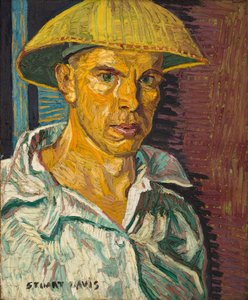
1892–1964, Estados Unidos
Stuart Davis
Stuart Davis: A Pioneer of American Modernism Stuart Davis, born Edward Stuart Davis on December 7, 1892, in Philadelphia, Pennsylvania, was immersed in an artistic environment from a young age. His father, Edward Wyatt Davis, served as the art editor for *The Philadelphia Press*, while his mother, Helen Stuart Davis, was a sculptor—a lineage that undeniably fostered his early fascination with visual arts. From childhood, he absorbed the aesthetic sensibilities of his parents and cultivated a deep appreciation for artistic expression. Davis received formal training at the Robert Henri School of Art in New York City from 1909 to 1912 under the guidance of Robert Henri himself.
Também de Stuart Davis
 Odol
 Lucky Strike1924
 T View1951
 Sixth Avenue El1931
Ensaios sobre Rocks, Gloucester
 Clyfford Still's Abstract Expressionism: A Study of Color, Form & the Existential LandscapeExplore the profound world of Clyfford Still's Abstract Expressionism with OriginalUniqueArt. Discover his unique style, existential themes…
 American abstract expressionist paintersJackson Pollock used his drip technique in 1949 to create Number 1, while Jasper Johns used impasto in 1959 for his work False Start.
 Mastering the Face of a Nation: The Top 25 Gilbert Stuart Artworks1796 marked the creation of the Athenaeum Portrait. How did Stuart use light and shadow to define the very soul of a nascent nation?