
 Visualizar na parede
 Compartilhar
 Compartilhar
 Detalhes
 Guia
Guia

 Baixar imagem
 Semelhantes
 Raio X
 Ver diaporama
 Perguntas e Respostas
 Estatísticas
Fabric Design, knots and streaks pattern

 Ler mais
A obra de arte exibida nesta página é protegida por leis de direitos autorais, o que significa que não podemos criar ou vender legalmente uma reprodução idêntica. Esta proteção é aplicada por meio de acordos internacionais, tais como a Convenção de Berna e pelas leis nacionais, incluindo as estabelecidas por Lei de Direitos Autorais dos EUA - Título 17.
Este método cumpre plenamente as regulamentações de direitos autorais, pois não envolve a cópia ou duplicação da obra protegida. Em vez disso, trata-se de uma reinterpretação criativa — uma nova pintura que é influenciada pela original, mas não idêntica a ela.
Giclée / Impressão de Arte
Impressão giclée ou em tela de qualidade de museu, com produção rápida e opções flexíveis de acabamento. ( Comprar pintura feita à mão Alternar para Imagem Digital)




































Escolha entre os nossos tamanhos pré-definidos que respeitam as proporções originais da obra de arte.

Insira a largura e a altura desejadas para se ajustarem à sua moldura ou parede. Uma impressão pode ser apenas cortada, nunca ampliada além da imagem original; portanto, um tamanho com proporções diferentes resultará na perda de parte da imagem. Enviamos uma maquete digital para sua aprovação antes de realizarmos a impressão. A imagem exibida nesta página não mostra o corte real — apenas a maquete o faz.
Entrega mundial () em 2 semanas, em vez das 4/5 semanas padrão. (10 Novembro)

Envio expresso gratuito para todo o mundo

Tela de Linho de Alta Qualidade

Seguro de transporte completo

Garantia de Reembolso de Impostos Alfandegários

Garantia de Fidelidade Cromática

Política de Devolução em 100 Dias (Apenas para Defeitos)

Garantia de reembolso de 100%

Oferta de desconto por quantidade
 A opção de vidro está disponível apenas para tamanhos inferiores a 110 cm

Fabric Design, knots and streaks pattern
Giclée / Impressão de Arte
Tamanho da Reprodução
-


Preço Total
€ 72
A Dynamic Composition: Stuart Davis' "Fabric Design, Knots and Streaks Pattern"
Stuart Davis’s “Fabric Design, Knots and Streaks Pattern” is a vibrant testament to the artist’s pioneering role in American Modernism. Created during a period of significant artistic experimentation, this work transcends mere representation; it's an energetic exploration of form, color, and rhythm inspired by both urban life and jazz music. The painting presents itself as a dynamic interplay of circles, lines, and blocks of color—primarily blues and reds—creating a visually stimulating composition that feels simultaneously structured and spontaneous.
Style & Technique: Proto-Pop Meets Cubist Influence
Davis’s style in this piece is characterized by its unique blend of influences. While rooted in the principles of Cubism, with its fragmented perspectives and geometric forms, it also anticipates elements of Pop Art decades before its formal emergence. The flattened planes of color and simplified shapes recall advertising imagery and commercial design—a deliberate choice reflecting Davis’s fascination with American popular culture. His technique involves layering paint to create depth and texture, allowing the colors to interact and vibrate against one another. Notice how he uses bold outlines to define shapes, further emphasizing their graphic quality.
Historical Context: The Jazz Age & American Modernism
This artwork was created during the 1930s, a period often referred to as the Jazz Age and the Great Depression. The era witnessed a profound shift in artistic sensibilities, moving away from traditional representational art towards abstraction and experimentation. Davis, along with artists like Piet Mondrian and Wassily Kandinsky, sought to capture the dynamism of modern life—the speed, energy, and complexity of urban environments. The influence of jazz music is particularly evident in the rhythmic patterns and improvisational feel of the composition; Davis often spoke about how jazz inspired his approach to painting.
Symbolism & Emotional Impact
- Circles: Often interpreted as representing wheels, gears, or other mechanical elements, reflecting the industrial age.
- Lines: Suggest movement and energy, creating a sense of visual flow throughout the composition.
- Color Palette (Blue & Red): The bold combination evokes feelings of excitement, vitality, and perhaps even tension—a reflection of the complexities of modern life.
Beyond its formal qualities, "Fabric Design, Knots and Streaks Pattern" evokes a sense of optimism and forward momentum. It’s an energetic celebration of American ingenuity and creativity. The painting's visual complexity invites repeated viewing, revealing new details and nuances with each encounter. It is a piece that sparks conversation and inspires contemplation on the nature of modern art and its relationship to everyday life.
Perguntas e Respostas
Qual é a cor predominante de "Fabric Design, knots and streaks pattern", de Stuart Davis?
A cor que mais se destaca em "Fabric Design, knots and streaks pattern" é Phthalo Green (#171e30). A cor dominante é útil ao combinar uma obra de arte com um ambiente interno.
"Fabric Design, knots and streaks pattern", de Stuart Davis está em domínio público?
Informação de direitos autorais para "Fabric Design, knots and streaks pattern", de Stuart Davis: a obra está em ainda protegido por direitos autorais. Isso determina se reproduções da imagem podem ser feitas livremente.
Por quais outros nomes Stuart Davis é conhecido(a)?
Outros nomes registrados para Stuart Davis, criador de "Fabric Design, knots and streaks pattern", incluem Edward Stuart Davis, Stewart Davis, Davies.
Biografia do Artista
Stuart Davis: A Pioneer of American Modernism
Stuart Davis, born Edward Stuart Davis on December 7, 1892, in Philadelphia, Pennsylvania, was immersed in an artistic environment from a young age. His father, Edward Wyatt Davis, served as the art editor for *The Philadelphia Press*, while his mother, Helen Stuart Davis, was a sculptor—a lineage that undeniably fostered his early fascination with visual arts. From childhood, he absorbed the aesthetic sensibilities of his parents and cultivated a deep appreciation for artistic expression. Davis received formal training at the Robert Henri School of Art in New York City from 1909 to 1912 under the guidance of Robert Henri himself. This formative period instilled in him not only technical skills but also a profound understanding of Henri’s philosophy—namely, “to capture ‘life in the raw.’” During these years, he forged enduring friendships with fellow painters John Sloan, Glenn Coleman, and Henry Glintenkamp—artists who would become collaborators and companions throughout his artistic journey. These connections proved invaluable in shaping Davis's worldview and artistic sensibilities.Early Career and the Armory Show
Davis swiftly gained recognition as one of the youngest exhibitors at the pivotal Armory Show in 1913. He presented five watercolor paintings that embodied the distinctive style of the Ashcan School—a movement characterized by its unflinching portrayal of urban life and its rejection of idealized representations. These canvases immediately established him as a voice among his peers, signaling an early step toward realizing his artistic ambitions. The Armory Show exposed Davis to the groundbreaking works of artists like Vincent van Gogh, Henri Matisse, and Pablo Picasso, sparking inspiration for his own explorations into abstraction and perspective.Artistic Development and Style
Throughout the 1920s, Davis honed his distinctive mature style—a style marked by bold colors and a deliberate simplification of form. He began creating abstract still lifes and landscapes infused with a proto-pop art element, skillfully incorporating contemporary subject matter such as cigarette packages and spark plug advertisements into his compositions. This innovative approach reflected Davis’s belief that “a subject had its emotional reality,” which could be gleaned through an awareness of geometric planes and spatial relationships—a conviction that would permeate his oeuvre. The Ashcan School movement continued to exert influence on his aesthetic sensibilities, grounding him in a tradition of realism while simultaneously propelling him toward experimentation with abstraction.Influences and Inspirations
Davis’s artistic vision was profoundly shaped by several key figures and movements. Robert Henri served as his foundational mentor, encouraging him to observe life directly and embrace spontaneity—values that resonated deeply within Davis's creative spirit. The Ashcan School movement instilled in him a commitment to depicting urban realities with honesty and immediacy. Furthermore, Cubism provided inspiration for his exploration of fragmented perspectives and geometric abstraction. Perhaps most notably, jazz music captivated Davis’s imagination, contributing to the rhythmic energy and improvisational quality of many of his paintings from the 1940s and 1950s—a passion that would become an integral part of his artistic identity.Notable Works
Davis's oeuvre includes iconic pieces such as *Odol (Modernism)*, completed in 1928—a testament to his ability to synthesize abstraction with recognizable imagery from popular culture. His paintings capture the essence of American life and convey a powerful emotional resonance. Other significant works include *Rocks, Gloucester* (1915), *The Mellow Pad*, and *Tropes de Teens* (1956)—each demonstrating Davis’s unwavering dedication to artistic innovation and his profound engagement with contemporary themes. Davis's legacy extends far beyond his individual creations—he stands as a pivotal figure in American Modernism, championing a bold vision of art that challenged conventions and embraced the dynamism of the 20th century. His influence continues to inspire artists today, securing his place as one of the most important voices in American art history.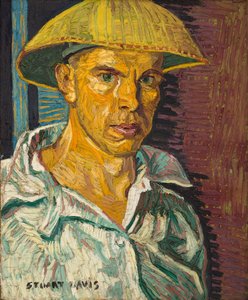
Stuart Davis
1892 - 1964 , Estados Unidos
Dados Rápidos
- Artistic Movement Or Style: American Modernism
- Artists Or Movements Influenced By This Artist: ['Ashcan School']
- Artists Who Influenced This Artist: ['Robert Henri']
- Date Of Birth: December 7, 1892
- Date Of Death: June 24, 1964
- Full Name: Edward Stuart Davis
- Nationality: American
- Notable Artworks:
- Odol (Modernism)
- Rocks, Gloucester
- Place Of Birth: Philadelphia, United States
Artigos Relacionados

Top 10 Obras-Primas do Expressionismo Abstrato: Arte para Decorar e Inspirar | OriginalUniqueArt.com
Descubra as 10 obras-primas do Expressionismo Abstrato com Jackson Pollock, Mark Rothko e mais! Explore a história, técnica e emoção por trás de cada pintura. Encontre reproduções de arte exclusivas para decorar sua casa em OriginalUniqueArt.com.

Arthur B. Davies: Pioneering American Modernism & the Cosmopolitan Spirit
Explore the life & work of Arthur B. Davies, a pivotal figure in American Modernism. Discover his unique style, role in the 1913 Armory Show, and lasting influence on art history. Learn about collecting Davies' works.

Arthur Dove: Pioneering American Abstraction & the Poetic Language of Modernism
Explore the groundbreaking work of Arthur Dove, a pioneer of American abstraction. Discover his artistic evolution, influences, and investment potential with OriginalUniqueArt's expert guide.

Abstração Geométrica: 10 Obras-Primas que Moldaram a Arte Moderna | OriginalUniqueArt.com
Descubra as 10 obras-primas da Abstração Geométrica que revolucionaram a arte moderna! Explore Kandinsky, Mondrian e outros artistas icônicos. Encontre reproduções de alta qualidade para decorar sua casa com OriginalUniqueArt.com.

Stuart Davis: Modernist Abstraction & the Vibrant Spirit of the Jazz Age
Explore the vibrant world of Stuart Davis, a pioneer of American Modernism. Discover his jazz-inspired paintings, signature style & investment potential. Expert insights for art collectors.
