
 Visualizar na parede
 Compartilhar
 Compartilhar
 Detalhes
 Guia
Guia

 Baixar imagem
 Semelhantes
 Raio X
 Ver diaporama
 Q&A
Q&A Estatísticas
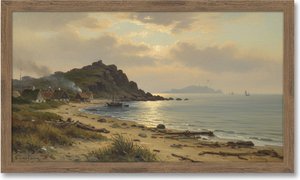
The Canal


 Ler mais
Giclée / Impressão de Arte
Impressão giclée ou em tela de qualidade de museu, com produção rápida e opções flexíveis de acabamento. ( Comprar pintura feita à mão Alternar para Imagem Digital)




P118B €10

P118H €10

P118W €10

P438Z €10

P508JH €12

P508YH €12

P805H €10

P805Z €10

P919BZ €10

P919G €10

P919XJ €10

P959ZH €10

P968JZ €12

W106C €8

W218G €10

W218JH €8

W218Y €10

W307PJ €10

W316G €10

W316PJ €8

W316Y €10

W398PJ €8

W4111J €10

W500HY €15

W500JH €15

W692G €12

W849H €8

W940BG €15

W953PJ €8




Escolha entre os nossos tamanhos pré-definidos que respeitam as proporções originais da obra de arte.

Insira a largura e a altura desejadas para se ajustarem à sua moldura ou parede. Uma impressão pode ser apenas cortada, nunca ampliada além da imagem original; portanto, um tamanho com proporções diferentes resultará na perda de parte da imagem. Enviamos uma maquete digital para sua aprovação antes de realizarmos a impressão. A imagem exibida nesta página não mostra o corte real — apenas a maquete o faz.
Entrega mundial () em 2 semanas, em vez das 4/5 semanas padrão. (2 Novembro)

Envio expresso gratuito para todo o mundo

Tela de Linho de Alta Qualidade

Seguro de transporte completo

Garantia de Reembolso de Impostos Alfandegários

Garantia de Fidelidade Cromática

Política de Devolução em 100 Dias (Apenas para Defeitos)

Garantia de reembolso de 100%

Oferta de desconto por quantidade
 A opção de vidro está disponível apenas para tamanhos inferiores a 110 cm

The Canal
Giclée / Impressão de Arte
Tamanho da Reprodução
-


Preço Total
€ 71
A Window Into Venetian Tranquility: Exploring Soren Emil Carlsen’s “The Market”
Danish-born painter Søren Emil Carlsen (1853 – 1932) stands as an intriguing figure in the annals of American Impressionism, bridging the gap between European artistic traditions and burgeoning landscapes of the Hudson River Valley. While often overshadowed by his contemporaries—Childe Hassam, J. Alden Weir, and John La Farge—Carlsen possessed a singular vision that distinguished him within the Cos Cob group, prioritizing delicate atmospheric perspectives and nuanced tonal gradations to convey profound emotional resonance. This essay delves into “The Market,” Venice – a captivating canvas reflecting Carlsen’s distinctive approach to capturing fleeting moments of beauty and serenity.Subject Matter and Composition: A Slice of Venetian Life
“The Market” depicts a vibrant yet understated scene unfolding along the Grand Canal in Venice during the early 20th century. The artist eschews grand narratives, instead focusing on the everyday rhythms of Venetian commerce and leisure. Dominating the composition is a tranquil waterway populated by boats laden with goods – merchants exchanging wares amidst the gentle ripple of water. At the center stands a solitary figure, presumably observing the activity with contemplative gaze, subtly anchoring the viewer’s eye within the expansive vista. Scattered amongst the boats are architectural elements—buildings lining the canal's edge—adding depth and texture to the overall impression. Carlsen meticulously rendered these details, capturing not just visual accuracy but also the palpable atmosphere of a bustling Venetian marketplace.Style and Technique: Impressionistic Sensitivity
Carlsen’s artistic style aligns closely with Impressionism, albeit tempered by his Scandinavian heritage. He skillfully employed loose brushstrokes—characteristic of Impressionist painters—to depict light and color with remarkable sensitivity. Unlike the bold palettes favored by some Impressionists, Carlsen opted for muted hues—primarily blues, greens, and ochres—creating a harmonious blend that evokes a sense of calm and nostalgia. The artist’s technique involved layering thin glazes of pigment onto the canvas, allowing underlying tones to subtly influence the final appearance. This meticulous process resulted in luminous surfaces imbued with atmospheric haze, mirroring the hazy light conditions prevalent during Venetian summers – a hallmark of Impressionistic painting.Historical Context: Venice at the Dawn of Modernity
“The Market” was created during a period of significant artistic experimentation and cultural transformation. The Impressionist movement challenged academic conventions, advocating for direct observation of nature and prioritizing subjective experience over idealized representation. Carlsen’s Venetian landscape reflects this spirit of innovation, aligning with the broader trend toward capturing fleeting impressions rather than striving for photographic realism. Furthermore, Venice itself was undergoing modernization—the arrival of tourists and the gradual electrification of its infrastructure—creating a dynamic backdrop for Carlsen's artistic endeavors. The painting serves as a poignant reminder of a bygone era – one where beauty resided in simplicity and tranquility.Symbolism: Light, Reflection, and Contemplation
Beyond its visual splendor, “The Market” resonates with symbolic significance. The canal itself represents fluidity and change—mirroring the ceaseless flow of life—while the boats symbolize commerce and human interaction. Most notably, Carlsen’s depiction of a solitary figure gazing upon the scene embodies contemplation and introspection. This pose invites viewers to consider their own relationship with the natural world and to appreciate the profound beauty found in quiet observation. The diffused light filtering through the Venetian haze contributes to this symbolic dimension, suggesting an ethereal quality that transcends mere visual perception.Emotional Impact: A Moment Frozen in Time
Ultimately, “The Market” succeeds in conveying a powerful emotional response—a feeling of serene contemplation and nostalgic longing for a simpler time. Carlsen’s masterful use of color and brushwork evokes the warmth of summer sunlight and the gentle murmur of Venetian life. The painting's understated elegance speaks to an enduring appreciation for beauty—beauty rooted not in grand spectacle but in subtle nuance and atmospheric depth. It remains a testament to Carlsen’s ability to transform observation into art, capturing a fleeting moment of Venetian tranquility that continues to captivate audiences today.Perguntas e Respostas
"The Canal", de Soren Emil Carlsen está localizado no país de origem do artista?
Não – a obra de arte encontra-se no exterior. Soren Emil Carlsen nasceu em Dinamarca, e o original de "The Canal" encontra-se num museu em Estados Unidos da América.
O que "The Canal" compartilha com o restante da obra de Soren Emil Carlsen?
"The Canal" integra a produção Impressionistic Landscape de Soren Emil Carlsen, cujos temas recorrentes incluem european training, impressionist style, tranquil scenes, rural life, landscape legacy.
Posso ver "The Canal" como um slideshow em tela cheia?
Um slideshow está disponível: a página Apresentação de imagens de "The Canal", de Soren Emil Carlsen.
Biografia do Artista
Soren Emil Carlsen: The Quiet Mastery of American Impressionism
Soren Emil Carlsen (1853-1932) stands as a singular figure in the annals of American art—a testament to understated brilliance and enduring influence. Born October 19, 1853, in Copenhagen, Denmark, his artistic journey began with an initial fascination for architecture at the Royal Academy, grounding him in principles of structure and form before he ultimately surrendered to the irresistible allure of pure creative expression. This pivotal decision propelled him toward a transformative relocation to Chicago in 1872, where he embarked on a career that would redefine American painting through its distinctive tonalist aesthetic—a style characterized by muted palettes, subtle gradations of light, and an unwavering focus on mood and atmosphere.- Early Influences & Education: Carlsen’s formative years were steeped in artistic tradition. His mother practiced painting, fostering a familial appreciation for visual art, while his cousin, Viggo Johansen—a celebrated Danish painter—served as a significant mentor, shaping his understanding of artistic technique and vision.
- The Embrace of Impressionism: Following his studies in Paris in 1875, Carlsen encountered the revolutionary ideas of Jean-Baptiste-Siméon Chardin, whose masterful depictions of still life captivated him. This encounter spurred him to explore new approaches to painting, culminating in a return to Chicago and the establishment of the Chicago Academy of Design as its inaugural instructor—a role that would profoundly impact generations of aspiring artists.
- The “American Chardin”: Carlsen’s artistic signature became synonymous with “The American Chardin,” reflecting his unparalleled ability to imbue everyday objects with dignity and poetic resonance. His early works—copper pans gleaming softly, game birds arranged with meticulous detail, delicate flowers poised in vases—were not merely representations of the visual world; they were meditations on texture, form, and the ephemeral beauty of time itself.
A Synthesis of Tonalism and Impressionistic Light
Carlsen’s artistic style represents a remarkable convergence of tonalist principles and impressionistic techniques—a harmonious blend that distinguishes him from many of his contemporaries. He skillfully captured the subtle nuances of light and atmosphere, mirroring Chardin's approach to portraying natural subjects with quiet contemplation. This sensitivity to luminescence became a hallmark of his oeuvre, establishing him as one of the foremost painters of his time. His exploration of landscapes and seascapes—influenced by encounters with Impressionist luminaries like John Twachtman and Julian Alden Weir—further solidified his reputation as an innovator who dared to challenge conventional artistic boundaries.- Still Life Mastery: Carlsen’s enduring legacy rests primarily on his exquisite still lifes, which exemplify the tonalist tradition's preoccupation with capturing mood and atmosphere. His compositions often featured commonplace objects—copper pans, brass candlesticks, game birds—rendered with painstaking detail and bathed in soft, diffused light.
- The Influence of Chardin: Carlsen’s artistic sensibilities were profoundly shaped by Jean-Baptiste-Siméon Chardin's unwavering commitment to portraying the natural world with understated elegance and profound emotional depth. He sought to emulate Chardin’s ability to convey a sense of serenity and contemplation—a stylistic ambition that resonated throughout his career.
Teaching Legacy & Recognition
Beyond his artistic achievements, Carlsen left an indelible mark on American art education—serving as director of the California School of Design (now San Francisco Art Institute) from 1887 to 1889 and subsequently holding positions at the National Academy of Design, the Art Students League, and the Pennsylvania Academy of Fine Arts for over four decades. His pedagogical approach emphasized observation, technique, and a deep understanding of artistic principles—inspiring countless students to pursue their own creative visions. He was awarded numerous honors during his lifetime, including the Samuel T. Shaw Purchase Prize, the Gold Medal at the Louisiana Purchase Exposition, and the prestigious Medal of Honor at the Panama–Pacific International Exposition—testaments to his unwavering dedication to excellence in art instruction.- Chicago Academy of Design: Carlsen’s tenure as instructor at Chicago Academy of Design established him as a pioneer in American art education, fostering a generation of artists who embraced tonalism and Impressionism.
- Notable Students: Among his most distinguished pupils was Guy Rose—a prominent figure in California Impressionism—whose artistic development benefited immensely from Carlsen’s guidance.
A Lasting Impression on American Art History
Soren Emil Carlsen's contribution to American art history transcends mere stylistic innovation; it embodies a profound appreciation for beauty found in simplicity and an unwavering belief in the transformative power of light—qualities that continue to inspire artists and viewers alike. His paintings—characterized by their muted palettes, subtle gradations of luminescence, and evocative mood—remain treasured artifacts of a bygone era—a testament to Carlsen’s enduring artistic vision and his indelible legacy as “The American Chardin.” He died January 2, 1932, in New York City.
Soren Emil Carlsen
1853 - 1932 , Dinamarca
Dados Rápidos
- Artistic Movement Or Style: Tonalismo e Impressionismo
- Artists Or Movements Influenced By This Artist: ['John Twachtman']
- Artists Who Influenced This Artist: ['Jean-Baptiste-Siméon Chardin']
- Date Of Birth: 1853-10-19
- Date Of Death: 1932-01-02
- Full Name: Soren Emil Carlsen
- Nationality: Dane
- Notable Artworks:
- Blackfish and Clams
- Still Life with Copper Pan
- Place Of Birth: Copenhagen, Dinamarca
Artigos Relacionados

Evocations of Place: A Historical Journey Through Landscape Art
Explore the rich history of landscape art with OriginalUniqueArt. Discover renowned artists, movements like Impressionism & Romanticism, and expert guidance for collecting timeless pieces. Find your perfect serene escape today!
Søren Emil Carlsen: A Study in Danish Luminism & Atmospheric Realism
Explore the captivating world of Søren Emil Carlsen, a master of Danish Luminism and American Impressionism. Discover his exquisite still lifes & landscapes – a study in realism, atmosphere, and enduring artistic beauty.

Os 10 Mestres do Impressionismo e a Paisagem que Mudou a Arte | OriginalUniqueArt
Descubra os 10 quadros impressionistas que revolucionaram a arte! Explore Monet, Renoir e outros mestres da paisagem francesa. Encontre reproduções de alta qualidade para decorar sua casa com beleza e história em OriginalUniqueArt.com.

Evocations of Place: A Historical Journey Through Landscape Art
Explore the rich history of landscape art with OriginalUniqueArt. Discover renowned artists, movements like Impressionism & tonalism, and expert guidance for collecting timeless pieces. Find your perfect serene escape today!

Paul Cézanne: As 25 Obras-Primas que Definiram um Gênio da Arte Moderna | OriginalUniqueArt
Descubra as 25 obras-primas de Paul Cézanne, o mestre do pós-impressionismo! Explore a história, técnica e cores vibrantes por trás de quadros icônicos como 'Les Baigneurs' e 'Mont Sainte-Victoire'. Encontre reproduções de arte exclusivas para decorar sua casa com elegância em OriginalUniqueArt.com.