
 Visualizar em escala
 Enviar
 Compartilhar
 Ver detalhes

 Baixar
 Semelhantes
 Raio X
 Apresentação de slides
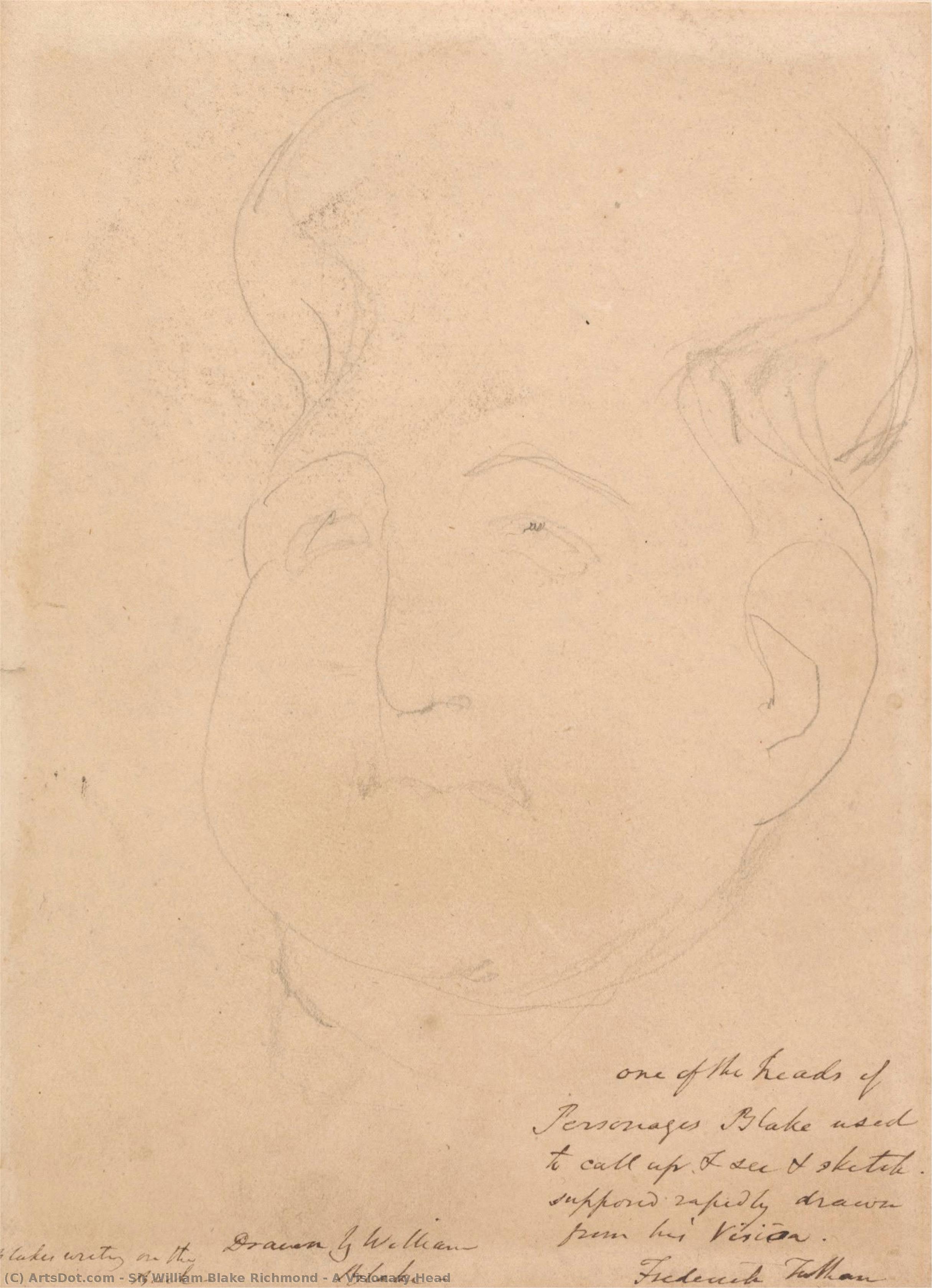
A Visionary Head
 Acrylic On Canvas
- WallArt
- Romanticism
 1820
1820 19.0 x 14.0 cm
 Museu de Arte Britânica da Universidade Yale
 Ver mais
Reprodução em Óleo Feita à Mão
Óleo sobre tela pintado à mão no seu tamanho e moldura, feito sob encomenda pelos nossos artistas. ( Encomendar impressão Comprar imagem em alta resolução)




P118B $10

P118H $10

P118W $10

P438Z $10

P508JH $12

P508YH $12

P805H $10

P805Z $10

P919BZ $10

P919G $10

P919XJ $10

P959ZH $10

P968JZ $12

W106C $8

W218G $10

W218JH $8

W218Y $10

W307PJ $10

W316G $10

W316PJ $8

W316Y $10

W398PJ $8

W4111J $10

W500HY $15

W500JH $15

W692G $12

W849H $8

W940BG $15

W953PJ $8




Escolha entre os nossos tamanhos pré-definidos que respeitam as proporções originais da obra de arte.

Pode inserir as suas próprias dimensões para se adequar a uma moldura ou espaço específico. Se o tamanho selecionado não corresponder às proporções da imagem original, iremos cortar a obra de arte ou estender a pintura com elementos adicionais pintados à mão. Um esboço digital será enviado para sua aprovação antes do início da produção.
Tenha em atenção que a pré-visualização no ecrã não reflete o corte ou extensão real. Apenas o esboço mostrará com precisão a composição final.
Embora tamanhos personalizados estejam disponíveis, recomendamos selecionar uma dimensão da lista predefinida para preservar as proporções originais.
Após o pedido, a equipa OriginalUniqueArt.com enviará um e-mail ao cliente para solicitar instruções e fornecer uma prévia do esboço.
Entrega mundial () em 3 a 4 semanas, em vez das 5 semanas padrão. (18 Agosto). Sem comprometer a qualidade.

Envio Expresso Gratuito para todo o Mundo

Tela de Linho Premium

Seguro de transporte total

Garantia de Reembolso de Impostos Alfandegários

Garantia de Fidelidade de Cor

Política de Devolução de 60 Dias (Apenas para Defeitos)

Garantia de reembolso de 100%

Desconto para múltiplas unidades
 A opção de vidro está disponível apenas para tamanhos inferiores a 110 cm

A Visionary Head
Técnica de Reprodução
Dimensões da Reprodução
-


Preço Total
$ 300
Descrição da Obra
A Visionary Head
Sir William Blake Richmond’s “A Visionary Head” stands as a testament to Romantic artistic ambition and an enduring fascination with the human psyche. Executed in 1820, this striking black chalk and pencil drawing captures a moment of profound contemplation—a study for what would become one of Richmond's most celebrated portraits. The image depicts a man’s face bathed in subtle tonal variations, conveying both physical detail and an inner spiritual resonance characteristic of Blake’s distinctive style. Subject Matter & Composition The portrait focuses intently on the human visage, prioritizing anatomical accuracy alongside expressive gesture. Richmond meticulously rendered the contours of the skull and facial muscles, reflecting his rigorous training in anatomy—a cornerstone of artistic education during the Victorian era. The positioning of the head is deliberately frontal, emphasizing direct gaze and fostering a sense of intimacy with the viewer. This compositional choice aligns perfectly with Romantic ideals of confronting reality and exploring the complexities of human emotion. Style & Technique Richmond’s technique exemplifies the Romantic preoccupation with tonal gradation—a method championed by artists like Turner and Constable. He skillfully employed hatching and shading to sculpt the form, creating a palpable illusion of depth and texture. The delicate pencil strokes contribute to an overall atmosphere of quiet solemnity, mirroring the contemplative mood conveyed by the subject matter. Richmond’s meticulous attention to detail distinguishes him from earlier portraitists who favored idealized representations; instead, he sought to capture the essence of his sitter's personality—a hallmark of Romantic artistic philosophy. Historical Context & Influences Richmond’s work emerged during a period marked by intellectual ferment and artistic experimentation. The Romantic movement challenged Neoclassical conventions, prioritizing imagination and emotion over rational calculation. Blake Richmond was profoundly influenced by William Blake, whose visionary art explored themes of spirituality and mythology—a connection that permeated Richmond's own creative endeavors. Furthermore, Richmond’s engagement with the burgeoning Aesthetic Movement signaled a shift toward valuing artistic craftsmanship and sensory experience as paramount goals. Symbolism & Emotional Impact Beyond its technical brilliance, “A Visionary Head” resonates with symbolic significance. The depiction of a man’s face—a universal emblem of humanity—invites viewers to contemplate questions of identity, consciousness, and mortality. Richmond's masterful rendering captures not merely physical likeness but also an intangible quality—the inner life of the subject—suggesting that true beauty lies in perceiving beyond superficial appearances. This artwork continues to inspire admiration for its understated elegance and profound psychological insight, cementing Richmond’s legacy as a pivotal figure in Victorian art history.- Size: 19 x 14 cm
- Date: 1820
Biografia do Artista
Early Life and Influences
Sir William Blake Richmond (1842–1921) was born at 10 York Street, London, England on November 29, 1842. His formative years were profoundly shaped by his association with The Ancients, a group of artists and writers captivated by the visionary poetry of William Blake. This influence permeated Richmond’s early artistic endeavors, evident in paintings such as “Abel the Shepherd” and “Christ and the Woman of Samaria,” exhibited at the Royal Academy in 1825. These works showcased a preoccupation with mythological narratives and spiritual symbolism—a direct reflection of Blake's aesthetic principles.Career Highlights
Richmond swiftly established himself as a prominent portrait painter, skillfully capturing the character and dignity of British gentry, nobility, and royalty. His technique was characterized by meticulous detail and an ability to convey not merely likeness but also psychological depth. Among his celebrated masterpieces are “Trees at Bocca d’Arno,” a landscape infused with Romantic idealism, and “The Crown of Peace,” commemorating Queen Victoria's reign—both demonstrating Richmond’s mastery of color and composition.Notable Associations and Travels
Recognizing the importance of artistic education abroad, Richmond embarked on a transformative journey to Paris in 1828. There, he immersed himself in the ateliers of École des Beaux-Arts and hospitals, honing his anatomical understanding alongside fellow artists. A memorable encounter occurred during his travels to Calais with Beau Brumell—a symbolic exchange of snuff boxes signifying an appreciation for shared artistic sensibilities.Richmond’s connection with Lord Sidmouth proved invaluable, providing counsel and inspiring a portrait depicting the esteemed statesman. This artwork now resides in the National Portrait Gallery, serving as a testament to Richmond's dedication to documenting significant figures within British society.
Legacy and Later Life
While Richmond continued to produce portraits throughout his career, his artistic legacy transcends mere representation. He remained steadfast in his commitment to capturing the essence of his subjects—a pursuit that cemented his position as one of Britain’s foremost portrait painters. William Blake Richmond passed away peacefully on February 11, 1921, leaving behind a substantial body of work that continues to resonate with artists and art enthusiasts globally.- View Sir William Blake Richmond’s artworks on OriginalUniqueArt: https://OriginalUniqueArt.com/@/sir-william-blake-richmond
- Explore the British Council Collection, featuring works by renowned artists like Morris Louis, William Larkin, and Alison Watt: /pt/art/show/art-d3ckkb-pt/
- Discover more about The Ancients and their influence on Richmond’s work: https://en.wikipedia.org/wiki/the_ancients

Sir William Blake Richmond
1809 - 1896 , Reino Unido
Informações Rápidas
- Artistic Movement Or Style: Romanticism
- Artists Who Influenced This Artist: ['William Blake']
- Date Of Birth: March 28, 1809
- Full Name: Sir William Blake Richmond
- Nationality: British
- Notable Artworks:
- Trees at Bocca d'Arno
- The Crown of Peace
- Place Of Birth: Brompton, United Kingdom
Artigos Relacionados

Sir William Blake Richmond: A Visionary of Aestheticism & Symbolism
Explore the life & art of Sir William Blake Richmond, a pivotal figure bridging Pre-Raphaelitism and Aestheticism. Discover his stunning portraits, mosaics at St Paul's Cathedral, and lasting influence on Victorian art.

William Blake: Romantic Visionary & Mystical Genius of the Imagination
Explore the mystical art & poetic genius of William Blake (1757-1827). Discover his revolutionary illuminated printing, rich symbolism, and lasting influence on Romanticism. Find handmade reproductions at OriginalUniqueArt.

John Varley I: Intimate Observation & the British Romantic Landscape
Explore the serene landscapes of John Varley I, a key figure in British Romanticism. Discover his unique watercolour style, collaboration with William Blake & lasting artistic legacy. Learn about collecting Varley's work.

William Powell Frith: Narratives of Victorian Society & the Rise of Realist Painting
Explore the life & works of William Powell Frith, the 'greatest British painter of social scenes.' Discover his iconic Victorian genre paintings and learn about his lasting impact on realist art. Hand-painted reproductions available.

William James Müller: Navigating Victorian Sentiment & Realism in British Landscape Painting
Explore the captivating landscapes of William James Müller, the leading artist of the Bristol School. Discover his Victorian masterpieces, Egyptian travels & Lycian sketches – a journey through 19th-century art and technique.

