

 Visualizar em escala
 Enviar
 Compartilhar
 Ver detalhes
 Guia de Obras do Aluno

 Baixar imagem
 Semelhantes
 Raio X
 Apresentação de slides
 Estatísticas
Edward Simeon
 Acrylic On Canvas
- WallArt
- Georgian Portraiture
 1808
1808 183.0 x 152.0 cm
 Reading Museum
 Ver mais
Giclée / Impressão de Arte
Impressão giclée ou em tela de qualidade de museu, com produção rápida e opções flexíveis de acabamento. ( Encomendar reprodução pintada à mão Ver Imagem Digital)




P118B $10

P118H $10

P118W $10

P438Z $10

P508JH $12

P508YH $12

P805H $10

P805Z $10

P919BZ $10

P919G $10

P919XJ $10

P959ZH $10

P968JZ $12

W106C $8

W218G $10

W218JH $8

W218Y $10

W307PJ $10

W316G $10

W316PJ $8

W316Y $10

W398PJ $8

W4111J $10

W500HY $15

W500JH $15

W692G $12

W849H $8

W940BG $15

W953PJ $8




Escolha entre os nossos tamanhos pré-definidos que respeitam as proporções originais da obra de arte.

Você pode inserir suas próprias dimensões para se ajustar a uma moldura ou espaço específico. Se o tamanho selecionado não corresponder às proporções da imagem original, iremos recortar a obra de arte ou estender a imagem com uma borda espelhada ou preenchimento sólido. Um mockup digital será enviado para sua aprovação antes do início da produção.
Por favor, observe que a visualização na tela não reflete o recorte ou a extensão real. Apenas o mockup mostrará com precisão a composição final.
Embora tamanhos personalizados estejam disponíveis, recomendamos selecionar uma dimensão da lista predefinida para preservar as proporções originais.
Entrega mundial () em 2 semanas, em vez das 4/5 semanas padrão. (26 Setembro)

Envio expresso gratuito para todo o mundo

Tela de Linho Premium

Seguro de transporte total

Garantia de Reembolso de Impostos Alfandegários

Garantia de Fidelidade de Cor

Política de Devolução em 100 Dias (Apenas para Defeitos)

Garantia de reembolso de 100%

Desconto para múltiplas unidades
 A opção de vidro está disponível apenas para tamanhos inferiores a 110 cm

Edward Simeon
Giclée / Impressão de Arte
Dimensões da Reprodução
-


Preço Total
$ 80
A Portrait of Dignified Reflection: Examining Sir William Beechey’s Masterpiece
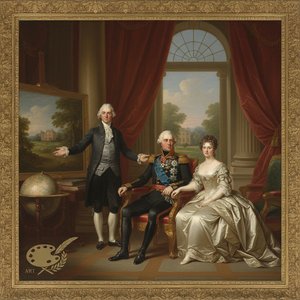
Sir William Beechey's "Edward Simeon," completed in 1808, stands as a testament to the elegance and intellectual curiosity of Georgian England. More than just a likeness of Edward Simeon, a prominent British diplomat and scholar, this portrait embodies a profound exploration of character and aspiration within the framework of its time. Painted during a period marked by burgeoning Enlightenment ideals and aristocratic patronage, Beechey’s work transcends mere representation to convey an atmosphere of contemplative seriousness—a quality that continues to resonate with viewers today.The Artist's Vision: Style and Technique
Beechey was renowned for his meticulous attention to detail and his ability to capture the subtle nuances of human emotion through masterful brushwork. His style leaned towards a restrained realism, prioritizing accuracy in anatomical rendering alongside careful consideration of lighting and drapery. The painting utilizes chiaroscuro—the dramatic interplay between light and shadow—to sculpt Simeon’s form and imbue the scene with depth. Notice how Beechey skillfully employs tonal gradations to illuminate Simeon's face, highlighting his gaze and conveying an inner stillness that speaks volumes about his contemplative nature. The artist’s technique is characterized by smooth blending and delicate layering of pigments, resulting in a surface texture that possesses both luminosity and tactile richness.Historical Context: Georgian Society and Portraiture
The portrait reflects the social conventions of Georgian Britain—a society obsessed with status and refinement. Simeon's dignified posture and gaze are indicative of the aristocratic ideal of virtue and intellect prevalent during the reign of George III. Commissioned by influential figures like Simeon, Beechey’s portraits served not only as visual records but also as symbols of prestige and social standing. They were intended to project an image of success and erudition—qualities highly valued within the intellectual circles of London at the time. Furthermore, Beechey's work aligns with the broader artistic trends of the era, which favored idealized depictions of individuals and landscapes alike.Symbolism Within the Composition
Beyond its formal execution, “Edward Simeon” is laden with symbolic elements that enrich its meaning. The red curtain serves as a visual barrier—representing both privacy and theatricality—drawing attention to Simeon’s central figure while simultaneously hinting at the performance of identity within social contexts. The books positioned strategically around Simeon's chair symbolize knowledge and intellectual pursuits, reinforcing his role as a learned diplomat and scholar. These objects are not merely decorative; they actively contribute to conveying the sitter’s character and aspirations—a hallmark of Beechey’s artistic approach.Emotional Impact: Capturing Inner Serenity
Ultimately, Beechey succeeds in capturing an elusive quality—inner serenity—that transcends mere visual representation. The portrait invites contemplation, prompting viewers to consider Simeon's gaze and posture as expressions of profound thoughtfulness. It speaks to the desire for dignified reflection—a virtue celebrated throughout Georgian society. “Edward Simeon” remains a captivating artwork because it captures not just a likeness but also an essence—a testament to Beechey’s artistic genius and his ability to convey complex emotions through subtle visual cues. Its enduring appeal lies in its capacity to transport us back to a bygone era while simultaneously reminding us of the timeless pursuit of intellectual integrity and contemplative grace.Biografia do Artista
Early Life and Artistic Beginnings
Sir William Beechey, born December 12, 1753, in the quaint Oxfordshire town of Burford, embarked on a life that would see him become a prominent figure in British portraiture. His early years were marked by tragedy; both his parents passed away while he was still young, leaving his upbringing to the care of his uncle, Samuel Beechey, a solicitor. Initially destined for a legal career, young William’s heart lay elsewhere—in the captivating world of art. Despite his uncle's aspirations, Beechey gravitated towards painting, an inclination that ultimately led him to London and admission into the Royal Academy Schools in 1772. This marked a pivotal moment, placing him within the orbit of established artists and setting the stage for his artistic development. His early training likely benefited from the guidance of Johan Zoffany, though concrete evidence remains elusive, shaping his initial style towards small-scale full-length portraits and intimate conversation pieces reminiscent of Zoffany’s own work.A Rising Star: Norwich and London
Beechey's artistic journey took him to Norwich in 1782, where he established a foothold as a portraitist among the region’s gentry. He secured commissions for portraits of prominent figures like John Wodehouse, and notably contributed four works to the collection of civic portraits at St Andrew’s Hall—a testament to his growing reputation. However, London beckoned, and in 1787 he returned to the capital, determined to make his mark on a larger stage. The late 1780s saw Beechey steadily gaining recognition, exhibiting works that showcased his developing skill and refined technique. A turning point arrived with his portrait of John Douglas, Bishop of Carlisle, exhibited in 1789—a work that garnered considerable attention and solidified his position within the London art scene. He skillfully navigated the conventions of the time, drawing inspiration from masters like Joshua Reynolds while forging a style uniquely his own.Royal Patronage and National Recognition
The year 1793 proved transformative for Beechey. Through a fortunate turn of events—a disgruntled sitter bringing his portrait to the attention of King George III and Queen Charlotte—Beechey found himself appointed as Queen Charlotte’s official portrait painter. This royal endorsement catapulted him into the upper echelons of artistic society, opening doors to a stream of prestigious commissions. He was elected an associate member of the Royal Academy that same year, further cementing his status. The following year brought even greater acclaim; in 1798, he painted *George III and the Prince of Wales Reviewing Troops*, a large-scale composition that earned him a knighthood and full membership to the Royal Academy. Though tragically lost in the 1992 Windsor Castle fire, this work exemplified Beechey’s ability to handle grand historical scenes alongside his more intimate portraiture. His success during this period was not merely artistic; it was deeply intertwined with the social and political landscape of Britain, reflecting a growing national pride and a flourishing aristocratic culture.Style, Legacy, and Lasting Influence
Beechey’s style is characterized by its refined elegance, subtle coloring, and meticulous attention to detail. He favored neoclassical compositions, often depicting his sitters in graceful poses reminiscent of classical sculpture. While not a radical innovator like some of his contemporaries—such as Thomas Lawrence—his consistent quality and ability to capture the likeness and character of his subjects earned him widespread acclaim. His portraits possess a dignified restraint, avoiding excessive drama or flamboyant flourishes. This approach appealed particularly to the royal family and the upper classes, who valued decorum and understated elegance. Despite some criticism leveled by Samuel Redgrave in 1890—who found Beechey’s work lacking in grace and his drapery somewhat clumsy—Beechey maintained a respectable position among British portraitists. His works continue to be celebrated for their technical skill and insightful portrayals of prominent figures from the late 18th and early 19th centuries, including Lord Nelson, John Kemble, and Sarah Siddons. *His legacy endures not only through his paintings but also as a testament to the enduring power of portraiture in capturing the spirit of an era.*Family and Further Contributions
Beechey’s personal life was marked by both joy and sorrow. He married Mary Ann Jones in 1778, and following her death, he wed Anne Phyllis Jessop, a successful miniature painter, in 1793. Through these unions, he fathered several children who also pursued artistic careers. His sons, Henry William Beechey—a painter and explorer—and Frederick William Beechey—a naval officer, geographer, and writer—carried on the family tradition of creative endeavor. *Beechey’s influence extended beyond his own paintings; he was known for his generosity towards aspiring artists, particularly John Constable, whom he mentored.* He retired to Hampstead in 1836, where he passed away in 1839, leaving behind a rich artistic legacy that continues to captivate and inspire. His contributions to British art remain significant, offering valuable insights into the lives and times of those who shaped the nation’s history.
Sir William Beechey
1753 - 1839 , Reino Unido
Informações Rápidas
- Artistic Movement Or Style: Neoclassicismo
- Artists Or Movements Influenced By This Artist: ['Samuel Redgrave']
- Artists Who Influenced This Artist:
- Johan Zoffany
- Joshua Reynolds
- Date Of Birth: 12 de dezembro 1753
- Date Of Death: 28 de janeiro 1839
- Full Name: Sir William Beechey
- Nationality: Britânico
- Notable Artworks:
- Retrato da Duquesa de York
- Revisão de Cavalaria
- Place Of Birth: Burford, Reino Unido
Artigos Relacionados
Timeless Elegance: The Art and Legacy of Classical Portraiture
Explore the profound legacy of classical portraiture. From the dramatic chiaroscuro of the Old Masters to exquisite hand-painted oil reproductions, discover how timeless elegance and masterful technique continue to inspire collectors and art enthusiasts worldwide.
Sir William Beechey: Portraiture, Patronage & Shaping Georgian Society
Explore the life & art of Sir William Beechey, a leading British portraitist of the Georgian era. Discover his royal commissions, aristocratic subjects, and lasting influence on 18th-century painting. Learn more at OriginalUniqueArt.
Os 10 Grandes Mestres do Neoclassicismo: Arte, História e Decoração
Descubra os 10 maiores mestres do Neoclassicismo! Explore a história, técnica e beleza de obras icônicas de David, Ingres e Canova. Encontre reproduções de arte neoclássica para decorar sua casa com elegância em OriginalUniqueArt.com.
Sir Nathaniel Dance-Holland: Portraiture, Patronage & Georgian Identity
Explore the life & art of Sir Nathaniel Dance-Holland, a leading Georgian portraitist. Discover his masterful technique, influential patrons, and lasting impact on 18th-century British society. A guide for discerning collectors.
John Hoppner: Portraiture, Patronage & British Identity in the Late Georgian Era
Explore the life & work of John Hoppner, a leading Georgian portraitist. Discover his vibrant style, influential patrons, and lasting impact on British art history. Expert insights for collectors.

