
 Visualizar na parede
 Compartilhar
 Compartilhar
 Detalhes
 Guia
Guia

 Baixar imagem
 Semelhantes
 Raio X
 Ver diaporama
 Q&A
Q&A Estatísticas
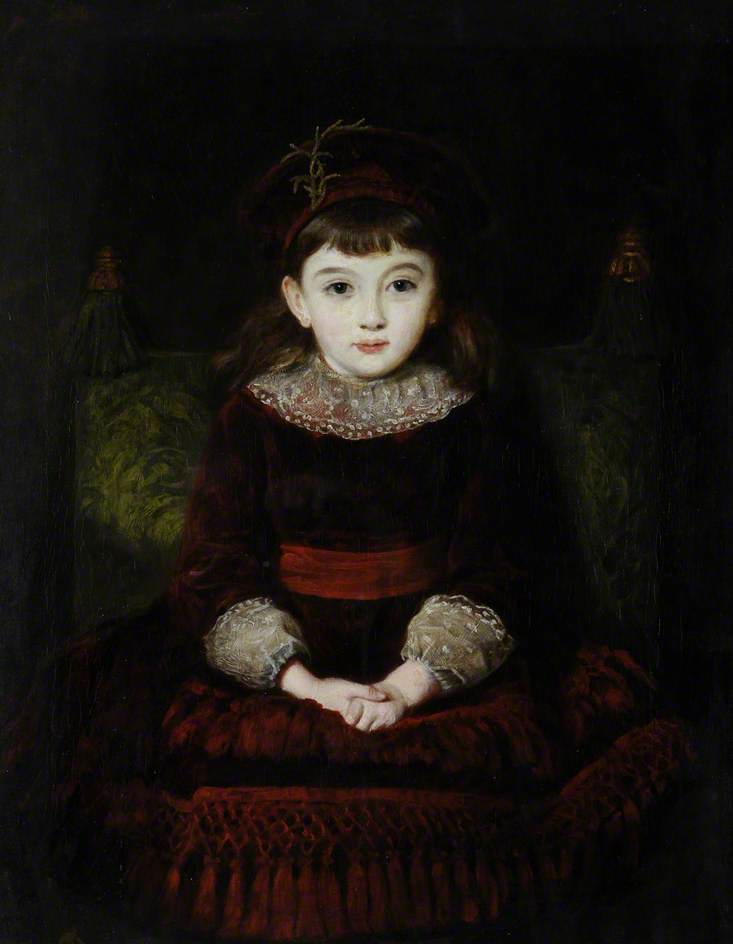
Sonhos Diurnos
 Acrílico sobre tela
- Arte de Parede
- Pre-Raphaelite Romanticism
 1874
1874 89.0 x 69.0 cm
 The Dick Institute
 Ler mais
Obtenha um arquivo pronto para impressão que vai muito além da visualização na web. Cada imagem digital que vendemos provém de um arquivo mestre de alta resolução em nosso banco de dados — geralmente entre 5.000 e 15.000 pixels de largura — para que você possa imprimir em grandes formatos, realizar cortes precisos ou reproduzir detalhes minuciosos com total confiança.
Nenhum arquivo sai do nosso estúdio sem passar por um cuidadoso processo de revisão. Um especialista digital verifica as cores em relação à pintura original e as corrige se necessário, aumentando então a clareza e o detalhe com ferramentas profissionais de retoque — sempre mantendo a fidelidade às pinceladas e ao estilo do artista. O resultado é uma imagem que se assemelha à pintura, e não a um scan com filtros.
Aprovação antes da finalização: nosso especialista enviará a imagem por e-mail em até 72 horas para sua revisão. Não ficou satisfeito? Solicite melhorias ou correções, ou peça o reembolso caso a qualidade não atenda às suas expectativas.
Esta é a qualidade em que confiam editoras, estúdios de design, galerias e gráficas.
Imagem Digital
Baixe um arquivo de alta resolução para exibição pessoal, impressão e projetos criativos. ( Alternar para Impressão Comprar pintura feita à mão)
Incluído em cada compra de imagem digital
Entrega Digital Especializada e Garantida
Ao escolher o OriginalUniqueArt.com, você não está apenas adquirindo uma imagem — você está recebendo uma obra de arte digital profissionalmente aprimorada, elaborada com precisão e com garantia de satisfação. Aqui está tudo o que acompanha seu pedido, automaticamente:

Entrega rápida por e-mail
O seu arquivo de imagem digital em alta resolução será enviado por e-mail em até 72 horas após o pedido — pronto para uso imediato.

Arquivo Digital com IA Otimizado
Sua obra de arte é otimizada profissionalmente por meio de ferramentas avançadas de IA e edição manual, garantindo o máximo de detalhes, clareza e precisão de cores.

Reenvio gratuito vitalício
Apagou ou perdeu o seu ficheiro acidentalmente? Não se preocupe – nós reenviamos para si a qualquer momento, gratuitamente.

Sem Taxas de Importação - Sempre
Desfrute da sua obra de arte instantaneamente, sem taxas alfandegárias, impostos ou custos de entrega — downloads digitais são sempre isentos de taxas.

Garantia de Fidelidade de Cores
Garantimos que sua imagem digital reflita as cores originais com a maior fidelidade possível, utilizando ferramentas profissionais e gerenciamento de cores.

Garantia de satisfação de 100 dias
Se não estiver satisfeito com a sua imagem digital, nós a revisaremos ou reembolsaremos 100% dentro de 100 dias — sem perguntas.

Garantia de Reembolso 100%
Não está satisfeito? Receba o reembolso total em até 100 dias após o recebimento do seu arquivo digital — sem perguntas.

Descontos para pedidos em lote
Compre 3 imagens, economize 10% - Compre 5, economize 15% - Compre 10+, economize 20%. Ideal para projetos criativos, galerias e agências.
A Window into Victorian Soul: Examining Millais’s “Day Dreams”
Sir John Everett Millais’s “Day Dreams,” completed in 1874, stands as a quintessential emblem of Pre-Raphaelite art—a movement that vehemently rejected the idealized conventions of academic painting and championed meticulous observation alongside profound emotional resonance. More than just a depiction of a young girl seated serenely in a chair, this canvas embodies a complex tapestry of artistic innovation and Victorian sensibilities.
- Subject Matter & Context: The portrait captures Eliza Calvert Wright, daughter of prominent botanist John William Wright, amidst a meticulously recreated meadow scene. This deliberate choice wasn’t merely decorative; it served as a cornerstone of the Pre-Raphaelite ethos – an insistence on grounding artistic vision in direct engagement with nature and capturing its beauty with uncompromising realism. The Victorian era was deeply invested in portraying domestic tranquility and moral virtue, mirroring the Wright family's values.
- Style & Technique: Millais’s mastery lies in his painstaking technique—oil paint applied with precise brushstrokes onto canvas—a method that allowed for unparalleled textural detail. Glazes were skillfully employed to imbue the colors with luminosity and depth, capturing the subtle nuances of light filtering through the foliage. This dedication to realism distinguishes “Day Dreams” from its predecessors and firmly establishes it within the Pre-Raphaelite canon.
- Composition & Visual Elements: The composition prioritizes stillness and contemplation, centering on Eliza’s figure against a dark backdrop that emphasizes her presence. Lines delineate the contours of her face, dress, and chair with deliberate precision, highlighting the importance of form and structure. Geometric shapes are minimal, providing contrast to the flowing drapery—a characteristic feature of Pre-Raphaelite art.
- Color Palette & Texture: The color palette utilizes rich reds, browns, creams, and subtle greens, creating a mood of subdued elegance. Millais’s meticulous rendering of textures – velvet dress fabric, lace collar and sleeves, plush chair upholstery—is breathtaking. He achieved this remarkable level of detail by painstakingly layering paint to simulate the tactile qualities of each surface.
- Symbolism & Emotional Impact: Beyond its visual splendor, “Day Dreams” speaks volumes about Victorian ideals of femininity and inner life. Eliza’s gaze directs inward, suggesting a preoccupation with thoughts and emotions—a reflection of the Pre-Raphaelites' fascination with psychological depth. The painting evokes feelings of serenity, introspection, and perhaps a hint of melancholy, prompting viewers to contemplate themes of innocence, beauty, and contemplation.
“Day Dreams” remains an enduring masterpiece—a testament to Millais’s artistic genius and the Pre-Raphaelite movement's unwavering commitment to truthfulness and emotional expression. Its exquisite detail and evocative atmosphere continue to inspire admiration and offer a captivating glimpse into Victorian culture.
Perguntas e Respostas
Onde posso encontrar obras de arte semelhantes a "Sonhos Diurnos", de Sir John Everett Millais?
A página Obras semelhantes de "Sonhos Diurnos", de Sir John Everett Millais apresenta obras relacionadas.
Qual técnica foi utilizada em "Sonhos Diurnos", de Sir John Everett Millais?
Sir John Everett Millais utilizou a técnica de Acrílico sobre tela para "Sonhos Diurnos". A técnica define a natureza material da obra original.
Qual ambiente combina com as cores de "Sonhos Diurnos", de Sir John Everett Millais?
Com sua paleta Tons terrosos, "Sonhos Diurnos", de Sir John Everett Millais é recomendado para um Sala de Estar. As cores são parte do motivo desta sugestão.
Biografia do Artista
A Prodigy of the Pre-Raphaelites: The Life and Art of Sir John Everett Millais
Born in Southampton in 1829, John Everett Millais entered the Royal Academy Schools at the astonishing age of eleven—the youngest student ever admitted. This early demonstration of prodigious talent foreshadowed a career that would not only define an artistic movement but also capture the Victorian imagination with its breathtaking realism and emotional depth. From his earliest days, Millais possessed a remarkable gift for observation, a quality that would become the cornerstone of his artistic style. He wasn’t merely painting what he saw; he was meticulously recreating it, imbuing each brushstroke with an almost photographic fidelity. This dedication to truth in representation set him apart and ultimately led him to challenge the established conventions of British art.The Birth of a Brotherhood and Artistic Rebellion
Millais’s artistic trajectory took a pivotal turn in 1848 when, alongside Dante Gabriel Rossetti and William Holman Hunt, he founded the Pre-Raphaelite Brotherhood. This wasn't simply an aesthetic choice; it was a deliberate rebellion against what they perceived as the artificiality of academic art—art that had strayed too far from the natural world and the sincerity of early Renaissance masters, those working *before* Raphael. The Pre-Raphaelites sought to revive the clarity, detail, and vibrant color palettes of artists like Jan van Eyck and Fra Angelico. Their manifesto was one of truth to nature, a rejection of idealized forms, and an embrace of subjects drawn from literature, mythology, and everyday life. Millais’s early works, such as Isabella, immediately showcased this new approach—a meticulous attention to detail combined with a narrative intensity that captivated and often provoked audiences. His most controversial work during this period, Christ in the House of His Parents (1849-50), depicted the Holy Family not as ethereal beings but as ordinary working-class people, sparking outrage among critics who found its realism unsettling and even blasphemous. The painting’s depiction of Jesus as a young carpenter, his mother Mary tending to the household chores, and Joseph engaged in manual labor directly contradicted traditional religious iconography, forcing viewers to confront the humanity of Christ in a way they had never experienced before.Evolving Styles and Victorian Sensibilities
The mid-1850s marked a period of significant change for Millais, both personally and artistically. His marriage to Effie Gray, following the annulment of her marriage to John Ruskin, profoundly influenced his work. He moved away from the intensely detailed, symbolic style of his early Pre-Raphaelite paintings towards a broader, more atmospheric realism. This shift wasn’t simply a matter of stylistic preference; it reflected a growing engagement with contemporary life and a desire to capture the fleeting beauty of the natural world. Paintings like Autumn Leaves exemplify this new direction—a serene depiction of a group of young women drifting leaves on a river, imbued with a sense of melancholy and nostalgia. He also found considerable success as a portraitist, capturing the likenesses of prominent Victorian figures, including John Gladstone and Benjamin Disraeli. This period saw Millais achieve widespread popularity and financial security, but it also drew criticism from some who felt he had compromised his artistic principles.Iconic Works and Lasting Influence
Millais’s career spanned several decades, producing a vast body of work that continues to be celebrated for its beauty, technical skill, and emotional resonance. Ophelia (1851-1852), perhaps his most famous painting, remains an enduring symbol of Victorian art—a hauntingly beautiful depiction of the tragic heroine drowning in a river, surrounded by a profusion of wildflowers. The painting’s meticulous detail, its evocative use of color, and its poignant portrayal of loss have captivated audiences for generations. A Huguenot (1851-1852), depicting a scene of religious persecution, showcases Millais's ability to capture dramatic emotion and narrative intensity. Mariana (1850-1851), inspired by Tennyson’s poem, is a masterful study of light and atmosphere, capturing the mood of quiet contemplation. Throughout his career, Millais consistently demonstrated an extraordinary eye for detail, a deep understanding of color theory, and a remarkable ability to evoke emotion through his art. His work profoundly influenced subsequent generations of artists, shaping the course of British painting in the late 19th century and beyond.Legacy and Historical Context
Sir John Everett Millais’s legacy extends far beyond his individual achievements as an artist. He played a crucial role in establishing the Pre-Raphaelite Brotherhood as a significant force in Victorian art, challenging established conventions and advocating for a return to the principles of early Renaissance painting. His willingness to depict ordinary people in realistic settings, his embrace of contemporary subjects, and his commitment to truth in representation helped to redefine the standards of British art. In 1896, he was elected President of the Royal Academy, a remarkable honor that reflected his enduring influence on the artistic community. Millais’s paintings continue to be exhibited in museums around the world, inspiring admiration for their beauty, technical skill, and emotional depth—a testament to the lasting power of his art and its profound impact on the Victorian imagination.
Sir John Everett Millais
1829 - 1896 , Reino Unido
Breve Biografia
- Artistic Movement Or Style: Pre-Rafaelita, Realismo
- Artists Or Movements Influenced By This Artist: ['Pre-Rafaelitas']
- Artists Who Influenced This Artist: ['Pre-Rafaelitas']
- Date Of Birth: 8 de junho de 1829
- Date Of Death: 13 de agosto de 1896
- Full Name: Sir John Everett Millais
- Nationality: Britânico
- Notable Artworks:
- Ophelia
- Cristo...
- A Huguenot
- Place Of Birth: Southampton, Reino Unido