

 Visualizar em escala
 Enviar
 Compartilhar
 Ver detalhes
 Guia de Obras do Aluno

 Baixar imagem
 Semelhantes
 Raio X
 Apresentação de slides
 Estatísticas
Mrs Livesay


 Ver mais
Reprodução em Óleo Feita à Mão
Óleo sobre tela pintado à mão no tamanho e moldura de sua escolha, feito sob encomenda pelos nossos artistas. ( Alternar para Impressão Ver Imagem Digital)




P118B €10

P118H €10

P118W €10

P438Z €10

P508JH €12

P508YH €12

P805H €10

P805Z €10

P919BZ €10

P919G €10

P919XJ €10

P959ZH €10

P968JZ €12

W106C €8

W218G €10

W218JH €8

W218Y €10

W307PJ €10

W316G €10

W316PJ €8

W316Y €10

W398PJ €8

W4111J €10

W500HY €15

W500JH €15

W692G €12

W849H €8

W940BG €15

W953PJ €8




Escolha entre os nossos tamanhos pré-definidos que respeitam as proporções originais da obra de arte.

Digite a largura e a altura de que necessita, para se ajustar à sua moldura ou à sua parede. Esta obra é pintada à mão, por isso, para um tamanho com uma proporção diferente, o artista pode pintar um pouco mais ao redor da imagem ou cortar um pouco — você escolhe. Enviamos-lhe uma maquete digital para aprovação antes de a pintura começar. A imagem exibida nesta página não mostra o resultado real — apenas a maquete mostra.
Após o pedido, a equipa OriginalUniqueArt.com enviará um e-mail ao cliente para solicitar instruções e fornecer uma prévia do esboço.
Entrega mundial () em 3 a 4 semanas, em vez das 5 semanas padrão. (24 Outubro). Sem comprometer a qualidade.

Envio expresso gratuito para todo o mundo

Tela de Linho Premium

Seguro de transporte total

Garantia de Reembolso de Impostos Alfandegários

Garantia de Fidelidade de Cor

Política de Devolução em 100 Dias (Apenas para Defeitos)

Garantia de reembolso de 100%

Desconto para múltiplas unidades
 A opção de vidro está disponível apenas para tamanhos inferiores a 110 cm

Mrs Livesay
Técnica de Reprodução
Dimensões da Reprodução
-


Preço Total
€ 263
A Portrait of Quiet Dignity
Sir Francis Grant’s 1851 masterpiece, “Mrs Livesay,” serves as a profound testament to the Victorian era's fascination with refined beauty and intellectual depth. In this exquisite oil on canvas, we encounter a woman of considerable social standing, captured in a moment of serene contemplation. Seated beneath the gentle canopy of a blossoming tree, Mrs. Livesay is not merely a subject of a likeness, but an embodiment of contemplative serenity. The painting invites the viewer into her private world, where the rustle of leaves and the turning of a page are the only sounds to break the stillness of a garden setting.
The composition employs a classic three-quarter pose that prioritizes intimacy, drawing the eye directly to the subject's downward gaze. As she holds an open book in her lap, the act of reading becomes a powerful symbol of knowledge, learning, and intellectual refinement. This focus on the internal life of the sitter is beautifully framed by the natural world; the soft, organic shapes of the tree branches overhead create a protective, almost sacred space around her. The subtle recession of the landscape background, rendered in hazy greens and browns, utilizes atmospheric perspective to create a shallow depth of field, ensuring that the viewer's emotional connection remains anchored to the subject herself.
Mastery of Light and Texture
Grant’s technical prowess is on full display through his masterful use of color and light. The palette is elegantly muted, dominated by sophisticated creams, soft blues, and whites in Mrs. Livesay’s attire, which provides a luminous contrast against the bold, rich red drapery upon which she rests. This interplay of tones is further enriched by the artist's ability to manipulate texture through delicate brushwork. One can almost feel the smooth, flowing surface of her dress juxtaposed against the more tactile, textured foliage of the surrounding garden.
The lighting within the piece is soft and diffused, acting as a gentle spotlight that illuminates the most expressive elements of the portrait: Mrs. Livesay's face and hands. This careful attention to light and shadow allows for subtle gradations in skin tone, lending a lifelike realism to her features. For collectors and interior designers alike, this painting offers more than just visual beauty; it provides an atmosphere of grace and tranquility. Whether placed in a sunlit study or a formal drawing room, a high-quality reproduction of “Mrs Livesay” brings with it a sense of historical prestige and a timeless, quiet elegance that resonates deeply within any sophisticated space.
Perguntas e Respostas
Onde posso encontrar estatísticas sobre "Mrs Livesay" de Sir Francis Grant?
As estatísticas sobre "Mrs Livesay" de Sir Francis Grant encontram-se na página de Estatísticas da obra: visitas mensais da obra, visitas às obras do artista e o detalhamento por país e idioma dos visitantes recentes.
Como "Mrs Livesay" equilibra luz e sombra?
"Mrs Livesay" possui shadow de brilho geral, e sua luminância é Soft Shadow.
Onde posso comprar uma reprodução pintada à mão de "Mrs Livesay" de Sir Francis Grant?
Cópias pintadas à mão de "Mrs Livesay" de Sir Francis Grant são vendidas no este site: uma reprodução a óleo pintada à mão sobre tela de linho, encomendadas através da sua página Reprodução Pintada à Mão.
Biografia do Artista
A Life Dedicated to Portraiture and the Academy
Sir Francis Grant, a name synonymous with refined portraiture and dedicated service to the British art establishment, emerged as one of the most sought-after artists of his era. Born in 1803 into a landed family in Perthshire, Scotland, young Francis initially seemed destined for a career in law. However, the allure of artistic expression proved too irresistible to resist. Though largely self-taught, he briefly studied under Alexander Nasmyth in Edinburgh, laying an early foundation before forging his own distinctive path. This path wasn’t immediately apparent; Grant's initial successes came with sporting scenes, capturing the energy and vibrancy of rural life – a fascination that would inform much of his artistic vision throughout his career. A pivotal moment arrived through his marriage, granting him access to the exclusive world of Melton Mowbray’s hunting set. There, he honed his skills under John Ferneley, a master of equestrian art, and began to specialize in depictions of horses and hounds – subjects that would initially define his reputation and establish him as a prominent figure within the British artistic landscape.Early Artistic Explorations: Sporting Scenes and Impressionistic Beginnings
Grant’s early canvases pulsed with dynamism and meticulous detail, reflecting Ferneley's influence and capturing the thrill of the hunt with remarkable accuracy. *Melton Breakfast* (1834), arguably his most celebrated work, exemplifies this style – a masterful composition brimming with light and shadow that conveys both the physicality of the scene and its emotional intensity. This initial focus on sporting subjects wasn’t merely a stylistic choice; it represented a broader engagement with the natural world and an appreciation for the traditions of rural England. However, Grant's artistic journey wouldn’t be confined to landscapes alone. Influenced by Impressionism – particularly by artists like Claude Monet – he began experimenting with looser brushstrokes and brighter palettes, subtly incorporating these techniques into his portraits as well. This blending of styles demonstrates Grant’s adaptability and willingness to embrace new artistic trends while retaining his core aesthetic sensibilities.The Aristocratic Portraiture: Capturing Character and Status
Grant's true mastery lay in his ability to portray individuals with profound insight – capturing not just their physical likeness but also their inner character and social standing. He possessed an uncanny knack for conveying emotion and nuance, transforming mere portraits into windows onto the souls of his subjects. This skill proved invaluable during a period when visual representation served as a powerful tool for asserting identity and prestige. Commissions poured in from the British aristocracy and political elite – individuals who sought to immortalize their achievements and solidify their positions within society. Among these prestigious commissions was undoubtedly the portrait of Queen Victoria herself (1842), an undertaking that cemented Grant’s reputation as one of the foremost portraitists of his time. This monumental canvas showcases Grant's technical prowess alongside his artistic sensitivity, skillfully conveying Victoria’s regal bearing and inner dignity. The painting is considered a masterpiece of Victorian art history, embodying the grandeur and formality of the era.Neoclassical Elegance Meets Romantic Sentimentality
Grant’s artistic style blended Neoclassical elegance with a touch of Romantic sentimentality – a harmonious fusion that distinguishes him from many of his contemporaries. He drew inspiration from classical sculpture and architecture, prioritizing balance and proportion in his compositions. Yet, he also embraced the expressive power of Romanticism, utilizing dramatic lighting and rich color to evoke emotion and convey psychological depth. This duality is evident throughout his oeuvre, particularly in portraits depicting women – where Grant skillfully captured both their beauty and vulnerability. His technique involved meticulous layering of paint—a hallmark of Neoclassical painting—combined with subtle tonal variations that imbue his canvases with warmth and luminosity. He achieved this effect through careful observation and painstaking execution, demonstrating a dedication to craftsmanship that elevated his work beyond mere likeness.Presidency at the Royal Academy: Shaping Artistic Discourse
Grant’s artistic accomplishments culminated in his election as President of the Royal Academy in 1866 – an honor bestowed upon him by his peers recognizing not only his artistic talent but also his distinguished service to the art world. This prestigious position marked a pivotal moment in Grant's career and solidified his legacy as a champion of innovation and tradition alike. During his tenure, he championed the institution’s commitment to fostering artistic excellence while simultaneously advocating for greater public engagement with art. Notably, Grant instituted a groundbreaking practice: the holding of major loan exhibitions – ambitious undertakings that broadened the Academy’s reach and influence and brought together masterpieces from across Europe. This initiative challenged conventional notions of artistic patronage and encouraged dialogue about art history and aesthetics. His leadership ensured that the Royal Academy remained at the forefront of British cultural life for decades to come, cementing Grant's place as a transformative figure in Victorian art history. He died peacefully in 1878, leaving behind an enduring body of work—a testament to his unwavering devotion to artistic excellence and his profound contribution to British culture.
Sir Francis Grant
1803 - 1878 , Reino Unido
Informações Rápidas
- Artistic Movement Or Style: Neoclássico, Romantismo
- Artists Or Movements Influenced By This Artist:
- Martin Archer Shee
- Solomon Hart
- Artists Who Influenced This Artist:
- Alexander Nasmyth
- John Ferneley
- Date Of Birth: Janeiro 18, 1803
- Date Of Death: Outubro 5, 1878
- Full Name: Sir Francis Grant
- Nationality: Escocês
- Notable Artworks:
- Melton Breakfast
- Lady Glenlyon
- Rainha Vitória Montando
- Place Of Birth: Escócia (Perthshire)
Artigos Relacionados
Reflections of an Era: Identity & Social Commentary in 19th-Century Portraiture
Explore the captivating world of 19th-century portraiture! Discover key artists, movements like Realism & Impressionism, and the powerful social commentary embedded within these iconic artworks. Expert insights at OriginalUniqueArt.
Francis Bacon: As 25 Obras Essenciais do Mestre da Angústia – OriginalUniqueArt
Descubra as 25 obras mais impactantes de Francis Bacon, o mestre da angústia e do expressionismo. Explore a história por trás dos retratos icônicos, cores vibrantes e emoções intensas. Encontre reproduções de arte exclusivas para transformar sua casa em OriginalUniqueArt.com!
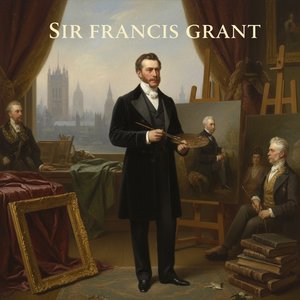
Sir Francis Grant: Portraiture, Patronage & Victorian Society
Explore the life & work of Sir Francis Grant, a leading Victorian portraitist. Discover his aristocratic clientele, role at the Royal Academy, and enduring artistic legacy. Learn about art patronage in 19th-century Britain.

As 25 Obras-Primas de Alfred Munnings: Arte Equina e a Alma Inglesa | OriginalUniqueArt
Descubra as 25 obras-primas de Alfred Munnings, o mestre da pintura equina e da alma inglesa. Explore a história, técnica e beleza atemporal de cada quadro. Reproduções de arte exclusivas em OriginalUniqueArt.com! Explore a coleção online.
Sir Joshua Reynolds: 25 Obras-Primas que Definem um Ícone da Arte Britânica | OriginalUniqueArt
Descubra as 25 obras-primas de Sir Joshua Reynolds, o mestre dos retratos ingleses do século XVIII. Explore a elegância neoclássica e a história por trás de cada pintura. Reproduções de arte exclusivas em OriginalUniqueArt.com!

