
 Visualizar em escala
 Enviar
 Compartilhar
 Ver detalhes
 Guia de Obras do Aluno

 Baixar imagem
 Semelhantes
 Raio X
 Apresentação de slides
 Estatísticas
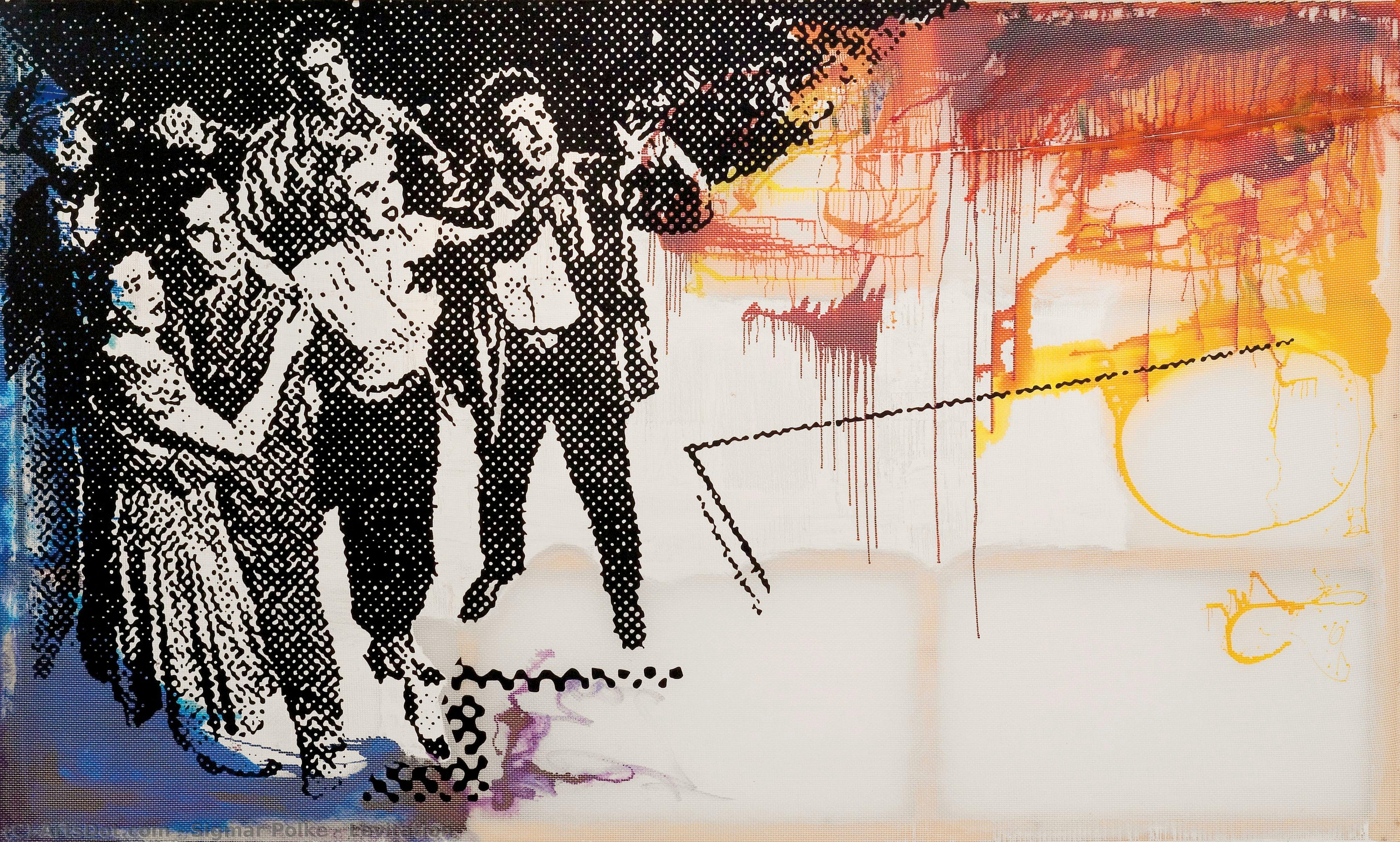
Levitation
 Encaustic
- WallArt
- Post-Impressionism
 2005
2005- Contemporary
 300.0 x 500.0 cm
 Kunsthaus Zürich
 Ver mais
Adquira uma imagem digital de alta resolução e aprimorada, muito superior à prévia online.
Cada arquivo é meticulosamente preparado por nossos especialistas internos, utilizando ferramentas avançadas e retoques manuais de alta precisão. Garantimos que cada imagem apresente clareza excepcional, fidelidade de cores e detalhes minuciosos.
O arquivo final é entregue por e-mail em até 72 horas, otimizado para uso imediato em ambientes profissionais, editoriais e de impressão. Esta é a mesma qualidade utilizada por estúdios de design de alto nível, editoras e galerias.
Imagem Digital
Baixe um arquivo de alta resolução para exibição pessoal, impressão e projetos criativos. ( Alternar para Impressão Encomendar reprodução pintada à mão)
Incluído em cada pedido de imagem digital
Entrega Digital Especializada e Garantida
Ao escolher o OriginalUniqueArt.com, você não está apenas adquirindo uma imagem — você está recebendo uma obra de arte digital profissionalmente aprimorada, elaborada com precisão e com garantia de satisfação. Aqui está tudo o que acompanha seu pedido, automaticamente:

Entrega rápida por e-mail
O seu arquivo de imagem digital em alta resolução será enviado por e-mail em até 72 horas após o pedido — pronto para uso imediato.

Arquivo Digital com IA Otimizado
Sua obra de arte é otimizada profissionalmente por meio de ferramentas avançadas de IA e edição manual, garantindo o máximo de detalhes, clareza e precisão de cores.

Reenvio gratuito vitalício
Apagou ou perdeu o seu ficheiro acidentalmente? Não se preocupe – nós reenviamos para si a qualquer momento, gratuitamente.

Sem Taxas de Importação - Sempre
Desfrute da sua obra de arte instantaneamente, sem taxas alfandegárias, impostos ou custos de entrega — downloads digitais são sempre isentos de taxas.

Garantia de Precisão de Cores
Garantimos que sua imagem digital reflita as cores originais com a maior fidelidade possível, utilizando ferramentas profissionais e gerenciamento de cores.

Garantia de satisfação de 100 dias
Se não estiver satisfeito com a sua imagem digital, nós a revisaremos ou reembolsaremos 100% dentro de 100 dias — sem perguntas.

Garantia de Reembolso 100%
Não está satisfeito? Receba o reembolso total em até 100 dias após o recebimento do seu arquivo digital — sem perguntas.

Descontos para pedidos em lote
Compre 3 imagens, economize 10% - Compre 5, economize 15% - Compre 10+, economize 20%. Ideal para projetos criativos, galerias e agências.
A Vision Suspended in Time: The Enigmatic World of Sigmar Polke
In the vast landscape of contemporary art, few names resonate with as much mystery and technical audacity as Sigmar Polke. His masterpiece, Levitation, created in 2005, serves as a profound meditation on the very nature of perception. At first glance, the viewer is met with a seemingly banal tableau—a table laden with objects that ground the scene in reality—yet this familiarity is quickly subverted by an underlying sense of existential weight. A group of figures stands before this arrangement, their faces captured in a moment of shared perplexity and quiet observation. It is a scene that feels simultaneously frozen in a cinematic still and vibrating with the tension of an unfolding drama, inviting those who gaze upon it to question what is truly visible and what remains hidden beneath the surface of our daily lives.
The emotional resonance of Levitation lies in its ability to evoke a sense of profound displacement. Polke, whose early life was shaped by the tumultuous migrations of post-war Europe, infused his work with a lifelong skepticism toward fixed truths. In this monumental canvas, measuring an imposing 300 x 500 cm, that skepticism transforms into a haunting beauty. The artwork does not merely depict a moment; it captures the feeling of being suspended between memory and reality, between the tangible world we touch and the ephemeral shadows of history that haunt our collective consciousness.
The Alchemy of Decay: Technique and Texture
To encounter Levitation is to witness a masterclass in the manipulation of medium. Polke’s distinctive style is a breathtaking blend of photographic realism and painterly abstraction, achieved through the demanding technique of encaustic. By layering beeswax, resin, and pigment, he creates a surface that possesses an almost organic vitality. This process allows for a luminous quality that seems to glow from within, yet it is simultaneously interrupted by subtle distress and fractures. These intentional imperfections imbue the work with an inherent sense of decay, mirroring the artist's preoccupation with the passage of time and the inevitable transformation of all things.
For the discerning collector or interior designer, this texture offers an unparalleled sensory experience. The way light interacts with the resinous layers creates a dynamic visual field that changes as one moves around the piece. It is not a static image but a living entity. This layering process serves as a metaphor for memory itself—built upon layers of experience, some bright and clear, others obscured by the weathered patina of time. The result is a work of art that demands presence, offering a sophisticated depth that elevates any space it inhabits.
Historical Echoes and Symbolic Depth
The historical context of Levitation adds a layer of poignant gravity to its visual splendor. Produced in the wake of the September 11th attacks, the painting reflects Polke’s broader engagement with global instability and the fragility of established narratives. By drawing inspiration from filmic conventions, he utilizes the language of mass media to heighten the emotional impact, prompting viewers to consider how much of our "reality" is actually a construction of the images we consume. The figures in the painting, caught in their moment of observation, act as proxies for the viewer, reflecting our own anxieties and our search for meaning in an increasingly fractured world.
Symbolically, the artwork operates on multiple planes. The table, with its collection of objects, represents the material world, while the title Levitation suggests a spiritual or psychological transcendence—a lifting away from the mundane into the realm of pure thought and perception. For those seeking to bring a piece of art history into their homes, this reproduction offers more than mere decoration; it provides a gateway to a complex dialogue about existence, loss, and the enduring power of the human gaze. It is an investment in a profound intellectual and aesthetic experience that continues to challenge and inspire.
Perguntas e Respostas
Quão saturada é a paleta de "Levitation"?
As cores de "Levitation" de Sigmar Polke possuem uma saturação Subtle Color. A saturação descreve o quão vívidas ou suaves são as cores.
De que forma o tema de "Levitation" se relaciona com os temas habituais de Sigmar Polke?
Entre os temas registrados de Sigmar Polke — experimentation, perception, surrealism, philosophical inquiry, critique, social commentary, protest, iconic image — "Levitation" traz seu próprio foco em painting, reflection, gravity, artist, witnesses, fabric, perspective.
Em que técnica foi executada a obra "Levitation" de Sigmar Polke?
"Levitation" é executada em Encaustic.
Biografia do Artista
Sigmar Polke (1941–2010) – Uma Vida Forjada na Dispersão: Os Primeiros Anos e a Formação Artística
Sigmar Polke’s artistic journey was profoundly shaped by the tumultuous currents of 20th-century history, beginning with his birth in Olsztyn, Poland, in 1941. His early life was marked by displacement; as a child, he fled with his family first to Thuringia and then, seeking refuge from Communist rule, to West Germany in 1953. This experience of being uprooted, of existing between worlds, instilled within him a lifelong skepticism towards fixed ideologies and a fascination with the instability of perception – themes that would become central to his art. Before dedicating himself fully to painting, Polke underwent an apprenticeship as a stained glass worker in Düsseldorf (1959-1960), a formative experience that honed his technical skill and introduced him to the possibilities of manipulating light and color. He then formally studied at the Kunstakademie Düsseldorf (1961-1967) under a constellation of influential figures: Karl Otto Götz, Gerhard Hoehme, and most significantly, Joseph Beuys. It was within this environment that Polke began to forge his unique artistic voice, one characterized by experimentation, irony, and a relentless questioning of established norms.Capitalista Realismo e a Subversão da Ideologia
Emerging in the early 1960s, Polke’s work quickly aligned with a burgeoning counter-cultural movement. In 1963, alongside Gerhard Richter, Konrad Lueg, and Manfred Kuttner, he co-founded *Kapitalistischer Realismo* (Capitalist Realism). This was not an artistic style in the traditional sense but rather a provocative gesture—a critique of both Western consumer culture and the rigid dogma of Soviet Socialist Realism. The movement’s name itself was deliberately ambiguous, suggesting that both systems were equally capable of producing artificial realities. Polke's early paintings from this period often appropriated imagery from advertising, comics, and popular media, presenting them with a detached irony that exposed their underlying ideological structures. He wasn’t simply rejecting capitalism; he was demonstrating its pervasive influence on perception itself. This initial foray into critical commentary established a pattern of subversive engagement that would define his career. Polke's meticulous attention to detail—replicating halftone dots from newspapers—served as a deliberate challenge to the dominant visual culture of the time, mirroring the movement’s broader aim of destabilizing accepted truths.A Busca pela Linguagem Artística e Influências
Polke’s artistic explorations extended beyond mere stylistic imitation. His fascination with Joseph Beuys – who championed performance art and shamanistic rituals – profoundly impacted his approach to creativity. Götz, Hoehme and Lüg—fellow students at Düsseldorf Kunstakademie—further nurtured Polke's intellectual curiosity and encouraged him to push boundaries. He absorbed influences from Surrealism and Cubism, recognizing the power of abstraction to convey complex ideas and emotions. However, unlike many artists of his generation who embraced grand narratives or monumental forms, Polke consistently sought a more understated aesthetic, prioritizing subtle gestures and material transformations over overt statements. This commitment to experimentation—to embracing chance operations and disrupting conventional artistic conventions—became a hallmark of his oeuvre.Fotografia e o Laboratório da Percepção
The 1970s witnessed a decisive shift in Polke’s artistic focus toward photography. Driven by an insatiable curiosity, he embarked on extensive travels to Pakistan and Afghanistan, documenting everyday life with a keen eye for the absurd and the unexpected. Unlike traditional documentary photographers who strive for objectivity, Polke subjected his images to radical chemical manipulation—altering colors, textures, and meanings—challenging the notion of photography as an impartial record of reality. He embraced chance operations and deliberately introduced imperfections, mirroring the movement’s broader aim of destabilizing accepted truths. This period reflects a deep exploration of perception—how our understanding of the world is shaped by subjective experience and mediated through technology. Polke's photographic works are characterized by meticulous attention to detail and an unsettling juxtaposition of familiar subjects with unexpected visual effects.Uma Legado de Experimentação e Reflexão Crítica
Polke’s later work continued to grapple with historical events and perceptions thereof, frequently adopting a sardonic or critical perspective. He explored alchemy and chemistry as metaphors for artistic transformation—mixing industrial products like motor oil and petrol with paint to create works that defied categorization. His output spanned painting, photography, film, and sculpture, demonstrating his versatility as an artist and his unwavering commitment to pushing creative boundaries. Polke’s legacy resides not in stylistic imitation but in a profound engagement with fundamental questions about art's role in society—its capacity to provoke thought, disrupt complacency, and confront uncomfortable truths. He remains one of the most important artists of the postwar era, bridging Pop Art, Conceptual Art, and Neo-Expressionism. His experimental approach, his relentless questioning of established norms, and his profound understanding of the complexities of perception ensure his enduring influence on contemporary art.
Sigmar Polke
1941 - 2010 , Alemanha
Informações Rápidas
- Artistic Movement Or Style:
- Capitalist Realismo
- Neo-Expressionismo
- Artists Or Movements Influenced By This Artist: ['Kunstakademie Düsseldorf']
- Artists Who Influenced This Artist:
- Joseph Beuys
- Pop Art
- Date Of Birth: 1941
- Date Of Death: 2010
- Full Name: Sigmar Polke
- Nationality: Alemanha
- Notable Artworks:
- Bunnies
- Raised Chair with Geese
- Place Of Birth (City And Country): Oels, Alemanha