Visualizar em escala
 Enviar
 Compartilhar
 Ver detalhes

 Baixar imagem
 Semelhantes
 Raio X
 Apresentação de slides
 Estatísticas
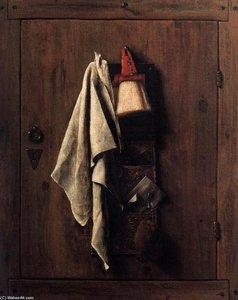
Self-Portrait
 1645
1645 54.0 x 45.0 cm
 Liechtenstein Museum
 Ver mais
Giclée / Impressão de Arte
Impressão giclée ou em tela de qualidade de museu, com produção rápida e opções flexíveis de acabamento. ( Encomendar reprodução pintada à mão Ver Imagem Digital)




































Escolha entre os nossos tamanhos pré-definidos que respeitam as proporções originais da obra de arte.

Você pode inserir suas próprias dimensões para se ajustar a uma moldura ou espaço específico. Se o tamanho selecionado não corresponder às proporções da imagem original, iremos recortar a obra de arte ou estender a imagem com uma borda espelhada ou preenchimento sólido. Um mockup digital será enviado para sua aprovação antes do início da produção.
Por favor, observe que a visualização na tela não reflete o recorte ou a extensão real. Apenas o mockup mostrará com precisão a composição final.
Embora tamanhos personalizados estejam disponíveis, recomendamos selecionar uma dimensão da lista predefinida para preservar as proporções originais.
Entrega mundial () em 2 semanas, em vez das 4/5 semanas padrão. (18 Setembro)

Envio expresso gratuito para todo o mundo

Tela de Linho Premium

Seguro de transporte total

Garantia de Reembolso de Impostos Alfandegários

Garantia de Fidelidade de Cor

Política de Devolução em 100 Dias (Apenas para Defeitos)

Garantia de reembolso de 100%

Desconto para múltiplas unidades
 A opção de vidro está disponível apenas para tamanhos inferiores a 110 cm

Self-Portrait
Giclée / Impressão de Arte
Dimensões da Reprodução
-


Preço Total
$ 80
Artistic Elements
The painting features a young man with fair skin and long, wavy hair, dressed in a red garment with lace at the collar. The subject's facial features are finely detailed, with a strong jawline, full lips, and clear eyes that seem to gaze directly at the viewer. The background is dark and indistinct, focusing attention on the figure. The brushwork is visible, particularly around the edges of the garment and the contours of the face, indicating a high level of skill and attention to detail.Similar Works
Other notable artists, such as Peter Paul Rubens and Anthony Van Dyck, also created remarkable self-portraits during this period. For example, Peter Paul Rubens' Self Portrait and Anthony Van Dyck's Self-portrait demonstrate the artistic trends of the time.- Baroque period characteristics, such as dramatic lighting and detailed rendering, are evident in these works.
- The use of oil on panel as a medium allows for rich, vibrant colors and textures.
- The Liechtenstein Museum houses an impressive collection of artworks, including pieces by Samuel Dirksz Van Hoogstraten and other notable artists.
For more information on the artist and his works, visit Samuel Dirksz Van Hoogstraten's page on OriginalUniqueArt.com. The Self-Portrait by Samuel Dirksz Van Hoogstraten is a testament to the artist's skill and the enduring beauty of Baroque art.
Biografia do Artista
A Master of Illusion and Intellect: The World of Samuel Dirksz van Hoogstraten
Samuel Dirksz van Hoogstraten, a name resonating with the ingenuity of the Dutch Golden Age, was far more than simply a painter. Born in Dordrecht in 1627 and passing away there in 1678, he embodied the era’s spirit of intellectual curiosity, artistic innovation, and burgeoning mercantile power. He wasn't merely recording reality on canvas; he was dissecting it, playing with perception, and exploring the very nature of representation itself. Van Hoogstraten distinguished himself not only through his skillful brushwork but also as a poet and a profound art theorist, leaving behind a legacy that extends beyond the visual realm into the world of ideas. His journey began within the family workshop of his father, Dirk van Hoogstraten, laying a foundational understanding of artistic principles before venturing to Amsterdam – the beating heart of Dutch artistry in the 17th century. It was there he entered the esteemed studio of Rembrandt van Rijn, an experience that would indelibly shape his early style and approach to light and shadow.From Rembrandt’s Shadow to Independent Vision
The influence of Rembrandt is undeniably present in Van Hoogstraten's initial works. A portrait from 1645, now residing in the Liechtenstein collection in Vienna, serves as a clear testament to this apprenticeship. However, unlike many students who remained tethered to their master’s style, Van Hoogstraten possessed an insatiable desire for experimentation and a restless spirit that propelled him beyond imitation. He wasn't content to simply replicate Rembrandt’s chiaroscuro; he sought to deconstruct it, analyze its effects, and ultimately forge his own unique artistic voice. This pursuit led him on extensive travels throughout Europe – to Vienna, Rome, and London – exposing him to diverse artistic traditions and fueling his intellectual growth. These journeys weren't merely sightseeing expeditions; they were immersive studies in architecture, perspective, and the prevailing aesthetic sensibilities of each locale. Upon returning to Dordrecht, he married in 1656 and assumed a civic role as provost of the mint, demonstrating a multifaceted talent that extended beyond the artistic sphere. This period saw him further refine his skills, moving towards an increasingly sophisticated understanding of illusionism and spatial representation.Trompe-l’œil, Perspective Boxes, and the Art of Deception
Van Hoogstraten's artistic prowess truly blossomed in his mastery of trompe-l’œil, a technique that translates to “deceive the eye.” His still lifes weren’t simply arrangements of objects; they were meticulously crafted illusions designed to blur the boundaries between reality and representation. He imbued seemingly haphazard collections with deeper symbolic meanings, inviting viewers to contemplate the transient nature of life and the deceptive allure of material possessions. Simultaneously, he became renowned for his creation of “peepshows” or "perspective boxes"—ingenious devices that offered immersive three-dimensional views into miniature worlds. One such box, currently housed at the National Gallery in London, recreates the interior of a typical Dutch house with astonishing realism when viewed through strategically placed peepholes. These weren’t mere novelties; they were sophisticated explorations of perspective and spatial illusion, demonstrating Van Hoogstraten's profound understanding of how the human eye perceives depth and dimension. His architectural paintings, such as his 1652 view of the Vienna Hofburg, further showcased his technical skill and attention to detail. He was a master of creating convincing illusions that challenged the viewer’s perception of space and reality, pushing the boundaries of artistic representation.A Theorist’s Legacy: ‘Inleyding tot de hooge schoole der schilderkonst’
However, Samuel van Hoogstraten's contribution extends far beyond his paintings and perspective boxes. He was a dedicated art theorist who sought to codify the principles of painting in his magnum opus, Inleyding tot de hooge schoole der schilderkonst: anders de zichtbaere werelt (Introduction to the Academy of Painting, or The Visible World), published in 1678. This ambitious treatise stands as one of the most comprehensive and intellectually rigorous explorations of art theory produced in the Dutch Republic during the 17th century. Van Hoogstraten delved into issues of pictorial persuasion, illusionism, the moral responsibilities of the artist, and the relationship between painting and philosophy, drawing upon a vast range of ancient and modern sources. He built upon the foundations laid by Karel van Mander in his earlier work, *Het Schilder-Boeck*, seeking to create a systematic framework for understanding and practicing the art of painting. His writings reflect both international influences gleaned from his travels and contemporary debates within Dutch artistic circles. The treatise is not merely a technical manual but also a profound meditation on the nature of vision, representation, and the artist’s role in shaping our perception of the world. It was this dedication to articulating the principles behind his craft that cemented his place as a pivotal figure in the history of art theory.A Lasting Influence
Van Hoogstraten’s influence resonated through subsequent generations of artists, notably through his pupils – including his brother Jan van Hoogstraten, Aert de Gelder, Cornelis van der Meulen, and Godfried Schalcken. His legacy is further preserved in the writings of Arnold Houbraken, one of his students who penned a biography of the artist that serves as a primary source of information about his life and work. Samuel Dirksz van Hoogstraten was not simply a painter; he was a polymath—an artist, poet, theorist, and administrator—who embodied the intellectual ferment of the Dutch Golden Age. His innovative techniques, profound insights into perception, and dedication to articulating the principles of art continue to captivate and inspire audiences today, solidifying his position as a master of illusion and intellect whose work transcends time.
Samuel van Hoogstraten
1627 - 1678 , Países Baixos
Informações Rápidas
- Artistic Movement Or Style: Século de Ouro
- Artists Or Movements Influenced By This Artist:
- Aert de Gelder
- Cornelis van der Meulen
- Artists Who Influenced This Artist:
- Rembrandt
- Dirk van Hoogstraten
- Date Of Birth: 2 août 1627
- Date Of Death: 19 oct 1678
- Full Name: Samuel Dirksz van Hoogstraten
- Nationality: Holandês
- Notable Artworks:
- Retrato de Mathys
- A Anêmica Dama
- Place Of Birth: Dordrecht, Holanda