Visualizar na parede
 Compartilhar
 Compartilhar
 Detalhes

 Baixar imagem
 Semelhantes
 Raio X
 Apresentação de slides
Ruins
 Oil On Canvas
- WallArt
- Pop Art
 1965
1965- Modern
 169.0 x 200.0 cm
 Ler mais
Giclê / Impressão de Arte
Impressão giclée ou em tela de qualidade de museu, com produção rápida e opções flexíveis de acabamento. ( Encomendar reprodução pintada à mão Alternar para Imagem)




P118B $10

P118H $10

P118W $10

P438Z $10

P508JH $12

P508YH $12

P805H $10

P805Z $10

P919BZ $10

P919G $10

P919XJ $10

P959ZH $10

P968JZ $12

W106C $8

W218G $10

W218JH $8

W218Y $10

W307PJ $10

W316G $10

W316PJ $8

W316Y $10

W398PJ $8

W4111J $10

W500HY $15

W500JH $15

W692G $12

W849H $8

W940BG $15

W953PJ $8




Escolha entre os nossos tamanhos pré-definidos que respeitam as proporções originais da obra de arte.

Você pode inserir suas próprias dimensões para se ajustar a uma moldura ou espaço específico. Se o tamanho selecionado não corresponder às proporções da imagem original, iremos recortar a obra de arte ou estender a imagem com uma borda espelhada ou preenchimento sólido. Um mockup digital será enviado para sua aprovação antes do início da produção.
Por favor, observe que a visualização na tela não reflete o recorte ou a extensão real. Apenas o mockup mostrará com precisão a composição final.
Embora tamanhos personalizados estejam disponíveis, recomendamos selecionar uma dimensão da lista predefinida para preservar as proporções originais.
Entrega mundial () em 2 semanas, em vez das 4/5 semanas padrão. (1 Agosto)

Envio Expresso Gratuito para todo o Mundo

Tela de Linho de Alta Qualidade

Seguro de transporte completo

Garantia de Reembolso de Impostos Alfandegários

Garantia de Fidelidade Cromática

Política de Devolução de 60 Dias (Apenas para Defeitos)

Garantia de reembolso de 100%

Oferta de desconto por quantidade
 A opção de vidro está disponível apenas para tamanhos inferiores a 110 cm

Ruins
Giclê / Impressão de Arte
Tamanho da Reprodução
-


Preço Total
$ 80
Descrição do Item Colecionável
A Dialogue Between Antiquity and Pop Art
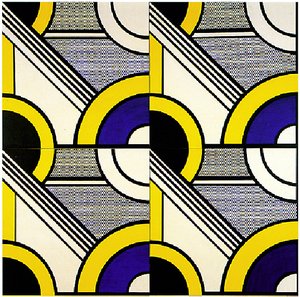
In the vast landscape of twentieth-century art, few works capture the tension between the eternal and the ephemeral as poignantly as Roy Lichtenstein’s "Ruins," painted in 1965. This masterpiece serves as a profound meditation on time, memory, and the enduring legacy of classical grandeur. At first glance, the canvas presents a stylized depiction of crumbling architectural columns set against a serene, almost dreamlike seascape. Yet, beneath this surface lies a complex interrogation of how we perceive history through the lens of modern mass media. Lichtenstein does not merely depict decay; he recontextualizes the very idea of a monument, inviting the viewer to witness the intersection of ancient civilization and the vibrant, mechanical pulse of the Pop Art movement.
The composition is anchored by three imposing columns that dominate the foreground, their structural integrity appearing both fragile and resolute. Rendered in a palette of muted blues and sun-drenched yellows, these elements evoke the warmth of a Mediterranean afternoon, yet they are stripped of traditional academic realism. Instead, Lichtenstein employs his signature reductive technique, utilizing bold outlines and the iconic Ben-Day dots borrowed from the world of comic strips. This meticulous application of halftone patterns creates an illusion of depth and texture that feels simultaneously flat and multidimensional. The result is a visual language that is instantly recognizable—a stylistic echo of industrial printing that breathes new life into the weathered stone of antiquity.
Symbolism and the Weight of Time
To gaze upon "Ruins" is to confront the inevitable passage of time. The choice of subject matter—architectural remnants—speaks to a universal human preoccupation with mortality and the fragmentation of power. Classical architecture has long stood as a symbol of permanence, artistry, and the peak of human achievement; by presenting these structures as broken and scattered, Lichtenstein highlights the transient nature of even the mightiest empires. The scattered cylindrical shapes at the base of the columns act as stylized representations of debris, reinforcing the theme of disintegration. There is a haunting beauty in this decay, a sense that while the physical stone may crumble, the aesthetic impact of these forms remains etched in our collective consciousness.
For the discerning collector or interior designer, "Ruins" offers an unparalleled emotional depth. It is a piece that commands attention through its intellectual rigor and visual clarity. The contrast between the heavy, historical subject matter and the light, playful technique of Pop Art creates a dynamic energy that can transform any sophisticated space. Whether placed in a contemporary gallery setting or as a focal point in a curated residential collection, this work inspires contemplation. It is not merely a painting of old stones; it is an evocative journey through the layers of human history, rendered with the bold, unapologetic confidence of a true visionary.
Biografia do Artista
The Genesis of a Pop Visionary
Roy Fox Lichtenstein, born in the vibrant metropolis of New York City on October 27, 1923, indelibly altered the landscape of twentieth-century art. Emerging as a pivotal figure within the Pop Art movement, Lichtenstein didn’t simply reflect his era; he actively interrogated it, transforming commonplace imagery into compelling artistic statements. His upbringing in an upper-middle-class Jewish family fostered both a cultural awareness and an early artistic inclination. Childhood exposure to museums and concerts, coupled with a deep appreciation for jazz music, laid the groundwork for a creative spirit that would challenge conventional notions of fine art. Though initially drawn to realistic drawing and painting during his formative years, Lichtenstein’s formal training commenced at the Art Students League in 1939 under Reginald Marsh, followed by studies at Ohio State University – interrupted briefly by wartime service in the Army. These experiences provided a robust technical foundation that would later be brilliantly re-contextualized through the lens of mass culture and commercial aesthetics. The seeds of his signature style weren’t sown within the hallowed halls of artistic tradition but rather in the often-overlooked world of everyday imagery, particularly comic books and advertising.From Abstraction to Appropriation: A Pivotal Shift
Lichtenstein's early work demonstrated a clear engagement with Abstract Expressionism, mirroring the dominant aesthetic trends of the post-war period. However, this phase proved transitional, a stepping stone towards his revolutionary style. A crucial moment arrived during his tenure at Rutgers University where he encountered Allan Kaprow, whose influence reignited Lichtenstein’s interest in proto-pop imagery. This encounter sparked a critical shift in his artistic trajectory, leading him to question the established boundaries between “high” and “low” art. He began looking beyond the subjective expression of Abstract Expressionism towards the objective language of popular culture – specifically, comic books and advertising. The year 1961 marked a turning point with *Look Mickey*, a work that boldly appropriated characters from Disney comics, signaling the beginning of his signature style. This wasn’t mere imitation; it was an act of artistic re-evaluation, elevating commonplace imagery to the status of fine art. He didn't simply copy comic strips; he meticulously recreated them using techniques mimicking commercial printing processes, a deliberate blurring of the lines between original artwork and mass production. This appropriation wasn’t about celebrating consumerism uncritically but rather examining its pervasive influence on American society and challenging traditional artistic hierarchies.The Language of Ben-Day Dots and Bold Lines
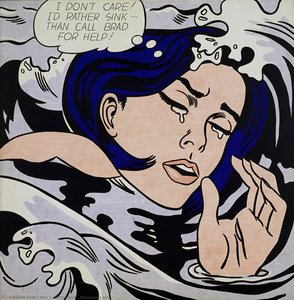
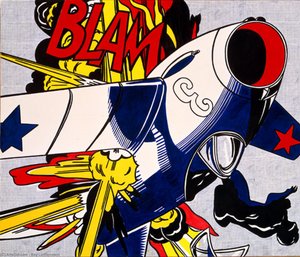
Lichtenstein's artistic vocabulary is instantly recognizable: bold, primary colors, thick black outlines, and most famously, Ben-Day dots – a technique borrowed directly from the mechanical reproduction of comic books. These dots weren’t merely decorative; they were integral to his conceptual framework, representing the very process of mass production and challenging the traditional emphasis on the artist's hand. His paintings often enlarged details from comic strips to monumental scale, forcing viewers to confront the aesthetic qualities of an art form typically dismissed as trivial. Works like *Whaam!* (1963), *Drowning Girl* (1963), and *Oh, Jeff…I Love You, Too…But…* (1964) became iconic representations of Pop Art, capturing the anxieties and desires of a rapidly changing consumer culture. These weren’t simply depictions of comic book scenes; they were commentaries on themes of war, romance, and societal expectations, filtered through the visual language of mass media. He aimed to strip away any pretense of artistic subjectivity, presenting his work as objective reflections of American society – a mirror held up to its own manufactured reality. The deliberate flatness and lack of painterly gesture further emphasized this detachment, mimicking the impersonal nature of commercial printing.Major Achievements and Lasting Impact
Roy Lichtenstein’s influence extends far beyond the realm of painting. His innovative use of commercial techniques and appropriation paved the way for new generations of artists exploring themes of consumerism, media saturation, and cultural identity. The sale of *Masterpiece* in 2017 for $165 million solidified his position as one of the most commercially successful American artists of all time, but his legacy is not solely defined by monetary value. He challenged traditional notions of artistic authorship and originality, forcing a re-evaluation of what constitutes “art” itself. His work continues to inspire graphic designers, illustrators, and visual artists across various disciplines.- Major Achievements: Pioneered Pop Art style; achieved international recognition with groundbreaking exhibitions.
- Notable Works: *Whaam!*, *Drowning Girl*, *Oh, Jeff…I Love You, Too…But…*, *Masterpiece*.
- Teaching Career: Influenced aspiring artists at SUNY Oswego and Rutgers University.

Roy Lichtenstein
1923 - 1997 , Estados Unidos da América
Dados Rápidos
- Artistic Movement Or Style: Pop Art
- Artists Or Movements Influenced By This Artist:
- Designers
- Ilustradores
- Artists Who Influenced This Artist:
- Reginald Marsh
- Allan Kaprow
- Date Of Birth: 27 de outubro de 1923
- Date Of Death: 29 de setembro de 1997
- Full Name: Roy Fox Lichtenstein
- Nationality: Americano
- Notable Artworks:
- Whaam!
- Drowning Girl
- Masterpiece
- Place Of Birth: Nova Iorque, EUA
Artigos Relacionados
Roy Lichtenstein: As 25 Obras-Primas Essenciais da Pop Art | OriginalUniqueArt
Descubra as 25 obras-primas de Roy Lichtenstein, ícone da Pop Art! Explore a história, técnica e cores vibrantes por trás de quadros famosos como 'Drowning Girl' e 'Look Mickey'. Encontre reproduções de arte exclusivas para decorar sua casa com estilo em OriginalUniqueArt.com.
As 10 Obras-Primas que Definiram a Pop Art | OriginalUniqueArt
Descubra as 10 obras-primas que revolucionaram a Pop Art! Explore a história de Andy Warhol, Roy Lichtenstein e outros ícones. Encontre reproduções de arte exclusivas para decorar sua casa com cores vibrantes e estilo em OriginalUniqueArt.com.
Beyond the Ben-Day Dots: Roy Lichtenstein's Pop Art Revolution & Enduring Legacy
Explore Roy Lichtenstein's revolutionary Pop Art! Discover the story behind Ben-Day dots, iconic works like 'Whaam!', and investment insights for collectors. Expert analysis & high-quality reproductions at OriginalUniqueArt.
Challenging Conventions: Pop Art's Origins, Evolution & Enduring Legacy
Explore the fascinating history of Pop Art, from its rebellious origins to its enduring influence on contemporary artists. Discover key figures like Warhol & Lichtenstein and learn about collecting this iconic movement.

Geek-Chic Interiors: The Definitive Guide to Decorating with Sophisticated Pop Culture Art
Elevate your home with our expert guide to Geek-Chic interiors. Discover how to seamlessly integrate sophisticated pop culture art and hand-painted masterpieces into luxury decor for a refined, modern aesthetic.