

 Visualizar em escala
 Enviar
 Compartilhar
 Ver detalhes
 Guia de Obras do Aluno

 Baixar imagem
 Semelhantes
 Raio X
 Apresentação de slides
 Estatísticas
Seated Man
 Oil On Canvas
- WallArt
- Cubism
 1913
1913- Modern
 130.0 x 165.0 cm
 Musée National d'Art Moderne Centre Georges Pompidou
 Ver mais
Giclée / Impressão de Arte
Impressão giclée ou em tela de qualidade de museu, com produção rápida e opções flexíveis de acabamento. ( Encomendar reprodução pintada à mão Ver Imagem Digital)




P118B $10

P118H $10

P118W $10

P438Z $10

P508JH $12

P508YH $12

P805H $10

P805Z $10

P919BZ $10

P919G $10

P919XJ $10

P959ZH $10

P968JZ $12

W106C $8

W218G $10

W218JH $8

W218Y $10

W307PJ $10

W316G $10

W316PJ $8

W316Y $10

W398PJ $8

W4111J $10

W500HY $15

W500JH $15

W692G $12

W849H $8

W940BG $15

W953PJ $8




Escolha entre os nossos tamanhos pré-definidos que respeitam as proporções originais da obra de arte.

Você pode inserir suas próprias dimensões para se ajustar a uma moldura ou espaço específico. Se o tamanho selecionado não corresponder às proporções da imagem original, iremos recortar a obra de arte ou estender a imagem com uma borda espelhada ou preenchimento sólido. Um mockup digital será enviado para sua aprovação antes do início da produção.
Por favor, observe que a visualização na tela não reflete o recorte ou a extensão real. Apenas o mockup mostrará com precisão a composição final.
Embora tamanhos personalizados estejam disponíveis, recomendamos selecionar uma dimensão da lista predefinida para preservar as proporções originais.
Entrega mundial () em 2 semanas, em vez das 4/5 semanas padrão. (25 Setembro)

Envio expresso gratuito para todo o mundo

Tela de Linho Premium

Seguro de transporte total

Garantia de Reembolso de Impostos Alfandegários

Garantia de Fidelidade de Cor

Política de Devolução em 100 Dias (Apenas para Defeitos)

Garantia de reembolso de 100%

Desconto para múltiplas unidades
 A opção de vidro está disponível apenas para tamanhos inferiores a 110 cm

Seated Man
Giclée / Impressão de Arte
Dimensões da Reprodução
-


Preço Total
$ 80
A Study in Cubist Stillness
In the vibrant, experimental atmosphere of 1913 Paris, Roger de La Fresnaye captured a moment of profound quietude that would become a cornerstone of early modernism. Seated Man is far more than a simple portrait; it is a masterful exploration of how the human form can be reimagined through the lens of Cubist fragmentation. At first glance, the viewer encounters a solitary figure, seated with an air of dignified composure, his hands resting calmly upon his lap. Yet, as one lingers on the canvas, the traditional boundaries of the subject begin to dissolve. The man’s presence is anchored by a serious, contemplative expression, suggesting a psychological depth that transcends the mere physical depiction of a sitter. This is a portrait not just of a person, but of an internal state—a moment of intellectual repose captured amidst the shifting planes of a modernizing world.
The composition serves as a brilliant dialogue between structure and spontaneity. De La Fresnaye employs the core tenets of Cubism, utilizing geometric shapes and overlapping planes to reconstruct the subject from multiple perspectives simultaneously. This technique dismantles the illusion of traditional realism, replacing it with a rhythmic arrangement of cubes and facets that challenge our perception of space. The background is a tapestry of bold, prismatic hues—striking blues, deep reds, and luminous yellows—that dance against stark whites. These colors do not merely decorate the scene; they actively participate in the construction of form, creating a sense of movement within the stillness. Scattered throughout this fractured landscape are subtle symbols of intellectual life: books lie near the figure, hinting at a thirst for knowledge, while a solitary bottle on the periphery adds a touch of domestic tranquility to the avant-garde arrangement.
A Legacy of Color and Form
To understand the emotional resonance of Seated Man, one must consider the historical currents that shaped De La Fresnaye’s hand. As a member of the Puteaux Group, the artist sought to move beyond the purely structural experiments of Picasso and Braque, infusing Cubism with a more decorative and luminous quality. His work reflects the influence of Orphism, where color becomes a primary vehicle for light and energy. This makes the painting an exceptional choice for those looking to introduce a sense of sophisticated dynamism into a contemporary space. The interplay between the heavy, grounded presence of the seated figure and the ethereal, fragmented background creates a tension that is both intellectually stimulating and visually soothing.
For the discerning collector or interior designer, this artwork offers a unique opportunity to anchor a room with a piece of art history. Its large-scale presence (130 x 165 cm) allows its intricate details—the texture of the suit, the sharp edges of the geometric planes, and the rich saturation of the palette—to command attention. Whether placed in a minimalist gallery setting or a richly textured study, a high-quality reproduction of this masterpiece brings with it an aura of cultured elegance. It is a work that invites continuous rediscovery, offering new layers of meaning and visual delight every time the eye wanders across its fractured, beautiful surface.
Biografia do Artista
Roger de La Fresnaye: Symbolism, Cubism and the Pursuit of Geometric Harmony
Roger de la Fresnaye (July 11, 1885 – November 27, 1925) stands as a singular figure in the constellation of early 20th-century French painting—a nobleman transformed into an avant-garde innovator whose brief but luminous career captured the spirit of its time. Born into the influential La Fresnayes family, steeped in military tradition and aristocratic privilege, he defied expectations by eschewing martial pursuits for a fervent dedication to artistic creation. His formative years were shaped by classical training at the Académie Julian and later the École des Beaux-Arts in Paris—institutions that instilled within him a foundational understanding of artistic principles while simultaneously exposing him to the burgeoning currents of Symbolism and Cubism. This duality would become the cornerstone of his distinctive stylistic vision, propelling him to the forefront of the modernist movement.From Nabis Dreams to Geometric Exploration
De la Fresnaye’s initial artistic explorations were profoundly influenced by the *Nabis*, a group of Post-Impressionist painters who championed subjective experience and symbolic resonance above mere visual representation. Under the tutelage of Maurice Denis and Paul Sérusier at the Académie Ranson, he absorbed their aesthetic precepts—a deliberate flattening of form, an emphasis on decorative patterns, and a masterful orchestration of color palettes—qualities vividly apparent in works such as *Woman with Chrysanthemums*. This early period embodies a dreamlike quality, mirroring the Nabis’ quest for spiritual depth through art. However, this initial path proved to be merely preparatory for his subsequent artistic breakthroughs. The irresistible allure of geometric abstraction soon captivated him, drawing him into the orbit of Georges Braque and Pablo Picasso—the pioneers of Cubism. Around 1912, he joined the *Section d'Or*, a collective united by an unwavering commitment to exploring new visual languages. This decisive step marked a radical departure from traditional artistic conventions, propelling him toward a groundbreaking synthesis that would redefine the boundaries of modern painting. The influence of Cézanne is palpable throughout his oeuvre. Like Cézanne, De La Fresnaye sought to capture the essence of nature through simplified forms and geometric structures—a technique he honed with meticulous precision. He was particularly fascinated by Cézanne’s exploration of spatial relationships, striving to convey a sense of depth and volume within flattened planes. This preoccupation with Cézanne's vision is evident in his early paintings, where he meticulously rendered objects using faceted surfaces and reduced color palettes—a stylistic echo of Cézanne’s groundbreaking approach. As exemplified by *The Conquest of the Air*, De La Fresnaye achieved a remarkable feat: he fused the decorative elegance of Symbolism with the intellectual rigor of Cubism, creating a visual language that was both aesthetically captivating and conceptually profound. ## The Impact of War and Artistic Transformation The outbreak of World War I irrevocably altered De la Fresnaye’s life trajectory—a period marked by enlistment in the French army followed by a debilitating illness that curtailed his military service and profoundly impacted his artistic output. Forced to confront physical limitations, he abandoned the dynamic spatial explorations characteristic of his Cubist phase for a more restrained style imbued with linear precision and introspective contemplation. This stylistic shift wasn’t driven by despair but rather by an astute awareness of his circumstances—a desire to express beauty within constraints—reflecting the artist's own evolving sensibility. His later paintings, notably *Undergrowth*, demonstrate this newfound aesthetic focus, prioritizing form and color in a manner that underscores the delicate balance between observation and imagination. ## Notable Achievements and Legacy De la Fresnaye’s artistic legacy extends far beyond his individual creations—he stands as a pivotal figure in shaping the trajectory of modern art. His pioneering embrace of Cubism established him as one of the foremost proponents of geometric abstraction, influencing generations of artists who followed. The meticulous craftsmanship evident in his paintings—particularly *The Conquest of the Air*, which achieved international acclaim and remains a cornerstone of Musée d’Art Moderne de Troyes —testifies to his unwavering dedication to artistic excellence. Furthermore, De La Fresnaye's contribution to the American Armory Show in 1913 cemented his place within the broader context of modernist art history—a testament to his courage in challenging conventional norms and forging a distinctive visual idiom. His paintings continue to inspire admiration for their elegance, precision, and profound engagement with the complexities of human experience. Roger de La Fresnaye’s enduring influence resides not only in his artistic innovations but also in his ability to embody the spirit of an era—a nobleman transformed into an artist who dared to reimagine the possibilities of visual expression.
Roger de La Fresnaye
1885 - 1925 , França
Informações Rápidas
- Artistic Movement Or Style: Cubismo e Simbolismo
- Artists Or Movements Influenced By This Artist: ['Nabis']
- Artists Who Influenced This Artist:
- Maurice Denis
- Paul Sérusier
- Georges Braque
- Pablo Picasso
- Robert Delaunay
- Date Of Birth: Julho 11, 1885
- Date Of Death: Nov. 27, 1925
- Full Name: Roger de La Fresnaye
- Nationality: Francês
- Notable Artworks:
- A Conquista do Ar
- La Madelon
- Le Cuirassier
- Place Of Birth: Le Mans, França
Artigos Relacionados

Neo-Abstract Art: The High-Impact Evolution of Modern Visual Energy and Geometric Sophistication
Discover the power of Neo-Abstract art. Explore how bold geometric forms and high-impact visual energy are redefining modern design. Learn to curate sophisticated, high-energy spaces with the latest trends in contemporary abstraction and structural color.
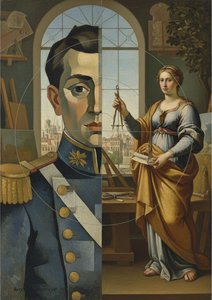
Roger de la Fresnaye: Cubism, Tradition & the Search for Order in Early 20th-Century French Painting
Explore the captivating world of Roger de la Fresnaye, a pivotal French Cubist painter. Discover his unique blend of tradition & modernity, influences, and lasting legacy with OriginalUniqueArt.

Beyond Form & Color: Geometric Abstraction's Evolution in 20th/21st Century Art
Explore the evolution of geometric abstraction from Cubism to contemporary art. Discover key artists like Malevich & Mondrian, investment insights, and expert collecting advice at OriginalUniqueArt.

Abstração Geométrica: 10 Obras-Primas que Moldaram a Arte Moderna | OriginalUniqueArt.com
Descubra as 10 obras-primas da Abstração Geométrica que revolucionaram a arte moderna! Explore Kandinsky, Mondrian e outros artistas icônicos. Encontre reproduções de alta qualidade para decorar sua casa com OriginalUniqueArt.com.

Goya: As 25 Obras-Primas que Definem um Mestre da Arte Espanhola | OriginalUniqueArt
Descubra as 25 obras-primas de Francisco Goya, o mestre espanhol do Romantismo. Explore retratos icônicos, gravuras impactantes e a história por trás de 'Saturno Devorando seu Filho' e 'A Majas'. Encontre reproduções de arte exclusivas para decorar sua casa com OriginalUniqueArt.com.

