- Início

- Imagem Digital
- robert tatin
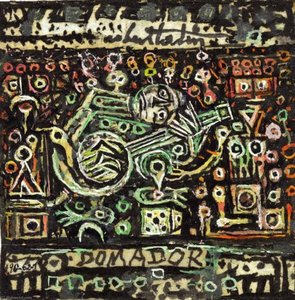
- Train de Maüa

 Comprar impressão Encomendar pintura
 Enviar
 Compartilhar
 Detalhes da obra
 Adicionar aos favoritos

 Baixar
 Semelhantes
 Raio X
 Slideshow
Train de Maüa
 Ver mais
Adquira uma imagem digital de alta resolução e aprimorada, muito superior à prévia online.
Cada arquivo é meticulosamente preparado por nossos especialistas internos, utilizando ferramentas avançadas e retoques manuais de alta precisão. Garantimos que cada imagem apresente clareza excepcional, fidelidade de cores e detalhes minuciosos.
O arquivo final é entregue por e-mail em até 72 horas, otimizado para uso imediato em ambientes profissionais, editoriais e de impressão. Esta é a mesma qualidade utilizada por estúdios de design de alto nível, editoras e galerias.
Imagem Digital
Baixe um arquivo de alta resolução para exibição pessoal, impressão e projetos criativos.
Incluído em cada pedido de imagem digital
Entrega Digital Especializada, Garantida
Ao escolher o OriginalUniqueArt.com, você não está apenas recebendo uma imagem — você está recebendo uma obra de arte digital profissionalmente aprimorada, elaborada com precisão e com garantia de satisfação. Aqui está tudo o que acompanha seu pedido, automaticamente:

Entrega rápida por e-mail
O seu arquivo de imagem digital em alta resolução será enviado por e-mail em até 72 horas após o pedido — pronto para uso imediato.

Arquivo Digital com IA
Sua obra de arte é otimizada profissionalmente por meio de ferramentas avançadas de IA e edição manual, garantindo o máximo de detalhes, clareza e precisão de cores.

Reenvio Gratuito Vitalício
Apagou ou perdeu o seu ficheiro acidentalmente? Não se preocupe – nós reenviamos para si a qualquer momento, gratuitamente.

Sem Taxas de Importação - Sempre
Desfrute da sua obra de arte instantaneamente, sem taxas alfandegárias, impostos ou custos de entrega — downloads digitais são sempre isentos de taxas.

Garantia de Precisão de Cores
Garantimos que sua imagem digital reflita as cores originais com a maior fidelidade possível, utilizando ferramentas profissionais e gerenciamento de cores.

Garantia de Satisfação de 60 Dias
Se você não estiver satisfeito com sua imagem digital, nós a revisaremos ou reembolsaremos 100% dentro de 60 dias — sem perguntas.

Garantia de Reembolso 100%
Não está satisfeito? Receba o reembolso total em até 60 dias após o recebimento do seu arquivo digital — sem perguntas.

Descontos para pedidos em lote
Compre 3 imagens, economize 10% - Compre 5, economize 15% - Compre 10+, economize 20%. Ideal para projetos criativos, galerias e agências.
Biografia do Artista
Robert Tatin: A Surrealist Vision of the Rural and the Primitive
Born in Laval, Mayenne, in 1902, Robert Tatin’s life was a remarkable confluence of seemingly disparate passions – construction, carpentry, ceramics, painting, sculpture, and architecture. He wasn't merely an artist; he was a builder of worlds, both tangible and imagined, driven by a profound desire to translate the rhythms of nature and the echoes of ancient myths into a singular, deeply personal visual language. His story is one of quiet revolution, a rejection of academic constraints in favor of intuitive creation, and ultimately, the establishment of a unique artistic sanctuary – his ‘Maison des Champs’ – that continues to bewilder and enchant visitors today.
Tatin's early years were shaped by a modest upbringing. His father was a Dreyfusard, deeply committed to his beliefs, while his mother practiced Catholicism. This duality—a tension between tradition and faith—likely fostered within him a sense of questioning and an independent spirit. He began his career as a house painter and carpenter, skills that would prove invaluable in the ambitious construction projects he undertook later in life. Crucially, he enrolled at the École des Beaux-Arts in Paris, immersing himself in classical techniques but quickly recognizing their limitations for expressing his own vision. This period laid the groundwork for his distinctive style – a blend of meticulous detail and dreamlike imagery.
The Years in South America: A Crucible of Creativity
A pivotal moment arrived in 1950 when Tatin, seeking inspiration and new techniques, embarked on an extended journey to Brazil and throughout South America. This period proved transformative. He spent years working alongside scientists at a ceramics research facility in Belo Horizonte, delving into the properties of cement and experimenting with innovative construction methods. He was deeply influenced by indigenous cultures, particularly their reverence for nature and their intricate symbolic systems. The vibrant colors, geometric patterns, and mythological narratives found in pre-Columbian art became integral to his own artistic vocabulary. It wasn’t simply observation; he actively engaged with these communities, learning from their traditions and incorporating them into his work.
Returning to France in 1955, Tatin settled in Vence on the French Riviera for a few years before ultimately returning to his native Mayenne. This move wasn’t about abandoning his artistic pursuits; rather, it was a homecoming—a desire to reconnect with his roots and create a space where he could fully realize his creative ambitions.
The Construction of ‘Maison des Champs’: A Personal Cosmology
In 1962, at the age of sixty, Tatin purchased an old farmhouse in Cossé-le-Vivien. What followed was not merely a renovation but a decades-long architectural and artistic undertaking – the creation of ‘Maison des Champs,’ a sprawling complex that defies easy categorization. He began by building a monumental stone structure resembling a temple, its entranceway shaped like a colossal dragon’s mouth, leading to a labyrinthine garden filled with sculptures, symbolic constructions, and painted walls. The house itself was expanded incrementally over twenty-one years, driven by Tatin's boundless imagination and his wife Lise’s unwavering support.
The ‘Maison des Champs’ is not simply a museum; it’s an immersive environment—a personal cosmology expressed through art. Each room is meticulously decorated with paintings depicting scenes of rural life, mythical figures, and abstract compositions. The sculptures are monumental, often exceeding eight feet in height, and imbued with symbolic meaning. The garden itself is a carefully orchestrated landscape, featuring twelve months represented by miniature structures, a central pond surrounded by symbolic elements, and a long, winding road lined with oversized statues of historical and artistic figures – a testament to Tatin’s fascination with the past.
A Legacy of Surrealism and Naive Art
Robert Tatin's work is often categorized as belonging to the realms of surrealism and naive art, though he resisted rigid labels. His paintings are characterized by their dreamlike quality, intricate detail, and symbolic imagery—a direct reflection of his experiences in South America and his deeply personal worldview. His sculptures, similarly, possess a raw, almost primitive energy, conveying a sense of timelessness and primal emotion. He was profoundly influenced by the work of artists like Paul Klee and Giorgio de Chirico, but he developed a unique style that is entirely his own.
Today, ‘Maison des Champs’ stands as a testament to Tatin's extraordinary vision—a surrealist sanctuary where art, architecture, and nature converge in a harmonious and unforgettable whole. It remains open to the public, offering visitors a rare glimpse into the mind of an artist who dared to create his own world, inviting us to contemplate the mysteries of life, myth, and the enduring power of imagination.
robert tatin
1902 - 1983
Informações Rápidas
- Artistic Movement Or Style: Surrealism, Art Brut
- Artists Or Movements Influenced By This Artist:
- Naïve art
- Dubuffet
- Artists Who Influenced This Artist:
- Rembrandt
- Van Gogh
- Date Of Birth: 1902
- Date Of Death: 1983
- Full Name: Robert Tatin
- Nationality: French
- Notable Artworks:
- Café de Flore
- L’Oeil
- Place Of Birth: Laval, France

