Visualizar em escala
 Enviar
 Compartilhar
 Ver detalhes
 Guia de Obras do Aluno

 Baixar imagem
 Semelhantes
 Raio X
 Apresentação de slides
 Estatísticas
Two Bridges
 Oil On Canvas
- WallArt
- Fauvism
 1912
1912- Modern
 51.0 x 61.0 cm
 Ver mais
Giclée / Impressão de Arte
Impressão giclée ou em tela de qualidade de museu, com produção rápida e opções flexíveis de acabamento. ( Encomendar reprodução pintada à mão Ver Imagem Digital)




P118B €10

P118H €10

P118W €10

P438Z €10

P508JH €12

P508YH €12

P805H €10

P805Z €10

P919BZ €10

P919G €10

P919XJ €10

P959ZH €10

P968JZ €12

W106C €8

W218G €10

W218JH €8

W218Y €10

W307PJ €10

W316G €10

W316PJ €8

W316Y €10

W398PJ €8

W4111J €10

W500HY €15

W500JH €15

W692G €12

W849H €8

W940BG €15

W953PJ €8




Escolha entre os nossos tamanhos pré-definidos que respeitam as proporções originais da obra de arte.

Você pode inserir suas próprias dimensões para se ajustar a uma moldura ou espaço específico. Se o tamanho selecionado não corresponder às proporções da imagem original, iremos recortar a obra de arte ou estender a imagem com uma borda espelhada ou preenchimento sólido. Um mockup digital será enviado para sua aprovação antes do início da produção.
Por favor, observe que a visualização na tela não reflete o recorte ou a extensão real. Apenas o mockup mostrará com precisão a composição final.
Embora tamanhos personalizados estejam disponíveis, recomendamos selecionar uma dimensão da lista predefinida para preservar as proporções originais.
Entrega mundial () em 2 semanas, em vez das 4/5 semanas padrão. (13 Outubro)

Envio expresso gratuito para todo o mundo

Tela de Linho Premium

Seguro de transporte total

Garantia de Reembolso de Impostos Alfandegários

Garantia de Fidelidade de Cor

Política de Devolução em 100 Dias (Apenas para Defeitos)

Garantia de reembolso de 100%

Desconto para múltiplas unidades
 A opção de vidro está disponível apenas para tamanhos inferiores a 110 cm

Two Bridges
Giclée / Impressão de Arte
Dimensões da Reprodução
-


Preço Total
€ 69
A Symphony of Urban Motion: Rediscovering Two Bridges
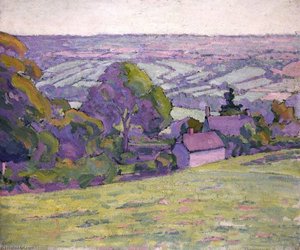
In the heart of the early twentieth century, as the gears of modernity began to turn with an unstoppable rhythm, Robert Polhill Bevan captured a fleeting moment of metropolitan vitality in his 1912 masterpiece, Two Bridges. This oil on canvas is far more than a mere depiction of a city street; it is a vibrant pulse of life frozen in time. The scene unfolds with a captivating energy, where the heavy presence of architecture meets the fluid movement of the streets. Two iconic red buses, rendered in bold, unapologetic hues, slice through the intersection, acting as anchors of color amidst the bustling crowd. As one gazes into the composition, the eye is drawn through a labyrinth of pedestrians and vehicles, even catching the subtle, nostalgic presence of a horse—a lingering ghost of a bygone era coexisting with the burgeoning mechanical age.
The technique employed by Bevan in Two Bridges reveals a painter deeply enamored with the transformative power of color and form. Moving away from the delicate, light-dappled nuances of Impressionism, Bevan embraces a style that leans toward the expressive intensity of Fauvism. He utilizes simplified, almost geometric shapes to define the urban landscape, where buildings rise in angular, sturdy blocks and vehicles are rendered with rounded, rhythmic outlines. The paint application is smooth yet possesses a subtle impasto that lends a tactile quality to the surfaces of the structures. By flattening the perspective and utilizing a deliberate distortion of space, Bevan creates an illusion of depth through the clever overlapping of forms rather than traditional linear perspective. This approach prioritizes visual impact and emotional resonance over photographic accuracy, inviting the viewer to experience the city's energy rather than just observe it.
Historically, this work serves as a profound testament to the transition of British Modernism. As a founding member of the Camden Town Group, Bevan was at the forefront of a movement that sought to find beauty in the everyday, unglamorous realities of urban existence. Two Bridges encapsulates this spirit perfectly, blending the traditional mastery of oil painting with a radical, modern sensibility. The painting evokes a sense of organized chaos—a feeling of being swept up in the momentum of progress. For the collector or the interior designer, this piece offers a sophisticated balance of bold color and structural stability. It is an artwork that commands attention, providing a focal point that breathes life, history, and a touch of avant-garde elegance into any curated space.
Perguntas e Respostas
Quem criou "Two Bridges" e em que ano?
Robert Polhill Bevan criou "Two Bridges" em 1912.
Onde deve ser pendurada uma reprodução de "Two Bridges" de Robert Polhill Bevan?
O formato Landscape de "Two Bridges" de Robert Polhill Bevan é recomendado para um(a) Coworking. O formato e o espaço juntos orientam a disposição de uma reprodução.
A qual artista "Two Bridges" é atribuída?
O artista por trás de "Two Bridges" é Robert Polhill Bevan. A obra está catalogada sob o nome de Robert Polhill Bevan.
Qual nível de contraste apresenta "Two Bridges" de Robert Polhill Bevan?
O contraste entre claro e escuro de "Two Bridges" é registrado como Statement. O contraste descreve a intensidade da diferença entre as áreas claras e escuras.
Quão intensas são as cores em "Two Bridges" de Robert Polhill Bevan?
As cores em "Two Bridges" de Robert Polhill Bevan possuem uma intensidade Balanced.
Sobre o que trata "Two Bridges"?
Os temas de "Two Bridges" são urban landscape, city transportation, early 20th century, british art scene, red buses painting, street life details, modern cityscape.
Qual é a data e o estilo de "Two Bridges" de Robert Polhill Bevan?
"Two Bridges" foi criada em 1912 como uma obra do movimento Fauvism. A data e o movimento situam a obra na história da arte.
Qual tamanho devo imprimir para "Two Bridges" para o meu quarto?
A combinação recomendada para "Two Bridges" de Robert Polhill Bevan: uma impressão de Small em um(a) Coworking.
Biografia do Artista
Robert Polhill Bevan (1865–1925): British Painter & Camden Town Group Founder
Robert Polhill Bevan, born in Hove in 1865, occupies a pivotal yet often understated position within the narrative of early 20th-century British art. Emerging from a Quaker background steeped in banking connections – his parents were Richard Alexander Bevan and Laura Maria Polhill – he defied conventional expectations to become a daring innovator, a key figure in the transition from Impressionism towards more radical explorations of color and form. His journey was one of constant experimentation, absorbing influences from across Europe while forging a distinctly personal artistic vision that would profoundly impact the development of modern art in Britain. Bevan’s early education at Westminster School of Art under Fred Brown provided a solid foundation, but it was his subsequent studies at the Académie Julian in Paris that truly ignited his creative spark. There, he encountered a constellation of rising stars – Paul Sérusier, Pierre Bonnard, Édouard Vuillard, and Maurice Denis – artists who were challenging academic conventions and embracing new approaches to painting. These encounters proved formative, exposing Bevan to the principles of synthetism and laying the groundwork for his future explorations.Brittany, Fauvism, and the Search for Pure Color
The impact of Brittany on Bevan’s artistic development cannot be overstated. Two significant journeys in 1890 and 1891 immersed him in the atmosphere of Pont-Aven, a small coastal town that had become a magnet for artists seeking an alternative to Parisian salon culture. The bold colors and simplified forms championed by artists like Gauguin resonated deeply with Bevan, influencing his early drawings and prints. He was particularly drawn to the luminous landscapes of Breton Brittany, where he sought inspiration from the Impressionists’ techniques of capturing fleeting moments of light and color. However, it was around 1904 that Bevan truly began to distinguish himself, embarking on a path of experimentation with pure color that anticipated the emergence of Fauvism on the continent. His painting “Courtyard” stands as a remarkable example of this proto-Fauvist approach, demonstrating a willingness to abandon naturalistic representation in favor of expressive chromatic intensity – a boldness that set him apart from many of his British contemporaries. This exploration didn’t remain static; Bevan subsequently adopted a divisionist or pointillist technique, evident in works like “Ploughing on the Downs” and “The Turn-Rice Plough,” showcasing his commitment to exploring different methods of applying color and capturing light. The influence of masters such as Velázquez and Goya remained palpable, alongside more immediate guidance from Renoir regarding the depiction of horses – a testament to Bevan’s broad artistic curiosity and willingness to learn from diverse sources.Collective Visions: The Camden Town Group and Beyond
Bevan was not an artist who worked in isolation. He actively sought connection with like-minded individuals, playing a crucial role in the formation of several influential art groups. As a founding member of the Camden Town Group, he joined forces with artists determined to depict modern urban life and challenge established artistic norms. This collective spirit extended to his involvement with the London Group and the Cumberland Market Group, further demonstrating his commitment to progressive artistic movements. The first Allied Artists’ Association exhibition in 1908 provided another important platform for Bevan, introducing him to the burgeoning world of international modernism – most notably, through his encounter with Wassily Kandinsky. These affiliations were not merely social; they fostered a dynamic exchange of ideas that shaped Bevan's artistic trajectory and contributed to the broader evolution of British art. He was particularly influenced by Walter Sickert’s vision for portraying the gritty realities of London life.Landscapes, Urban Scenes, and Lasting Legacy
While Bevan’s subject matter was diverse, encompassing portraits – including notable depictions of his wife, Stanislawa de Karłowska – and urban scenes documenting the decline of the horse cab trade (“The Cab Horse”), he is perhaps best known for his landscapes. His paintings of Sussex and Brittany are imbued with a vibrant energy, capturing the essence of rural life through expressive brushwork and bold color palettes. Works like “In the Downs near Lewes,” “The Chestnut Tree,” and “Landscape in the Blackdown Hills, Devon” exemplify this mastery, showcasing his ability to convey both the physical beauty and emotional resonance of the natural world. Bevan’s distinctive style—characterized by luminous colors and simplified forms—anticipated developments in Fauvist painting and established him as a leading British painter of the early years of the 20th Century. His contribution to the Camden Town Group was instrumental in shaping the direction of British art during this period, cementing his place as an innovator who championed new artistic approaches. Bevan’s legacy continues to inspire artists today, reminding us of the importance of experimentation and engagement with diverse influences. He remains a vital figure for understanding the complex evolution of British painting in the early twentieth century.
Robert Polhill Bevan
1865 - 1925 , Reino Unido
Informações Rápidas
- Artistic Movement Or Style: Fauvismo, Divisionismo
- Artists Or Movements Influenced By This Artist:
- Grupo Camden Town
- Grupo Londres
- Grupo Cumberland
- Artists Who Influenced This Artist:
- Paul Gauguin
- Velázquez
- Goya
- Renoir
- Date Of Birth: 1865
- Date Of Death: 1925
- Full Name: Robert Polhill Bevan
- Nationality: Britânico
- Notable Artworks:
- A Fazenda
- Arado nos Altos Pampas
- Casa da Rainha
- Cavalo de Carro
- Place Of Birth: Hove, Reino Unido
Artigos Relacionados
25 Obras-Primas do Museu Britânico: Arte, História e Decoração Inspiradora
Descubra as 25 obras mais emblemáticas do Museu Britânico! Explore a história, artistas e técnicas por trás de tesouros como a Pedra de Roseta e os Mármores de Elgin. Encontre reproduções de arte exclusivas para decorar sua casa com elegância em OriginalUniqueArt.com.
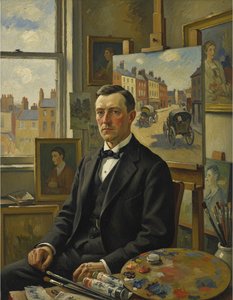
Robert Bevan: Pioneering British Post-Impressionism & the Camden Town Group's Intimate Vision
Explore the life & work of Robert Bevan, a pioneer of British Post-Impressionism and founding member of the Camden Town Group. Discover his vibrant landscapes and lasting impact on early 20th-century art.

Hubert Robert: Picturing Ruins, Preserving Memory – A Study of Romantic Antiquarianism & Artistic Innovation
Explore the captivating world of Hubert Robert, master of Romantic landscape painting & 'capriccio' ruins. Discover his historical context, artistic innovations, and collecting insights with OriginalUniqueArt.

David Roberts: A Scottish Pioneer of Topographical Art & Orientalist Vision
Explore the captivating world of David Roberts, a pioneering Scottish painter renowned for his detailed Orientalist scenes & stunning Egyptian landscapes. Discover his legacy and find museum-quality reproductions at OriginalUniqueArt.
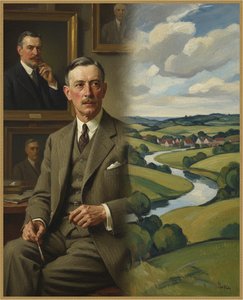
Reginald Grenville Eves: Bridging Portraiture & Modern British Landscape Painting
Explore the life & work of Reginald Grenville Eves, a leading British portraitist who transitioned to captivating landscape painting. Discover his legacy and prominent works at OriginalUniqueArt.