 Visualizar em escala
 Enviar
 Compartilhar
 Ver detalhes
 Guia de Obras do Aluno

 Baixar imagem
 Semelhantes
 Raio X
 Apresentação de slides
 Estatísticas
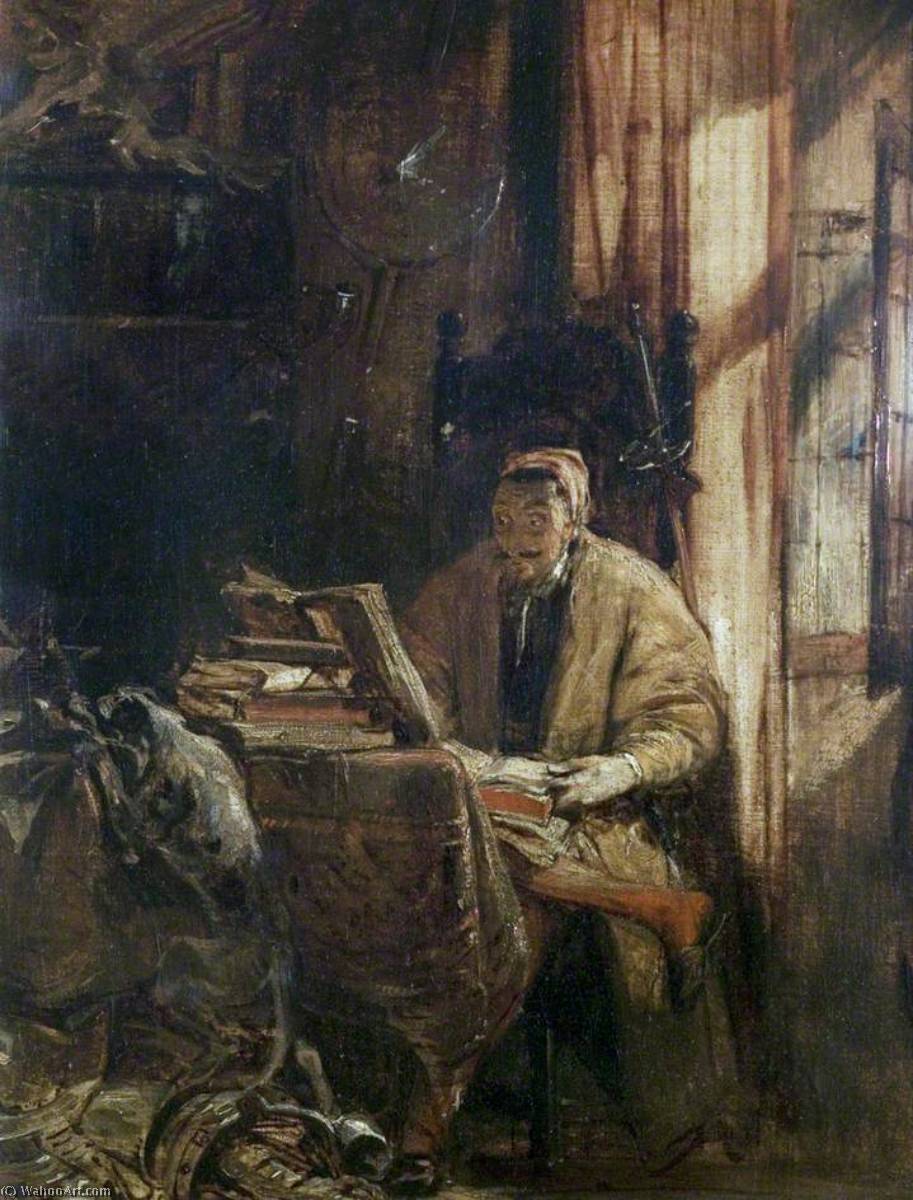
Don Quixote in His Study


 Ver mais
Giclée / Impressão de Arte
Impressão giclée ou em tela de qualidade de museu, com produção rápida e opções flexíveis de acabamento. ( Encomendar reprodução pintada à mão Ver Imagem Digital)




P118B $10

P118H $10

P118W $10

P438Z $10

P508JH $12

P508YH $12

P805H $10

P805Z $10

P919BZ $10

P919G $10

P919XJ $10

P959ZH $10

P968JZ $12

W106C $8

W218G $10

W218JH $8

W218Y $10

W307PJ $10

W316G $10

W316PJ $8

W316Y $10

W398PJ $8

W4111J $10

W500HY $15

W500JH $15

W692G $12

W849H $8

W940BG $15

W953PJ $8




Escolha entre os nossos tamanhos pré-definidos que respeitam as proporções originais da obra de arte.

Você pode inserir suas próprias dimensões para se ajustar a uma moldura ou espaço específico. Se o tamanho selecionado não corresponder às proporções da imagem original, iremos recortar a obra de arte ou estender a imagem com uma borda espelhada ou preenchimento sólido. Um mockup digital será enviado para sua aprovação antes do início da produção.
Por favor, observe que a visualização na tela não reflete o recorte ou a extensão real. Apenas o mockup mostrará com precisão a composição final.
Embora tamanhos personalizados estejam disponíveis, recomendamos selecionar uma dimensão da lista predefinida para preservar as proporções originais.
Entrega mundial () em 2 semanas, em vez das 4/5 semanas padrão. (25 Setembro)

Envio expresso gratuito para todo o mundo

Tela de Linho Premium

Seguro de transporte total

Garantia de Reembolso de Impostos Alfandegários

Garantia de Fidelidade de Cor

Política de Devolução em 100 Dias (Apenas para Defeitos)

Garantia de reembolso de 100%

Desconto para múltiplas unidades
 A opção de vidro está disponível apenas para tamanhos inferiores a 110 cm

Don Quixote in His Study
Giclée / Impressão de Arte
Dimensões da Reprodução
-


Preço Total
$ 80
A Portrait of Rustic Grandeur: Unpacking Bonington’s “Don Quixote in His Study”
Richard Parkes Bonington's "Don Quixote in His Study," painted in 1826, isn’t merely a depiction of an elderly man; it’s a carefully constructed tableau brimming with quiet contemplation and the weight of a life lived within the confines of memory and imagination. The painting immediately draws the viewer into a dimly lit interior, dominated by a rich, earthy palette – ochres, browns, and deep reds—that speaks to both the warmth of domesticity and the encroaching shadows of age. Bonington masterfully employs chiaroscuro, a dramatic contrast between light and dark, to sculpt the figure of Don Quixote, lending him an almost sculptural quality while simultaneously emphasizing his vulnerability. The scene is not one of heroic action, but rather of introspective stillness; we are invited to witness a moment of profound solitude.
- Compositional Harmony: The arrangement of objects—the stacked books, the overflowing bags, the ticking clock—creates a sense of controlled chaos, mirroring perhaps the mental landscape of the subject.
- Color Palette: The muted tones evoke a feeling of nostalgia and the passage of time, while the strategic use of red draws attention to the woman’s headscarf, subtly hinting at her character and story.
- Light & Shadow: Bonington's skillful manipulation of light creates depth and drama, highlighting the subject’s face and casting long shadows that suggest both age and a certain melancholy.
The Artist and His Influences: A Bridge Between Romanticism and Tradition
Richard Parkes Bonington stands as a fascinating figure in the transition between the last vestiges of English Romanticism and the burgeoning influences of French Realism. Born in Nottingham, England, in 1802, he spent much of his formative artistic years in France, absorbing the techniques and philosophies of masters like Jean-Auguste Dominique Ingres and, crucially, Eugène Delacroix. Bonington’s style is a unique synthesis of these influences; he retains the Romantic emphasis on light and atmosphere but grounds it in a meticulous observation of form and detail reminiscent of the Old Masters. His early training with François Louis Thomas Francia, who had returned from studying Girtin's watercolors in England, instilled in him a deep appreciation for the delicate handling of color and brushwork that would become hallmarks of his work.
Historical Context:** Bonington’s painting was created during a period of significant artistic change. The Romantic movement was waning, giving way to new approaches to representation. Bonington navigated this shift with remarkable grace, producing works that were both deeply personal and technically sophisticated. His brief but brilliant career is marked by a poignant sense of unrealized potential – he died at the young age of 26 from tuberculosis.Decoding Symbolism: Layers of Meaning in a Simple Scene
Beyond its immediate visual appeal, “Don Quixote in His Study” is rich with symbolic layers. The cluttered room itself represents the accumulated weight of memory and experience—the books, the bags, the clock all speak to a life lived fully, yet perhaps somewhat wistfully. Don Quixote’s posture – slumped slightly, his gaze fixed inward – suggests a man lost in thought, grappling with the remnants of a bygone era. The red headscarf is particularly intriguing; it could symbolize both resilience and vulnerability, hinting at the woman's strength and her own quiet struggles. The painting subtly evokes themes of aging, memory, solitude, and the enduring power of imagination.
A Legacy in Reproduction: Bringing Bonington’s Vision to Life
Reproductions of “Don Quixote in His Study” offer a remarkable opportunity to experience the depth and nuance of Bonington's artistry. The meticulous detail, the evocative lighting, and the subtle symbolism are all faithfully captured in high-quality reproductions. Whether adorning a study or a gallery wall, this painting invites contemplation and offers a glimpse into the mind of a truly exceptional artist. The rich textures and carefully rendered details translate beautifully to canvas, creating a timeless piece that speaks to the enduring power of art to transport us to another time and place.
Biografia do Artista
A Fleeting Brilliance: The Life and Art of Richard Parkes Bonington
Richard Parkes Bonington, a name that resonates with a poignant sense of unrealized potential within the annals of Romantic painting, remains an artist whose brief career cast a long shadow across both British and French artistic landscapes. Born on October 25th, 1802, in Arnold, Nottinghamshire, England, his path to recognition was uniquely shaped by a blend of familial encouragement and geographical circumstance. His father, Richard Bonington senior, possessed a diverse skillset – gaoler, drawing master, and lace-maker – providing an unconventional yet stimulating upbringing for his son. It was from him that young Richard received his earliest instruction in watercolor painting, a talent quickly recognized and nurtured. Even as a boy of eleven, he exhibited work at the Liverpool Academy, signaling the emergence of a remarkable artistic sensibility.
This early promise propelled him towards a destiny increasingly intertwined with the vibrant art world of France. In 1817, the Bonington family relocated to Calais seeking opportunity in the lace trade, but for Richard, this move proved transformative on an entirely different level. He came under the tutelage of François Louis Thomas Francia, a watercolorist deeply influenced by English masters like Thomas Girtin. Francia instilled in Bonington a profound appreciation for light and atmosphere – qualities that would become hallmarks of his distinctive style. The family subsequently moved to Paris in 1818, immersing Richard in the heart of French artistic life. Here, he forged a crucial friendship with Eugène Delacroix, a relationship that proved profoundly influential. He enrolled at the École des Beaux-Arts under Baron Antoine-Jean Gros, further honing his skills and absorbing the prevailing artistic currents.
The Synthesis of Styles: English Sensibility & French Technique
Bonington’s early work beautifully reflects this synthesis of English watercolor traditions and French academic training. He didn't simply adopt techniques; he *absorbed* them, creating a style characterized by luminous landscapes and a delicate touch. His mastery of light was particularly striking, reminiscent of Girtin but infused with a distinctly Romantic sensibility. He excelled at capturing the fleeting effects of weather and the subtle nuances of nature, imbuing his scenes with an emotional resonance that went beyond mere representation. This ability to evoke feeling, rather than simply record observation, set him apart from many of his contemporaries.
His landscapes often depicted coastal views or the serene beauty of Normandy, imbued with a sense of atmospheric perspective and masterful handling of light. Works like “Scene in Normandy” (1823) showcase this ability to capture the ephemeral qualities of nature. He didn’t merely depict what he saw; he evoked a feeling, an emotional response to the landscape. Simultaneously, Bonington ventured into historical painting, creating dramatic compositions such as "Charles V. visits François Ier after the Battle of Pavia" (c. 1827). These works reveal his fascination with narrative and his ability to translate historical events onto canvas with vibrant color and dynamic energy.
A Rising Star: Recognition & Innovation
Bonington’s success was swift and undeniable. In 1824, he shared a gold medal at the Paris Salon alongside John Constable and Anthony Vandyke Copley Fielding – a testament to his burgeoning reputation. This recognition wasn't merely for technical skill; it acknowledged an innovative approach to color and composition that resonated with audiences and critics alike. He was lauded for his ability to blend English Romantic sensibilities with French academic rigor, creating something entirely new.
His work also extended into lithography, illustrating Baron Taylor’s *Voyages pittoresques dans l'ancienne France* and his own architectural series *Restes et Fragmens*. This demonstrated a versatility that further solidified his position as a rising star in the art world. He was not confined to one medium or subject matter; he embraced experimentation and pushed the boundaries of artistic expression.
A Legacy Cut Short: Influence & Enduring Appeal
Tragically, Richard Parkes Bonington succumbed to tuberculosis on September 23rd, 1828, bringing an abrupt end to a career brimming with potential. Despite his short life, his influence on the development of both British and French Romanticism was considerable. Delacroix himself paid tribute to Bonington’s “lightness of touch” and recognizing his innovative approach to color and composition. His work inspired a generation of artists, bridging the gap between English landscape traditions and the burgeoning Romantic movement in France.
Today, his paintings are held in prestigious collections worldwide, including the Louvre and the Wallace Collection, which houses an impressive group of thirty-five works. In his hometown of Arnold, a theatre and primary school bear his name, while a statue at Nottingham School of Art serves as a lasting memorial to this exceptional artist.
Key Works & Lasting Recognition
- Rouen, Normandy (c. 1823): A quintessential example of Bonington’s atmospheric landscapes, capturing the essence of the Norman countryside.
- View of the Lagoon near Venice (1827): Demonstrates his ability to depict light and water with remarkable sensitivity, showcasing a Venetian scene filled with romantic allure.
- Charles V. visits François Ier after the Battle of Pavia (c. 1827): A dynamic historical painting that exemplifies his skill in narrative composition and vibrant color palette.
- Gold Medal at the Paris Salon (1824): Shared with esteemed artists like John Constable, marking a significant milestone in his career.
- Delacroix’s Tribute: Eugène Delacroix's posthumous praise of Bonington’s “lightness of touch” solidified his reputation as an innovative and influential artist.

Richard Parkes Bonington
1802 - 1828 , Reino Unido
Informações Rápidas
- Artistic Movement Or Style: Romantismo
- Artists Or Movements Influenced By This Artist:
- Delacroix
- Romantismo Britânico
- Artists Who Influenced This Artist:
- Thomas Girtin
- Eugène Delacroix
- Date Of Birth: 25 Out 1802
- Date Of Death: 23 Set 1828
- Full Name: Richard Parkes Bonington
- Nationality: Britânico
- Notable Artworks:
- Cena em Normandia
- Venecia Lagoa Vista
- Carlos V visita François I
- Place Of Birth: Arnold, Reino Unido
Artigos Relacionados

Oil on Canvas: A Historical & Technical Exploration of a Timeless Artistic Medium
Explore the rich history & enduring techniques of oil painting on canvas. Discover the science behind its longevity, conservation practices, and contemporary relevance. Expert insights for art enthusiasts.
Richard Parkes Bonington: A Brief but Brilliant Career – Romantic Landscapes & the Dawn of Plein Air Painting
Explore the short but impactful career of Richard Parkes Bonington, a pivotal figure bridging British Romanticism & French plein air painting. Discover his luminous landscapes and lasting influence on Delacroix & beyond.

The Enduring Power of Painting: A Historical & Contemporary Exploration of Form and Emotion
Explore the rich history & enduring techniques of oil painting with OriginalUniqueArt. Discover masterpieces, learn about art collecting, and find authentic handmade reproductions crafted by skilled artists.

O Legado Duradouro da Pintura a Óleo sobre Tela: Técnica, História e Prática Contemporânea
Explore a história e as técnicas da pintura a óleo com especialistas. Descubra os mestres, materiais essenciais e o futuro desta arte atemporal. Reproduções de qualidade museológica.

The Enduring Legacy of Oil on Canvas: Technique, History & Aesthetic Impact
Explore the rich history & techniques of oil painting – from Renaissance masters to Impressionism. Discover pigments, layering methods, and why this timeless medium endures. Expert insights for artists & art enthusiasts.