Visualizar em escala
 Enviar
 Compartilhar
 Ver detalhes

 Baixar imagem
 Semelhantes
 Raio X
 Apresentação de slides
 Estatísticas
São Sebastião


 Ver mais
Giclée / Impressão de Arte
Impressão giclée ou em tela de qualidade de museu, com produção rápida e opções flexíveis de acabamento. ( Encomendar reprodução pintada à mão Ver Imagem Digital)




P118B $10

P118H $10

P118W $10

P438Z $10

P508JH $12

P508YH $12

P805H $10

P805Z $10

P919BZ $10

P919G $10

P919XJ $10

P959ZH $10

P968JZ $12

W106C $8

W218G $10

W218JH $8

W218Y $10

W307PJ $10

W316G $10

W316PJ $8

W316Y $10

W398PJ $8

W4111J $10

W500HY $15

W500JH $15

W692G $12

W849H $8

W940BG $15

W953PJ $8




Escolha entre os nossos tamanhos pré-definidos que respeitam as proporções originais da obra de arte.

Você pode inserir suas próprias dimensões para se ajustar a uma moldura ou espaço específico. Se o tamanho selecionado não corresponder às proporções da imagem original, iremos recortar a obra de arte ou estender a imagem com uma borda espelhada ou preenchimento sólido. Um mockup digital será enviado para sua aprovação antes do início da produção.
Por favor, observe que a visualização na tela não reflete o recorte ou a extensão real. Apenas o mockup mostrará com precisão a composição final.
Embora tamanhos personalizados estejam disponíveis, recomendamos selecionar uma dimensão da lista predefinida para preservar as proporções originais.
Entrega mundial () em 2 semanas, em vez das 4/5 semanas padrão. (20 Setembro)

Envio expresso gratuito para todo o mundo

Tela de Linho Premium

Seguro de transporte total

Garantia de Reembolso de Impostos Alfandegários

Garantia de Fidelidade de Cor

Política de Devolução em 100 Dias (Apenas para Defeitos)

Garantia de reembolso de 100%

Desconto para múltiplas unidades
 A opção de vidro está disponível apenas para tamanhos inferiores a 110 cm

São Sebastião
Giclée / Impressão de Arte
Dimensões da Reprodução
-


Preço Total
$ 80
A Renaissance Masterpiece: Raphael’s St Sebastian
Raphael (Raffaello Sanzio da Urbino), a luminary of the High Renaissance, gifted the world with an extraordinary body of work characterized by grace, harmony, and profound humanism. His *St Sebastian*, painted around 1501-1502, stands as a compelling example of his artistic prowess, currently residing in the Accademia Carrara of Bergamo, Italy. This oil on canvas (43 x 34 cm) is not merely a depiction of a martyred saint; it’s a meditation on faith, suffering, and divine beauty.The Artist & His Historical Context
Born in Urbino in 1483, Raphael quickly ascended to become one of the most celebrated painters alongside Leonardo da Vinci and Michelangelo. He absorbed influences from his father, Giovanni Santi, and artists like Perugino, but rapidly developed a distinctive style marked by clarity of form, balanced composition, and an idealized representation of the human figure. The High Renaissance—a period of artistic flourishing centered in Italy during the late 15th and early 16th centuries—emphasized classical ideals, anatomical accuracy, and harmonious proportions. Raphael embodied these principles perfectly, creating works that resonated with both spiritual devotion and intellectual refinement. He was influenced by humanist thinkers like Pico della Mirandola who championed the idea of human dignity and potential. The Duke Federico da Montefeltro’s court in Urbino fostered this intellectual climate, encouraging artistic experimentation and scholarly pursuits—a setting that profoundly shaped Raphael's formative years.Decoding the Image: Subject & Symbolism
The painting portrays St Sebastian, an early Christian martyr renowned for his endurance of suffering. Legend recounts how he was bound to a post and pierced with arrows, yet miraculously survived multiple times before ultimately being clubbed to death. Raphael doesn’t depict the brutality of the martyrdom itself; instead, he presents a moment of quiet contemplation *before* the final blow. St Sebastian stands serene, almost melancholic, his gaze directed slightly downward. The posture conveys vulnerability and acceptance—a deliberate choice that underscores the saint's spiritual fortitude. The symbolism is rich and layered. The arrows represent not only physical torment but also spiritual trials and temptations. They symbolize the wounds of Christ, reminding viewers of the sacrifice required for salvation. St Sebastian was often invoked as a protector against plagues and epidemics, making him a particularly relevant figure during times of crisis—a reflection of the anxieties prevalent in Renaissance Italy. His youthful beauty and athletic physique embody the Renaissance ideal of human perfection, even in the face of suffering—a testament to Raphael’s mastery of anatomical representation. The halo surrounding St Sebastian signifies divine grace and holiness, elevating him beyond earthly concerns.Technique & Artistic Style
Raphael’s mastery is evident in every brushstroke. He employs subtle *sfumato* – a technique pioneered by Leonardo da Vinci involving soft, blurred outlines – to create a sense of atmospheric depth and ethereal beauty. This blurring effect softens the contours of the figure and landscape, blending colors seamlessly together—a hallmark of Raphael's distinctive style. The composition is carefully balanced, with St Sebastian centrally positioned and the landscape providing a tranquil backdrop. The use of light and shadow delicately models the figure’s anatomy, highlighting his musculature and conveying a sense of vulnerability. Raphael skillfully utilizes linear perspective to create an illusion of three-dimensionality, anchoring the scene within a realistic space.- Composition: A pyramidal structure lends stability and focus to the image.
- Color Palette: A harmonious blend of warm tones—reds, browns, and golds—creates a visually pleasing effect.
- Perspective: Raphael’s understanding of linear perspective creates a convincing illusion of depth.
Emotional Impact & Lasting Legacy
*St Sebastian* evokes a complex range of emotions. It is simultaneously beautiful and sorrowful, serene and poignant. The painting invites viewers to contemplate themes of faith, sacrifice, and the human condition—questions that continue to resonate across centuries. Raphael’s ability to imbue his figures with such psychological depth is what sets him apart as one of history's greatest artists. This artwork remains a powerful reminder of the Renaissance preoccupation with idealism and spiritual contemplation. A reproduction of *St Sebastian* offers a unique opportunity to bring the elegance and emotional power of the High Renaissance into your home or office—a testament to Raphael’s genius and a celebration of artistic excellence. Photo Description: --Overall Impression-- The artwork is a portrait of a young man, likely depicting Saint Sebastian, rendered in the style of Renaissance painting. It exhibits classical composition with the subject centrally positioned and framed by a golden halo. The image utilizes sfumato technique to create soft transitions between colors and forms, characteristic of Leonardo da Vinci’s work. The background depicts a hazy landscape with rolling hills and distant buildings, providing depth and context. The figure is draped in rich red robes adorned with intricate gold embroidery, contrasting sharply with his pale skin. He holds a guitar, an unexpected modern element juxtaposed against the historical setting, adding a surreal quality to the piece. The lighting is diffused and warm, emanating from an unseen source, highlighting the subject’s face and clothing while casting subtle shadows. Lines are used subtly to define the form of the figure and landscape, with careful attention paid to anatomical accuracy. Shapes are predominantly organic – flowing hair, rounded features, and naturalistic forms in the background. The texture is rich and layered, achieved through meticulous brushwork and glazing techniques. The style is undeniably Renaissance, drawing heavily on classical ideals of beauty and proportion. The technique involves layering thin glazes of oil paint to build up color and luminosity. Materials used are primarily oil paints on canvas. Size: Unknown Date: Unknown ARTIST INFORMATION: ================== Artist: Raphael Birth Year: 1483 Death Year: 1520 Birth City: Urbino Birth Country: Italy Biography:The Urbino Renaissance: Raphael’s Early Life and Formation
Raffaello Sanzio da Urbino, known to the world as Raphael (Raffaello Sanzio da Urbino), was born in 1483 within the small but highly cultured city-state of Urbino in the Marches region, where his father Giovanni Santi was court painter to the Duke. The reputation of the court had been established by Federico da Montefeltro, a highly successful condottiere who had been created Duke of Urbino by Pope Sixtus IV – Urbino formed part of the Papal States – and who died the year before Raphael was born. The emphasis of Federico’s court was more literary than artistic, but Giovanni Santi was a poet of sorts as well as a painter, and had written a rhymed chronicle of the life of Federico, and both wrote the texts and produced the decor for masque-like court entertainments. His poem to Federico shows him as keen to demonstrate awareness of the most advanced North Italian painters, and Early Netherlandish artists as well. This immersion in a courtly environment, one that valued refinement and intellectual discourse, profoundly shaped the young Raphael's sensibilities. The loss of his father at age eleven thrust responsibility upon him, but also provided an opportunity to hone his skills within the family workshop, absorbin
Biografia do Artista
O Renascimento Urbino: A Formação e Primeiros Anos de Rafael
Raffaello Sanzio da Urbino, mundialmente conhecido como Rafael, emergiu de um cenário cultural extraordinariamente fértil. Nascido em 1483 dentro das muralhas de Urbino, uma pequena mas intelectualmente vibrante cidade-estado no centro da Itália, seus primeiros anos foram imersos em uma atmosfera que prezava tanto a habilidade artística quanto o aprendizado humanista. Seu pai, Giovanni Santi, não era meramente um pintor empregado pelo Duque Federico da Montefeltro – ele era um homem profundamente engajado com as correntes do pensamento renascentista, um poeta que croniquou a vida do Duque e buscou ativamente ideias artísticas inovadoras de toda a Itália e além. Essa imersão em um ambiente cortesão, que valorizava o refinamento e o discurso intelectual, moldou profundamente a sensibilidade do jovem Rafael. A perda de seu pai aos onze anos impôs-lhe responsabilidades, mas também lhe proporcionou uma oportunidade de aprimorar suas habilidades na oficina familiar, absorvendo técnicas e tradições sob a orientação de artistas locais. Mesmo em seus primeiros trabalhos, uma graça gentil e atenção meticulosa aos detalhes – marcas de seu estilo maduro – começaram a emergir.
Da Úmbria a Florença: Absorvendo Novas Influências
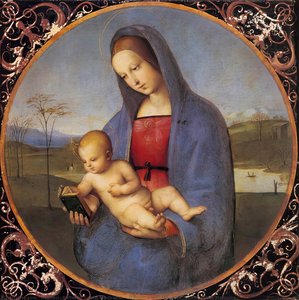
A jornada artística de Rafael foi uma de contínua evolução, marcada por períodos de intenso estudo e assimilação. Seu treinamento inicial com Pietro Perugino em Perugia lançou uma base sólida no estilo umbro – caracterizado por sua modelagem suave, composições harmoniosas e cenas religiosas serenas. No entanto, Rafael possuía uma curiosidade insaciável que o impulsionava a buscar novos desafios e expandir seus horizontes artísticos. Em 1504, viajou para Florença, uma cidade então pulsante com a energia da inovação artística. Aqui, encontrou as obras-primas de Leonardo da Vinci e Michelangelo, artistas que estavam ultrapassando os limites da pintura de maneiras sem precedentes. Estudou meticulosamente suas técnicas – o sfumato de Leonardo, seus sutis gradientes de luz e sombra, e a poderosa precisão anatômica e composições dramáticas de Michelangelo. Este período florentino foi um cadinho para Rafael, forçando-o a confrontar novas possibilidades artísticas e sintetizá-las em sua própria visão única. A influência é visível no aumento do dinamismo e da profundidade psicológica de seus trabalhos desse tempo, particularmente em sua série de Madonas.
O Triunfo Romano: Encomendas e Obras-Primas
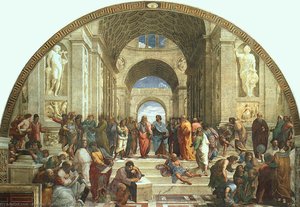
Em 1508, Rafael recebeu uma convocação que alteraria o curso de sua carreira – um convite do Papa Júlio II para ir a Roma. Este marcou o início de seu período mais prolífico e celebrado. A Cidade Eterna lhe ofereceu uma oportunidade sem paralelo de mostrar seus talentos em grande escala, adornando os apartamentos papais no Vaticano com afrescos deslumbrantes. A Escola de Atenas, talvez sua obra mais famosa, é um testemunho de seu domínio da composição, perspectiva e alegoria filosófica. Dentro de seu espaço majestoso, Rafael reuniu figuras da antiguidade clássica – Platão, Aristóteles, Pitágoras, Euclides – criando um vibrante tableau que celebrava a razão humana e a busca pelo conhecimento. Continuou trabalhando para papas subsequentes, incluindo Leão X, empreendendo projetos monumentais como a decoração das Stanze della Segnatura e da Stanza d'Eliodoro. Seus afrescos nessas salas não são meramente decorativos; são declarações profundas sobre o poder papal, crenças religiosas e os ideais do Renascimento.
Uma Síntese de Graça e Grandeza: O Estilo Artístico de Rafael
O estilo artístico de Rafael é frequentemente descrito como uma mistura harmoniosa de graça, clareza e beleza idealizada. Ele possuía uma habilidade extraordinária de sintetizar diversas influências – a tradição umbra, inovações florentinas, antiguidade clássica – em uma estética singularmente equilibrada. Suas composições são meticulosamente planejadas, exibindo um senso de ordem e proporção que reflete sua profunda compreensão dos princípios renascentistas. Suas figuras irradiam dignidade serena e expressividade emocional, incorporando o ideal humanista da perfeição humana. Ele também foi um mestre colorista, empregando tons ricos e luminosos para criar obras que são visualmente cativantes e intelectualmente estimulantes. Ao contrário do estilo frequentemente dramático e turbulento de Michelangelo, o trabalho de Rafael exala uma sensação de calma e harmonia – uma qualidade que o cativou por séculos.
Legado e Influência Duradoura
A morte prematura de Rafael em 1520, aos trinta e sete anos, interrompeu uma carreira repleta de potencial. No entanto, seu legado perdura como uma das figuras mais significativas da história da arte ocidental. Seu trabalho tornou-se uma pedra angular da estética do Alto Renascimento, servindo como um modelo para gerações de artistas. Embora a influência de Michelangelo tenha dominado posteriormente o discurso artístico, a ênfase de Rafael na clareza, harmonia e beleza idealizada experimentou um renascimento durante o período neoclássico, defendido por críticos como Johann Joachim Winckelmann. Hoje, suas pinturas continuam a inspirar admiração, cativando os espectadores com sua brilhante técnica, profundidade emocional e apelo duradouro. Sua influência pode ser vista em inúmeras obras de arte que se seguiram, solidificando seu lugar como um verdadeiro mestre do Renascimento – um pintor que capturou não apenas a semelhança física de seus sujeitos, mas também a própria essência da graça e dignidade humana.

Rafael
1483 - 1520 , Itália
Informações Rápidas
- Artistas Influenciados: ['Pintura Neoclássica']
- Artistas Que Influenciaram:
- Leonardo da Vinci
- Michelangelo
- Data Da Morte: 1520
- Data De Nascimento: 1483
- Local De Nascimento: Urbino, Itália
- Movimento Artístico: Alto Renascimento
- Nacionalidade: Italiano
- Nome Completo: Raffaello Sanzio
- Obras Notáveis: ['A Escola de Atenas']
Artigos Relacionados
Os 25 Tesouros do Hermitage: Arte Clássica para Decorar com Elegância
Descubra os 25 tesouros do Museu Hermitage em São Petersburgo! Explore a história de Rembrandt, Leonardo da Vinci e outros mestres. Encontre reproduções de arte clássica para decorar sua casa com elegância. OriginalUniqueArt.com: a beleza atemporal ao seu alcance.
Do Esboço Inicial à Obra Duradoura: Uma Exploração Abrangente do Processo de Reprodução da Pintura a Óleo
Descubra o fascinante processo de reprodução da pintura a óleo com artistas experientes! Explore técnicas, história e personalize sua coleção. Qualidade museológica garantida.

El Greco: As 25 Obras-Primas que Definem um Gênio da Pintura | OriginalUniqueArt
Descubra as 25 obras-primas de El Greco, o mestre renascentista espanhol! Explore a história, técnica e emoção por trás de quadros icônicos como 'O Enterro do Conde Orgaz'. Encontre reproduções de arte exclusivas e inspire sua decoração em OriginalUniqueArt.com.

Oil on Canvas: The Professional Guide to Durable, High-Quality Art Reproductions for Hospitality and Large-Scale Interior Projects
A professional guide for hotel designers and procurement managers on selecting durable, high-quality oil on canvas reproductions. Learn about material longevity, custom multi-panel layouts, and efficient bulk ordering solutions for large-scale hospitality projects.
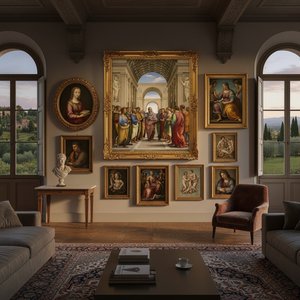
As 25 Obras-Primas de Rafael: Uma Jornada pela Arte Renascentista | OriginalUniqueArt
Descubra as 25 obras-primas de Rafael, o mestre do Renascimento italiano! Explore a história por trás das pinturas mais famosas, como 'A Escola de Atenas' e suas Madonas. Encontre reproduções de arte exclusivas para decorar sua casa com beleza clássica em OriginalUniqueArt.com.