Visualizar na parede
 Compartilhar
 Compartilhar
 Detalhes

 Baixar imagem
 Semelhantes
 Raio X
 Slideshow
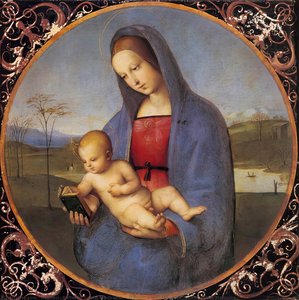
Madonna com o Diádem Azul


 Ler mais
Giclée / Impressão de Arte
Impressão giclée ou em tela de qualidade de museu, com produção rápida e opções flexíveis de acabamento. ( Comprar pintura feita à mão Comprar imagem)




P118B $10

P118H $10

P118W $10

P438Z $10

P508JH $12

P508YH $12

P805H $10

P805Z $10

P919BZ $10

P919G $10

P919XJ $10

P959ZH $10

P968JZ $12

W106C $8

W218G $10

W218JH $8

W218Y $10

W307PJ $10

W316G $10

W316PJ $8

W316Y $10

W398PJ $8

W4111J $10

W500HY $15

W500JH $15

W692G $12

W849H $8

W940BG $15

W953PJ $8




Escolha entre os nossos tamanhos pré-definidos que respeitam as proporções originais da obra de arte.

Você pode inserir suas próprias dimensões para se ajustar a uma moldura ou espaço específico. Se o tamanho selecionado não corresponder às proporções da imagem original, iremos recortar a obra de arte ou estender a imagem com uma borda espelhada ou preenchimento sólido. Um mockup digital será enviado para sua aprovação antes do início da produção.
Por favor, observe que a visualização na tela não reflete o recorte ou a extensão real. Apenas o mockup mostrará com precisão a composição final.
Embora tamanhos personalizados estejam disponíveis, recomendamos selecionar uma dimensão da lista predefinida para preservar as proporções originais.
Entrega mundial () em 2 semanas, em vez das 4/5 semanas padrão. (26 Agosto)

Envio expresso gratuito para todo o mundo

Tela de Linho de Alta Qualidade

Seguro de transporte completo

Garantia de Reembolso de Impostos Alfandegários

Garantia de Fidelidade Cromática

Política de Devolução em 60 Dias (Apenas para Defeitos)

Garantia de reembolso de 100%

Oferta de desconto por quantidade
 A opção de vidro está disponível apenas para tamanhos inferiores a 110 cm

Madonna com o Diádem Azul
Giclée / Impressão de Arte
Tamanho da Reprodução
-


Preço Total
$ 80
Descrição do Colecionável
A Vision of Serenity: Exploring Raphael’s *Madonna of the Diadem* (c. 1510)
Raphael’s *Madonna of the Diadem*, painted around 1510, is a quintessential example of High Renaissance artistry – a tender and harmonious depiction of maternal love and divine grace. This oil painting showcases Raphael's mastery of composition, color, and emotional nuance, solidifying his reputation as one of history’s most beloved artists.Subject & Composition
The artwork centers on the Virgin Mary, gently shielding the Christ Child while Saint John the Baptist kneels in reverent prayer before them. The scene unfolds outdoors, suggested by distant hills and architectural elements – a subtle nod to an idyllic landscape. Raphael employs a pyramidal composition, drawing the viewer’s eye upwards from the figures towards Mary's head, crowned with a delicate diadem (hence the painting’s name). This arrangement creates a sense of stability and reverence. The intimate grouping of the three figures fosters a feeling of quiet domesticity, contrasting beautifully with the sacred nature of the subject matter.Style & Technique
*Madonna of the Diadem* embodies the hallmarks of Raphael’s style: clarity, balance, and idealized beauty. He skillfully utilizes *sfumato*, a technique pioneered by Leonardo da Vinci, to create soft transitions between colors and forms, lending an ethereal quality to the figures. Layers of translucent glazes build depth and luminosity, resulting in rich, vibrant hues. The lines are fluid and graceful, contributing to the overall sense of serenity. Raphael’s meticulous attention to detail is evident in the realistic rendering of fabrics, skin tones, and facial expressions. He achieves this remarkable realism through painstaking observation and careful blending of pigments—a testament to his dedication as an artist.Historical Context & Artistic Influences
Raphael flourished during the High Renaissance (roughly 1490-1527), a period marked by renewed interest in classical art and philosophy. Born in Urbino, he received early training from his father and later honed his skills under Perugino. His time in Florence exposed him to the works of Leonardo and Michelangelo, influencing his style but never diminishing his unique artistic voice. Raphael’s ability to synthesize these influences – Umbrian sweetness, Florentine dynamism, and classical ideals – is a defining characteristic of his work. Comparing this piece with other Madonnas by Raphael, such as *Madonna della Seggiola* or *Madonna of the Meadow*, reveals a consistent theme of tender intimacy and harmonious composition.Symbolism & Meaning
The painting is rich in symbolic meaning. The cloth draped over Jesus represents protection and foreshadows his future suffering. John the Baptist’s act of worship signifies devotion and humility, acknowledging Christ's divine status. The diadem adorning Mary symbolizes her queenship as Mother of God. The overall composition evokes a sense of peace and spiritual contemplation. Raphael’s intention was to convey not merely visual beauty but also profound moral and theological truths—a reflection of the humanist values prevalent during his time.Emotional Impact & Legacy
*Madonna of the Diadem* is profoundly moving in its depiction of maternal love, piety, and divine grace. Raphael’s masterful use of color, light, and composition creates an atmosphere of tranquility and reverence. The painting invites viewers to contemplate the sacredness of family and the beauty of faith. As a timeless masterpiece, it continues to inspire artists and captivate audiences centuries after its creation – making it a treasured addition to any collection or interior space seeking elegance and spiritual depth. Photo Description: --Overall Impression-- The artwork is a Renaissance-era oil painting depicting the Virgin Mary with the infant Jesus and John the Baptist. It’s a vertical composition, emphasizing the figures within a relatively shallow space. The scene takes place outdoors, likely in a landscape setting, with distant hills and buildings visible in the background. The subject matter centers around a serene domestic moment – Mary gently covering Jesus with a cloth, while John the Baptist kneels in prayer. The style is characteristic of Renaissance painting, demonstrating meticulous detail, realistic representation of figures, and a focus on classical ideals of beauty and proportion. The technique utilizes layering and glazing to achieve depth and luminosity. Lines are predominantly soft and flowing, contributing to an overall sense of grace and tranquility. Shapes are largely organic – the rounded forms of the figures and drapery contrast with the geometric structures in the background. Texture is created through brushstrokes that suggest fabric, skin, and stone. Lighting is diffused and warm, emanating from an unseen source, casting soft shadows and highlighting the faces of the figures. Perspective is employed to create a sense of depth, though it’s not strictly linear perspective; rather, it's more atmospheric. The color palette is rich and harmonious, dominated by blues, reds, and golds. Symbolic elements include the cloth covering Jesus (representing protection), John the Baptist’s prayer (symbolizing devotion), and the landscape background (suggesting a connection to nature). Emotionally, the painting evokes feelings of piety, tenderness, and maternal love -- Size: Unknown Date: 1510 ARTIST INFORMATION: ================== Artist: Raphael Birth Year: 1483 Death Year: 1520 Birth City: Urbino Birth Country: Italy Biography:The Urbino Renaissance: Raphael’s Early Life and Formation
Raffaello Sanzio da Urbino, known to the world as Raphael, emerged from a remarkably fertile cultural landscape. Born in 1483 within the walls of Urbino, a small but intellectually vibrant city-state in central Italy, his earliest years were steeped in an atmosphere that prized both artistic skill and humanist learning. His father Giovanni Santi was not merely a painter employed by Duke Federico da Montefeltro—he was a man deeply engaged with the currents of Renaissance thought, a poet who chronicled the Duke’s life and actively sought out innovative artistic ideas from across Italy and beyond. This immersion in a courtly environment, one that valued refinement and intellectual discourse, profoundly shaped the young Raphael's sensibilities. The loss of his father at age eleven thrust responsibility upon him, but also provided an opportunity to hone his skills within the family workshop, absorbin
Biografia do Artista
O Renascimento Urbino: A Formação e Primeiros Anos de Rafael
Raffaello Sanzio da Urbino, mundialmente conhecido como Rafael, emergiu de um cenário cultural extraordinariamente fértil. Nascido em 1483 dentro das muralhas de Urbino, uma pequena mas intelectualmente vibrante cidade-estado no centro da Itália, seus primeiros anos foram imersos em uma atmosfera que prezava tanto a habilidade artística quanto o aprendizado humanista. Seu pai, Giovanni Santi, não era meramente um pintor empregado pelo Duque Federico da Montefeltro – ele era um homem profundamente engajado com as correntes do pensamento renascentista, um poeta que croniquou a vida do Duque e buscou ativamente ideias artísticas inovadoras de toda a Itália e além. Essa imersão em um ambiente cortesão, que valorizava o refinamento e o discurso intelectual, moldou profundamente a sensibilidade do jovem Rafael. A perda de seu pai aos onze anos impôs-lhe responsabilidades, mas também lhe proporcionou uma oportunidade de aprimorar suas habilidades na oficina familiar, absorvendo técnicas e tradições sob a orientação de artistas locais. Mesmo em seus primeiros trabalhos, uma graça gentil e atenção meticulosa aos detalhes – marcas de seu estilo maduro – começaram a emergir.
Da Úmbria a Florença: Absorvendo Novas Influências
A jornada artística de Rafael foi uma de contínua evolução, marcada por períodos de intenso estudo e assimilação. Seu treinamento inicial com Pietro Perugino em Perugia lançou uma base sólida no estilo umbro – caracterizado por sua modelagem suave, composições harmoniosas e cenas religiosas serenas. No entanto, Rafael possuía uma curiosidade insaciável que o impulsionava a buscar novos desafios e expandir seus horizontes artísticos. Em 1504, viajou para Florença, uma cidade então pulsante com a energia da inovação artística. Aqui, encontrou as obras-primas de Leonardo da Vinci e Michelangelo, artistas que estavam ultrapassando os limites da pintura de maneiras sem precedentes. Estudou meticulosamente suas técnicas – o sfumato de Leonardo, seus sutis gradientes de luz e sombra, e a poderosa precisão anatômica e composições dramáticas de Michelangelo. Este período florentino foi um cadinho para Rafael, forçando-o a confrontar novas possibilidades artísticas e sintetizá-las em sua própria visão única. A influência é visível no aumento do dinamismo e da profundidade psicológica de seus trabalhos desse tempo, particularmente em sua série de Madonas.
O Triunfo Romano: Encomendas e Obras-Primas
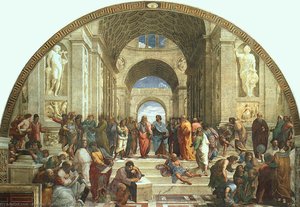
Em 1508, Rafael recebeu uma convocação que alteraria o curso de sua carreira – um convite do Papa Júlio II para ir a Roma. Este marcou o início de seu período mais prolífico e celebrado. A Cidade Eterna lhe ofereceu uma oportunidade sem paralelo de mostrar seus talentos em grande escala, adornando os apartamentos papais no Vaticano com afrescos deslumbrantes. A Escola de Atenas, talvez sua obra mais famosa, é um testemunho de seu domínio da composição, perspectiva e alegoria filosófica. Dentro de seu espaço majestoso, Rafael reuniu figuras da antiguidade clássica – Platão, Aristóteles, Pitágoras, Euclides – criando um vibrante tableau que celebrava a razão humana e a busca pelo conhecimento. Continuou trabalhando para papas subsequentes, incluindo Leão X, empreendendo projetos monumentais como a decoração das Stanze della Segnatura e da Stanza d'Eliodoro. Seus afrescos nessas salas não são meramente decorativos; são declarações profundas sobre o poder papal, crenças religiosas e os ideais do Renascimento.
Uma Síntese de Graça e Grandeza: O Estilo Artístico de Rafael
O estilo artístico de Rafael é frequentemente descrito como uma mistura harmoniosa de graça, clareza e beleza idealizada. Ele possuía uma habilidade extraordinária de sintetizar diversas influências – a tradição umbra, inovações florentinas, antiguidade clássica – em uma estética singularmente equilibrada. Suas composições são meticulosamente planejadas, exibindo um senso de ordem e proporção que reflete sua profunda compreensão dos princípios renascentistas. Suas figuras irradiam dignidade serena e expressividade emocional, incorporando o ideal humanista da perfeição humana. Ele também foi um mestre colorista, empregando tons ricos e luminosos para criar obras que são visualmente cativantes e intelectualmente estimulantes. Ao contrário do estilo frequentemente dramático e turbulento de Michelangelo, o trabalho de Rafael exala uma sensação de calma e harmonia – uma qualidade que o cativou por séculos.
Legado e Influência Duradoura
A morte prematura de Rafael em 1520, aos trinta e sete anos, interrompeu uma carreira repleta de potencial. No entanto, seu legado perdura como uma das figuras mais significativas da história da arte ocidental. Seu trabalho tornou-se uma pedra angular da estética do Alto Renascimento, servindo como um modelo para gerações de artistas. Embora a influência de Michelangelo tenha dominado posteriormente o discurso artístico, a ênfase de Rafael na clareza, harmonia e beleza idealizada experimentou um renascimento durante o período neoclássico, defendido por críticos como Johann Joachim Winckelmann. Hoje, suas pinturas continuam a inspirar admiração, cativando os espectadores com sua brilhante técnica, profundidade emocional e apelo duradouro. Sua influência pode ser vista em inúmeras obras de arte que se seguiram, solidificando seu lugar como um verdadeiro mestre do Renascimento – um pintor que capturou não apenas a semelhança física de seus sujeitos, mas também a própria essência da graça e dignidade humana.

Rafael
1483 - 1520 , Itália
Dados Rápidos
- Artistas Influenciados: ['Pintura Neoclássica']
- Artistas Que Influenciaram:
- Leonardo da Vinci
- Michelangelo
- Data Da Morte: 1520
- Data De Nascimento: 1483
- Local De Nascimento: Urbino, Itália
- Movimento Artístico: Alto Renascimento
- Nacionalidade: Italiano
- Nome Completo: Raffaello Sanzio
- Obras Notáveis: ['A Escola de Atenas']
Artigos Relacionados
As 25 Obras-Primas de Rafael: Uma Jornada pela Arte Renascentista | OriginalUniqueArt
Descubra as 25 obras-primas de Rafael, o mestre do Renascimento italiano! Explore a história por trás das pinturas mais famosas, como 'A Escola de Atenas' e suas Madonas. Encontre reproduções de arte exclusivas para decorar sua casa com beleza clássica em OriginalUniqueArt.com.

John Singer Sargent: As 25 Obras-Primas que Definem um Ícone da Arte
Descubra as 25 obras-primas de John Singer Sargent, o mestre do retrato e do impressionismo americano. Explore a história, técnica e beleza atemporal de seus quadros mais famosos. Encontre reproduções de arte exclusivas para decorar sua casa com elegância em OriginalUniqueArt.com.

John Constable: As 25 Obras-Primas que Definem o Mestre da Paisagem Inglesa | OriginalUniqueArt
Descubra as 25 obras-primas de John Constable, o mestre da paisagem inglesa! Explore a arte romântica, cores vibrantes e histórias fascinantes por trás de 'Hay Wain' e outras pinturas icônicas. Encontre reproduções de alta qualidade para decorar sua casa com OriginalUniqueArt.com.
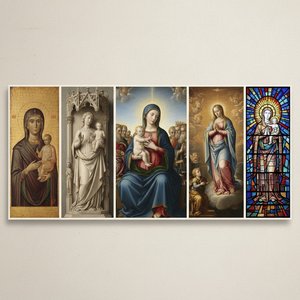
Divine Grace: A Journey Through the Most Iconic Depictions of the Virgin Mary in Art History
Embark on a profound journey through art history with our exploration of the most iconic depictions of the Virgin Mary. Discover the divine grace, symbolism, and masterful techniques found in Renaissance masterpieces and sacred iconography.

Divine Grace: An Art Historian's Journey Through Iconic Masterpieces of the Virgin Mary
Explore the profound beauty of Marian iconography through an art historian's lens. Discover iconic masterpieces by Raphael and Renaissance masters, celebrating the divine grace and timeless elegance of the Virgin Mary in classical fine art.