 Compartilhar
 Compartilhar
 Detalhes
 Guia
Guia

 Baixar imagem
 Semelhantes
 Ver diaporama
 Perguntas e Respostas
 Estatísticas
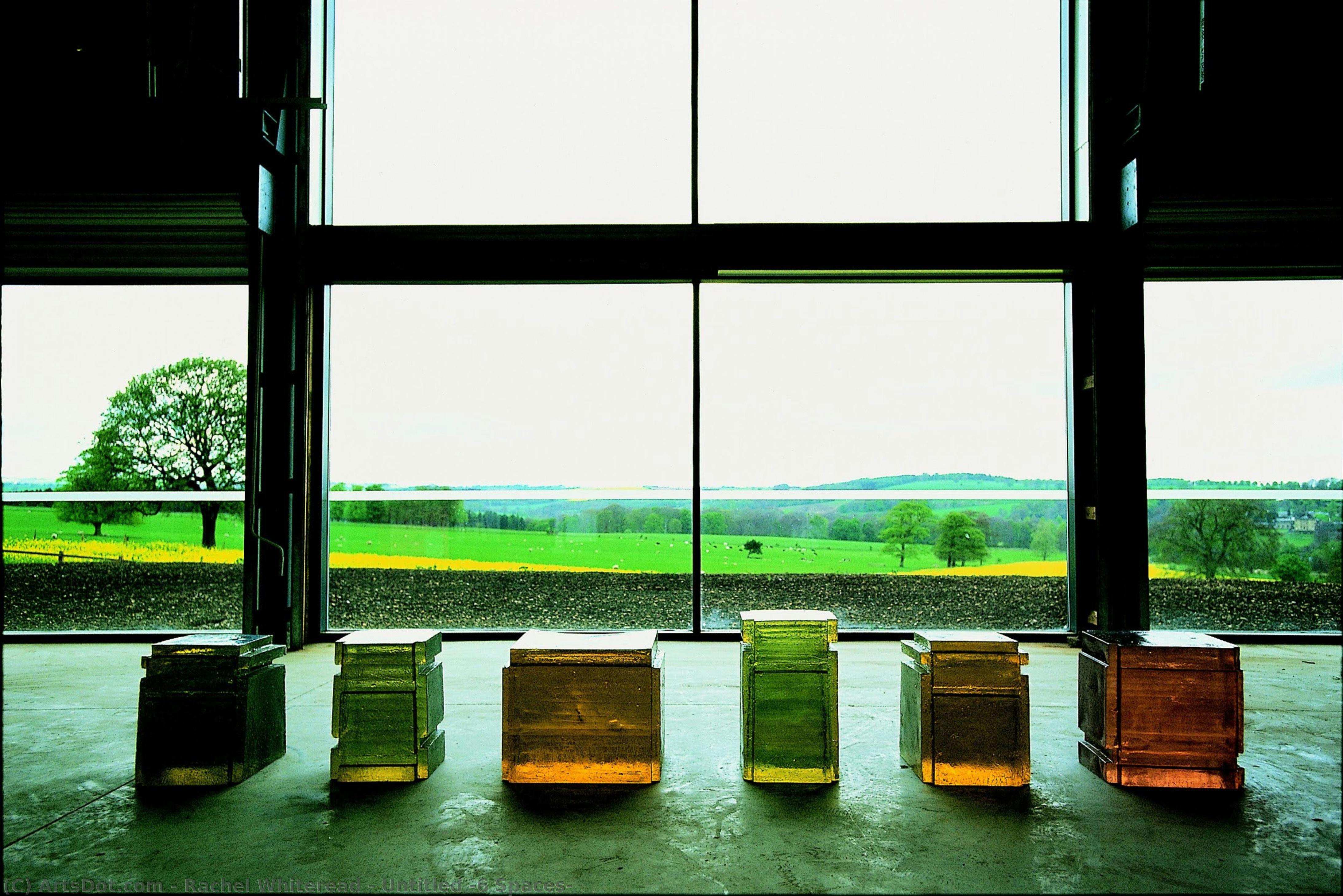
Untitled (6 Spaces)

- 40.0 x 313.0 cm


 Ler mais
Obtenha um arquivo pronto para impressão que vai muito além da visualização na web. Cada imagem digital que vendemos provém de um arquivo mestre de alta resolução em nosso banco de dados — geralmente entre 5.000 e 15.000 pixels de largura — para que você possa imprimir em grandes formatos, realizar cortes precisos ou reproduzir detalhes minuciosos com total confiança.
Nenhum arquivo sai do nosso estúdio sem passar por um cuidadoso processo de revisão. Um especialista digital verifica as cores em relação à pintura original e as corrige se necessário, aumentando então a clareza e o detalhe com ferramentas profissionais de retoque — sempre mantendo a fidelidade às pinceladas e ao estilo do artista. O resultado é uma imagem que se assemelha à pintura, e não a um scan com filtros.
Aprovação antes da finalização: nosso especialista enviará a imagem por e-mail em até 72 horas para sua revisão. Não ficou satisfeito? Solicite melhorias ou correções, ou peça o reembolso caso a qualidade não atenda às suas expectativas.
Esta é a qualidade em que confiam editoras, estúdios de design, galerias e gráficas.
Imagem Digital
Baixe um arquivo de alta resolução para exibição pessoal, impressão e projetos criativos. ( Alternar para Impressão Comprar pintura feita à mão)
Incluído em cada compra de imagem digital
Entrega Digital Especializada e Garantida
Ao escolher o OriginalUniqueArt.com, você não está apenas adquirindo uma imagem — você está recebendo uma obra de arte digital profissionalmente aprimorada, elaborada com precisão e com garantia de satisfação. Aqui está tudo o que acompanha seu pedido, automaticamente:

Entrega rápida por e-mail
O seu arquivo de imagem digital em alta resolução será enviado por e-mail em até 72 horas após o pedido — pronto para uso imediato.

Arquivo Digital com IA Otimizado
Sua obra de arte é otimizada profissionalmente por meio de ferramentas avançadas de IA e edição manual, garantindo o máximo de detalhes, clareza e precisão de cores.

Reenvio gratuito vitalício
Apagou ou perdeu o seu ficheiro acidentalmente? Não se preocupe – nós reenviamos para si a qualquer momento, gratuitamente.

Sem Taxas de Importação - Sempre
Desfrute da sua obra de arte instantaneamente, sem taxas alfandegárias, impostos ou custos de entrega — downloads digitais são sempre isentos de taxas.

Garantia de Fidelidade de Cores
Garantimos que sua imagem digital reflita as cores originais com a maior fidelidade possível, utilizando ferramentas profissionais e gerenciamento de cores.

Garantia de satisfação de 100 dias
Se não estiver satisfeito com a sua imagem digital, nós a revisaremos ou reembolsaremos 100% dentro de 100 dias — sem perguntas.

Garantia de Reembolso 100%
Não está satisfeito? Receba o reembolso total em até 100 dias após o recebimento do seu arquivo digital — sem perguntas.

Descontos para pedidos em lote
Compre 3 imagens, economize 10% - Compre 5, economize 15% - Compre 10+, economize 20%. Ideal para projetos criativos, galerias e agências.
The Architecture of Absence: Encountering Rachel Whiteread’s Untitled (6 Spaces)
In the quiet, contemplative realm of contemporary sculpture, few artists command the ability to make the invisible felt as powerfully as Rachel Whiteread. Her 199 and Untitled (6 Spaces) serves as a profound meditation on the boundaries between the internal and external worlds. At first glance, the viewer is met with a minimalist arrangement: a series of colored, geometric forms positioned within a serene, light-filled interior. Yet, beneath this clean, modern aesthetic lies the artist's signature preoccupation with the concept of negative space. Whiteread does not merely present objects; she presents the memory of spaces that have been occupied, captured, and frozen in time.
The composition of the piece creates a striking dialogue between the man-made structure and the natural landscape beyond. Through large, expansive windows, a panoramic view of the rural world unfolds, acting as a soft, organic counterpoint to the rigid, geometric precision of the interior. The five square, colored boxes sit upon the concrete floor like silent sentinels, their vibrant hues providing a rhythmic pulse against the muted, atmospheric tones of the distant horizon. This juxtaposition invites the observer to consider the threshold—the thin, often permeable line where our sheltered, constructed environments meet the untamed expanse of nature.
Materiality and the Play of Light
The power of Untitled (6 Spaces) resides in its masterful use of texture and light. The smooth, industrial surfaces of concrete and glass are interrupted by the painted wooden forms, creating a tactile experience that shifts as the light changes throughout the day. The lighting within the space is intentionally subdued, casting soft shadows that lend a sculptural depth to the entire room. This interplay of light and shadow does more than just define shape; it breathes life into the stillness, emphasizing the weight of the boxes and the profound silence they inhabit.
For the discerning collector or interior designer, this work offers an unparalleled sense of spatial equilibrium. The technique utilizes a photographic perspective that creates a deep, linear recession, drawing the eye from the foreground elements through the mid-ground windows to the distant horizon. This layering of elements—the heavy, colorful boxes against the ethereal, receding landscape—creates a sense of infinite depth, making it an ideal focal point for spaces that value modern minimalism and architectural sophistication.
A Legacy of Memory and Form
To understand this work is to understand the broader trajectory of Rachel Whiteread’s career. As a pivotal figure in the Young British Artists (YBA) movement and the first woman to win the Turner Prize, Whiteread has spent decades exploring the psychological weight of objects. Her practice often involves casting the voids left behind by domestic items, turning the "nothingness" of a room into a tangible, physical presence. In Untitled (6 Spaces), this concept is translated into a more architectural language, where the "spaces" are not just voids, but deliberate, colored interruptions in an otherwise seamless environment.
The emotional impact of the piece is one of profound introspection. There is a subtle sense of isolation or contemplation evoked by the expansive view and the solitary presence of the colored boxes. It is a work that rewards slow looking, offering a sanctuary of stillness in a frantic world. Whether viewed as a study in geometric precision or a poetic reflection on the passage of time, this piece remains a cornerstone of contemporary sculptural thought, capturing the very essence of what it means to inhabit a space.
Perguntas e Respostas
Onde e para qual finalidade é recomendado "Untitled (6 Spaces)"?
As recomendações de uso para "Untitled (6 Spaces)", de Rachel Whiteread são (Geometry) e o ambiente (Office).
Qual técnica foi utilizada em "Untitled (6 Spaces)", de Rachel Whiteread?
A técnica de "Untitled (6 Spaces)", de Rachel Whiteread é Sculpture. As reproduções visam reproduzir a aparência desta técnica.
As cores de "Untitled (6 Spaces)", de Rachel Whiteread são vibrantes ou suaves?
A cor de "Untitled (6 Spaces)" apresenta Subtle Color de saturação e Balanced de intensidade.
Biografia do Artista
A Sculptor of Absence and Memory
Rachel Whiteread, born in Ilford, England, in 1963, stands as a pivotal figure in contemporary sculpture, renowned for her hauntingly beautiful explorations of absence, memory, and the spaces that surround us. Her work isn’t about what *is* there, but rather what *isn't*, a subtle yet profound shift in sculptural thinking that propelled her to international acclaim and cemented her place within the influential Young British Artists (YBA) movement. Whiteread’s artistic journey began amidst a creatively stimulating environment; her mother, Patricia Whiteread, was also an artist, instilling an early appreciation for visual expression, while her father, Thomas Whiteread, fostered a strong sense of social awareness that would later permeate her work. The personal losses of both parents during her career undoubtedly deepened the emotional resonance found within her sculptures, imbuing them with a palpable sense of melancholy and reflection.Formative Years and Artistic Development
Whiteread’s formal training laid the groundwork for her unique artistic vision. She studied at Brighton Polytechnic from 1982 to 1985, followed by the prestigious Slade School of Art, University College London, where she earned an MA in sculpture in 1987. A crucial turning point came during a workshop led by sculptor Richard Wilson, which sparked her fascination with casting techniques and their potential for artistic expression. This exploration wasn’t about replicating form, but rather capturing the void—the negative space left behind when an object is removed. Early works like “Closet” (1988) exemplified this nascent approach. A plaster cast of a wardrobe's interior, draped in black felt, evoked childhood memories and the comforting darkness of hidden spaces, hinting at the psychological weight objects can carry. This fascination with domesticity and personal history became a recurring theme throughout her career.The Art of Casting Negative Space
Whiteread’s signature technique revolves around casting negative space—the areas *around* objects rather than the objects themselves. She employs materials like plaster, concrete, and resin to create casts of spaces surrounding everyday items – furniture, architectural details, even entire rooms. This innovative approach challenges traditional notions of sculpture by focusing on what is absent, creating a sense of mystery and evoking feelings of loss or memory. Her sculptures aren’t simply representations; they are ghostly presences, echoes of lives lived and spaces occupied. Whiteread believes her casts retain “the residue of years and years of use,” imbuing them with a sense of history and human presence. This isn't merely about the physical form but also the intangible traces left behind by those who interacted with it. The resulting works are profoundly evocative, prompting viewers to contemplate the significance of what is not immediately present.Landmark Works and Lasting Legacy
Whiteread’s career has been punctuated by several groundbreaking works that have garnered international acclaim. “Ghost” (1990), a monumental plaster cast of an entire room, captured the atmosphere of a demolished house, establishing her reputation and attracting the attention of Charles Saatchi. However, it was "House" (1993) that truly catapulted her to fame—and controversy. This large concrete cast of the interior of a Victorian terraced house, exhibited on-site before being controversially demolished by the local council, sparked public debate about urban development and preservation. The work earned her the prestigious Turner Prize in 1993, making her the first woman to receive the award. Further demonstrating her ability to engage with significant social issues, “Judenplatz Holocaust Memorial” (2000) in Vienna consists of concrete casts of library shelves with pages turned inwards, a poignant symbol of the loss of knowledge and identity during the Holocaust. "Untitled Monument" (2001), a massive resin cast of the empty fourth plinth in Trafalgar Square, London, offered a unique perspective on public space and civic engagement. Whiteread’s contribution to contemporary art is significant for redefining sculpture, exploring memory and loss, offering social commentary, and influencing countless artists to explore new forms of expression. Her work continues to resonate with audiences worldwide, reminding us of the power of absence and the enduring weight of memory.Recognition and Continued Influence
- Turner Prize (1993): Awarded for “House,” solidifying her position as a leading figure in contemporary art.
- Venice Biennale (1997): First woman to present a solo exhibition at the British Pavilion, receiving the Best Young Artist award.
- Dame Commander of the Order of the British Empire (DBE) (2019): Honored for her services to art, recognizing her significant contribution to the cultural landscape.
- Ongoing Exhibitions and Collections: Whiteread’s work is featured in major museums and galleries worldwide, including the Tate Modern, Museum of Modern Art (MoMA), and National Gallery of Art.

Rachel Whiteread
1963 - , United Kingdom
Breve Biografia
- Full Name: Rachel Whiteread
- Nationality: British
- Date Of Birth: 1963
- Place Of Birth: Ilford, United Kingdom
- Notable Artworks:
- Ghost
- House
- Untitled Monument
- Artistic Movement Or Style: Young British Artists
- Artists Who Influenced This Artist: ['Richard Wilson']
- Artists Or Movements Influenced By This Artist: ['Contemporary sculpture']