Text size

() ·

A painting made for you, by hand

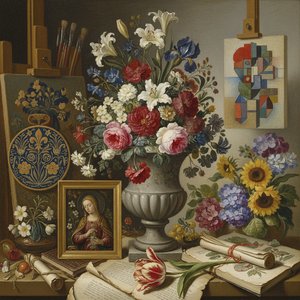
Flower Still Life

Reprodução em Óleo Feita à Mão

Óleo sobre tela pintado à mão no tamanho e moldura de sua escolha, feito sob encomenda pelos nossos artistas. ( Alternar para Impressão Alternar para Imagem Digital)

Descrição do Item

Discover Rachel Ruysch's stunning 'Flower Still Life' (1726). A masterpiece of Dutch Golden Age realism, showcasing exquisite botanical detail & a poignant reflection on nature’s beauty.

Biografia do Artista

Rachel Ruysch (1664-1750): Pioneira da pintura floral holandesa! Descubra o realismo detalhado, fundos escuros e composições dinâmicas desta artista inovadora.

from ·

Chapter 1

How large should it be?

Slide to change the size; the picture on the left shows the frame at its real width. The proportions of the original are kept.

Tamanho padrão
personalizado
CM
INCH

Escolha entre os nossos tamanhos pré-definidos que respeitam as proporções originais da obra de arte.

largura
altura

Insira a largura e a altura desejadas para se ajustarem à sua moldura ou parede. Como esta obra é pintada à mão, para um tamanho com proporções diferentes, o artista poderá pintar um pouco mais ao redor da imagem ou reduzir ligeiramente a composição — você escolhe. Enviamos uma maquete digital para sua aprovação antes de iniciar a pintura. A imagem exibida nesta página não representa o resultado real — apenas a maquete mostra o resultado final.

Chapter 2

How should it arrive?

Choose the edges of the stretched canvas

Choose your frame

Corner sample of the WhiteWrap canvas edge finish, stretched on madeira maciça bars
White €1
Corner sample of the BlurSideWrap canvas edge finish, stretched on madeira maciça bars
Blurside €1
Corner sample of the ExtendedWrap canvas edge finish, stretched on madeira maciça bars
Extended €1
Corner sample of the P118B picture frame: poliestireno moldado, 5 cm wide and 3 cm thick
P118B €10
Corner sample of the P118H picture frame: poliestireno moldado, 5 cm wide and 3 cm thick
P118H €10
Corner sample of the P118W picture frame: poliestireno moldado, 5 cm wide and 3 cm thick
P118W €10
Corner sample of the P438Z picture frame: poliestireno moldado, 5.5 cm wide and 3.5 cm thick
P438Z €10
Corner sample of the P508JH picture frame: poliestireno moldado, 7 cm wide and 3.5 cm thick
P508JH €12
Corner sample of the P508YH picture frame: poliestireno moldado, 7 cm wide and 3.5 cm thick
P508YH €12
Corner sample of the P805H picture frame: poliestireno moldado, 5 cm wide and 3.5 cm thick
P805H €10
Corner sample of the P805Z picture frame: poliestireno moldado, 5 cm wide and 3.5 cm thick
P805Z €10
Corner sample of the P919BZ picture frame: poliestireno moldado, 7 cm wide and 3.5 cm thick
P919BZ €10
Corner sample of the P919G picture frame: poliestireno moldado, 7 cm wide and 3.5 cm thick
P919G €10
Corner sample of the P919XJ picture frame: poliestireno moldado, 7 cm wide and 3.5 cm thick
P919XJ €10
Corner sample of the P959ZH picture frame: poliestireno moldado, 5 cm wide and 3 cm thick
P959ZH €10
Corner sample of the P968JZ picture frame: poliestireno moldado, 6 cm wide and 4 cm thick
P968JZ €12
Corner sample of the W106C picture frame: madeira maciça, 5 cm wide and 3 cm thick
W106C €8
Corner sample of the W218G picture frame: madeira maciça, 5 cm wide and 3 cm thick
W218G €10
Corner sample of the W218JH picture frame: madeira maciça, 5 cm wide and 3 cm thick
W218JH €8
Corner sample of the W218Y picture frame: madeira maciça, 5 cm wide and 3 cm thick
W218Y €10
Corner sample of the W307PJ picture frame: madeira maciça, 6 cm wide and 3 cm thick
W307PJ €10
Corner sample of the W316G picture frame: madeira maciça, 6 cm wide and 3 cm thick
W316G €10
Corner sample of the W316PJ picture frame: madeira maciça, 6 cm wide and 3 cm thick
W316PJ €8
Corner sample of the W316Y picture frame: madeira maciça, 6 cm wide and 3 cm thick
W316Y €10
Corner sample of the W398PJ picture frame: madeira maciça, 5 cm wide and 3 cm thick
W398PJ €8
Corner sample of the W4111J picture frame: madeira maciça, 6.5 cm wide and 3.5 cm thick
W4111J €10
Corner sample of the W500HY picture frame: madeira maciça, 7 cm wide and 5 cm thick
W500HY €15
Corner sample of the W500JH picture frame: madeira maciça, 7 cm wide and 5 cm thick
W500JH €15
Corner sample of the W692G picture frame: madeira maciça, 8 cm wide and 4 cm thick
W692G €12
Corner sample of the W849H picture frame: madeira maciça, 5 cm wide and 3 cm thick
W849H €8
Corner sample of the W940BG picture frame: madeira maciça, 7.5 cm wide and 4.5 cm thick
W940BG €15
Corner sample of the W953PJ picture frame: madeira maciça, 6 cm wide and 3.5 cm thick
W953PJ €8
Corner sample of the H24-GOLD picture frame: madeira entalhada com gesso, 10 cm wide and 6 cm thick
H24-GOLD €30
Corner sample of the H24-SILVER picture frame: madeira entalhada com gesso, 10 cm wide and 6 cm thick
H24-SILVER €30
Corner sample of the H36-GOLD picture frame: madeira entalhada com gesso, 15 cm wide and 6.5 cm thick
H36-GOLD €45
Corner sample of the H36-SILVER picture frame: madeira entalhada com gesso, 15 cm wide and 6.5 cm thick
H36-SILVER €45
Prévia da moldura
Com moldura

Moulding: . Overall size with the frame: .

Chapter 3

Who paints it, and should anything change?

Examples of what can be changed: Replace face with customer photo; Add pet (e.g., replace cat with dog); Include hidden message in background; Change background landscape or elements.
After order, OriginalUniqueArt.com team will email client for instructions and provide a mockup preview

Entrega mundial () em 3 a 4 semanas, em vez das 5 semanas padrão. (2 Novembro). Sem comprometer a qualidade.

Chapter 4

The finishing touches

A nameplate, as in a museum?

Detalhes da Placa de Bronze Gravada

This elegant plaque features the artist's name and the title of the artwork, finely engraved for a timeless presentation.

It is made from bronze with a refined, elegant finish. The text is precisely laser-engraved for a sharp and permanent result. Measuring 9x2 cm, the plaque is compact yet easy to read. It's built to be durable and scratch-resistant, offering a professional, museum-quality look. Mounting is simple thanks to the included adhesive backing.

Detalhes da Placa de Acrílico Transparente

The plaque includes essential engraved details such as the artist's name, the title of the artwork, the date it was created, the type of media used-like oil on canvas or watercolor-a brief description of the piece, and a QR code that links to the complete artwork information.

It is crafted from clear acrylic, offering a sleek, modern appearance. The text is UV-engraved in black to ensure strong visual contrast. With a size of 10x15 cm, it ensures optimal readability. It comes equipped with two metal hooks for secure wall mounting. The plaque is designed to be weather-resistant, making it suitable for various environments, and it includes interactive features that work seamlessly with smartphone scanning.

Detalhes da Placa de Acrílico Preto

This elegant plaque includes engraved information such as the artist's name, the title of the artwork, the date it was created, the type of media used (like oil on canvas or watercolor), a short description of the artwork, and a QR code for quick access to more information.

The plaque itself is made from refined black acrylic with a premium finish. The text is laser-engraved in white for high contrast and readability. Its size is 10x15 cm, designed to be easy to read. It comes with two metal hooks for professional mounting. The design is sleek and fits any interior style. It is also weather-resistant and durable, with built-in digital integration for mobile compatibility.

A protective varnish?

When do you need it?

Chapter 5

Your painting, as you ordered it

Flower Still Life

Técnica de Reprodução

Tamanho da Reprodução

-

Artista Sênior de Elite

Mais detalhes, refinamento e tempo de produção adicional

-

Moldura para Reprodução

-

-

Para obras de arte ou reproduções com mais de 105 cm (aproximadamente 41 polegadas) em qualquer um dos lados, a moldura será enviada como um kit desmontado. Este método garante uma entrega segura e evita danos durante o transporte.

Montagem profissional necessária — este não é um produto DIY (faça você mesmo).
O kit deve ser montado e a tela esticada por um profissional de molduraria experiente, utilizando cola de madeira (não inclusa), um alicate de esticar tela e grampos para manter as travessas alinhadas enquanto a cola seca. A montagem incorreta ou a tensão desigual da tela podem danificar permanentemente a obra de arte e não estão cobertas pela nossa garantia.

  • Todas as barras de madeira maciça estão incluídas, precisamente cortadas ao tamanho certo.

  • Montado com os parafusos fornecidos, além de cola para madeira para as junções dos cantos, que não está inclusa e deve ser providenciada pelo seu moldurista.

  • São necessárias ferramentas profissionais não incluídas: um alicate de estiramento de tela (esticador) e grampos para manter as ripas alinhadas enquanto a cola seca.

Importante:
As junções dos cantos requerem cola para madeira, as ripas devem ser mantidas com grampos até que a cola esteja completamente seca, e o estiramento da tela na moldura montada requer um alicate de esticar tela. Nenhum destes itens está incluído no kit. Por favor, certifique-se de contar com um profissional de molduraria experiente antes de encomendar este tamanho.

Etiqueta de identificação

-

-

Verniz de Proteção

Verniz brilhante (realça as cores e protege contra a luz e a umidade)

-

Personalizar minha obra

Exemplos de alterações possíveis: Substituir o rosto por uma foto do cliente; Adicionar um animal de estimação (ex.: substituir gato por cachorro); Incluir uma mensagem oculta no fundo; Alterar a paisagem ou os elementos do fundo.

-

Urgente

Entrega mundial () em 3 a 4 semanas, em vez das 5 semanas padrão. (2 Novembro). Sem comprometer a qualidade.

-

Envio Expresso

Entrega mundial para em 5 semanas. (9 Novembro).

Com envio incluído

Preço Total

€ 267

Preço Total € 267

A opção de vidro está disponível apenas para tamanhos inferiores a 110 cm

Included with every order

  • Envio expresso gratuito para todo o mundo
  • Tela de Linho de Alta Qualidade
  • Seguro de transporte completo
  • Garantia de Reembolso de Impostos Alfandegários
  • Garantia de Fidelidade Cromática
  • Política de Devolução em 100 Dias (Apenas para Defeitos)
  • Garantia de reembolso de 100%
  • Oferta de desconto por quantidade

Rachel Ruysch’s “Flower Still Life”: A Window into Dutch Golden Age Beauty

Rachel Ruysch's "Flower Still Life," painted in 1726, isn’t merely a depiction of blossoms; it’s a meticulously crafted meditation on beauty, mortality, and the burgeoning fascination with the natural world that defined the Dutch Golden Age. This exquisite work, now residing at the Toledo Museum of Art, offers a rare glimpse into the studio of one of the most celebrated female artists of her time – a woman who defied convention to establish herself as a master of botanical realism.

Ruysch’s artistic journey was profoundly shaped by her father, Frederik Ruysch, a renowned professor of anatomy and botany. He cultivated within their home not just a household but a living laboratory—a vast collection of preserved specimens, dissected animals, and meticulously documented plants. It was here that young Rachel developed an unparalleled eye for detail, learning to observe the subtle nuances of form, texture, and color with scientific precision. This early immersion instilled in her a deep respect for nature’s fragility and its inherent beauty – themes that would become central to her artistic vision.

The Language of Flowers: Symbolism and Technique

“Flower Still Life” exemplifies Ruysch's signature style, characterized by an almost obsessive attention to detail. The composition is dominated by a profusion of flowers—poppies in vibrant reds and oranges, delicate white roses, hollyhocks reaching for the light, and a host of other blooms arranged within a dark, shadowed niche. Each petal, leaf, and stem is rendered with astonishing accuracy, capturing the velvety texture of petals, the intricate veins of leaves, and the subtle gradations of color. Ruysch’s technique isn't simply about replicating what she sees; it’s about conveying an understanding of the flower’s very essence – its structure, its life cycle, and its inherent beauty.

Beyond mere representation, Ruysch imbues her paintings with symbolic meaning. The inclusion of insects—a bee diligently gathering pollen, a caterpillar crawling along a stem, and a butterfly alighting on a bloom—adds layers of interpretation. These creatures represent the transient nature of life, the cycle of decay and renewal, and the interconnectedness of all living things. The presence of a watch within the arrangement is particularly poignant, serving as a visual reminder of the fleeting passage of time – a hallmark of the *vanitas* genre, which explored themes of mortality and vanity.

A Reflection of its Time: The Dutch Golden Age

“Flower Still Life” is inextricably linked to the cultural context of the Dutch Golden Age. During this period, the Netherlands experienced an unprecedented economic boom fueled by trade and exploration. The nation became a global center for horticulture, importing exotic plants from around the world—including tulips, which had originated in Turkey. The tulip mania of 1637, a speculative bubble centered on these highly prized flowers, demonstrated the Dutch people’s fascination with beauty and their willingness to invest heavily in its pursuit. Ruysch's paintings capture this spirit of extravagance and connoisseurship, reflecting the wealth and sophistication of the era.

Bringing Ruysch’s Vision Home: Reproductions and Interior Design

Today, reproductions of “Flower Still Life” are highly sought after by collectors and interior designers alike. The painting's rich colors, intricate details, and evocative symbolism make it a captivating addition to any space. When selecting a reproduction, consider the quality of the materials used—a fine-art print on archival paper will ensure that the artwork’s beauty endures for generations to come. The dynamic composition and subtle interplay of light and shadow create a sense of depth and movement, adding a touch of elegance and sophistication to any room. Ruysch's masterpiece continues to inspire with its celebration of nature's beauty and its poignant reminder of life's fleeting moments.

Perguntas e Respostas

Qual é a paleta de cores de "Flower Still Life"?

As cores de "Flower Still Life" compõem uma paleta Earthy. Esta classificação descreve as famílias de cores predominantes.

Posso ver "Flower Still Life", de Rachel Ruysch na minha própria parede antes de comprar?

A página de Prévia em RA de "Flower Still Life", de Rachel Ruysch utiliza realidade aumentada para mostrar a obra em seu próprio espaço, através de um dispositivo compatível.

Quem é o artista por trás de "Flower Still Life"?

O artista por trás de "Flower Still Life" é Rachel Ruysch. A obra está catalogada sob o nome de Rachel Ruysch.

More about this painting

Visualizar na parede Visualizar em RA Alternar para Impressão Alternar para Imagem Digital Compartilhar
Detalhes Guia Adicionar aos favoritos Baixar imagem Semelhantes Raio X Ver diaporama Q&A Estatísticas

In numbers

  • 1726the year it was painted
  • 29frames to choose from
  • standard sizes, in its own proportions
  • 5weeks to paint and deliver it
Rachel Ruysch

Rachel Ruysch

1664 - 1750, Países Baixos

Quick facts about Rachel Ruysch

  • Artistas Influenciados Por: ['Pintores de natureza morta']
  • Artistas Que Influenciaram:
    • Willem van Aelst
    • Otto Marseus van Schrieck
  • Data De Falecimento: 1750
  • Data De Nascimento: 3 de junho de 1664
  • Local De Nascimento: Amsterdã, Países Baixos
  • Movimento Artístico: Natureza morta floral
  • Nacionalidade: Holandesa
  • Nome Completo: Rachel Ruysch
  • Obras Notáveis:
    • Still Life with Flowers...
    • Still-Life with Flowers

Biografia do Artista

Rachel Ruysch: A Florista da Era de Ouro Holandesa

Rachel Ruysch, uma figura singular no panteão dos artistas do Século de Ouro holandês, floresceu em um ambiente intelectualmente estimulante que moldou sua visão artística única. Nascida em Haia em 1664, filha do renomado professor de anatomia e botânica Frederik Ruysch, Rachel cresceu imersa em um mundo de curiosidades científicas e beleza natural. A coleção extraordinária de seu pai – esqueletos animais, espécimes minerais e uma miríade de plantas – serviu como laboratório vivo para sua imaginação, despertando nela um profundo apreço pela precisão da natureza e a transitoriedade da vida. Desde cedo, Rachel demonstrou talento artístico notável, dedicando-se à representação detalhada das flores e insetos que povoavam o universo de seu pai. Essa infância singular não apenas alimentou sua paixão pela arte, mas também lhe proporcionou um conhecimento botânico profundo, que se refletiria em suas obras com uma precisão científica rara. Sua formação inicial foi complementada por um aprendizado formal com Willem van Aelst, um mestre da pintura floral em Amsterdã, onde aprimorou suas habilidades técnicas e aprendeu os segredos de composições florais exuberantes e aparentemente espontâneas.

Uma Revolução na Pintura Floral

A obra de Rachel Ruysch transcendeu as convenções estabelecidas da pintura floral holandesa. Enquanto muitos artistas da época se contentavam com arranjos simétricos e formais, ela ousou romper com essa tradição, abraçando uma abordagem mais naturalista e dinâmica. Suas composições eram caracterizadas por um senso de movimento e vitalidade, com flores inclinadas, caules retorcidos e pétalas delicadamente dispostas para criar uma sensação de espontaneidade. A maestria de Ruysch residia em sua capacidade de capturar a textura sutil e as variações de cor de cada flor individualmente, conferindo-lhes um realismo impressionante. O uso magistral de fundos escuros intensificava o brilho das flores, criando um contraste dramático que realçava sua beleza efêmera. Além disso, Ruysch frequentemente incorporava elementos inusitados em suas pinturas, como pequenos animais e insetos escondidos entre as flores, adicionando uma camada extra de interesse visual e simbolismo. Essa combinação de precisão científica e sensibilidade artística a distinguiu de seus contemporâneos, estabelecendo-a como uma inovadora na pintura floral.

Reconhecimento Real e Legado Duradouro

O talento excepcional de Rachel Ruysch não passou despercebido. Sua obra conquistou o reconhecimento de colecionadores e patronos em toda a Europa, incluindo membros da realeza. Em 1701, ela alcançou um marco histórico ao se tornar a primeira mulher a ser admitida na prestigiosa Pictura, uma guilda de artistas em Haia – um testemunho inequívoco de seu talento e status entre seus pares masculinos. O ápice de sua carreira chegou com o convite para servir como pintora da corte do Eletor Palatino Johann Wilhelm em Düsseldorf, onde passou oito anos criando obras que solidificaram ainda mais sua reputação internacional. A influência de Ruysch se estendeu além das fronteiras de seu ateliê. Sua abordagem inovadora à pintura floral inspirou gerações de artistas subsequentes, e suas obras continuam a ser admiradas por sua beleza atemporal e precisão técnica. A publicação de poemas em sua homenagem durante sua vida é um testemunho da admiração e respeito que ela despertava na sociedade holandesa.

Uma Pioneira em um Mundo Dominado por Homens

Rachel Ruysch não apenas deixou uma marca indelével no mundo da arte, mas também desafiou as normas sociais de seu tempo. Em uma era em que as mulheres eram frequentemente excluídas das profissões artísticas, ela perseverou e alcançou o sucesso, provando que o talento e a dedicação podiam superar barreiras de gênero. Sua história é um poderoso lembrete da importância de desafiar as expectativas sociais e perseguir os próprios sonhos, independentemente das dificuldades. Hoje, suas pinturas são exibidas em museus e coleções particulares em todo o mundo, incluindo o Museu Nacional de Mulheres nas Artes, o Museu de Toledo e a Mauritshuis, testemunhando seu legado duradouro como uma das maiores pintoras florais da história da arte. Rachel Ruysch permanece como um símbolo de talento, perseverança e inovação, inspirando artistas e admiradores até os dias atuais. Sua obra é mais do que apenas uma representação da beleza natural; é uma celebração da vida, da fragilidade e da resiliência do espírito humano.

Informações Rápidas

  • Year: 1726
  • Title: Flower Still Life
  • Medium: Oil on canvas
  • Location: Toledo Museum of Art
  • Dimensions: 75.6 x 60.6 cm
  • Artist: Rachel Ruysch

Quiz de Arte

Cada pergunta possui apenas uma resposta correta.

Pergunta 1:
What is the primary subject matter of Rachel Ruysch’s ‘Flower Still Life’?
Pergunta 2:
According to the description, what is unique about Rachel Ruysch’s approach to still life painting?
Pergunta 3:
What historical context is mentioned regarding Rachel Ruysch’s career?
Pergunta 4:
The description highlights that Ruysch’s father was a:
Pergunta 5:
What does the description suggest about the significance of flowers in Ruysch’s work?
Explore obras de arte organizadas por temas, estilos e características.