

 Visualizar na parede
 Compartilhar
 Compartilhar
 Detalhes
 Guia
Guia

 Baixar imagem
 Semelhantes
 Raio X
 Ver diaporama
 Estatísticas
Sorrento. Garden.
 Oil On Canvas
- WallArt
- Post-Impressionism
 1924
1924 81.0 x 66.0 cm
 Ler mais
Obtenha um arquivo pronto para impressão que vai muito além da visualização na web. Cada imagem digital que vendemos provém de um arquivo mestre de alta resolução em nosso banco de dados — geralmente entre 5.000 e 15.000 pixels de largura — para que você possa imprimir em grandes formatos, realizar cortes precisos ou reproduzir detalhes minuciosos com total confiança.
Nenhum arquivo sai do nosso estúdio sem passar por um cuidadoso processo de revisão. Um especialista digital verifica as cores em relação à pintura original e as corrige se necessário, aumentando então a clareza e o detalhe com ferramentas profissionais de retoque — sempre mantendo a fidelidade às pinceladas e ao estilo do artista. O resultado é uma imagem que se assemelha à pintura, e não a um scan com filtros.
Você aprova antes de finalizar: nosso especialista envia a imagem por e-mail em até 72 horas para sua revisão. Não ficou satisfeito? Peça melhorias ou correções, ou solicite um reembolso caso a qualidade não atenda às expectativas.
Esta é a qualidade em que confiam editoras, estúdios de design, galerias e gráficas.
Imagem Digital
Baixe um arquivo de alta resolução para exibição pessoal, impressão e projetos criativos. ( Alternar para Impressão Comprar pintura feita à mão)
Incluído em cada compra de imagem digital
Entrega Digital Especializada e Garantida
Ao escolher o OriginalUniqueArt.com, você não está apenas adquirindo uma imagem — você está recebendo uma obra de arte digital profissionalmente aprimorada, elaborada com precisão e com garantia de satisfação. Aqui está tudo o que acompanha seu pedido, automaticamente:

Entrega rápida por e-mail
O seu arquivo de imagem digital em alta resolução será enviado por e-mail em até 72 horas após o pedido — pronto para uso imediato.

Arquivo Digital com IA Otimizado
Sua obra de arte é otimizada profissionalmente por meio de ferramentas avançadas de IA e edição manual, garantindo o máximo de detalhes, clareza e precisão de cores.

Reenvio gratuito vitalício
Apagou ou perdeu o seu ficheiro acidentalmente? Não se preocupe – nós reenviamos para si a qualquer momento, gratuitamente.

Sem Taxas de Importação - Sempre
Desfrute da sua obra de arte instantaneamente, sem taxas alfandegárias, impostos ou custos de entrega — downloads digitais são sempre isentos de taxas.

Garantia de Fidelidade de Cores
Garantimos que sua imagem digital reflita as cores originais com a maior fidelidade possível, utilizando ferramentas profissionais e gerenciamento de cores.

Garantia de satisfação de 100 dias
Se não estiver satisfeito com a sua imagem digital, nós a revisaremos ou reembolsaremos 100% dentro de 100 dias — sem perguntas.

Garantia de Reembolso 100%
Não está satisfeito? Receba o reembolso total em até 100 dias após o recebimento do seu arquivo digital — sem perguntas.

Descontos para pedidos em lote
Compre 3 imagens, economize 10% - Compre 5, economize 15% - Compre 10+, economize 20%. Ideal para projetos criativos, galerias e agências.
A Sun-Drenched Reverie: Exploring Sorrento. Garden.
To gaze upon Pyotr Konchalovsky's "Sorrento. Garden." is to step, quite literally, into a sun-drenched memory of leisure and Mediterranean bliss. This painting captures more than just a beautiful beach day; it encapsulates the very essence of repose—the perfect confluence of warm light, gentle human activity, and the soothing rhythm of the sea. The scene unfolds with an inviting generosity, presenting a tableau where life moves at the unhurried pace dictated only by the tide. One can almost feel the warmth on the skin and hear the distant murmur of conversation mingling with the lapping waves.
Mastery in Light and Atmosphere
Konchalovsky’s technique here is a testament to his profound understanding of light, particularly as it interacts with water and sun-baked earth. While the painting draws from the vibrant palette associated with Italian coastal scenes, its execution carries the weight of Russian artistic tradition filtered through an Impressionistic lens. The handling of the water is particularly masterful; it is not merely blue, but a complex tapestry of turquoise, emerald, and shimmering silver where sunlight breaks upon the surface. Notice how the figures are integrated into this luminous environment—they are bathed in the same golden glow that illuminates the distant boat and the simple wooden benches scattered along the shore. This skillful use of light unifies every element, binding the people, the landscape, and the atmosphere into one cohesive, breathable moment.
The Context of Leisure: A Moment Captured
Painted in 1924, this work emerges from a period of immense social and artistic flux in Russia. Yet, within this backdrop of historical turbulence, Konchalovsky offers us an escape—a deliberate retreat to the timeless pleasure of nature. The inclusion of scattered figures suggests a universal human experience: the need for connection, relaxation, and simple enjoyment away from the clamor of daily life. It speaks to a yearning for permanence in art, anchoring the viewer in a moment that feels both vividly real and beautifully suspended in time.
Symbolism of Place and People
The garden setting itself, juxtaposed with the open expanse of the beach, suggests a balance between cultivated beauty and wild freedom. The people, though rendered with enough detail to feel present, remain somewhat generalized—they are archetypes of enjoyment rather than specific portraits. This anonymity is key; it allows every viewer to project themselves into the scene. Are you one of those strolling near the water's edge, or perhaps seated on a bench, simply watching the world drift by? The boat resting peacefully adds a note of potential journey, suggesting that while this moment is perfect, life continues onward.
Bringing Coastal Serenity Home
For collectors and designers alike, "Sorrento. Garden." offers more than just decoration; it offers an emotional anchor. Reproducing this piece allows one to infuse a space—be it a sunlit drawing-room or a coastal-inspired bedroom—with the enduring spirit of Mediterranean ease. The rich color saturation and the palpable sense of warmth make it an immediate focal point, transforming any room into a sanctuary reminiscent of a perfect summer escape.
Perguntas e Respostas
Quem criou "Sorrento. Garden." e em que ano?
A obra "Sorrento. Garden." é de autoria de Piotr Konchalovsky e data de 1924.
Onde posso comprar uma impressão de "Sorrento. Garden.", de Piotr Konchalovsky?
Uma impressão de "Sorrento. Garden.", de Piotr Konchalovsky pode ser encomendada diretamente na sua página de Impressão Fine Art: uma impressão fine art em tela de algodão ou papel canvas de arquivo.
Qual é a intensidade do contraste em "Sorrento. Garden.", de Piotr Konchalovsky?
O nível de contraste de "Sorrento. Garden.", de Piotr Konchalovsky é Bold.
Biografia do Artista
A Life Immersed in the Russian Artistic Spirit
Pyotr Petrovich Konchalovsky, born February 21, 1876, in the village of Slavianka near Kharkiv, was more than just a painter; he was a visual chronicler of a Russia undergoing profound transformation. His artistic journey mirrored the nation’s own tumultuous passage through revolution and ideological shifts, marked by a relentless search for new forms of expression. Konchalovsky's upbringing steeped him in an atmosphere rich with intellectual and creative currents. His father, Petr Petrovich Konchalovsky, was a respected translator and art publisher whose Moscow home became a vibrant hub frequented by leading artists of the era—Valentin Serov, Mikhail Vrubel, Vasily Surikov all graced their residence after the family’s move to the capital in 1889. This early exposure wasn't merely observational; it instilled within young Pyotr a deep appreciation for artistic expression and laid the foundation for his future path. Weekends spent absorbing the masterpieces at the Tretyakov Gallery proved formative, shaping his aesthetic sensibilities with the power of Russian masters.From Parisian Influences to Avant-Garde Innovation
Konchalovsky’s formal training began at the Moscow School of Painting, Sculpture and Architecture, but a pivotal period followed in Paris from 1896 to 1898 at the Académie Julian. This immersion in the French art world proved transformative. He encountered the groundbreaking work of Paul Cézanne and Vincent van Gogh, artists who challenged conventional representation and explored new ways of perceiving form and color. A subsequent journey to Arles allowed him a deeper understanding of Van Gogh’s artistic vision—a pilgrimage into the heart of expressive intensity. Returning to Russia, he continued his studies at the Imperial Academy of Arts in Saint Petersburg, graduating in 1907. However, it was upon his return that Konchalovsky truly began to forge his own distinctive style. He became a central figure in the Russian avant-garde movement, co-founding the influential “Jack of Diamonds” (Knave of Diamonds) society in 1910. This group rejected academic traditions and championed experimentation, seeking inspiration not only from Western European modernism but also from Russia’s own folk art traditions—icons, tavern signs, and colorful popular prints known as *lubok*. He was a master of observation, capable of transforming the mundane into something extraordinary through the power of his vision.Navigating Shifting Ideologies: Style and Subject Matter
Konchalovsky’s artistic style evolved throughout his career, reflecting both personal exploration and the changing political climate of Russia. Initially influenced by Fauvism and Cézanne, his early works were characterized by bold colors, simplified forms, and a focus on structure. Paintings like “Still Life with a Coffeepot” exemplify this period, showcasing a vibrant palette and a dynamic composition. Following service in the Russian army during World War I, Konchalovsky’s style began to shift. The rise of Socialist Realism under the Soviet regime demanded art that served ideological purposes, celebrating socialist ideals and portraying prominent figures. While this represented a departure from his earlier avant-garde explorations, Konchalovsky adapted, becoming known for his ceremonial portraits. Despite these changes, he maintained a distinctive artistic voice, infusing even his more politically charged works with a sense of solidity and monumentality. Throughout his prolific career—estimated at over 5,000 pieces—he consistently explored still lifes, landscapes, and portraiture, demonstrating a remarkable versatility and unwavering commitment to the art of painting.A Prolific Output: Key Themes & Subjects
Konchalovsky’s vast body of work reveals recurring themes and subjects that demonstrate his artistic preoccupations. Still lifes were a constant throughout his career, allowing him to explore form, color, and composition in a controlled environment. He often depicted everyday objects—fruits, flowers, dishes—imbuing them with a sense of weight and presence. He was particularly drawn to the vibrant colors and textures of Russian folk art, which informed his approach to both still life and landscape painting. Landscapes, particularly those inspired by his travels, also held a special place in his oeuvre, capturing the beauty and grandeur of the natural world. However, it was perhaps in portraiture that Konchalovsky truly excelled, creating compelling likenesses of his contemporaries, often imbued with psychological depth. His portraits ranged from intimate depictions of family members to grand ceremonial representations of Soviet officials. He also experimented with genre scenes and historical subjects, demonstrating a willingness to tackle diverse artistic challenges. The sheer volume of his work—over 5,000 pieces—is a testament to his tireless dedication and unwavering commitment to the art of painting.Legacy and Enduring Significance
Pyotr Konchalovsky’s contribution to Russian art is undeniable. He bridged the gap between early modernism and Socialist Realism, navigating complex political currents while remaining a significant artistic force. His first solo exhibition at the Tretyakov Gallery in 1922 solidified his reputation as one of Russia's leading artists. Beyond his own work, Konchalovsky fostered a family deeply involved in the arts; his son, Mikhail Petrovich Konchalovsky, became a renowned film director, and his daughter, Natalia Konchalovskaya, was an accomplished artist herself. His paintings are not merely aesthetically pleasing objects but historical documents, reflecting the tumultuous period in which they were created. They offer valuable insights into the evolution of Russian art and the challenges faced by artists operating within a rapidly changing society. Konchalovsky’s ability to adapt while maintaining a distinctive style cemented his place as a key figure in Russian art history, leaving behind a legacy that continues to inspire and captivate audiences today.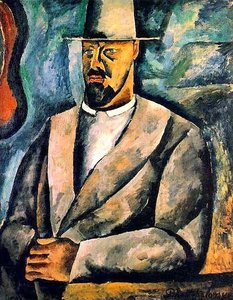
Piotr Konchalovsky
1876 - 1956 , Rússia
Breve Biografia
- Artistic Movement Or Style: Avant-garde, Fauvism, Realismo
- Artists Or Movements Influenced By This Artist:
- Mir Iskusstva
- Jack of Diamonds
- Artists Who Influenced This Artist:
- Cézanne
- Van Gogh
- Date Of Birth: 21/02/1876
- Date Of Death: 02/02/1956
- Full Name: Pyotr Petrovich Konchalovsky
- Nationality: Russo
- Notable Artworks:
- Natureza Morta
- Xaveco
- Retratos
- Place Of Birth: Kharkiv, Rússia